Tokyo Electric Power Co. (TEPCO), the operator of the earthquake-crippled Fukushima Daiichi nuclear power plant, has detected plutonium in the soil around the site.
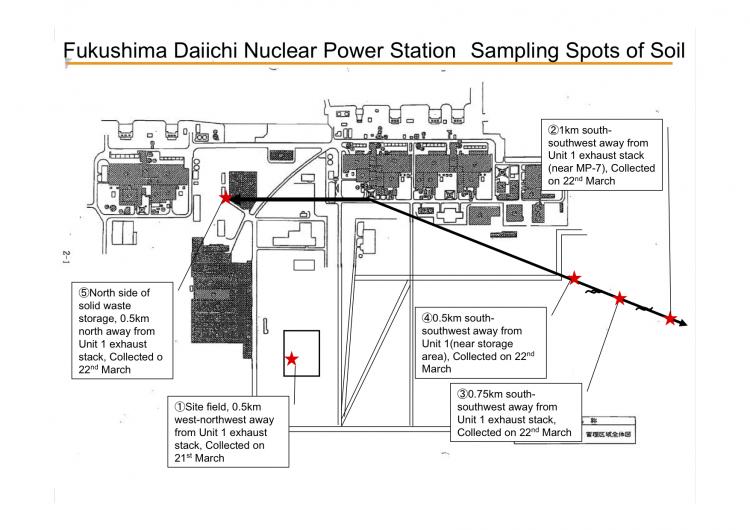
After conducting an analysis of soil collected March 21 and 22 from five spots around the six-reactor complex, TEPCO said Monday that plutonium was found in the soil for the first time in the ongoing nuclear crisis.
TEPCO reported that it believes the plutonium was released in the recent meltdown. It said the plutonium was probably discharged from nuclear fuel after the magnitude 9.0 earthquake and subsequent tsunami damaged the plant on March 11.
Plutonium, a byproduct of nuclear reactions and a part of the fuel mix at the plant’s No. 3 reactor, is more toxic than other radioactive substances such as cesium and iodine.
However, TEPCO said that the plutonium levels detected do not pose a major risk to human health. The levels detected from the soil samples were about the same as those from the fallout found in Japan after past nuclear tests by the United States and Russia.
The three plutonium isotopes discovered in the soil have long half-lives. Plutonium 239, the more common isotope, takes 24,000 years to lose half its radioactivity. Plutonium 238 takes 88 years, while plutonium 240 takes 6,500 years.
A senior official at Japan’s Nuclear Industry and Safety Agency (NISA), Hidehiko Nishiyama, said the detection of plutonium suggests “certain damage to fuel rods” and added that it is “deplorable” that plutonium was found despite various containment functions at the plant, according to Kyodo News.
Meanwhile, TEPCO and NISA announced on Monday that alarming levels of radiation exceeding 1,000 millisieverts per hour were detected Sunday in water collected in a trench outside the No. 2 reactor. They said the contaminated water might have come from the reactor’s core, where fuel rods have partially melted.
Similar highly radioactive water has also been building up in the basement of the reactor’s turbine building, which is connected to the trench. TEPCO is planning to pump out the water, hoping to eventually remove it.
“The crisis at the Fukushima Daiichi plant has still not been overcome and it will take some time to stabilize the reactors,” International Atomic Energy Agency Director General Yukiya Amano said at a press conference in Vienna on Monday.
“It is vitally important that we learn the right lessons from what happened on March 11 and afterwards, in order to strengthen nuclear safety throughout the world,” said Amano, who visited Japan briefly a week after the earthquake. “I would therefore like to propose that a high-level IAEA conference on nuclear safety should take place here in Vienna before the summer.”
Earlier, on March 24, three workers who were laying cable on the first floor and in the basement of the No. 3 reactor’s turbine building, were exposed to more than 170 millisieverts of radiation. Two workers, whose leg skin was contaminated, were immediately sent to the hospital, and the third joined later. TEPCO said all three left hospital Monday.
According to the latest Kyodo News survey released on Sunday, 58.2 percent of respondents disapprove of the government’s handling of the nuclear crisis at the Fukushima Daiichi plant, while on the other hand, 57.9 percent said they approve of the government’s victim support in hard-hit areas in northeastern Japan.
As of 9 p.m. Monday, more than 28,000 people were either missing or dead. The National Police Agency confirmed that 11,004 have died, while 17,339 are still missing.
After conducting an analysis of soil collected March 21 and 22 from five spots around the six-reactor complex, TEPCO said Monday that plutonium was found in the soil for the first time in the ongoing nuclear crisis.
TEPCO reported that it believes the plutonium was released in the recent meltdown. It said the plutonium was probably discharged from nuclear fuel after the magnitude 9.0 earthquake and subsequent tsunami damaged the plant on March 11.
Plutonium, a byproduct of nuclear reactions and a part of the fuel mix at the plant’s No. 3 reactor, is more toxic than other radioactive substances such as cesium and iodine.
However, TEPCO said that the plutonium levels detected do not pose a major risk to human health. The levels detected from the soil samples were about the same as those from the fallout found in Japan after past nuclear tests by the United States and Russia.
The three plutonium isotopes discovered in the soil have long half-lives. Plutonium 239, the more common isotope, takes 24,000 years to lose half its radioactivity. Plutonium 238 takes 88 years, while plutonium 240 takes 6,500 years.
A senior official at Japan’s Nuclear Industry and Safety Agency (NISA), Hidehiko Nishiyama, said the detection of plutonium suggests “certain damage to fuel rods” and added that it is “deplorable” that plutonium was found despite various containment functions at the plant, according to Kyodo News.
Meanwhile, TEPCO and NISA announced on Monday that alarming levels of radiation exceeding 1,000 millisieverts per hour were detected Sunday in water collected in a trench outside the No. 2 reactor. They said the contaminated water might have come from the reactor’s core, where fuel rods have partially melted.
Similar highly radioactive water has also been building up in the basement of the reactor’s turbine building, which is connected to the trench. TEPCO is planning to pump out the water, hoping to eventually remove it.
“The crisis at the Fukushima Daiichi plant has still not been overcome and it will take some time to stabilize the reactors,” International Atomic Energy Agency Director General Yukiya Amano said at a press conference in Vienna on Monday.
“It is vitally important that we learn the right lessons from what happened on March 11 and afterwards, in order to strengthen nuclear safety throughout the world,” said Amano, who visited Japan briefly a week after the earthquake. “I would therefore like to propose that a high-level IAEA conference on nuclear safety should take place here in Vienna before the summer.”
Earlier, on March 24, three workers who were laying cable on the first floor and in the basement of the No. 3 reactor’s turbine building, were exposed to more than 170 millisieverts of radiation. Two workers, whose leg skin was contaminated, were immediately sent to the hospital, and the third joined later. TEPCO said all three left hospital Monday.
According to the latest Kyodo News survey released on Sunday, 58.2 percent of respondents disapprove of the government’s handling of the nuclear crisis at the Fukushima Daiichi plant, while on the other hand, 57.9 percent said they approve of the government’s victim support in hard-hit areas in northeastern Japan.
As of 9 p.m. Monday, more than 28,000 people were either missing or dead. The National Police Agency confirmed that 11,004 have died, while 17,339 are still missing.