


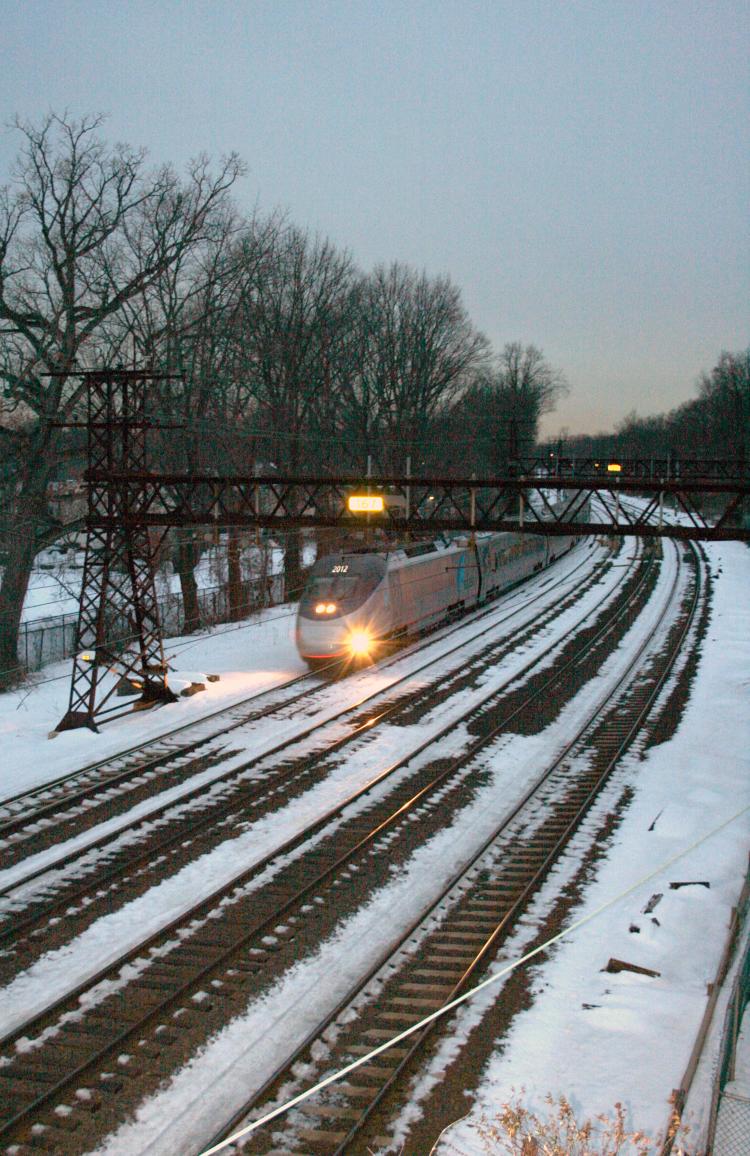
NEW YORK—The New Haven Line, which connects commuters from New Haven, Fairfield, and Westchester to Manhattan, has approximately 40 percent of its cars out of commission after a repeated “pummeling” by record snowfalls and extreme cold this winter.
“The situation is dire,” wrote Metro-North President Howard Permut in a letter to the New Haven Line customers. About 70 percent of the cars on the line are over 40 years old. The infrastructure and movable bridges are close to a century old.
Like an old man on a winter day, the Metro-North system has stiff joints and simply cannot run like it did in its hey day.
Train cars fill up the Metropolitan Transit Authority (MTA) workshops, spilling out into the surrounding yard, where mechanics work in the snow and cold to get the aging machines back into working order. As one car leaves, another arrives, and the work is endless, reported Permut.
A solution is in sight, but it requires the patience of the multitude of commuters who will have to deal with delayed service and crowded trains until it can be implemented.
Metro-North hopes to have 300 new M-8 trains up and running by the end of the first quarter of 2011. The transition may not be seamless, however, as the cars will require time and testing to be able to handle the planned workload.
“The testing of the new M-8 pilot cars continues; however, this is a highly complex car with much computer technology,” Permut said. “As we identify problems in testing—mostly related to complex software—we effect a fix and need to retest. … We will put the cars into revenue service when we are confident that they operate both safely and reliably.”
The testing has also been held up by the inclement weather.
For now, the MTA is running on a reduced winter schedule through March 4. Weekday peak service is reduced by about 10 percent, and the Sunday schedule is in effect for both Saturdays and Sundays.
A “Winter Crisis: Commuter Summit,” planned for Feb. 16 at 7 p.m. at the Stamford Government Center, will give riders a chance to discuss the situation with local lawmakers and Metro-North officials.
“The situation is dire,” wrote Metro-North President Howard Permut in a letter to the New Haven Line customers. About 70 percent of the cars on the line are over 40 years old. The infrastructure and movable bridges are close to a century old.
Like an old man on a winter day, the Metro-North system has stiff joints and simply cannot run like it did in its hey day.
Train cars fill up the Metropolitan Transit Authority (MTA) workshops, spilling out into the surrounding yard, where mechanics work in the snow and cold to get the aging machines back into working order. As one car leaves, another arrives, and the work is endless, reported Permut.
A solution is in sight, but it requires the patience of the multitude of commuters who will have to deal with delayed service and crowded trains until it can be implemented.
Metro-North hopes to have 300 new M-8 trains up and running by the end of the first quarter of 2011. The transition may not be seamless, however, as the cars will require time and testing to be able to handle the planned workload.
“The testing of the new M-8 pilot cars continues; however, this is a highly complex car with much computer technology,” Permut said. “As we identify problems in testing—mostly related to complex software—we effect a fix and need to retest. … We will put the cars into revenue service when we are confident that they operate both safely and reliably.”
The testing has also been held up by the inclement weather.
For now, the MTA is running on a reduced winter schedule through March 4. Weekday peak service is reduced by about 10 percent, and the Sunday schedule is in effect for both Saturdays and Sundays.
A “Winter Crisis: Commuter Summit,” planned for Feb. 16 at 7 p.m. at the Stamford Government Center, will give riders a chance to discuss the situation with local lawmakers and Metro-North officials.


