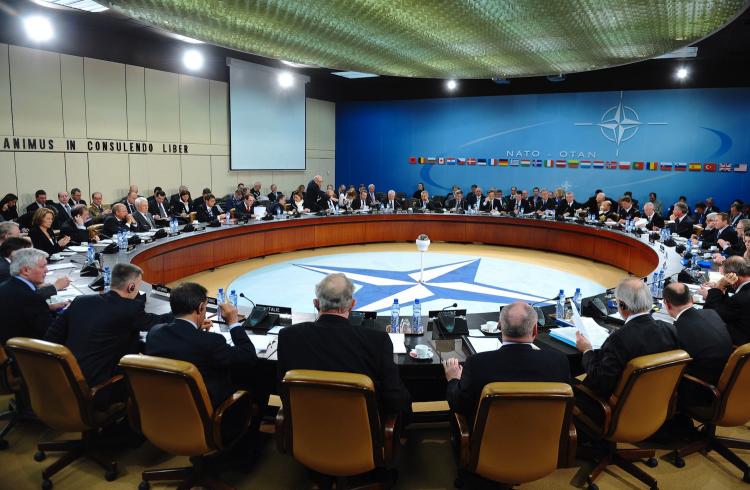
NATO wants to see strong regional support for a no-fly zone over Libya before it will take action, announced NATO Secretary-General Anders Fogh Rasmussen on Thursday, following a special session on Libya.
On Thursday NATO announced it will intervene to aid Libyan rebels only if there is demonstrated need, clear legal basis, and strong regional support.
“I can’t imagine the international community and the United Nations stand idly by if Col. Gadhafi continues attacking his people systematically. But I have to say we do not look for intervention in Libya,“ said Rasmussen at a press conference following the meeting of NATO defense ministers.
The United States has made it especially clear that it wants broad international support for action in Libya, lest it be perceived as self-interested.
Hoping to prevent Western intervention in Libya from being perceived as self-interested, the U.S. secretary of state said the United States wants to see international support for a no-fly zone.
Secretary of State Hillary Clinton said Tuesday that a no-fly zone should “come from the people of Libya themselves.”
“This doesn’t come from the outside. This doesn’t come from some Western power or some Gulf country saying this is what you should do, this is how you should live,” she added during an interview on Sky News.
The regional support that the West is looking for mainly refers to endorsement by the League of Arab States.
It is “fairly likely” the Arab League will endorse establishing a no-fly zone over Libya, says American Enterprise Institute resident scholar Michael Rubin. The league will meet Saturday in Cairo to discuss how to respond to the situation in Libya.
Although the league’s role is mostly symbolic, league support of a NATO action would lend that action greater legitimacy in the eyes of Arabs, says Rubin.
Libyan representative to the Arab Lleague, Abdel Moneim al-Honi who resigned on Feb. 20, sent a letter to league Secretary-General Amr Moussa demanding he expel Gadhafi from the league, reports Al Masry Al Youm. The league suspended Libya’s membership on Feb. 22.
Rubin says that an explicit endorsement of the no-fly zone by al-Honi could be the go-ahead the West needs. “If the Libyan delegate to the Arab league throws his hat in with the opposition [rebels], and says ‘do this’ it is going to be hard for any Arab state to object,” to supporting the no-fly zone.
Gadhafi’s ties with the Arab world have been weak since he “got frustrated with the Arab league and Arab world and cast his lot in with the Africans” years ago says Rubin.
In recent years, Gadhafi strengthened ties Africa, trying “to use the continent as a platform to raise his profile internationally, really desiring to become a global player,” says Stratfor analyst Mark Schroeder in a video on the intelligence company’s website.
Schroeder explains that although Gadhafi cultivated strong business ties with African nations south of Libya in recent years, Gadhafi “does not have a domineering influence over these governments.” Schroeder says the governments of Burkina Faso, Chad, and Sudan will be watching what happens to Gadhafi in Tripoli, “but they will act to ensure that their own regimes can move on.”
Gadhafi’s has put a lot of funds into the African Union, paying membership fees for several other nations.
According to Edmond Keller, director of the UCLA Globalization Research Center-Africa, the African Union “jealously guards the sovereignty of its member states,” and is unlikely to support establishing a no-fly zone over Libya.
On Feb. 23, the African Union condemned the “indiscriminate and excessive use of force and lethal weapons against peaceful protesters.”
With reporting by Cindy Drukier
On Thursday NATO announced it will intervene to aid Libyan rebels only if there is demonstrated need, clear legal basis, and strong regional support.
“I can’t imagine the international community and the United Nations stand idly by if Col. Gadhafi continues attacking his people systematically. But I have to say we do not look for intervention in Libya,“ said Rasmussen at a press conference following the meeting of NATO defense ministers.
The United States has made it especially clear that it wants broad international support for action in Libya, lest it be perceived as self-interested.
Hoping to prevent Western intervention in Libya from being perceived as self-interested, the U.S. secretary of state said the United States wants to see international support for a no-fly zone.
Secretary of State Hillary Clinton said Tuesday that a no-fly zone should “come from the people of Libya themselves.”
“This doesn’t come from the outside. This doesn’t come from some Western power or some Gulf country saying this is what you should do, this is how you should live,” she added during an interview on Sky News.
The regional support that the West is looking for mainly refers to endorsement by the League of Arab States.
It is “fairly likely” the Arab League will endorse establishing a no-fly zone over Libya, says American Enterprise Institute resident scholar Michael Rubin. The league will meet Saturday in Cairo to discuss how to respond to the situation in Libya.
Although the league’s role is mostly symbolic, league support of a NATO action would lend that action greater legitimacy in the eyes of Arabs, says Rubin.
Libyan representative to the Arab Lleague, Abdel Moneim al-Honi who resigned on Feb. 20, sent a letter to league Secretary-General Amr Moussa demanding he expel Gadhafi from the league, reports Al Masry Al Youm. The league suspended Libya’s membership on Feb. 22.
Rubin says that an explicit endorsement of the no-fly zone by al-Honi could be the go-ahead the West needs. “If the Libyan delegate to the Arab league throws his hat in with the opposition [rebels], and says ‘do this’ it is going to be hard for any Arab state to object,” to supporting the no-fly zone.
Gadhafi’s ties with the Arab world have been weak since he “got frustrated with the Arab league and Arab world and cast his lot in with the Africans” years ago says Rubin.
In recent years, Gadhafi strengthened ties Africa, trying “to use the continent as a platform to raise his profile internationally, really desiring to become a global player,” says Stratfor analyst Mark Schroeder in a video on the intelligence company’s website.
Schroeder explains that although Gadhafi cultivated strong business ties with African nations south of Libya in recent years, Gadhafi “does not have a domineering influence over these governments.” Schroeder says the governments of Burkina Faso, Chad, and Sudan will be watching what happens to Gadhafi in Tripoli, “but they will act to ensure that their own regimes can move on.”
Gadhafi’s has put a lot of funds into the African Union, paying membership fees for several other nations.
According to Edmond Keller, director of the UCLA Globalization Research Center-Africa, the African Union “jealously guards the sovereignty of its member states,” and is unlikely to support establishing a no-fly zone over Libya.
On Feb. 23, the African Union condemned the “indiscriminate and excessive use of force and lethal weapons against peaceful protesters.”
With reporting by Cindy Drukier