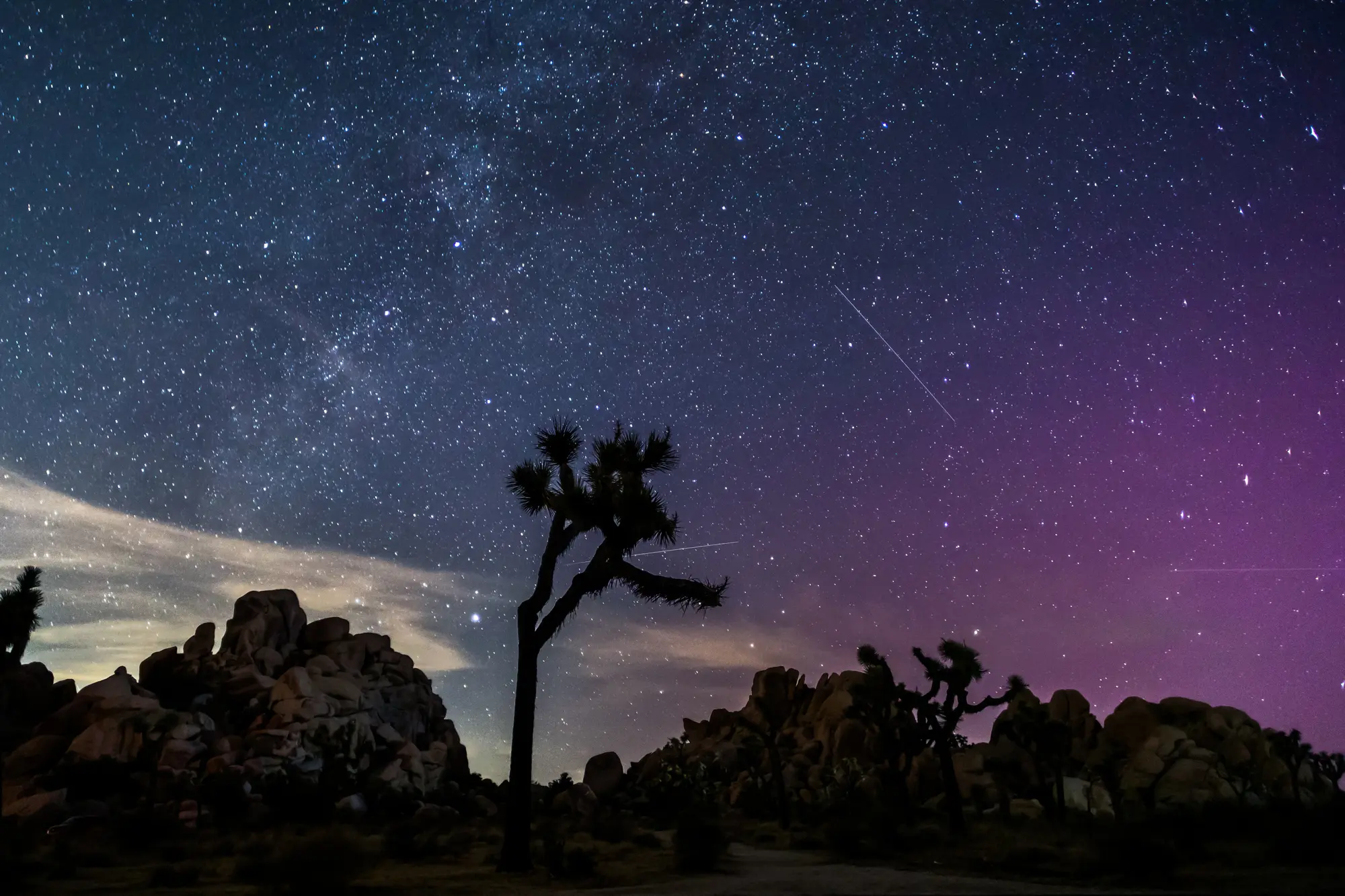
It is considered the most popular meteor shower of the year, and it is set to peak on a moonless night.
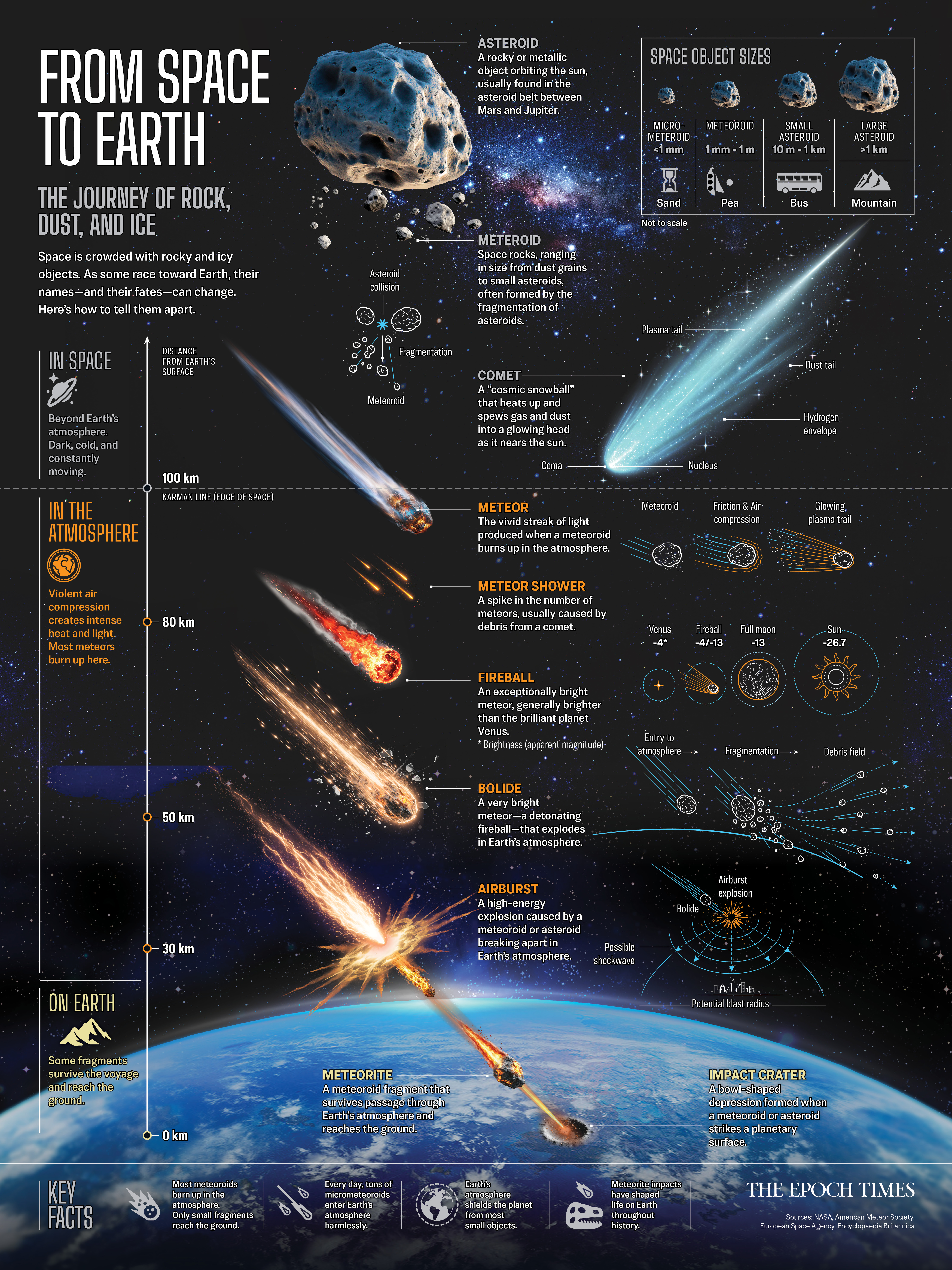
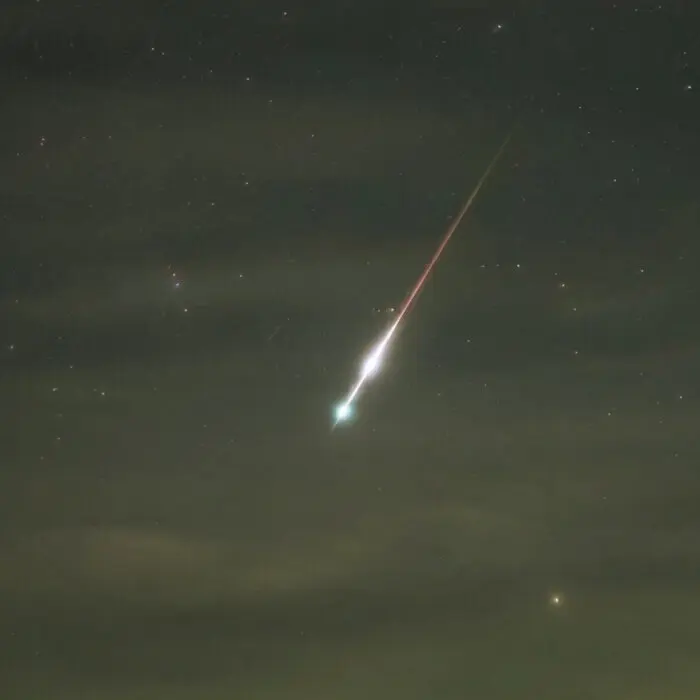
The Perseids meteor shower is an annual celestial event that normally occurs in the latter half of summer in the Northern Hemisphere. From mid-July to late August, stargazers can look up to see fireballs streak across the sky at speeds of 37 miles per second as Earth passes through a dust cloud left behind by the Swift–Tuttle comet.
“The Perseids [meteor shower], which peaks in mid-August, is considered the best meteor shower of the year,” according to NASA. “With swift and bright meteors, Perseids frequently leave long ‘wakes’ of light and color behind them as they streak through Earth’s atmosphere.
“The Perseids are one of the most plentiful showers, with about 50 to 100 meteors seen per hour.”
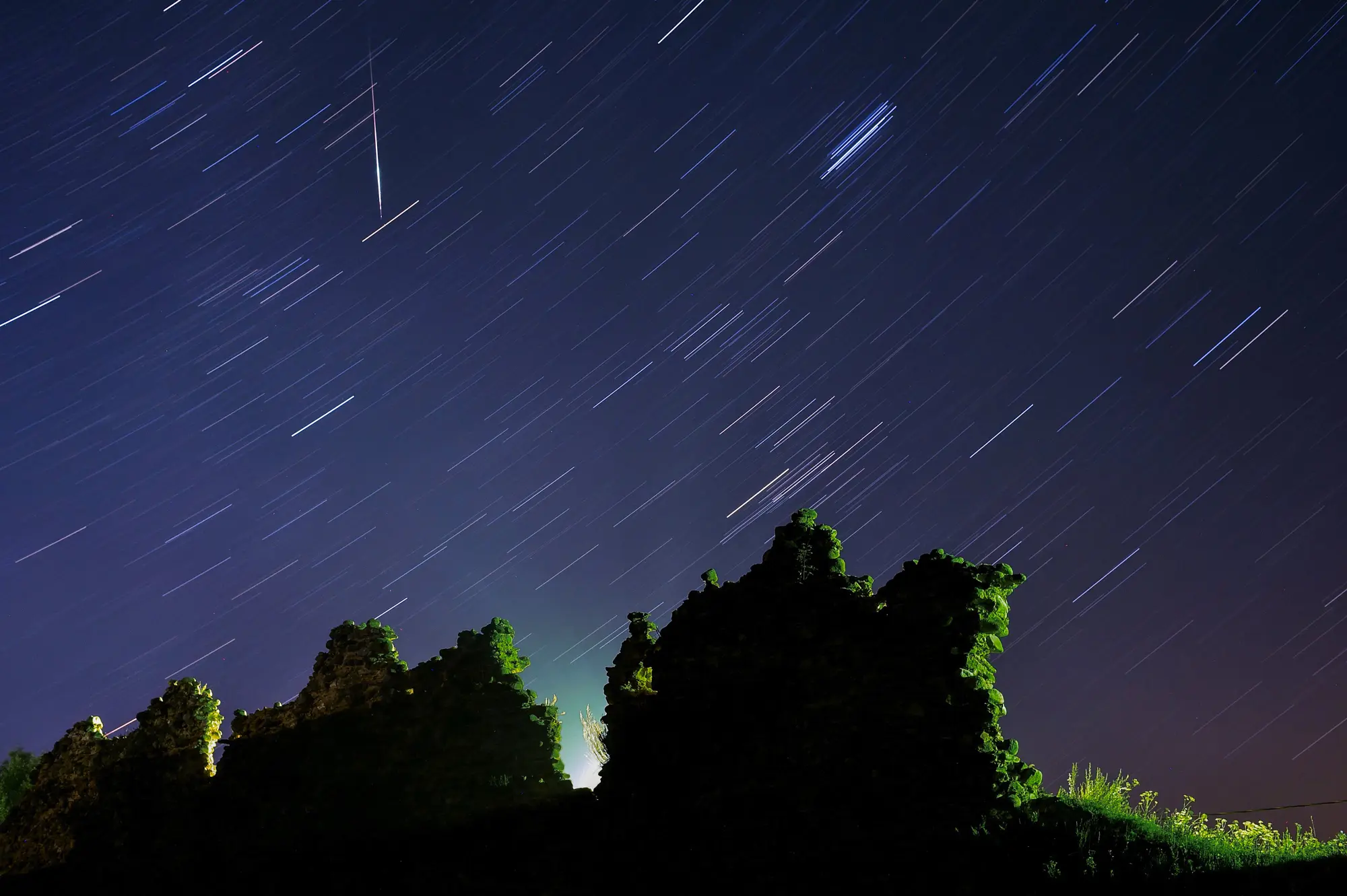
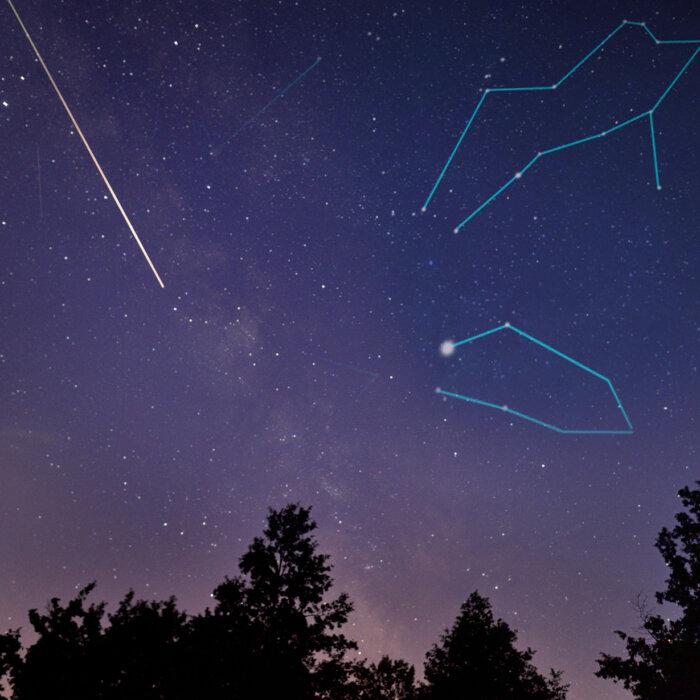
The event is called the Perseids meteor shower because the space debris appears to originate from the constellation Perseus, which is due to rise just after 8:30 a.m. ET on Aug. 12 and set just after 1:20 a.m. ET on Aug. 13.
The entire viewing window began July 17 and ends Aug. 24, with its peak forecasted for Aug. 12–13. A key reason for its popularity is the fact that the shower occurs on warm summer nights, offering a comfortable viewing environment for sky watchers.
According to the American Meteor Society, the event is producing “normal” rates of 30 to 50 meteors per hour in rural areas. The society defines a meteor shower as an event in which 10 or more meteors light up the sky within an hour, but on Aug. 12–13, the forecasted Perseids peak will generate 100 meteors per hour.
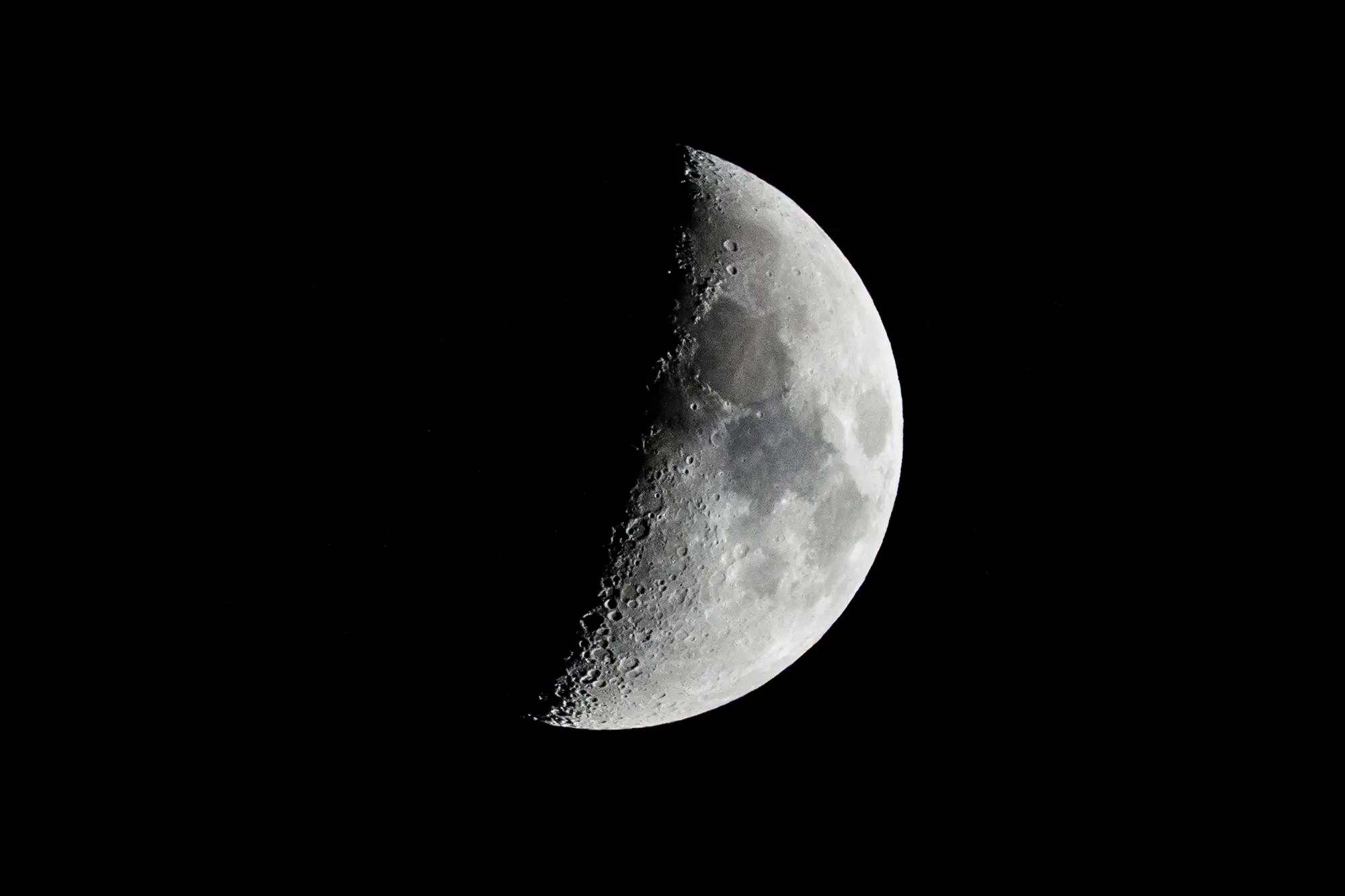
On top of that, this stellar climax will occur during a new moon, a milestone in the lunar calendar exactly opposite to a full moon, where Earth’s shadow completely covers the nearside and creates a seemingly moonless night.
This will create optimal viewing conditions as smaller sources of light become visible against the much darker sky—and there are dozens of areas across the United States out of the glowing umbrella of light pollution.
Dark Sky Parks: Where to Watch
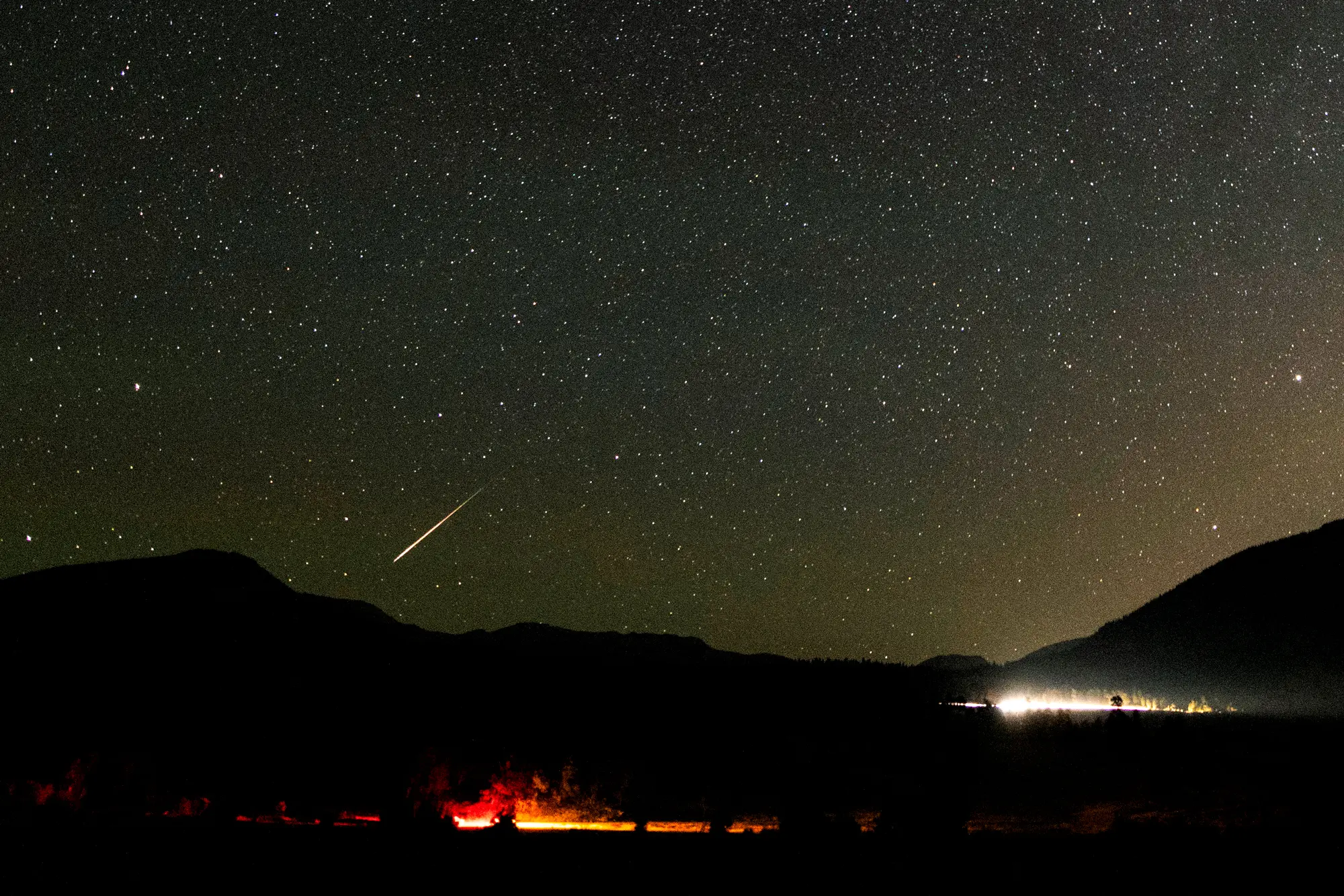
The National Park Service told The Epoch Times in an email that the meteor shower will be visible “from all places on Earth with dark sky.”
At least 18 national parks specifically earned the title of “Dark Sky Parks,” contributing to the 177 locations across the country recognized by DarkSky International as being far enough away from urban light pollution to provide dark, clear skies for skywatching and stargazing. Most locations offer night skies dark enough for visitors to not only see thousands of stars otherwise drowned out by light pollution, but also the Milky Way and even faint celestial objects like nebulae without needing a telescope.
Arches National Park, Utah
Badlands National Park, South Dakota
Big Bend National Park, Texas
Black Canyon of the Gunnison National Park, Colorado
Bryce Canyon National Park, Utah
Canyonlands National Park, Utah
Capitol Reef National Park, Utah
Chaco Culture National Historical Park, New Mexico
Death Valley National Park, California
Grand Canyon National Park, Arizona
Great Basin National Park, Nevada
Great Sand Dunes National Park and Preserve, Colorado
Joshua Tree National Park, California
Lyndon B. Johnson National Historical Park, Texas
Mammoth Cave National Park, Kentucky
Mesa Verde National Park, Colorado
Petrified Forest National Park, Arizona
Voyageurs National Park, Minnesota
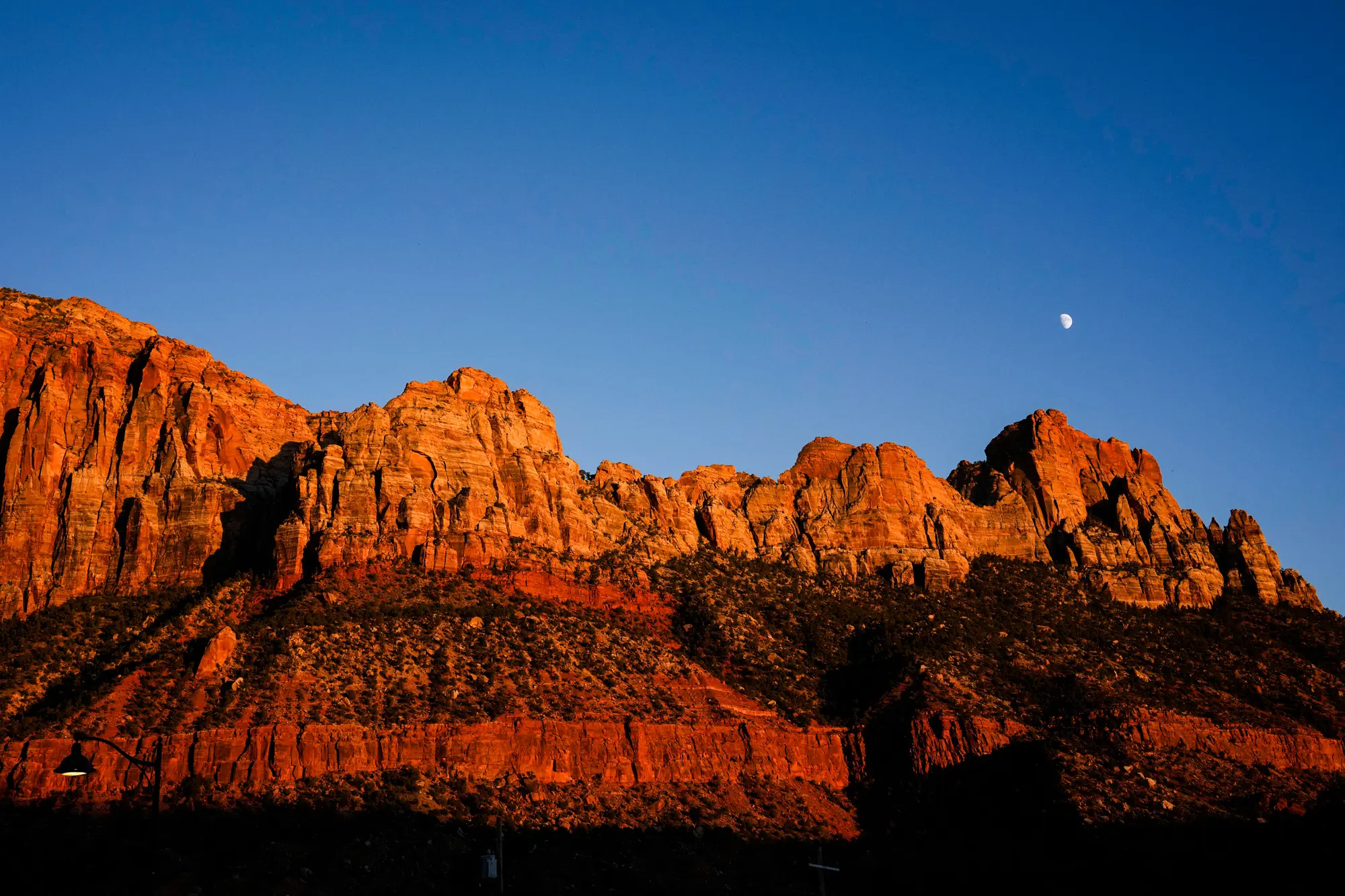
Zion National Park, Utah
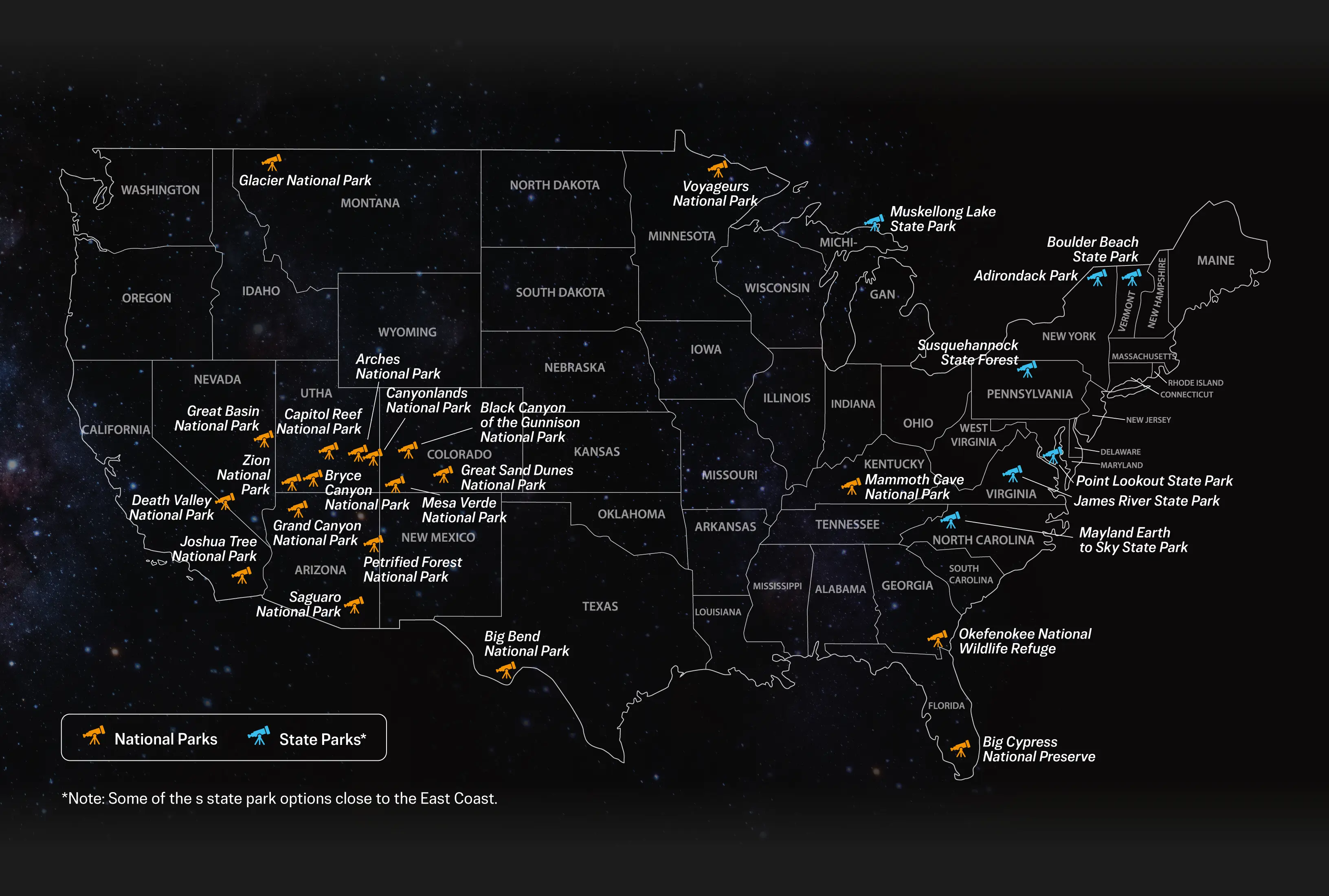
The park service published its own extended list of park sites related to night sky viewings, and it has collected its own night sky data across the 628 locations in the lower 48 alone.
Several locations have some special skywatching events scheduled on Aug. 12 and 13.
Acadia National Park is hosting its weekly Acadia’s Night Sky program at 9 p.m. local time on Aug. 12.
George Washington Memorial Parkway is hosting a Perseids Meteor Shower Stargazing Party at 9 p.m. local time on Aug. 12.
Zion National Park is hosting a Kolob Night Sky Telescope Viewing Program at 9 p.m. local time on Aug. 12 and 13.
Redwood National and State Parks is hosting a Night Sky Program at Jedediah Smith Day-Use Area at 9:15 p.m. local time on Aug. 12.
Capitol Reef National Park has a Meteor Shower Talk planned at 10 p.m. local time on Aug. 12 and Aug. 13.
Great Basin National Park is hosting an astronomy program at 8:30 p.m. local time on Aug. 13.
Bryce Canyon National Park is hosting a Star Party at 9:45 p.m. local time on Aug. 13.
Meanwhile, many national and state parks offer general means of nighttime access for visitors to do their own skywatching, such as overnight camping options and 24-hour road access.
“Although the traditional ‘best viewing window’ for meteor showers is late night through pre-dawn, it can be difficult for many visitors to stay up that late or wake up early at those hours,” the National Park Service told The Epoch Times in an email.
“It is recommended that visitors begin observing any time after twilight ends, once the sky is fully dark. The most comfortable and effective way to watch is to lie flat on the ground so the whole sky is visible at once.”
There are also state park viewing options across the country, including some on the East Coast.
Cherry Springs State Park, Pennsylvania
James River State Park, Virginia
Kissimmee Prairie Preserve State Park, Florida
Mayland Earth to Sky Park & Bare Dark Sky Observatory, North Carolina
Natural Bridge State Park, Virginia
Staunton River State Park, Virginia
Sky Meadows State Park, Virginia
Watoga State Park, West Virginia
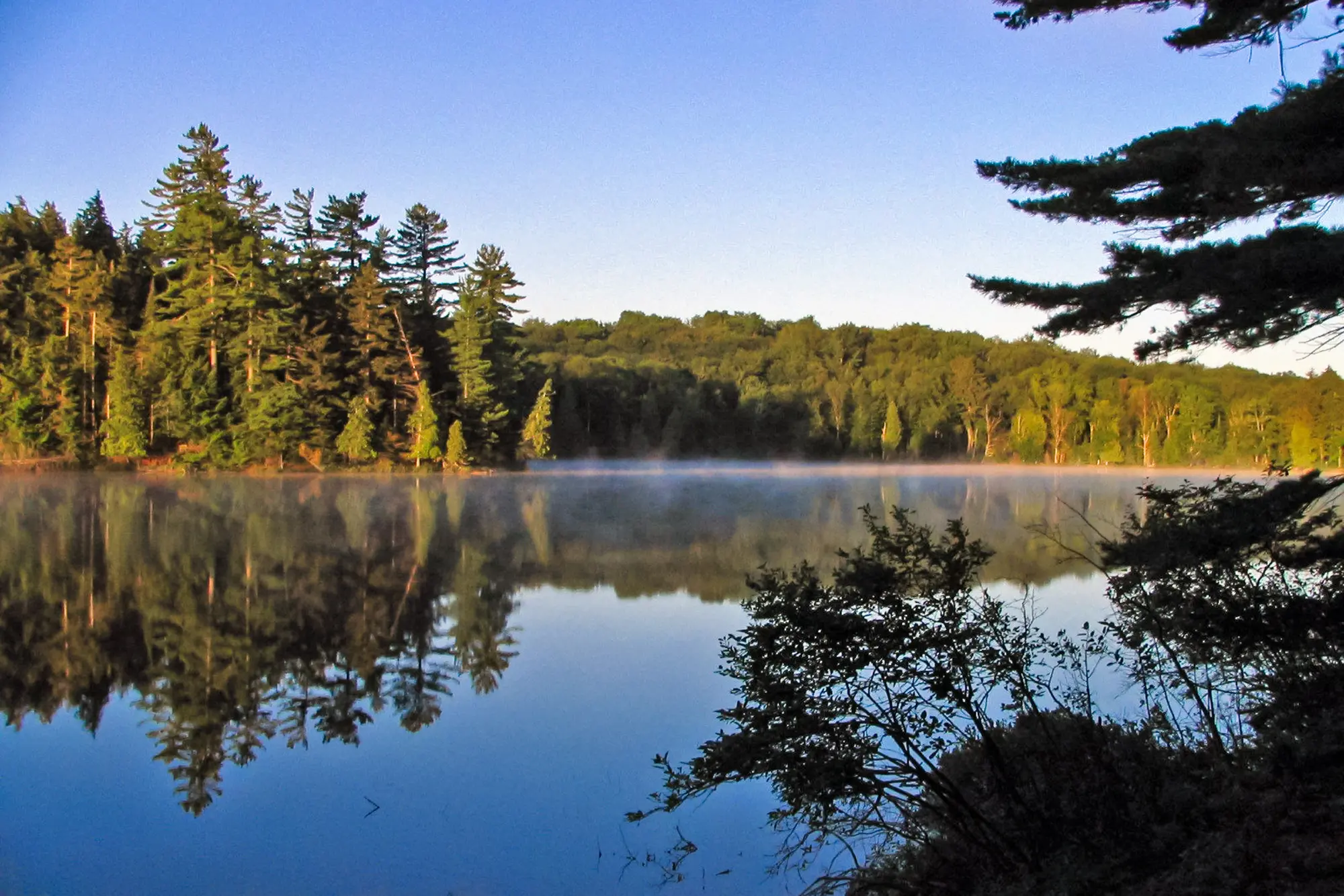
However, the park service told The Epoch Times that parks out west typically have darker skies.
While these parks are generally known to offer dark skies for watching meteor showers and stargazing, viewing success is still contingent on weather. Prospective skywatchers should monitor the local forecasts of their desired dark sky locations to ensure clear skies aren’t disrupted by storm clouds or passing smoke from wildfires.
“Smoke conditions are difficult to predict more than a few days in advance because they depend heavily on wind directions, and smoke can travel long distances,” the park service said. “Being far from an active wildfire does not guarantee clear conditions.”