WASHINGTON—A group of human rights and faith-based refugee advocates are drawing attention to an estimated 5,000 refugees who risk deportation under what they say is an overly broad application of U.S. terrorism laws created after the 9/11 terrorists attacks.
Many of the people on the list have already been legally admitted into the country as refugees, and have proven to be at risk of persecution or bodily harm should they return to their own countries.
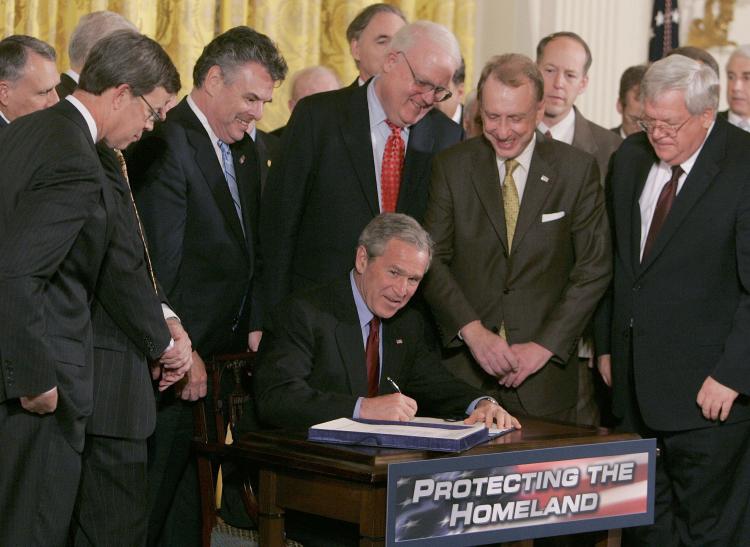
The USA PATRIOT Act (also Patriot Act), passed in 2001, changed immigration rules, and these people’s legal status’ and rights in the United States were suddenly thrown into limbo. They are now subject to deportation, detention, and lengthy separations from family, putting them in very difficult situations.
Thousands of the refugee claimants have also been disqualified from making their cases to a judge, after being labeled terrorists under the Patriot Act. Many have already been deported without a hearing.
Critics say the criteria for labeling someone a terrorist under the Patriot Act and the subsequent Real ID Act of 2005, which broadened the criteria even further, are misguided.
Under the Patriot Act, any person said to have provided material aid to a terrorist, regardless of whether they did so under extreme duress, including threat of life, or whether the aid was twice or third removed from supporting a terrorist organization, is said to be inadmissible.
A refugee from Burundi was detained for 20 months in a succession of county jails because the U.S. Department of Homeland Security and an immigration judge took the position that he had provided material support to a rebel group, after he was robbed at gunpoint of his lunch and the $4 in his pocket, according to a report by the group Human Rights First.
The act also defines a terrorist as anyone using a gun for any purpose other than personal monetary gain. The definition has been used to bar individuals fighting repressive regimes, for example, refugees who fought alongside U.S. forces to overthrow Saddam Hussein in the 1990s.
Many U.S.-defined terrorist groups, particularly those on a Tier III list, are seen by observers as only tangentially related to U.S. security interests. For example, any group that has used armed force against the regime in Iran since the 1979 revolution is counted a terrorist.
Members of a Hudson panel, discussing the issue on Dec. 20, said the government has been aware of the problems for some time. A waiver passed by Congress with bipartisan support in 2007 gave the administration discretionary authority to make exceptions for legitimate refugees, and was meant to alleviate many of the injustices.
But according to Human Rights First, the waiver has only been used to help a few narrowly defined groups of refugees. It hasn’t succeeded in addressing the root of the problem, nor are actions being taken quickly enough, stated its report.
“The law has been changed three years ago, and this administration is just sitting on its hands about it,” complained Michael Horowitz, director of Hudson Institute’s Project for Civil Justice Reform, and previous counsel for the Office of Management and Budget under the Reagan administration, at a Hudson event.
A group of 18 organizations sent a joint letter to the administration in October. They are still awaiting a response. Advocates believe that if they continue to raise awareness of the plight of these refugees, they may elicit enough public support for their cause to shame the administration into acting quickly to process the backlog of people “on hold.”
Melanie Nezer of the Hebrew Immigrant Aid Society said that there are a number of administration officials working on the issues behind the scenes. She wants the Departments of Justice, State, and Homeland Security to stop the duplication and get a process that works faster.
“It is time to just get this done,” said Elisa Massimino, president and CEO of New York and Washington D.C.-based Human Rights First.
The people affected “have already survived great uncertainty and loss,” she said.
Many of the people on the list have already been legally admitted into the country as refugees, and have proven to be at risk of persecution or bodily harm should they return to their own countries.
The USA PATRIOT Act (also Patriot Act), passed in 2001, changed immigration rules, and these people’s legal status’ and rights in the United States were suddenly thrown into limbo. They are now subject to deportation, detention, and lengthy separations from family, putting them in very difficult situations.
Thousands of the refugee claimants have also been disqualified from making their cases to a judge, after being labeled terrorists under the Patriot Act. Many have already been deported without a hearing.
Critics say the criteria for labeling someone a terrorist under the Patriot Act and the subsequent Real ID Act of 2005, which broadened the criteria even further, are misguided.
Under the Patriot Act, any person said to have provided material aid to a terrorist, regardless of whether they did so under extreme duress, including threat of life, or whether the aid was twice or third removed from supporting a terrorist organization, is said to be inadmissible.
A refugee from Burundi was detained for 20 months in a succession of county jails because the U.S. Department of Homeland Security and an immigration judge took the position that he had provided material support to a rebel group, after he was robbed at gunpoint of his lunch and the $4 in his pocket, according to a report by the group Human Rights First.
The act also defines a terrorist as anyone using a gun for any purpose other than personal monetary gain. The definition has been used to bar individuals fighting repressive regimes, for example, refugees who fought alongside U.S. forces to overthrow Saddam Hussein in the 1990s.
Many U.S.-defined terrorist groups, particularly those on a Tier III list, are seen by observers as only tangentially related to U.S. security interests. For example, any group that has used armed force against the regime in Iran since the 1979 revolution is counted a terrorist.
Members of a Hudson panel, discussing the issue on Dec. 20, said the government has been aware of the problems for some time. A waiver passed by Congress with bipartisan support in 2007 gave the administration discretionary authority to make exceptions for legitimate refugees, and was meant to alleviate many of the injustices.
But according to Human Rights First, the waiver has only been used to help a few narrowly defined groups of refugees. It hasn’t succeeded in addressing the root of the problem, nor are actions being taken quickly enough, stated its report.
“The law has been changed three years ago, and this administration is just sitting on its hands about it,” complained Michael Horowitz, director of Hudson Institute’s Project for Civil Justice Reform, and previous counsel for the Office of Management and Budget under the Reagan administration, at a Hudson event.
A group of 18 organizations sent a joint letter to the administration in October. They are still awaiting a response. Advocates believe that if they continue to raise awareness of the plight of these refugees, they may elicit enough public support for their cause to shame the administration into acting quickly to process the backlog of people “on hold.”
Melanie Nezer of the Hebrew Immigrant Aid Society said that there are a number of administration officials working on the issues behind the scenes. She wants the Departments of Justice, State, and Homeland Security to stop the duplication and get a process that works faster.
“It is time to just get this done,” said Elisa Massimino, president and CEO of New York and Washington D.C.-based Human Rights First.
The people affected “have already survived great uncertainty and loss,” she said.