


NEW YORK—After four years of planning, the final design of the Hunter’s Point South affordable-housing development was unveiled Wednesday morning. Developers Phipps Houses, Related Companies, and Monadnock Construction were awarded the bid on this $360 billion project. Construction is scheduled to commence next month.
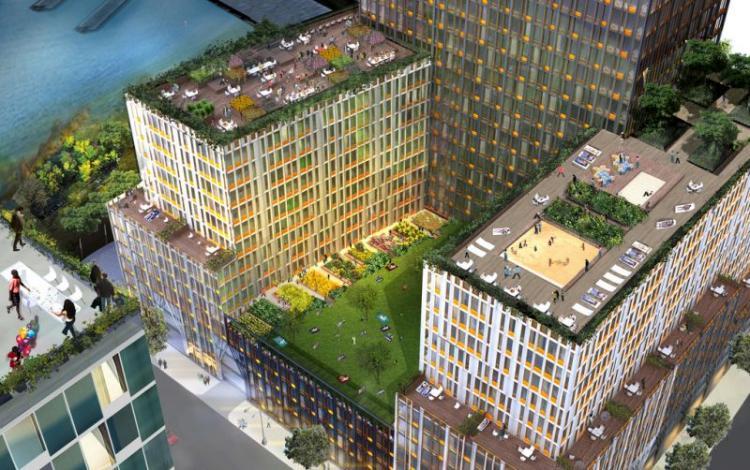
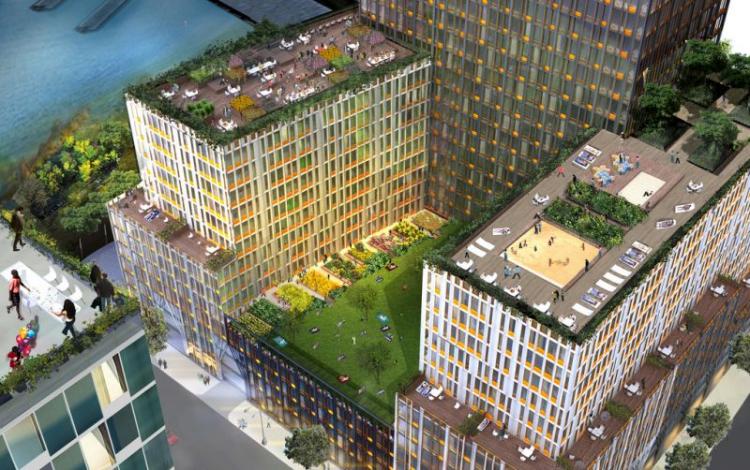
The 20-acre strip of land along the East River in Long Island City is currently a barren, industrial wasteland. By 2013, however, it will be home to two new mixed-use buildings containing 908 housing units and 20,000 square feet of retail space. A new intermediate and high school will also open its doors to 1,100 students, and the residents of this new community will enjoy five acres of park space.
This is only phase one of a long-term plan to build 5,000 units and an 11-acre waterfront park in Hunter’s Point South. It is the largest affordable-housing development project since the Co-op City in the Bronx and Starrett City Apartments in Brooklyn were completed in the 1970s.
Of the 908 housing units, 75 percent will be allocated to low and middle-income families. The primary goal of the project is to create units for the middle class—the city’s teachers, firefighters, and police officers.
The median income for a family of four in New York City in 2010 was $79,200, according to the Housing and Urban Development (HUD) estimates. The affordable housing in the Hunter’s Point South development will be divided among different income groups, with 20 percent allocated for households earning $32,000 to $64,000 annually and the remaining 55 percent allotted to families earning $103,000 to $130,000.
The plan met with protest in an earlier formulation, which included only 60 percent of affordable housing. Community groups argued that the “affordable housing” was not affordable to the majority of New Yorkers.
“The reality when you look at the income requirements for the project is that it would exclude 60 percent of the borough,” said Elena Conte of the Pratt Center for Community Development, an organization that advocates for low-income communities, at a 2008 City Council hearing on the development project, reported WNYC News.
Some of the community groups that had raised objections to the project at a City Council hearing in 2008 said they’ve stopped following the development and have no comment on the increase of affordable-housing units from 60 percent to 75 percent.
“There is a large number of large buildings being erected along waterfront, and the scale is something we’re going to have to reckon with,” said Roland Lewis, president and CEO of the Waterfront Alliance, which represents 450 organizations with ties to the city’s waterways. He hopes to see some permanent facilities for water recreation and is happy that the plans include an East River Ferry pilot program.
The ferry will start on its route from Hunter’s Point South to Brooklyn and Lower Manhattan in the spring. Developers will begin working on the infrastructure for the new community next month. The park will begin to take shape this summer, the buildings will be constructed over 2012 and 2013, and the school will open its doors in the fall of 2013.
“Today marks a significant milestone in the transformation of Hunter’s Point South into a vibrant and dynamic waterfront neighborhood,” stated Seth Pinsky, president of the New York City Economic Development Corporation, in a press release. “In challenging economic times, this project will create thousands of jobs, leverage millions of dollars in private investments, build new community amenities, and result in significant critical infrastructure investments.”
The 20-acre strip of land along the East River in Long Island City is currently a barren, industrial wasteland. By 2013, however, it will be home to two new mixed-use buildings containing 908 housing units and 20,000 square feet of retail space. A new intermediate and high school will also open its doors to 1,100 students, and the residents of this new community will enjoy five acres of park space.
This is only phase one of a long-term plan to build 5,000 units and an 11-acre waterfront park in Hunter’s Point South. It is the largest affordable-housing development project since the Co-op City in the Bronx and Starrett City Apartments in Brooklyn were completed in the 1970s.
Of the 908 housing units, 75 percent will be allocated to low and middle-income families. The primary goal of the project is to create units for the middle class—the city’s teachers, firefighters, and police officers.
The median income for a family of four in New York City in 2010 was $79,200, according to the Housing and Urban Development (HUD) estimates. The affordable housing in the Hunter’s Point South development will be divided among different income groups, with 20 percent allocated for households earning $32,000 to $64,000 annually and the remaining 55 percent allotted to families earning $103,000 to $130,000.
The plan met with protest in an earlier formulation, which included only 60 percent of affordable housing. Community groups argued that the “affordable housing” was not affordable to the majority of New Yorkers.
“The reality when you look at the income requirements for the project is that it would exclude 60 percent of the borough,” said Elena Conte of the Pratt Center for Community Development, an organization that advocates for low-income communities, at a 2008 City Council hearing on the development project, reported WNYC News.
Some of the community groups that had raised objections to the project at a City Council hearing in 2008 said they’ve stopped following the development and have no comment on the increase of affordable-housing units from 60 percent to 75 percent.
“There is a large number of large buildings being erected along waterfront, and the scale is something we’re going to have to reckon with,” said Roland Lewis, president and CEO of the Waterfront Alliance, which represents 450 organizations with ties to the city’s waterways. He hopes to see some permanent facilities for water recreation and is happy that the plans include an East River Ferry pilot program.
The ferry will start on its route from Hunter’s Point South to Brooklyn and Lower Manhattan in the spring. Developers will begin working on the infrastructure for the new community next month. The park will begin to take shape this summer, the buildings will be constructed over 2012 and 2013, and the school will open its doors in the fall of 2013.
“Today marks a significant milestone in the transformation of Hunter’s Point South into a vibrant and dynamic waterfront neighborhood,” stated Seth Pinsky, president of the New York City Economic Development Corporation, in a press release. “In challenging economic times, this project will create thousands of jobs, leverage millions of dollars in private investments, build new community amenities, and result in significant critical infrastructure investments.”


