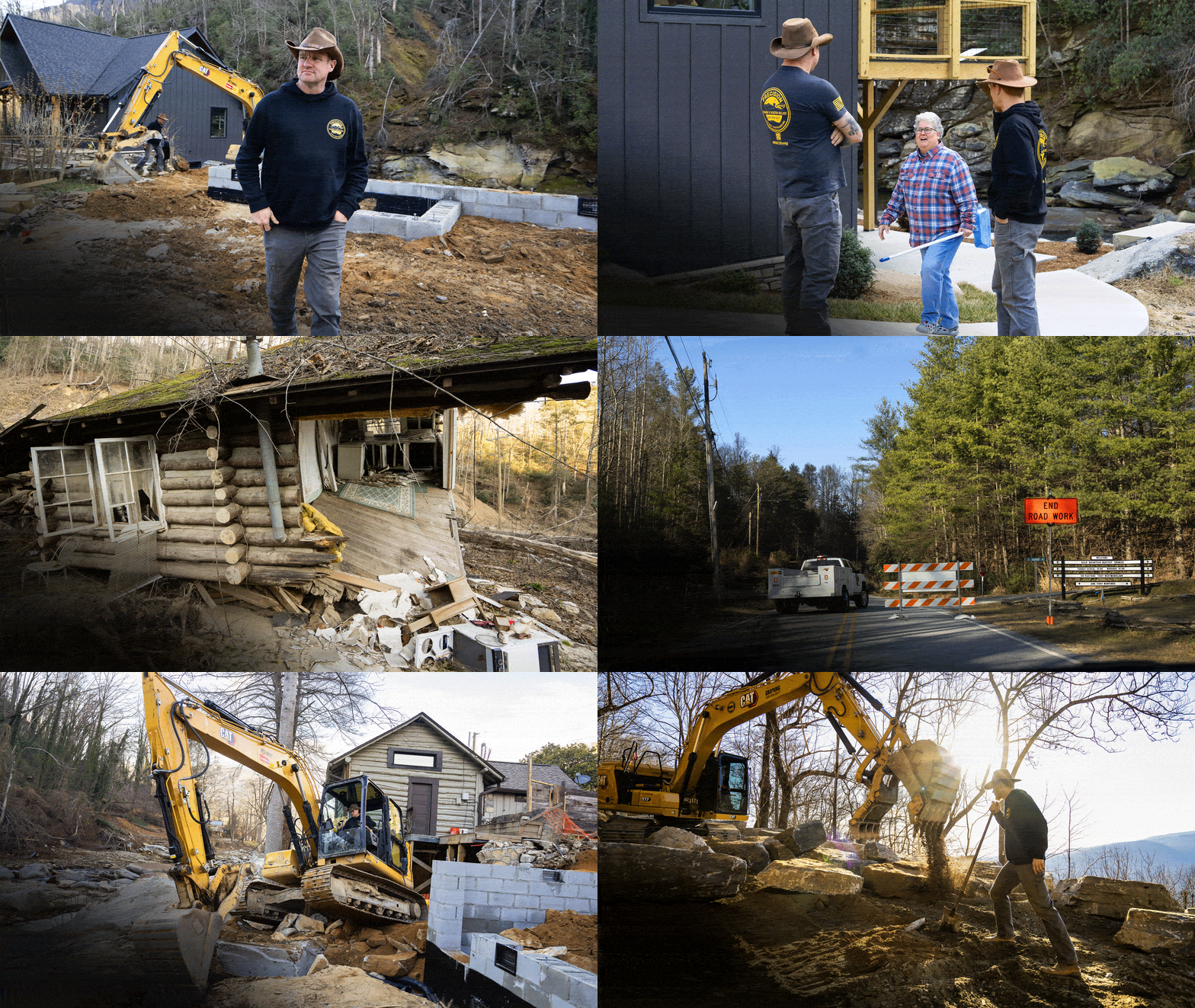

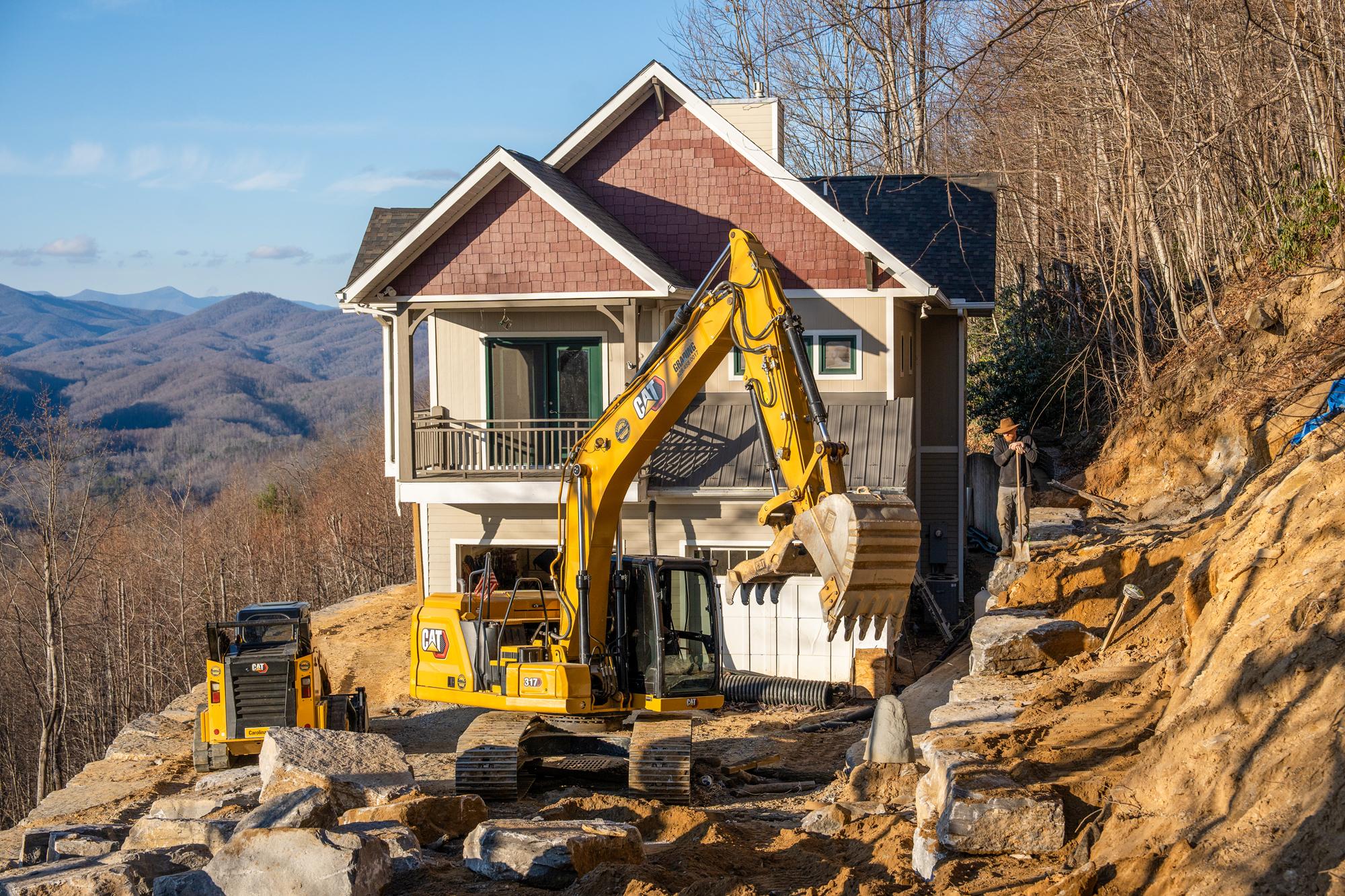
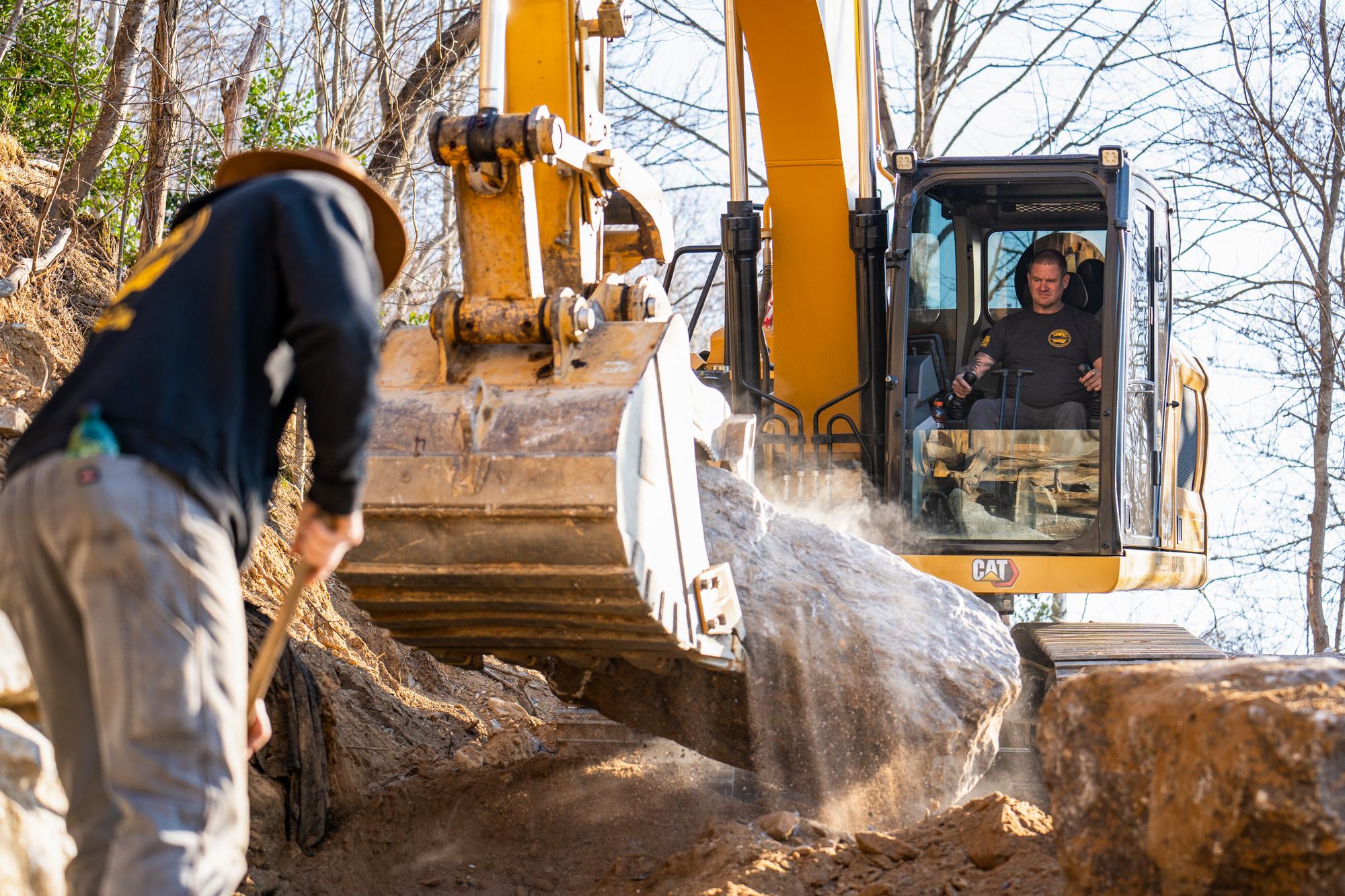
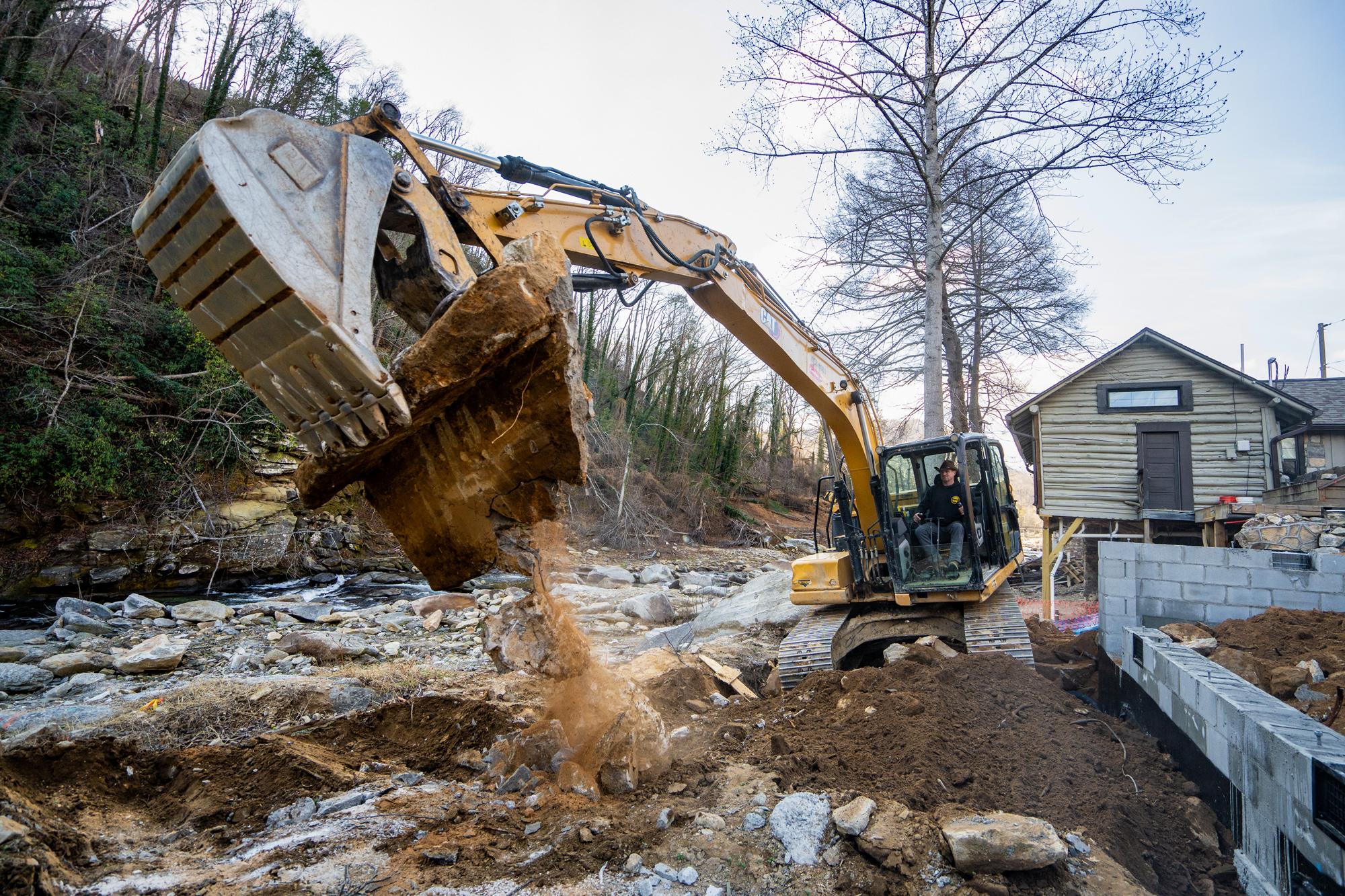
BLACK MOUNTAIN, N.C.—Boom! Boom! Boom!—the sound reverberated through the crisp mountain air as Jake Jarvis used his excavator to pound a massive stone into place along a retaining wall.
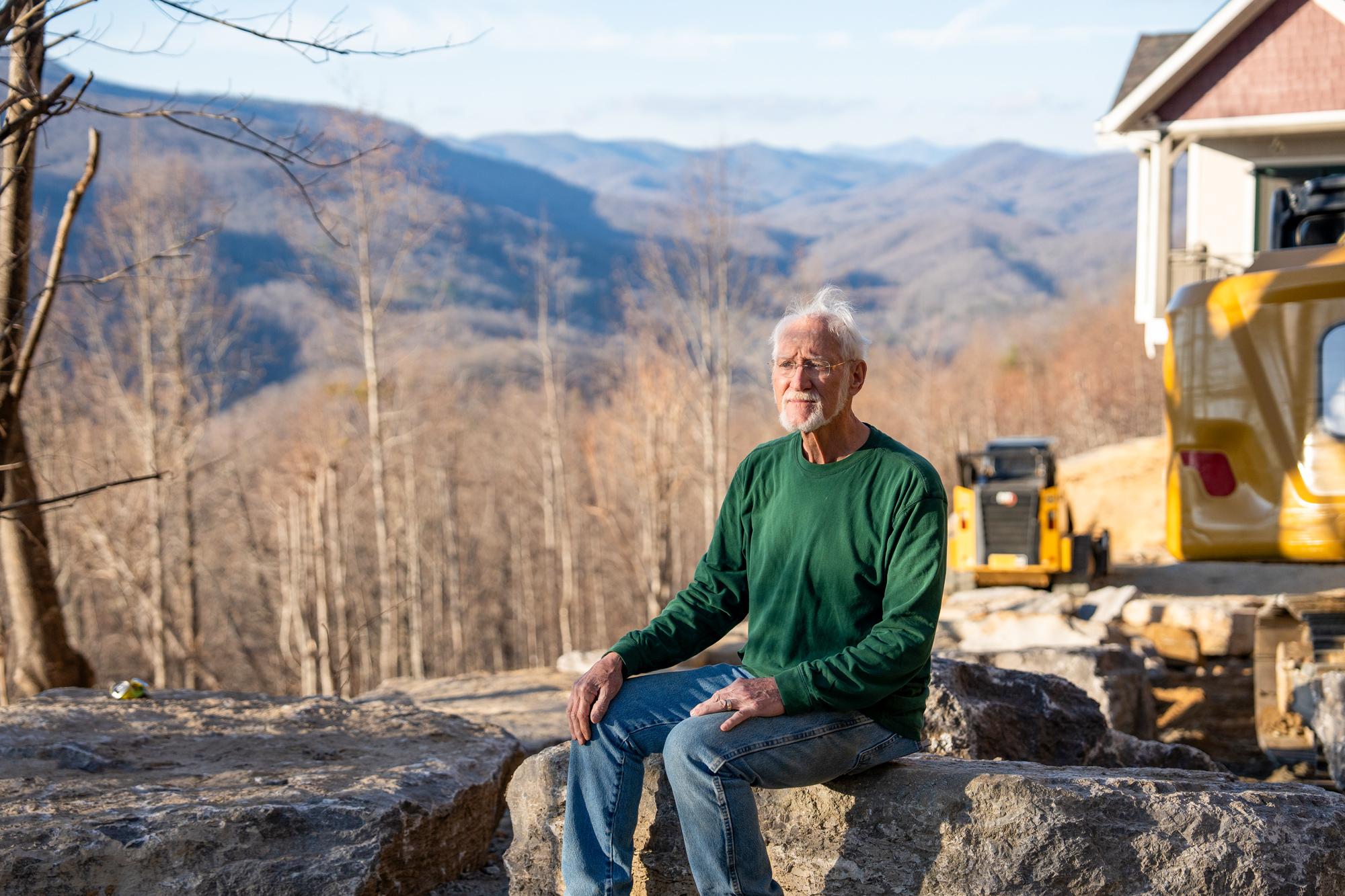
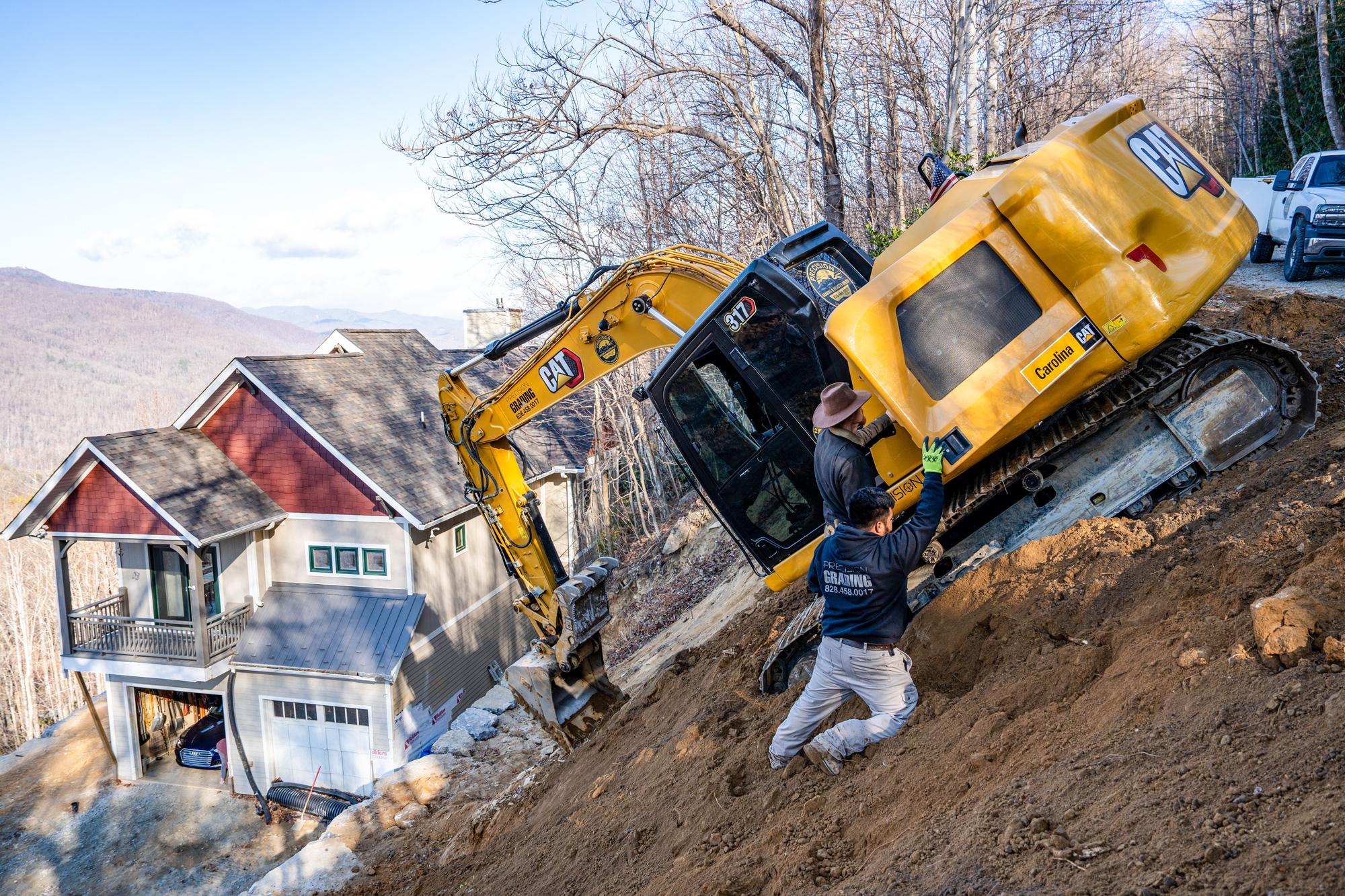
Jarvis, owner of Precision Grading & Disaster Relief, had volunteered to stabilize a hillside that collapsed during Hurricane Helene in September 2024, nearly taking Ray Miller’s house with it.
Massive stones, some weighing 7 tons, dotted Miller’s driveway like tabletops fit for the Hall of the Mountain King, awaiting the excavator.
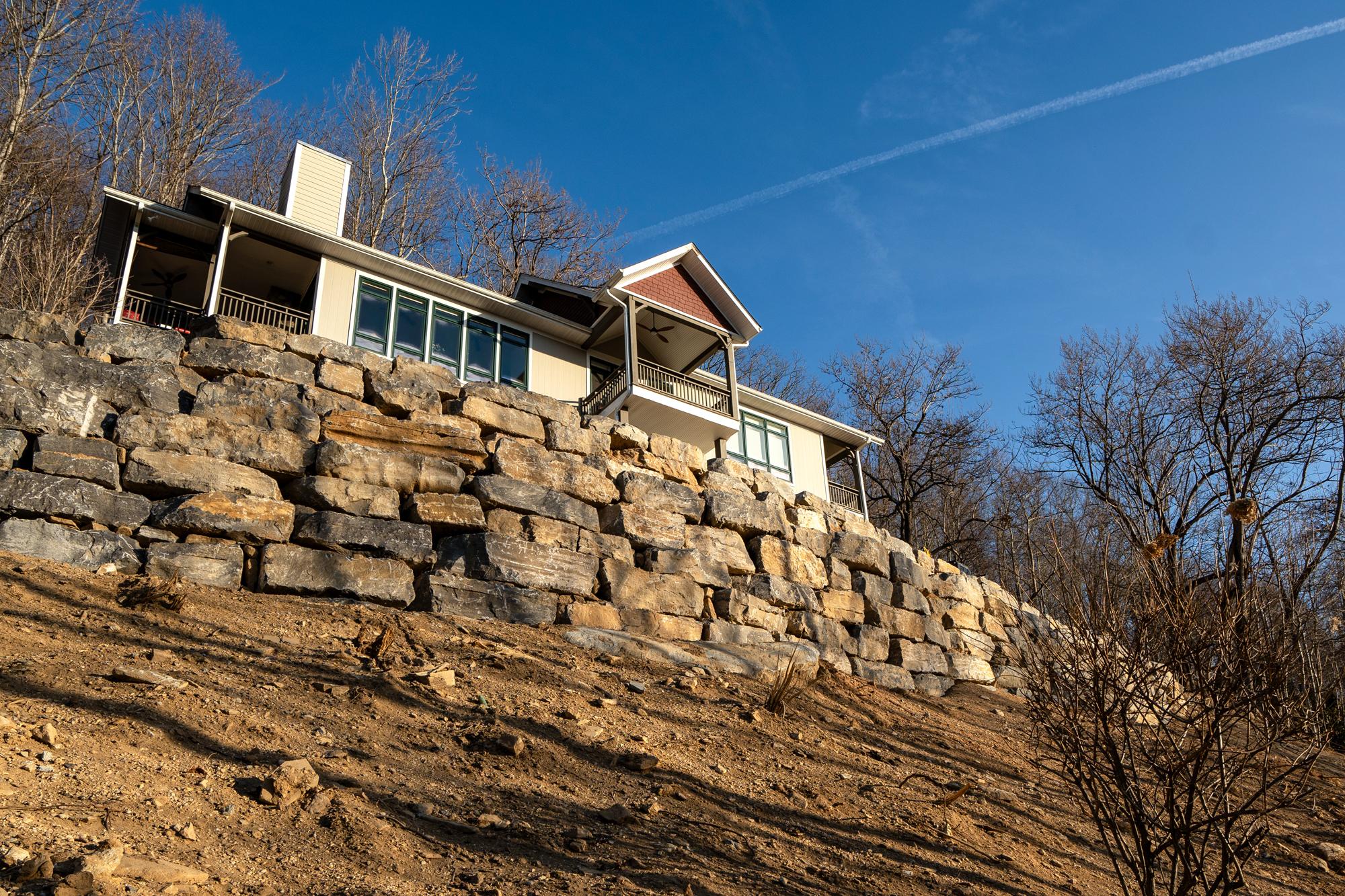
Eventually, Jarvis used 500 rocks the Millers bought to create a beautiful, tiered retaining wall system at no cost to Miller and his wife. He finished the project early in January, after starting it in October 2025.
It has been a long time coming for the Millers. Like many in this mountain community, they are struggling to fix their home more than a year after the disaster.
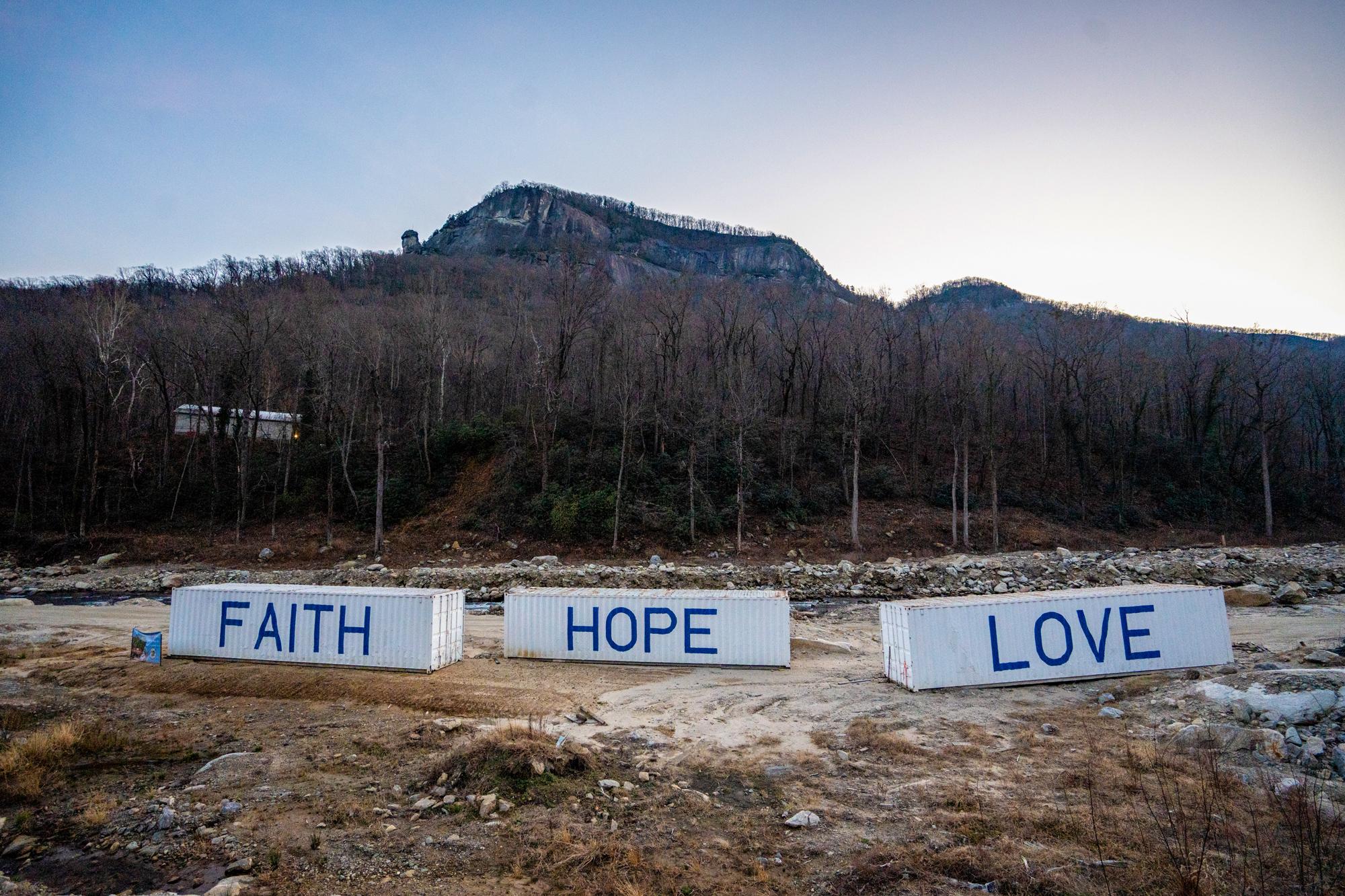
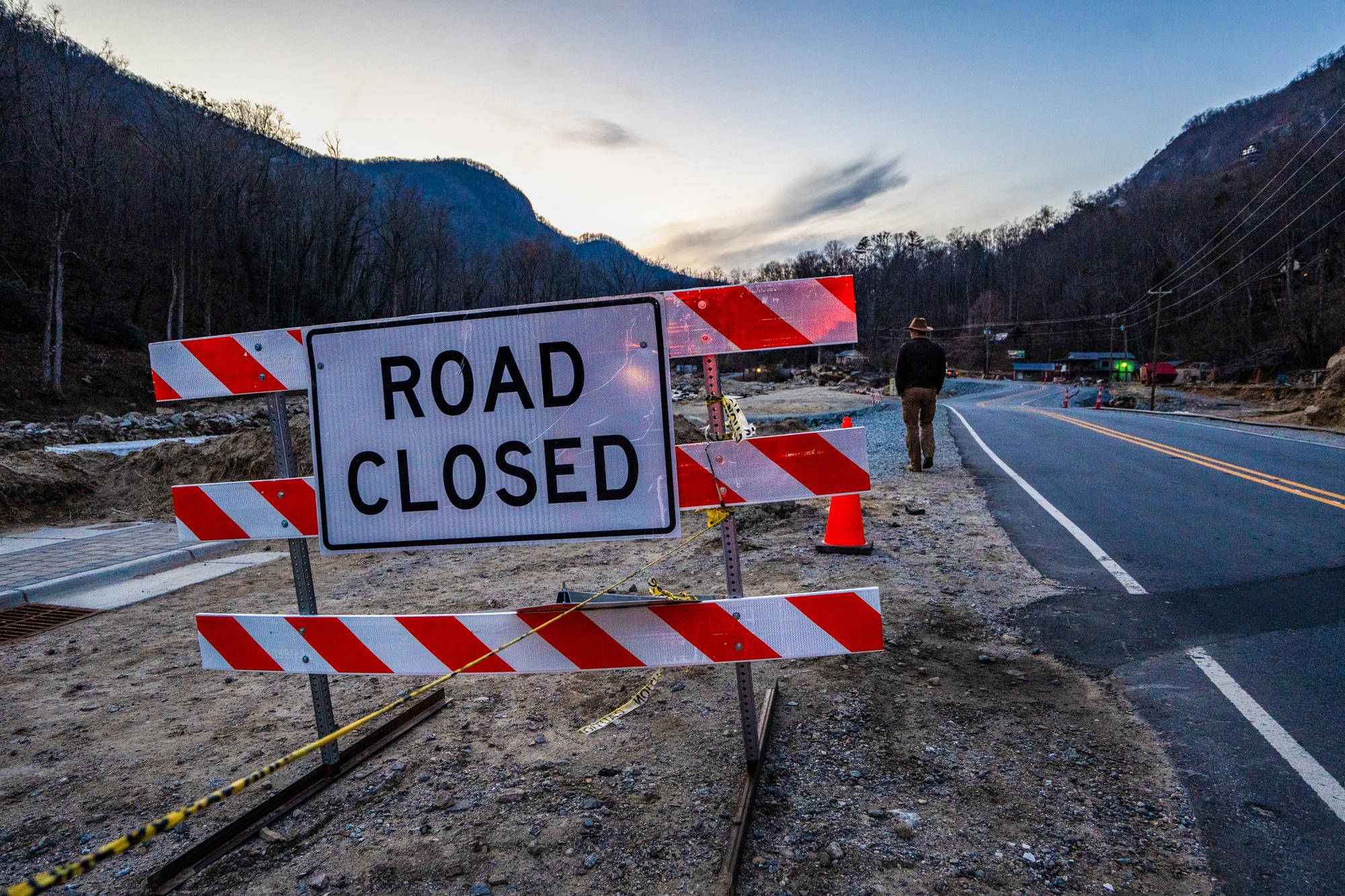
Progress has been made, but the roads leading into Chimney Rock and Bat Cave in North Carolina remain closed to the public. The road to the Miller home—a narrow country road with hairpin turns hugging the mountainside—is closed for construction, except for locals.
Fortunately, Miller and his wife were out of town when the storm struck, sparing them from immediate danger.
Once they made it up the mountain road about two weeks later, they were greeted with devastation.
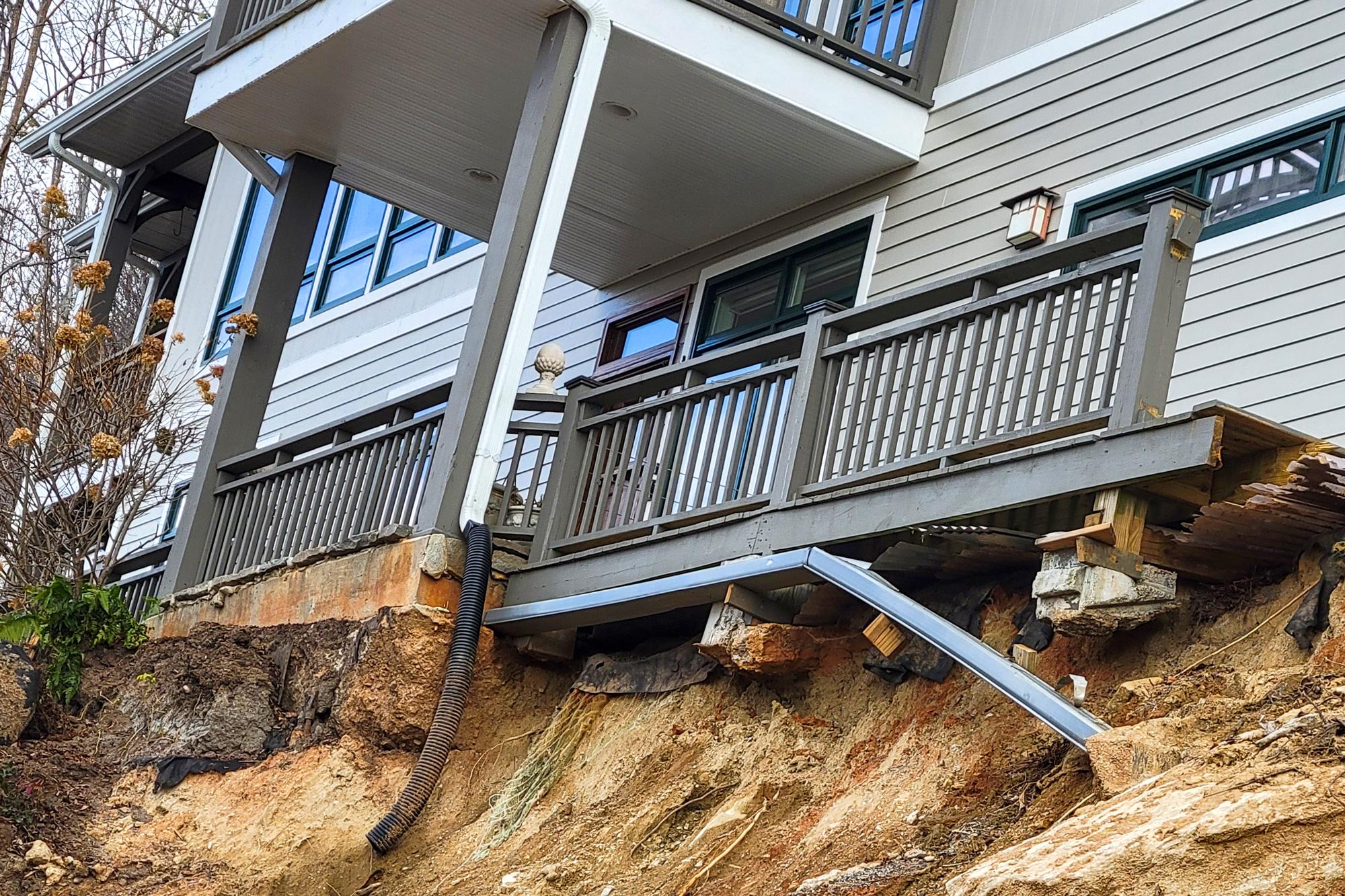
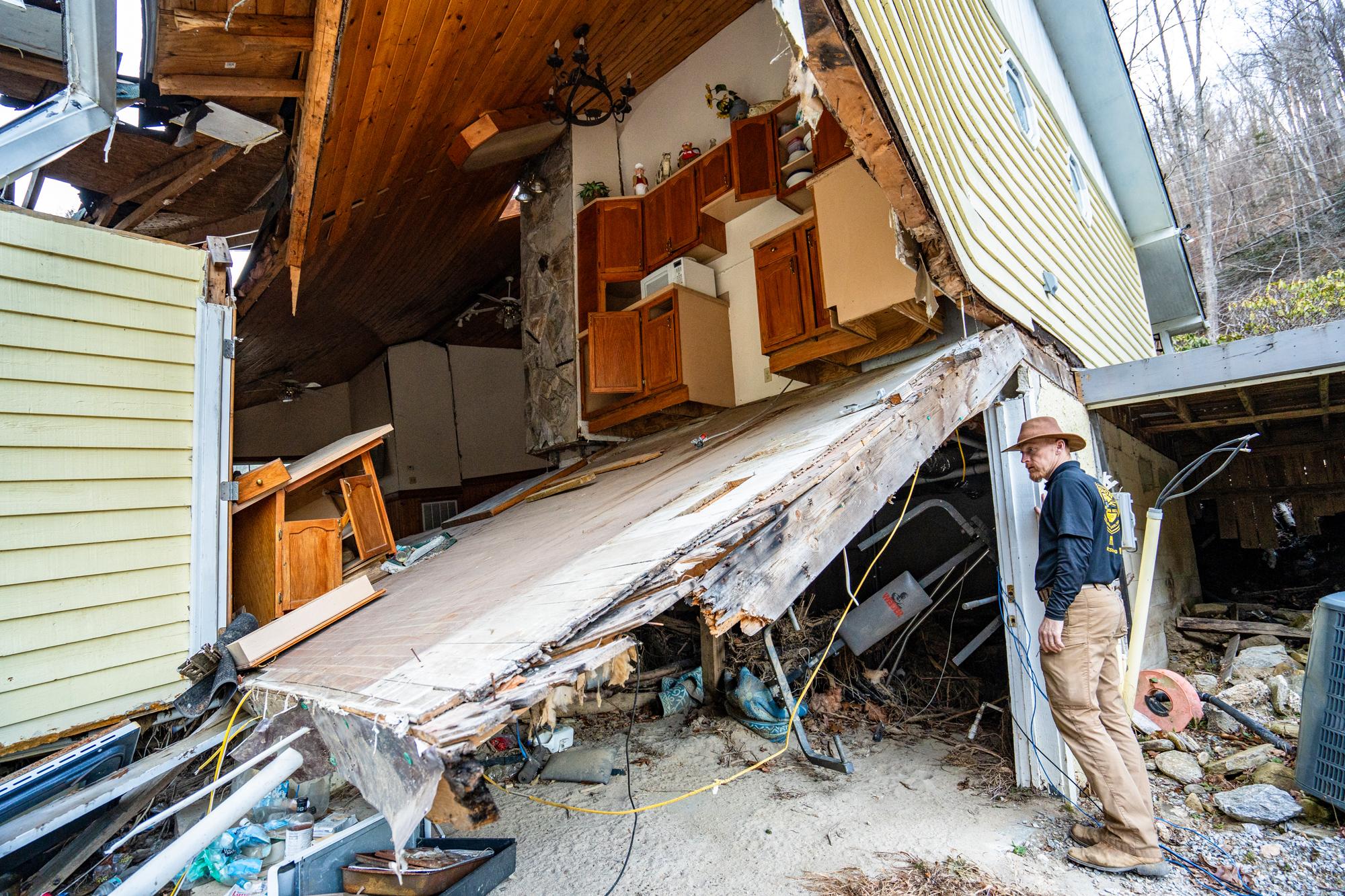
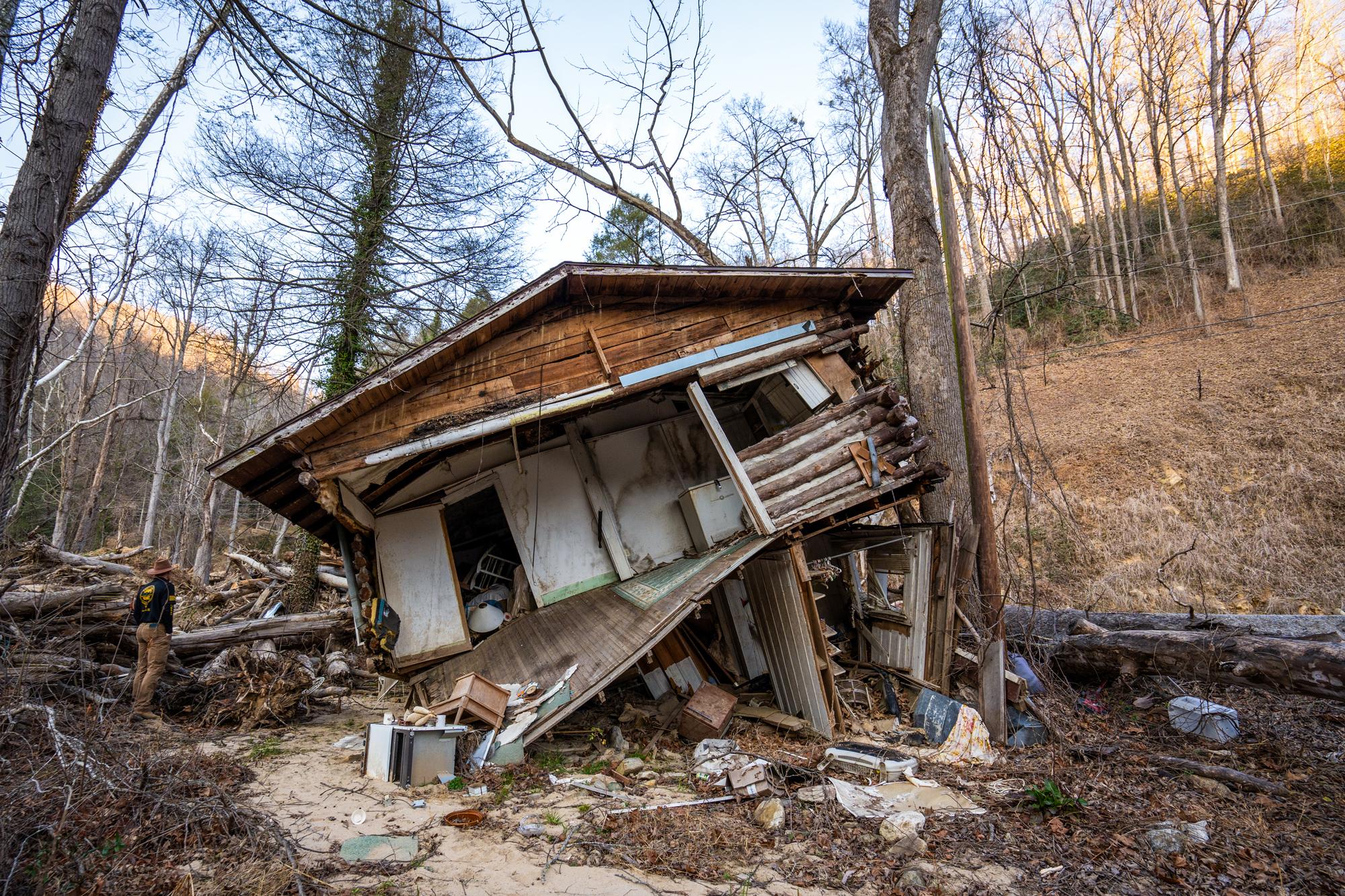
The hurricane ripped up trees, triggering a mudslide that covered their driveway and filled their garage with dirt and debris nearly to the ceiling. Two giant boulders had tumbled down the hillside, landing in the driveway among felled trees.
Miller said heavy rain washed out much of the foundation, leaving the home clinging to the mountainside.
Trouble on the Mountain



Miller’s neighbor was not so lucky. He lost his life during the storm.
“He was out trying to mitigate damages because the house was filling up with mud and debris [when a mudslide hit],” Miller told The Epoch Times.
“I guess it came like an avalanche, so fast he couldn’t get out of the way,“ he said. ”They were looking for his body every day for 10, 11 days.”
Miller said his insurance did not “pay a penny” and that the Federal Emergency Management Agency (FEMA) paid only $20,000 toward an estimated $890,000 repair bill, which was far more than what the couple paid for the house.
“We thought we were safe here,” Miller said. He has spent $250,000 on rebuilding so far.
That did not leave the retirees with many options. Then Miller heard about Jarvis’s work repairing people’s properties and contacted him on Facebook.
The repair job was not for the faint of heart.
As usual, Jarvis documented his efforts on Facebook with a photo of his excavator cutting into the steep hillside.
“It’s never too steep when you’re the only hope they have,“ he wrote. ”God always provides a way.”
“They’re elderly,“ Jarvis told The Epoch Times. ”This is their final home. They are buying these rocks. I was concerned that if we had a big rain, the house would take another hit.”
America’s Hardest Worker
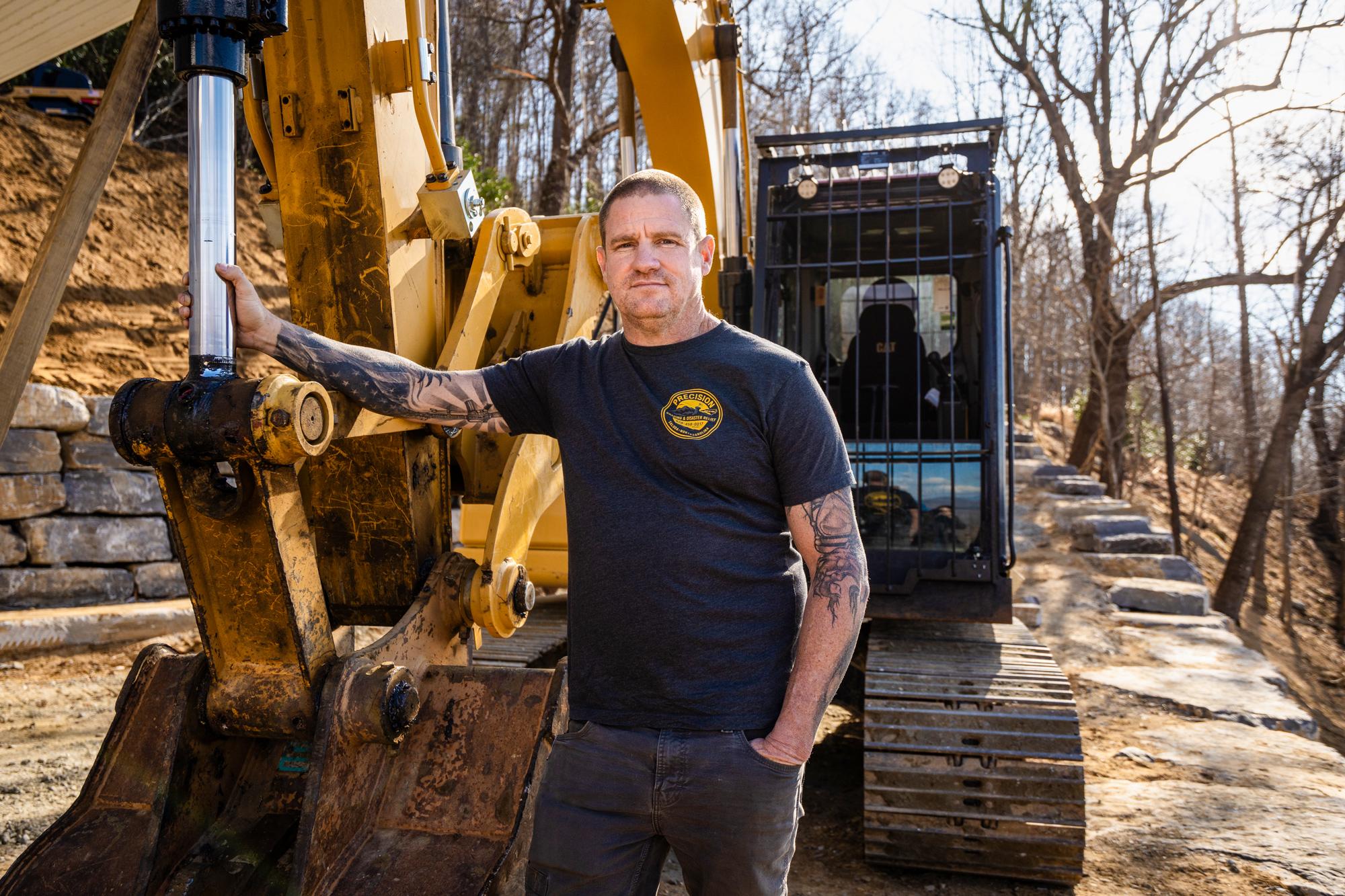
Over the months, Jarvis, who volunteers his time and equipment, has helped some 350 people and businesses in these mountain communities who had lost hope.In their eyes, Jarvis is a rockstar—a town hero.
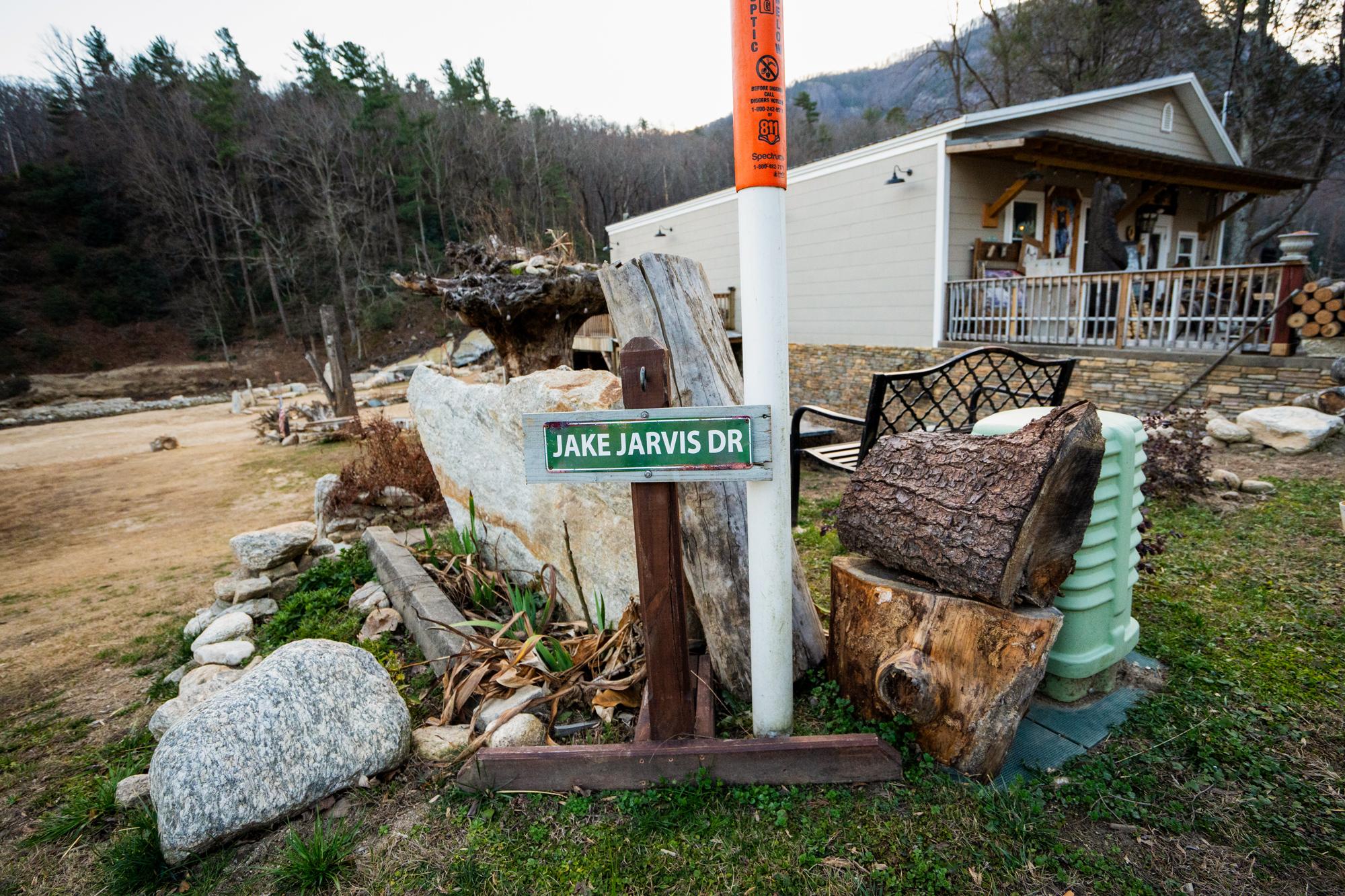
They show their appreciation by purchasing giant Precision Grading banners and hanging them across the front of their homes. One family even named the private road to their house after him. They wave and honk their horns in greeting when he drives by in his pickup truck.
He received the grand prize of $20,000 in the contest after receiving more than 75,000 votes nationwide. Jarvis plans to put the contest money back into his volunteer efforts and pay his crew.
Jarvis said he also received The Great American Award from The Heritage Foundation in Georgia on Jan. 10.
Jake told the audience at the most recent award ceremony that the most rewarding part of helping the people of western North Carolina is knowing that they have a place to live; it’s “seeing somebody who had nothing and lost everything smile again and give them something back.”
His company has been instrumental in rebuilding the Chimney Rock area, repairing retaining walls along the Rocky Broad River, installing septic systems, clearing roads and downed power lines, and leveling lots for residents and businesses, all at no charge.
Jarvis recalled working some 230 days straight before taking a Saturday off.
The military veteran, who loves God, country, and community, said donations have slowed. Outsiders do not know that roads are still closed and lives remain in limbo.
A Few Good Men
Helene, a Category 4 hurricane, struck Florida on Sept. 26, 2024, leaving a trail of death and destruction as it traveled northward into North Carolina.Jarvis began volunteering after he dug himself out of his Saluda, North Carolina, home that September, never imagining that it would become a full-time mission.
The devastation left in Helene’s wake was breathtaking. Mudslides were everywhere. That worried Jarvis, because with the cell towers down, there was no way to reach his friend near Chimney Rock.
So he went out right after the storm with three of his crew members and a mini excavator and headed down U.S. Route 64, only to find it totally blocked.
“It just looked like a bomb went off, you know, coming from Hendersonville,” he said.
”I teared up looking around,” he recalled. “I realized how great the need was.”
So he and his crew unloaded the equipment, grabbed chainsaws, and started clearing the road of trees, debris, and downed power lines.
Two days later, they reached the Highway 64 bridge over the Rocky Broad River, but it had washed out. So he crossed in a tiny boat with a rope, finally reaching the community of Bat Cave.
While there, he met the fire chief, who was desperate for help. All the townsfolk were cut off with no road access.
That day, Jarvis and his crew of volunteers cleared Highway 74 from Gerton to Bat Cave on their own.
People with damaged or destroyed homes and businesses began asking him how much he would charge for repairs.
Red Tape and Rebuilding
Jarvis drove his pickup to a meeting at the address of a home destroyed by trees and boulders just outside of Chimney Rock in early January.He joined Mark Goldfuss, the builder for Spokes of Hope out of North Myrtle Beach, South Carolina, along with Kim Freeman and Dayna West of Rutherford County Habitat for Humanity.
All are working together to provide funding or labor to the future homeowner, Valerie Romero, at no cost.
They met with a county permitting representative to discuss rebuilding the home.
Rebuilding is difficult because many septic permits are outdated or limit the number of bedrooms, Jarvis explained.
“If your septic was washed away, no, you can’t build your house back,“ Jarvis said as they mulled over a solution for the victim. ”Sorry. Your land’s worthless.”
Goldfuss said, “Tell us what we can do, not what we can’t do.” The volunteers stood around the empty lot strewn with boulders that had been washed down the mountainside.
Goldfuss said many volunteers are skilled tradesmen but not licensed in North Carolina, complicating the rebuilding process.
Some who want to rebuild on their lots must continue paying their old mortgages, meaning that they are paying double mortgages. For others, the financial burden is too great—they walk away and let the bank foreclose. Romero is fortunate because she will have only one mortgage.
Double Trouble
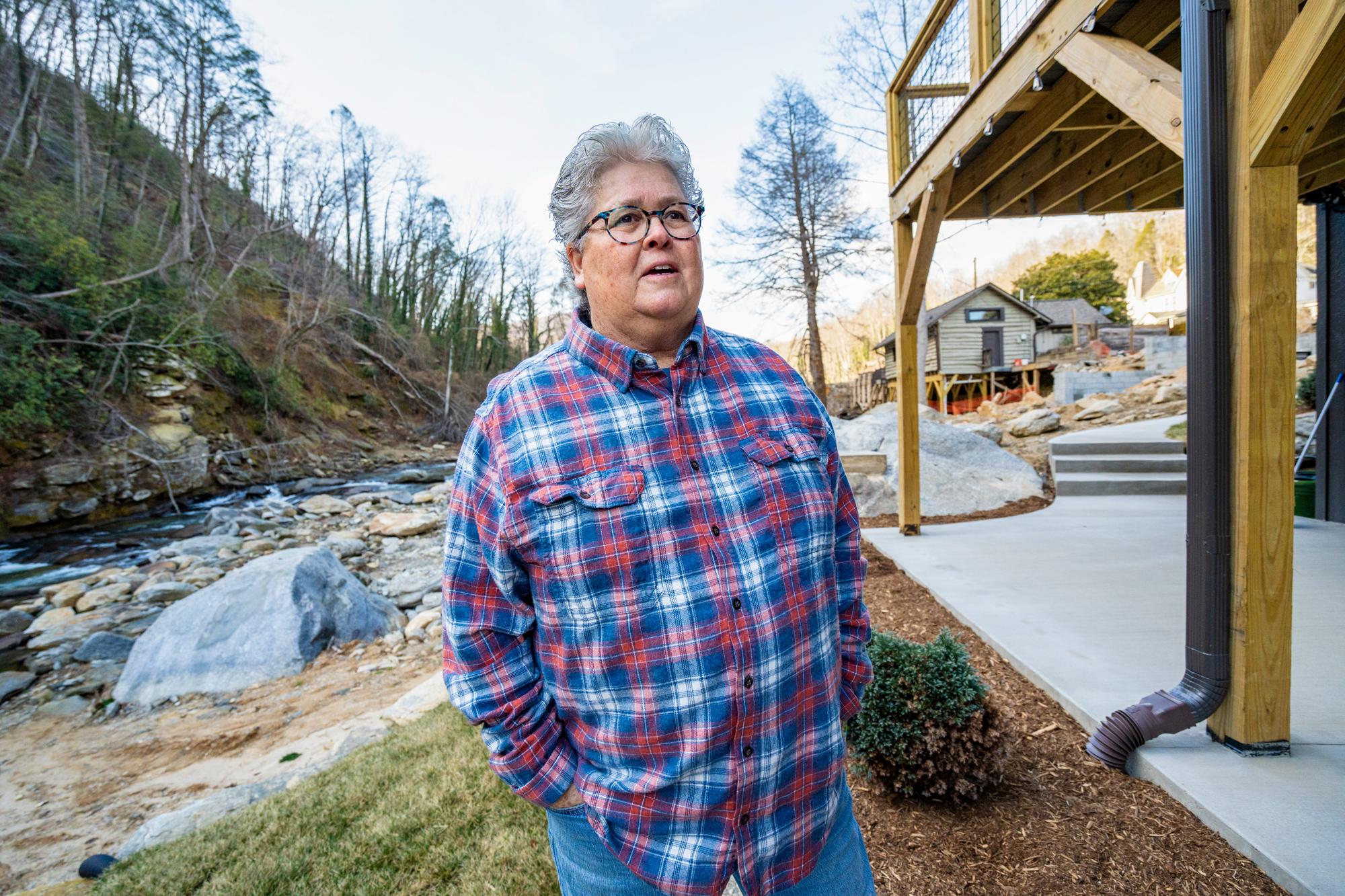
Cheryl Johnson and her spouse, who live in Bat Cave, found themselves in that situation. They now pay two mortgages.Their property sits along a river that became a raging torrent, all but washing their home away.
They are still paying for the home that was destroyed. Soon, they will have to begin paying for their new home—one of the first to be rebuilt in Bat Cave.
Johnson said they survived the hurricane thanks to a neighbor, who came pounding on their door as water rushed into the street, surrounding their house.
“‘You’re an island,’“ she recalls the neighbor yelling over the roaring storm. ”'You’re an island. You gotta get out!’”
They waded out of the front of their home with their dogs and made it to higher ground, sheltering under a neighbor’s porch.
Johnson said she thinks that if they had waited any longer, they might have died. The river rose close to the roof at the back of their house, which faced the river, in a matter of minutes.
Like others, Johnson said their homeowners’ insurance did not pay anything.
“We had riders for water intrusion,“ Johnson said. ”We had riders for paying for a place to stay while repairs were done. The second they deem that it’s a flood, you get nothing.”
Dealing with FEMA was an exercise in patience and perseverance, she said. FEMA only paid $42,500 for the house, but nothing for the contents, although she appealed.
It was hard enough trying to find the money to build a new home, she said. What made it worse was the estimated $17,000 cost to remove what remained of the old home.
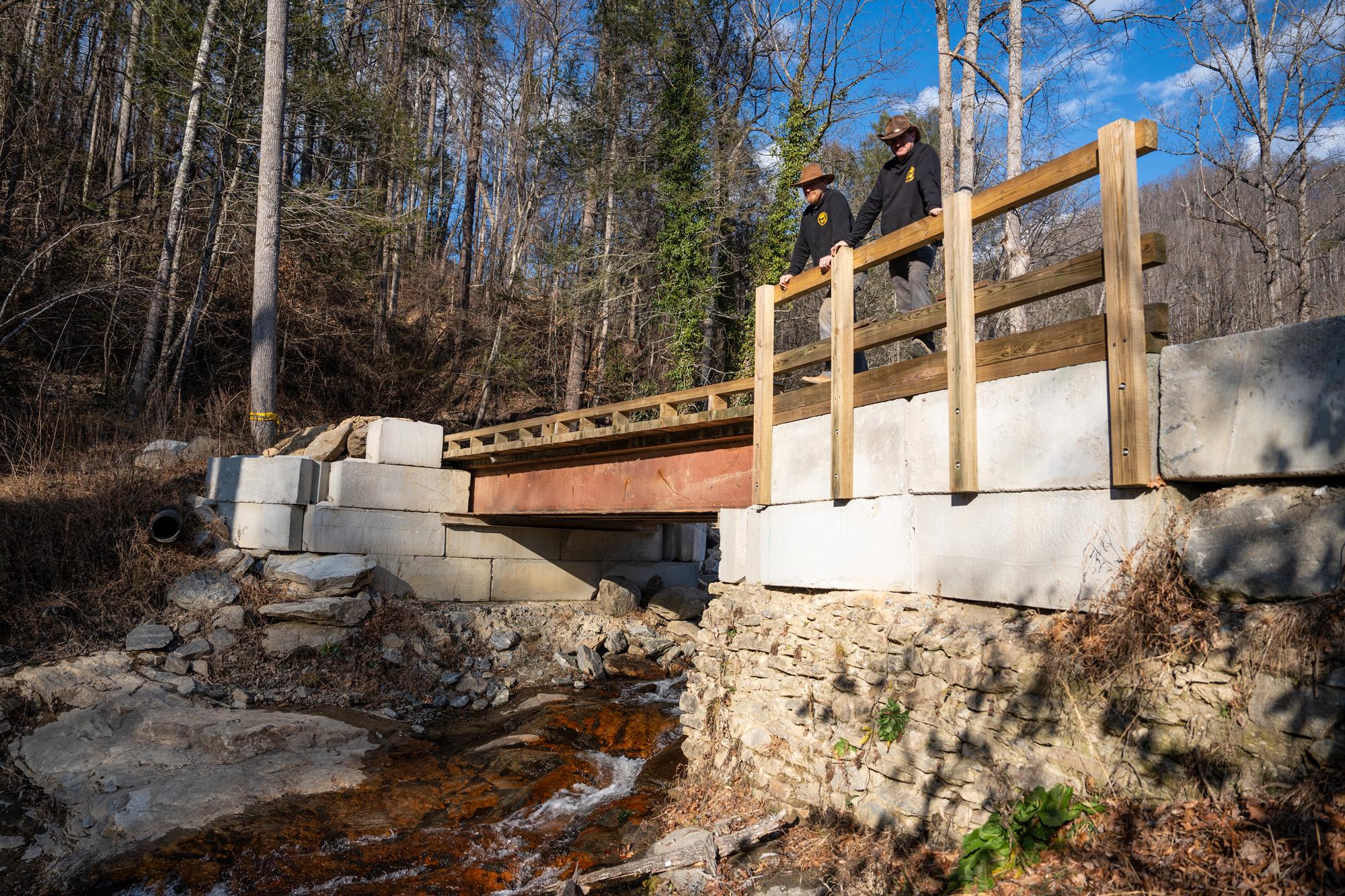
But then they met Jarvis, who cleared and leveled the lot for free. Later, he reinforced the riverbank below the home with rocks left by the flood.
“We’re the lucky ones,” she said. “I mean, we built the house with the kindness of strangers, people donating product, time, money.”
“You know, this reminds you that there’s still good in this world,” she said.
Their new home sits upon a hill overlooking the now serene river.
Hope Floats
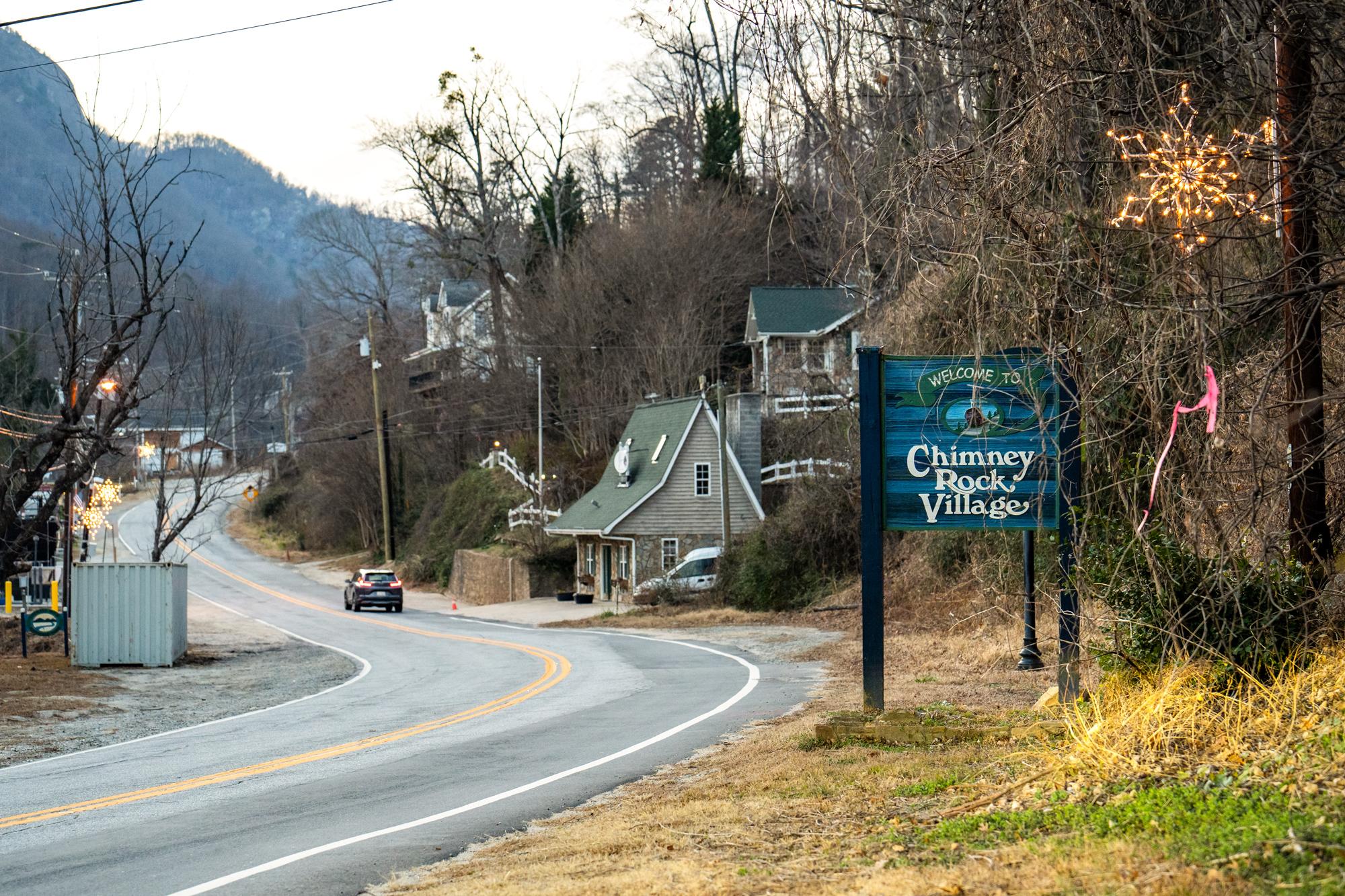
Chimney Rock Village has about 140 residents, according to 2020 Census data.There are fewer people now. Helene claimed three lives near Chimney Rock, which sits in Rutherford County.
The raging river chewed into the village’s Main Street, leaving much of the road washed away. The storm destroyed most of the homes and businesses in the Chimney Rock area, according to the report.
But hope floats here.
Stephen Duncan, the village’s administrator, said the town received assistance from FEMA and had some funds on hand.
“I don’t care what anybody says, we’re very pleased with FEMA,” he said.
A collaborative effort by volunteers—people who gave their expertise, loaned equipment, and put in sweat equity—has helped rebuild the town.
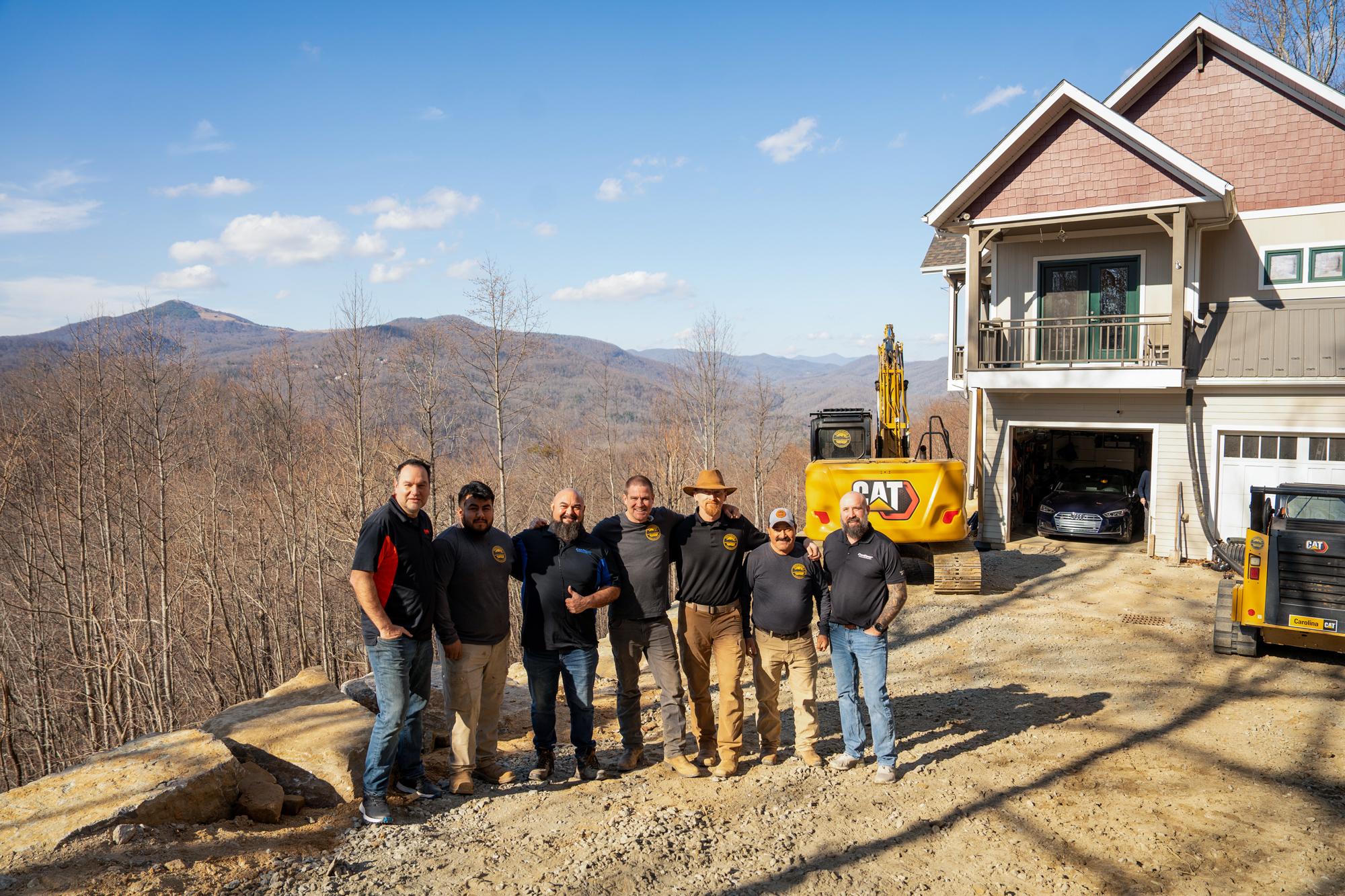
“We were lucky, because we had [Jarvis] helping us clean up the river, help us stabilize the [river] banks,“ Duncan said. ”We had Spokes of Hope come in and rebuild for free, and got all the materials we needed.”
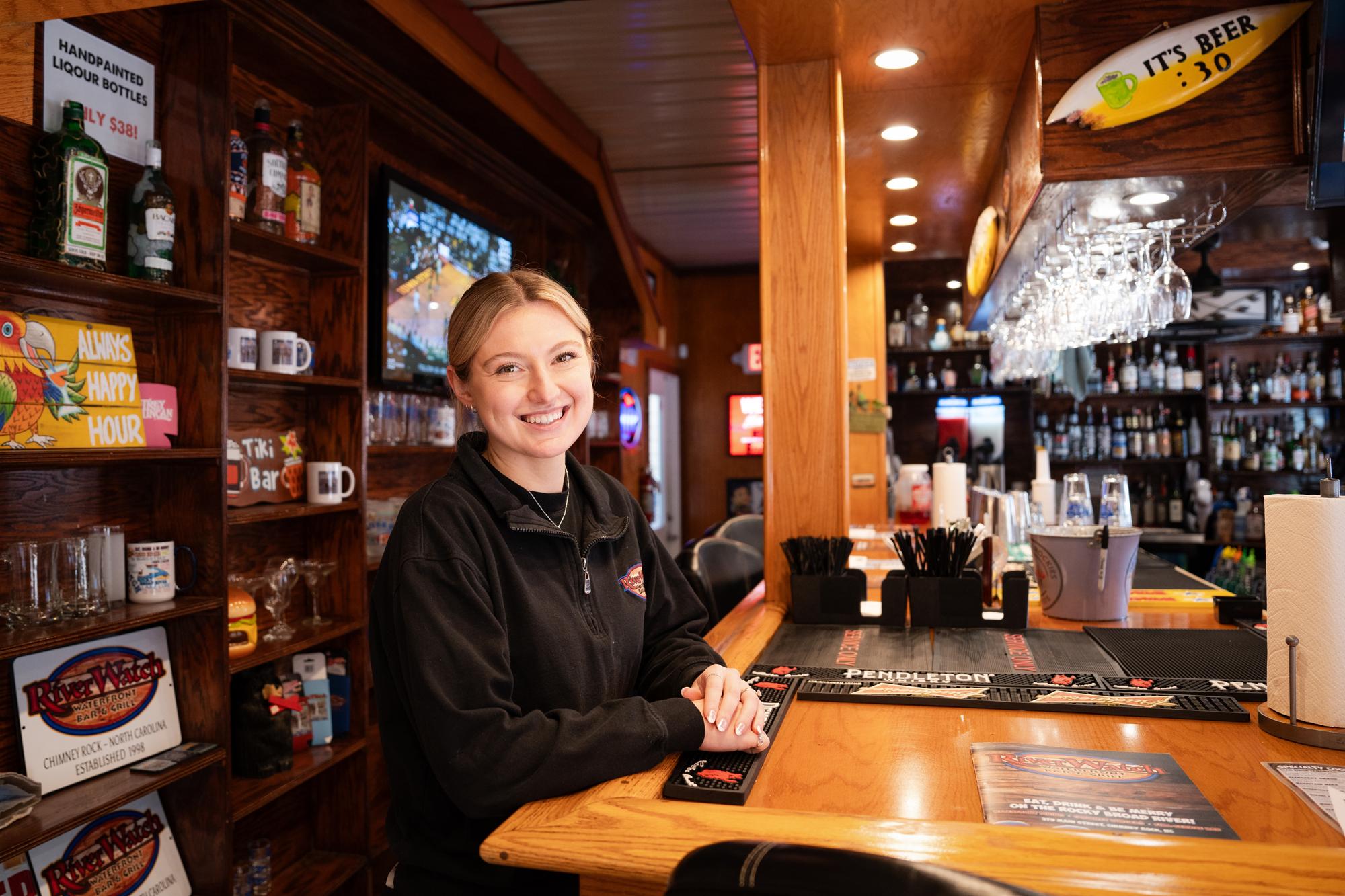
RiverWatch Bar & Grill on Main Street was bustling on a Tuesday afternoon in the first week of January.
Shelly Banz-McCormack, whose family owns the eatery, said the town and its residents are grateful for Jarvis, who leveled and graded the restaurant’s parking area.
“He is a local hero,” she said. “We’re really lucky to have him here in this community, and just feel very blessed.”
Nick Sottile, owner of Broad River Inn and Chimney Rock Adventure Golf, which sustained major damage, said he was ready to move on after the storm.
“Let’s just say we were ready to pack up and move out of town,“ he said. ”It was hard to see a future when everything was destroyed, and [Jarvis] brought that vision to us.”
Jarvis and the other volunteers saved the town, but he is so humble that he would never say that about himself, Sottile said.
“Without him and the other volunteers, the town would have been a ghost town,” he said.