Wolf attacks on cattle in Northern California have triggered ranchers and rural residents who are demanding more reliable compensation for their losses and the right to defend themselves and their herds.
The state has recorded hundreds of wolf attacks on cattle since wolves returned to California, and as ranchers drive their herds to higher pastures during the mid-summer season, they’re worried about more carnage.
Last year, wolves attacked and killed or injured 198 livestock, the California Department of Fish and Wildlife (CDFW) reported. Ranchers in Sierra County were hit the hardest, with 56 wolf attacks, followed by Plumas County with 48, Lassen with 47, and Siskiyou with 25.
The worst offenders were the Beyem Seyo wolf pack with 90 attacks, followed by the Harvey pack with 38 and the Whaleback pack with 25.
This year, the latest published data from the agency show 26 such wolf attacks up until April. But Axel Hunnicutt, the statewide gray wolf coordinator for the CDFW, told The Epoch Times on July 17 that there have been at least 41 confirmed or probable livestock losses—almost all cattle—attributed to wolves so far this year.
That brings the number to more than 400 in the state since 2015.
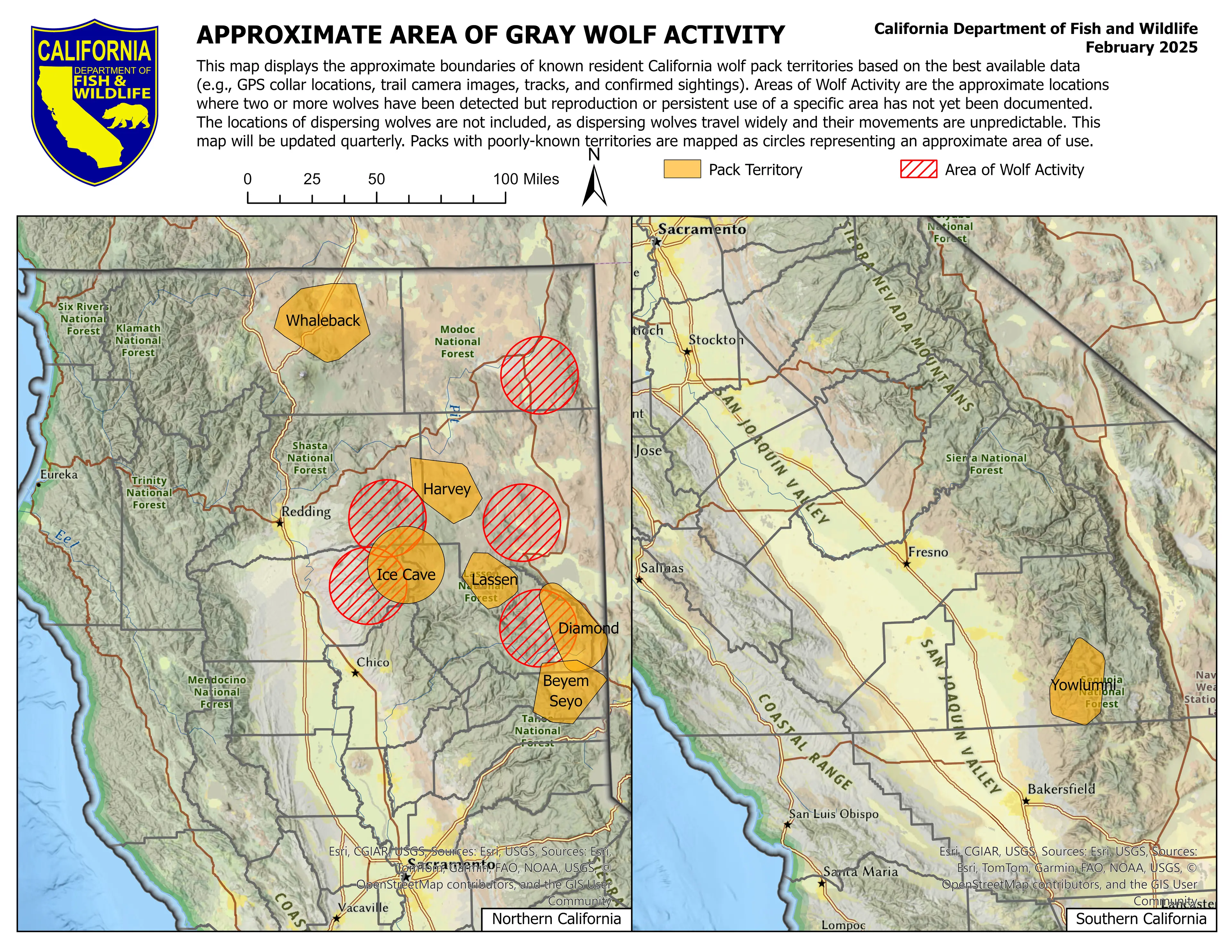
With at least 50 wolves among nine known wolf packs now in the state, attacks on livestock have generally increased year after year, said Hunnicutt, a wildlife ecologist who leads the agency’s wolf conservation efforts and partnership with the University of California–Berkeley’s California Wolf Project. The program, largely funded by the CDFW, studies and manages the state’s gray wolf population with support from the National Geographic Society.
Although the California Wolf Project’s preliminary data indicate that about 92 percent of the Whaleback wolf pack’s diet in Siskiyou County is cattle, Hunnicut expects the percentage to be lower in the final report, which has not yet been released to the public.
The preliminary data were based on one summer (2024) in a two-year study. But because wolves—including the Whaleback pack—tend to prey more on deer and elk in the winter, Hunnicutt expects the percentage to drop substantially when winter diets are taken into account.
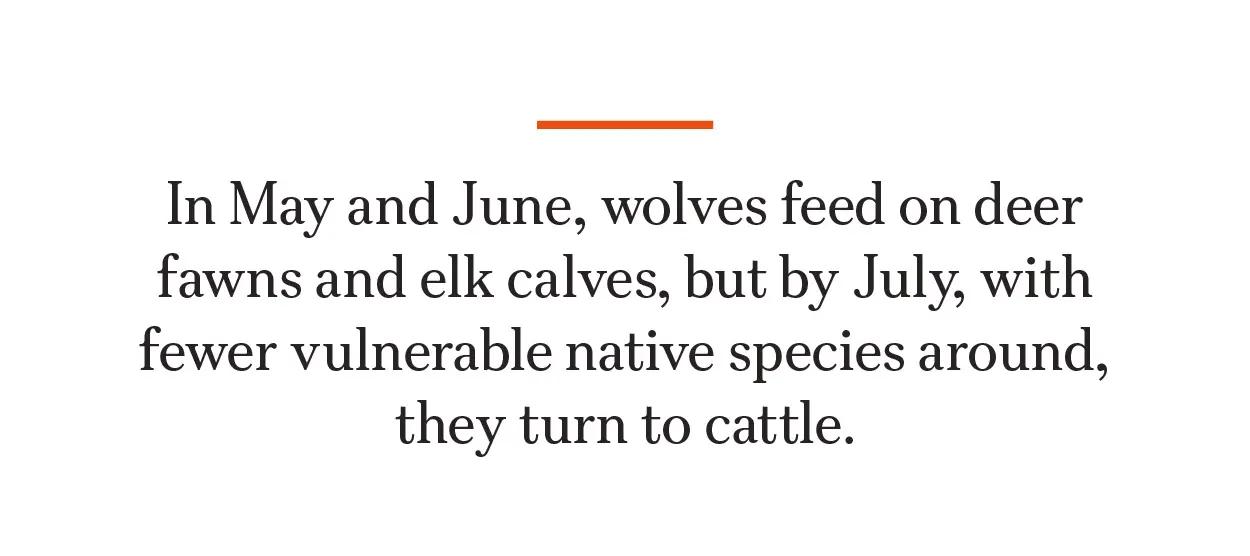
In May and June, the wolves mainly feed on deer fawns and elk calves, but by July, when there are fewer vulnerable native species around, these opportunistic hunters will turn to cattle as ranchers drive their herds—including 80-to-200-pound calves that are easy prey—up to grazing allotments in higher elevations, Hunnicutt said.
The sooner ranchers can get their herds to open pastures in the mountains and the longer they can keep them there, the more they can reduce feed costs. But this comes with greater risks of cattle losses to wolves, mountain lions, bears, and coyotes, which can seriously harm young calves, he said.
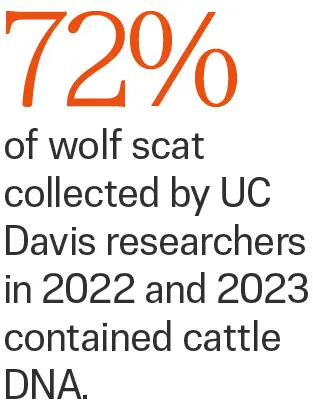
Another study conducted by the University of California–Davis found that wolves from the Lassen and Harvey packs in northeastern California were mainly eating cattle. Researchers collected scat samples during the summer months of 2022 and 2023 and found that 72 percent of wolf scat contained cattle DNA.
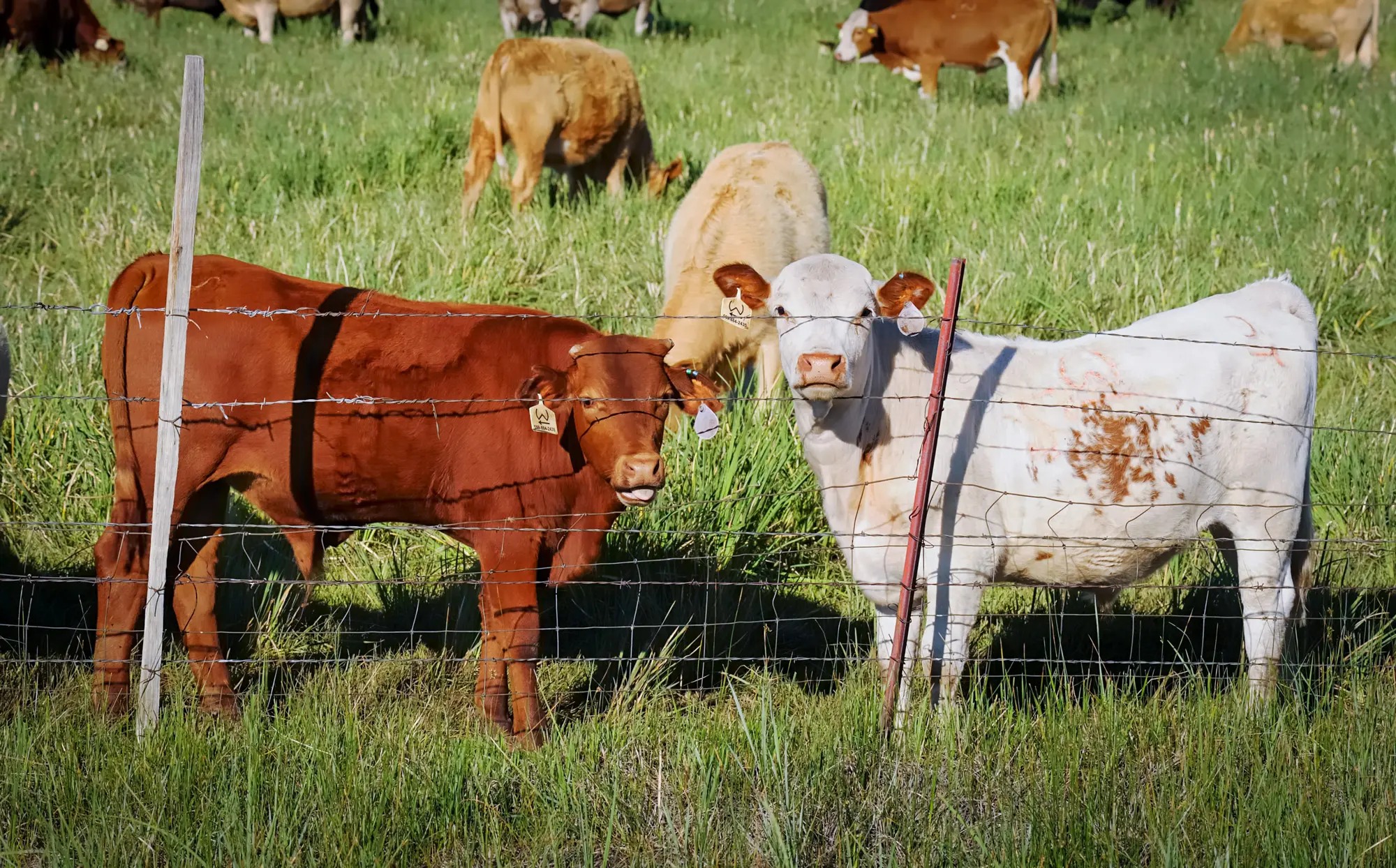
The study concluded that California wolves “primarily satisfy their caloric requirements through livestock consumption, underscoring the considerable challenges posed by coexistence of wolves and humans within the state.”
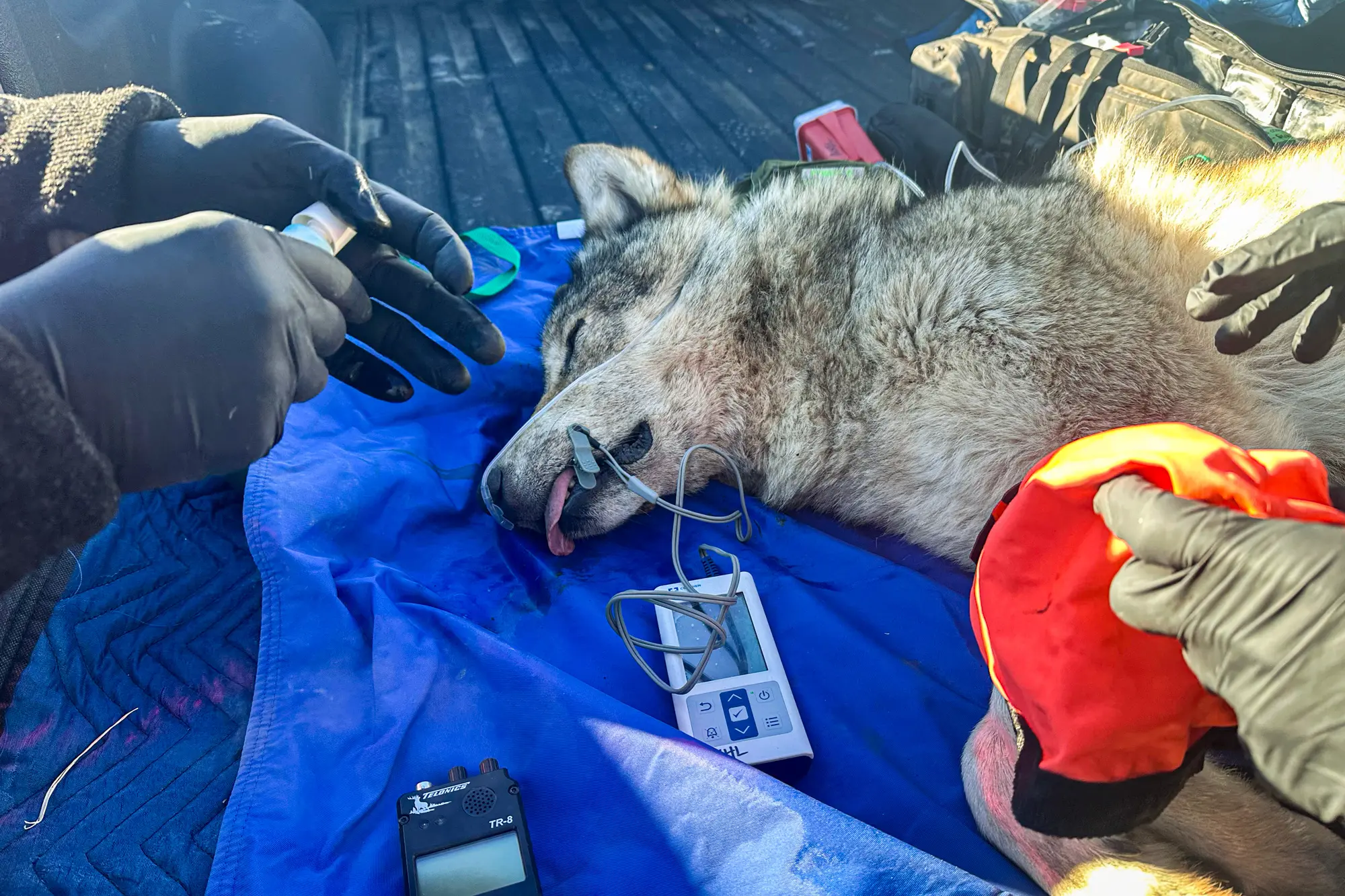
While ranchers have asked for more accurate real-time data on the locations of wolves, Hunnicutt said if the agency ramped up data transmission from wolf collars to every five minutes, the batteries on the collars would die within weeks.
Capturing and re-collaring wolves that often is unrealistic, and chasing them down with helicopters in high summer temperatures would exhaust and kill them, he said.
Calls for Legislative Change
State Assemblywoman Heather Hadwick (R-Alturas) is working to address the plight of California ranchers.
“The wolf crisis is no longer a future concern. It’s happening right now. The impacts are real and they’re growing,” she said at a press conference in July.
Hadwick introduced two legislative bills this year to address the wolf problem, but she withdrew one—Assembly Bill 1673—after opposition from Democrats.
The bill would have allowed ranchers, with authorization from the CDFW, to use nonlethal deterrents such as pepper-balls and tear gas to haze wolves and protect herds.

Meanwhile, Assembly Bill 1722 would create an exemption for using necessary force against wolves to prevent immediate bodily harm and clarify that Californians have the right to defend themselves or their family from a wolf or mountain lion under the California Endangered Species Act. The bill has advanced to the Senate Appropriations Committee, where fiscal impacts will be considered.
Both bills are about giving rural communities practical, “common-sense tools” to protect their families, livestock, and way of life, said Hadwick, who has also called for full replenishment of the Wolf-Livestock Compensation Program’s fund to reimburse ranchers for killed and injured livestock.
While the Fish and Wildlife Department is doing what it can to address the problem, the agency is expected to respond to the “rapidly growing crisis,” without enough funding for staff and resources, Hadwick said.
The least the state can do is provide the resources, compensation, and management tools needed to help ranchers through this crisis, Hadwick said.
“This is not what true coexistence looks like. Coexistence means everyone has a seat at the table,” she said.
“It means that you’re listening not only to the advocacy groups, but also to the ranchers who feed our state, the sheriffs who respond when communities have concerns, and the wildlife professionals tasked with managing these growing conflicts.”
Sheriffs Seek Action
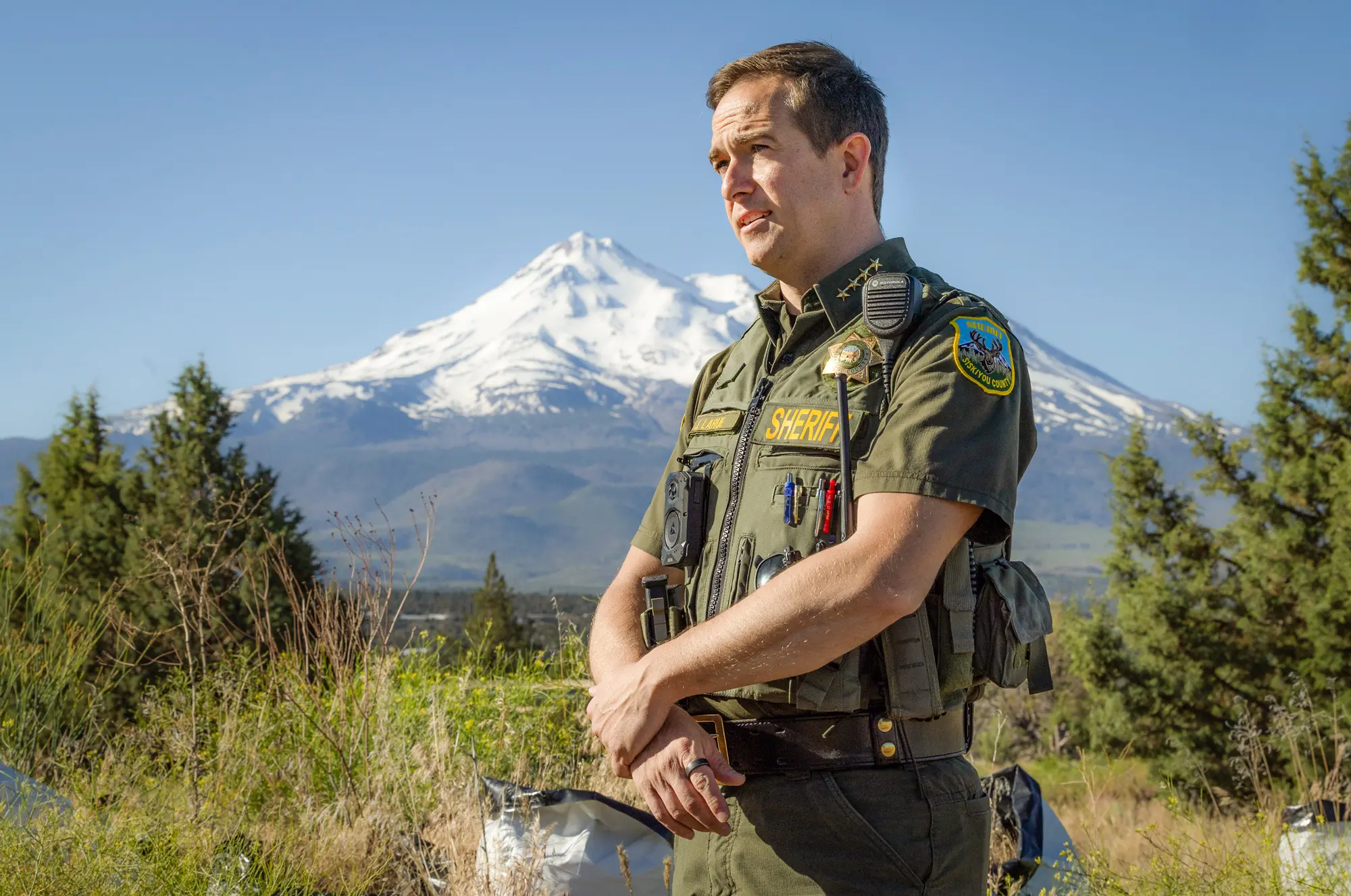
At the press conference, Siskiyou County Sheriff Jeremiah LaRue called on the state to step up its efforts to manage the wolf crisis.
The state has done “a terrible job of wildlife management,” LaRue said.
“They don’t know how many wolves we have,” he said. “They don’t know the food that the wolves eat. We have ungulates—deer and elk—but they don’t know what we have in the county.
“We have an animal that is eating beef. It is killing livestock.”
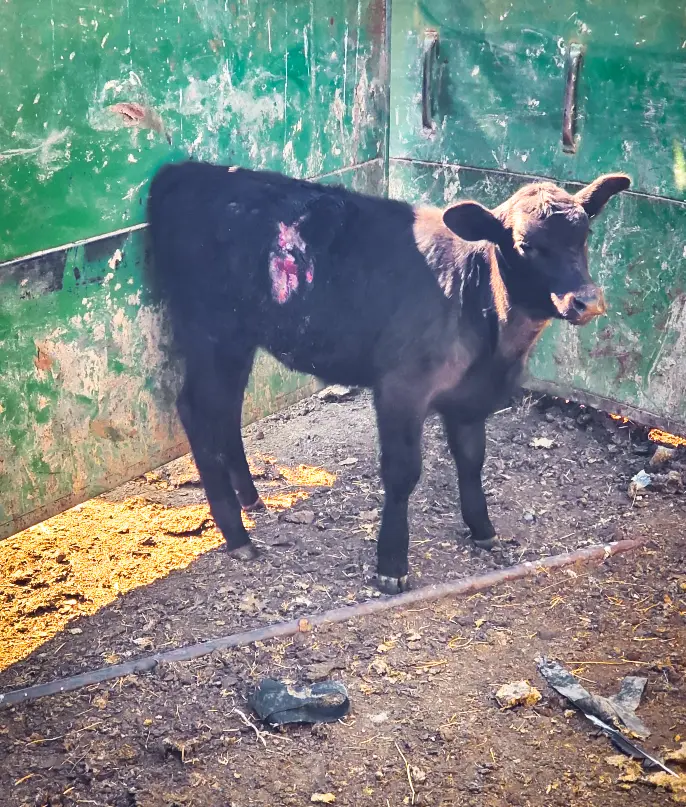
For the Whaleback pack, cattle are not an occasional kill but the main staple in their diet, LaRue said.
LaRue said sheriffs in California’s northern counties have faced challenges dealing with the Department of Fish and Wildlife.



“Imagine being a producer with cattle ... and your polygon lights up. It’s like, well, within that six-mile [area], there could have been a wolf, maybe yesterday,” he said.
“To date, that’s the best we have. We’ve been trying to work on some agreements to get better information quicker for the producers, but it’s just been chaos, honestly.”
Sierra County Sheriff Mike Fisher said rural communities aren’t actually “coexisting” with wolves—at least not the way “extremely powerful” wolf advocacy groups portray.
“This is not coexisting,” he said. “The apex predators have been allowed just to continue to exist and cause havoc—not coexist through management.”
A Rancher’s Nightmare
Shirl Woodson, who runs a cattle operation with her husband in northeastern Siskiyou County, said at the same press conference that when wolves are near, the couple searches the ranch every morning for dead cattle.
“We might only find a blood spot, we might find a bone, or we might find a cow or a calf. This goes on day after day,” she said.
“So think about it. If I came to your home and destroyed your property and destroyed your livelihood, and you couldn’t call the sheriff because there was no recourse, how would that affect you?”
Woodson says she often wakes up at night listening for wolves. The morning searches take hours away from other work that needs to be done on the ranch.
“I’m tied up dealing with the wolves, and we aren’t compensated for it,” she said. “This is a home invasion ... and we have no resources to help ourselves. We’ve done everything we can.”

Woodson described an encounter last spring when two big gray wolves about 80 feet from her front door stalked three of her dogs, and she ran out of the house to rescue them.
“After that, I’ve had nightmares every single night about wolves,” she said. “We shouldn’t have to live in constant fear.”
Seeing the maimed and mangled bodies of their cattle has also taken its toll, Woodson said.
“This affects us. And it’s not the wolves’ fault. Wolves are doing ... what wolves do,” she said. “The problem is the wolves aren’t being managed.”
With less and less deer and elk herds left on the landscape, cattle are now their main prey, Woodson said.
“We’re not in the business of raising cattle to feed the wolves,” she said. “We’re in the business of feeding the people of our country.”
State Sen. Shannon Groves (R-Bakersfield) said ranchers should have every right to use nonlethal force such as paintball guns or tear gas to deter wolves.
“This is about basic self-defense and preventing devastating loss of life, injury, economic losses to our farms and ranches and individuals in rural areas of our state,” she said.
Lack of Funding?
Hadwick told The Epoch Times in her email that she believes CDFW staff “are doing the best they can” with the tools, funding, and laws they’ve been given.
“The problem isn’t the people—it’s that the system isn’t working,” she said.
The Beyem Seyo wolf pack in Sierra County is a perfect example, said Hadwick, referring to the authorized killing last fall of four wolves notorious for attacking cattle.
“By the time lethal removal was finally authorized, those wolves had already learned that cattle were an easy food source,” she said. “We should be putting effective tools in place much earlier, before that behavior develops.”
The agency needs additional funding and resources to respond more quickly, support ranchers better, and stay ahead of the problem instead of constantly reacting to it, she said.
Hadwick said she has been working to connect technology companies with the agency to explore better ways to track wolves, improve information sharing with ranchers, extend the battery life of GPS collars, and develop more accurate methods of monitoring wolf populations and livestock interactions.
“There are technologies available today that could make a real difference, and we should be using them,” she said. “There isn’t one silver bullet, but there are several things we can do that would make a real difference.
“Ranchers aren’t asking for special treatment. They’re asking for practical solutions, reliable support, and policies that recognize the realities they’re facing every day.”

Hadwick pointed out there is currently “zero funding” in this year’s state budget for the Wolf-Livestock Compensation Program to pay ranchers for cattle lost to wolf attacks.
CDFW put out a press release on July 1, the first day of the 2026–2027 fiscal year, indicating that leftover funds from the $2 million allocated in last year’s budget were disbursed to nonprofit groups to indirectly benefit ranchers.
But Hadwick’s office clarified there is “no new money” to fund the program in the 2026–2027 state budget.
However, $1 million was allocated to another program called the Human Wildlife Conflict Program, which deals not just with wolves but other wildlife attacks on animals in both in rural and urban areas.
Return of the Wolf
By the 1920s, the North American gray wolf was essentially wiped out in California, and decades later was listed as a recovering endangered species protected under the California Endangered Species Act and the federal Endangered Species Act.
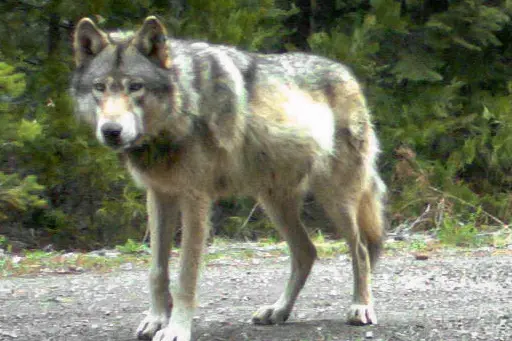
The CDFW has been tasked with monitoring and managing the state’s gray wolf population ever since a lone wolf, known as Oregon Wolf OR-7—a descendant of wolves moved from Canada to the United States in the mid-1990s—made its way to California in 2011.
The agency claims wolves were not reintroduced into California but “returned to the state on their own.” But some skepticism about how wolves returned to the state still exists among ranchers.
Amaroq Weiss, an attorney and the senior West Coast wolf advocate at the Center for Biological Diversity, told The Epoch Times that although wolves have been protected under the federal Endangered Species Act since the mid-1970s, it took another two decades to reintroduce them into the United States because many people see them as “killing machines.”
In the mid-1990s, North American gray wolves from Canada were captured in the provinces of Alberta and British Columbia and reintroduced in Wyoming and Idaho—31 in Wyoming inside Yellowstone National Park and 35 in central Idaho’s Frank Church–River of No Return wilderness, she said.
As their populations grew, offspring of the Idaho wolf pack moved into Washington state and Oregon, and their descendants eventually made their way to California, Weiss said.
Debate Over Delisting Stalled
Proposed federal legislation, House Bill 845 and a companion bill, S. 1306, seeks to delist the gray wolf as an endangered species nationwide. Both bills are pending review by the Senate Committee on Environment and Public Works.
Weiss said gray wolves remain threatened. “There are five threat factors that the agency has to analyze before they can remove or reduce protections for wolves, and there clearly are still threats remaining as we have been able to demonstrate in court filings,” she said.
Those threats are habitat destruction, overutilization, disease or predation, inadequate regulatory mechanisms, and other natural or manmade factors.
Weiss said in January that several past attempts to delist or downlist gray wolves have been struck down by the courts.
Each time the U.S. Fish and Wildlife Service has proposed a rule, it has received “hundreds of thousands, if not well over a million,” public comments opposed to downlisting protections.
In the past, when wolves were delisted or downlisted, the Center for Biological Diversity and other environmental organizations challenged those decisions in court because they violated the Endangered Species Act, she said.
Amid ongoing debate in Congress over whether or not to delist gray wolves from the federal Endangered Species Act, Hadwick “wholeheartedly” supports the move and says the state should also allow responsible lethal management.
Wolves have successfully expanded their territory across the West, including California, and now should be managed the same way as other wildlife populations, she said.
“We need a balanced approach that allows states to respond to local conditions while ensuring wolves remain part of our landscape,” she said.
What Are Ranchers Saying?
For more than a decade, ranching families have watched wolf packs expand, while doing everything the state has asked of them, she said. They’ve spent countless hours trying to protect their herds, implemented nonlethal deterrents, documented livestock losses, changed grazing practices, used drones, hired range riders, and installed fladry—brightly colored flags hung to deter predators.
Nevertheless, wolf attacks are on the rise and ranchers keep absorbing financial losses, stress and uncertainty, Hadwick said.
“This isn’t just about loss of livestock, it’s about family livelihoods, mental health, public safety, and the future of agriculture in rural California,” she said.
Ranchers have grown weary of the system. “They’re frustrated, exhausted, and they feel like Sacramento isn’t listening,” she said.
“Many ranches span tens of thousands of acres, where finding every calf or determining a cause of death simply isn’t realistic,” she said.
The official numbers “almost certainly underestimate the true impact” wolves are having on ranching families,” Hadwick said.
“That’s why it’s so important that we listen not only to the data, but also to the people living with wolves every single day. Their experiences tell the rest of the story,” she said.
Lethal Removal as a Last Resort?
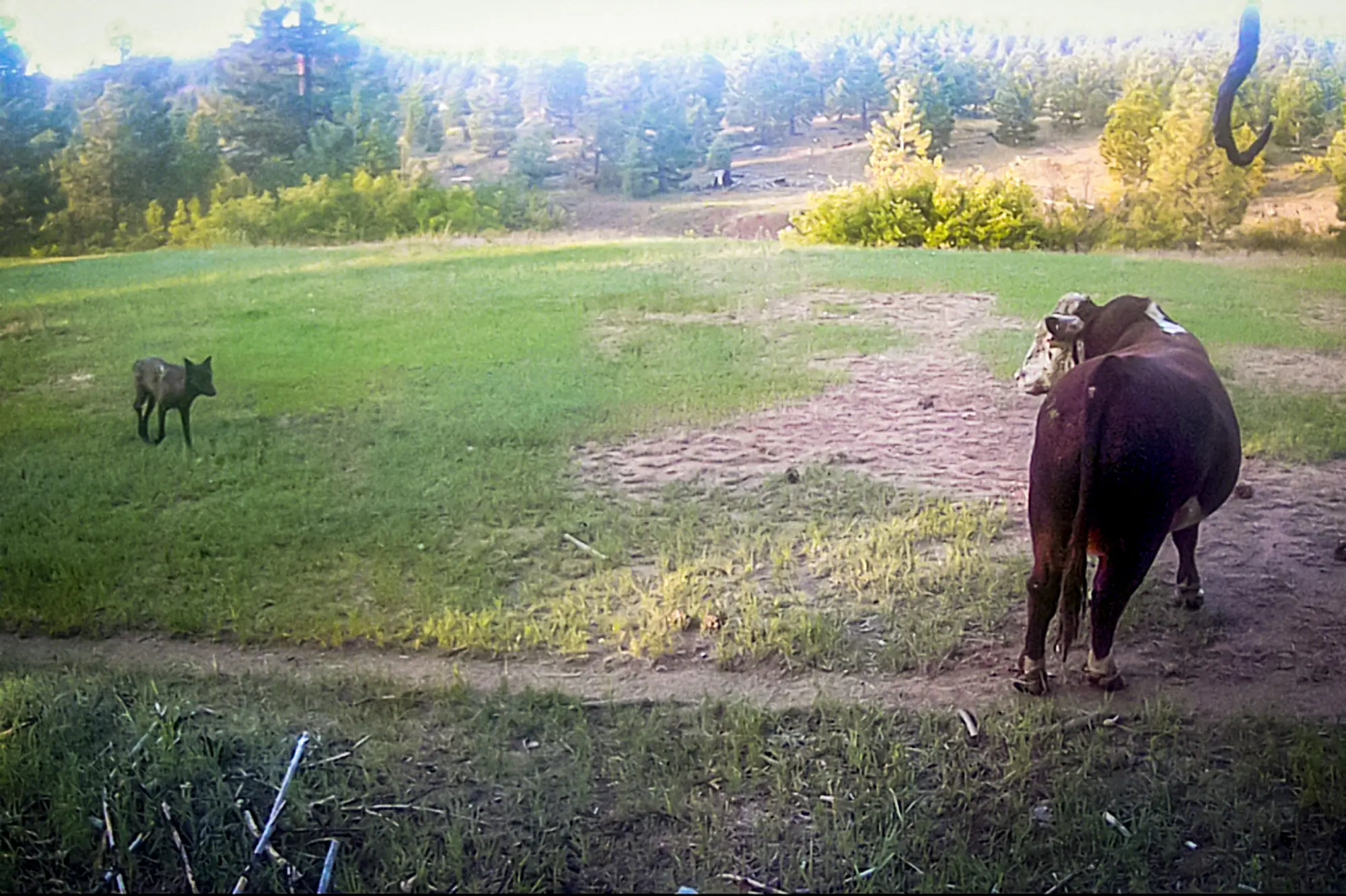
Ben Myhre, a wildlife specialist and wolf liaison for Tehama County, told The Epoch Times he found wolf tracks—likely from the Ice Cave pack—as recently as mid-July.
Although no reports of wolves attacking cattle in Tehama have surfaced, the county is taking a proactive approach to prevent wolves from becoming habituated to cattle.
The “big fear,” he said, is that wolves will train their offspring to kill cattle, Myhre said.
“They’re going to go for cattle just because that’s the only thing they know,” he said.
Myhre, an experienced hunter and conservationist, said the wolves in northern California rely on cattle for sustenance because there’s not enough natural prey.
Tehama County is working toward an agreement with the California Department of Fish and Wildlife to provide more accurate data to warn when wolves are near, he said.
His new job as county wolf liaison means working with ranchers and the state agency.
While “not all wolves are bad,” he said, it’s “unacceptable” to let the bad ones “keep killing and killing.”
“We need the ability to deal with repeat offenders,” he said.
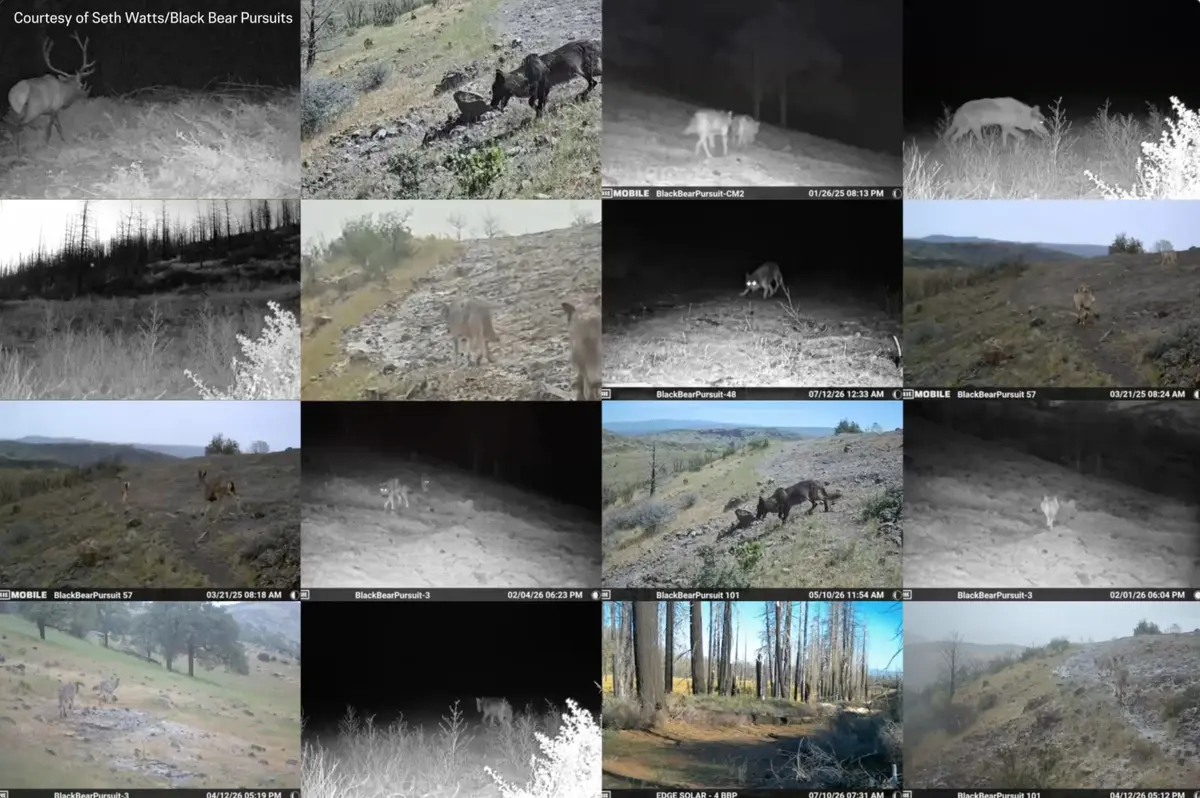
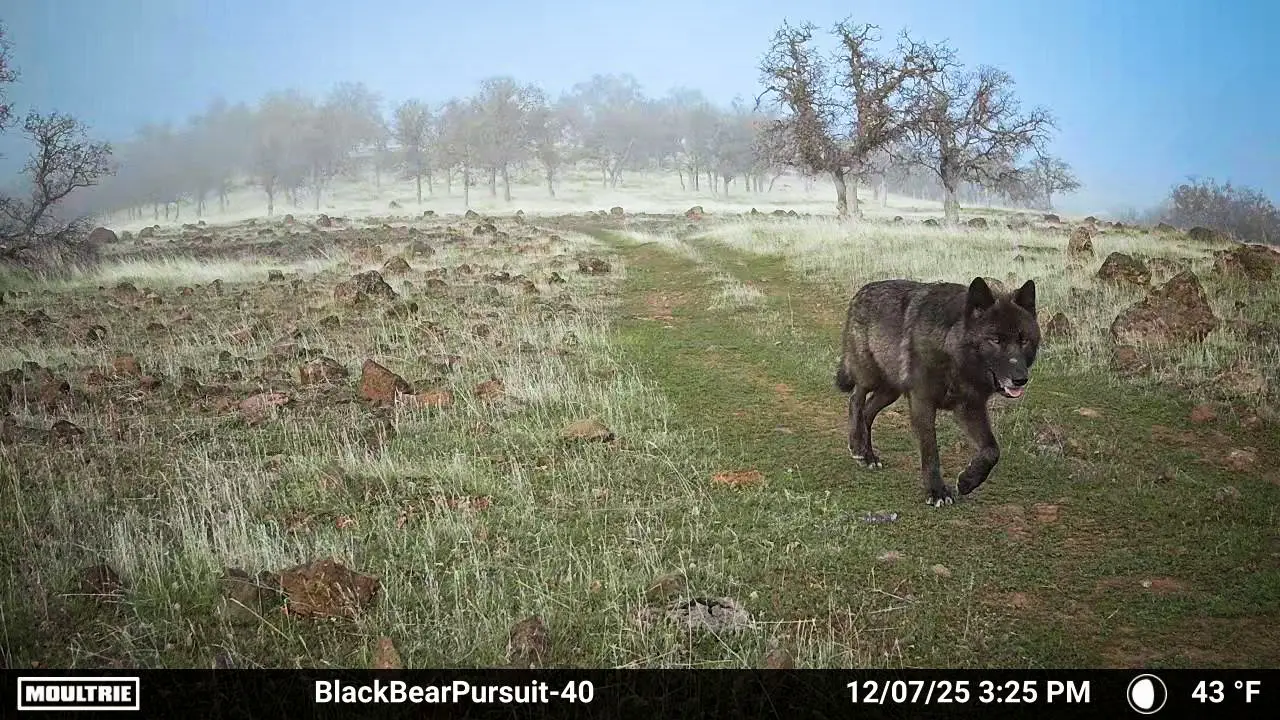
Seth Watts, a hunter, conservationist, and founder of Black Bear Pursuits, who tracks wildlife behavior on trailcams, told The Epoch Times that with deer populations down by 50 percent since 1990, wolves lack enough natural prey.
He attributes the decline of ungulates—mainly deer and elk herds—to massive, habitat-destroying wildfires and more predators on the landscape.
Black bears and coyotes “kill a ton of fawns” in the spring, he said.
While opinions vary on how to manage wolves, Watts said lethal removal needs to be put back on the table as a ”last resort” option to protect the livelihood of ranchers
“I’m a common-sense person, and part of coexisting is lethal removal of whatever species you want to talk about. If we’re going to coexist with them, lethal management needs to be on the table,” he said.
“I’m not anti-predator. I’m anti-no-management.”
Watts started running trail cameras in 2018.
“Even though I’m in the field a lot, cameras show you stuff that you’re not going to see the majority of the time.” he said.
Over the last three years, Watts has picked up a lot of wolf activity.He was one of—if not the first—to capture the Ice Cave pack on camera in 2022 in Tehama County and has studied these wolves.
He’s recorded trailcam footage of wolves trailing deer.
“Wolves will just run them to death,” he said. “They’ll chase those deer till they’re exhausted, and that’s exactly why they would rather kill a cow than chase a deer.”