This copy is for your personal, non-commercial use only. Distribution and use of this material are governed by our Subscriber Agreement and by copyright law. For non-personal use or to order multiple copies, please contact The Epoch Times Reprints.
Alaska challenges the imagination and then delivers a reality bigger, wider, and more wonderful than anything you could ever envision. Its nicknames say it all: the last frontier, the great land. It is a place where gold miners came from unbelievable distances, from around the world, to find their fortune. And which continues to draw adventure-seekers from across the earth, daily delivering so many natural treasures.
Anchorage, the 49th state’s largest city (but not its capital), sits surrounded by wonders. On several visits there, I’ve come to appreciate both the modern conveniences in town and the culture and history of this city of fewer than half a million people.
It’s a place set on salty waters, which are sometimes filled with whales and hemmed in by snow-capped mountains and glaciers. There is so much to see and do, even if you (like me) aren’t particularly outdoorsy. You just need to know how to explore Anchorage. After several visits there, here’s my guide to getting the most out of this fascinating city.
Arrival
Not surprisingly, given its location at the edge of the Arctic, Alaska’s Ted Stevens International Airport (ANC) has a long and rather illustrious history. The airport is now named for the state’s longest serving senator, but began life in the 1950s, connected to an Air Force base.
During Cold War days, communist countries (including the neighboring Soviet Union) restricted their airspace to flights from the West. So European carriers would use ANC as a stopover on the way to Asia, earning it the nickname, “the Crossroads of the World.”
Ted Stevens International Airport (ANC), once known as the "Crossroads of the World," sits just five miles from downtown Anchorage. zeelichsheng/Shutterstock
Direct flights from Europe are now few and far between. A seasonal nonstop from Frankfurt on German carrier Condor is one notable exception. I flew that route last year in their business-class cabin, and it was a pleasure. It was also a great convenience to finish one trip in Europe and begin a very different one in Alaska, without the need to land and connect anywhere else.
And while transcontinental flights are no longer the norm, Alaska Airlines and others offer direct flights to many cities in the Lower 48. These include Minneapolis, Seattle, Phoenix, Atlanta, Portland, Los Angeles, Denver, Las Vegas, and more. And the airport is very well located, just five miles outside the city center. Grab a taxi or ride-share, or take two bucks out of your pocket and hop on the People Mover bus, which leaves both terminals at ANC every 15 minutes (during peak times).
Alaska, and Alaska
When people picture this remote, massive state— where more than 20 contiguous states could fit inside its borders—they picture a log cabin on a lake alongside polar bears, Kodiaks, salmon leaping upstream across an endless wilderness.
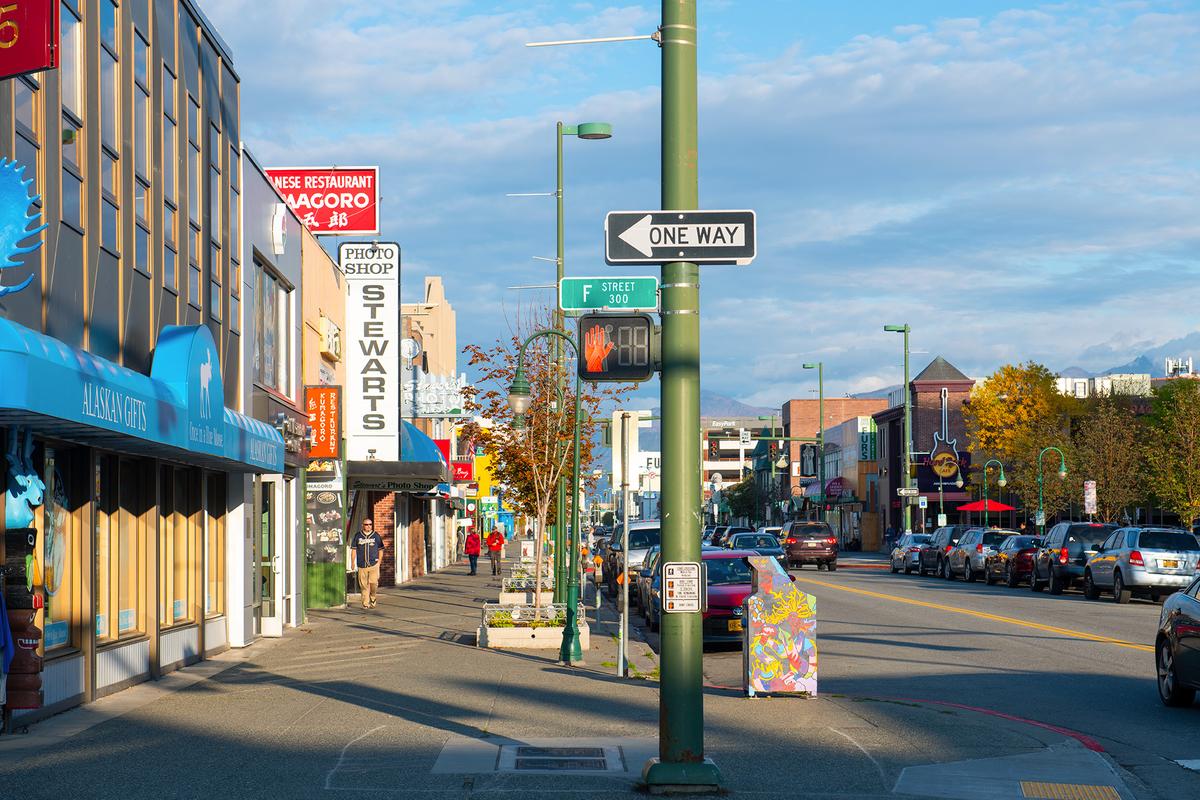
All those spellbinding stereotypes are absolutely true. But I remember the first time I strolled down 4th Avenue; I could have squinted and imagined myself in many other mid-sized American cities. There are bars and restaurants serving a preponderance of fresh seafood, along with a downtown mall and big box stores on the outskirts.
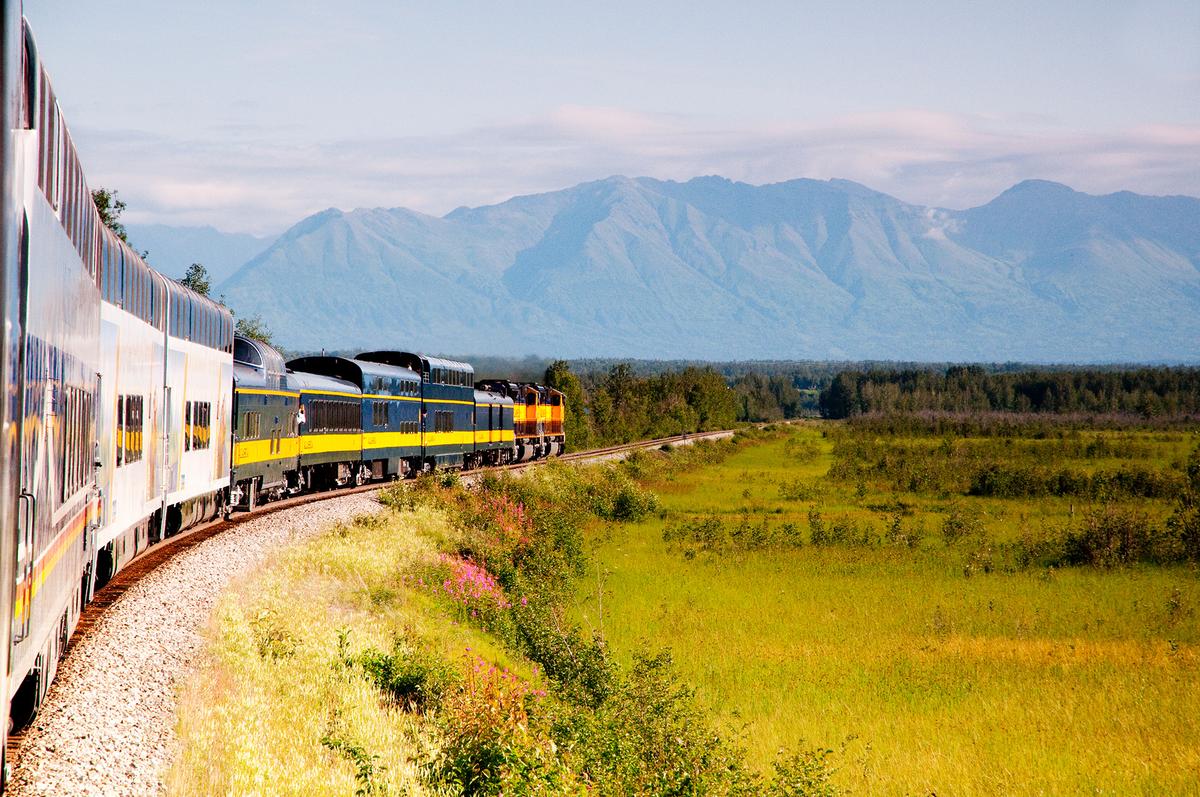
This balance makes Anchorage two distinct things: it is a destination in itself, but it is also the perfect jumping-off point to stock up on everything you need if your journey is taking you into the wilderness—or even onto a dome car on the Alaska Railroad bound for Denali National Park and Fairbanks.
Small-town charm: Downtown Anchorage offers a vibrant mix of shops and modern conveniences. Wangkun Jia/Shutterstock
The Alaska Railroad glides past snow-capped peaks on its journey toward Denali National Park and Fairbanks. Gail Shotlander/Getty Images
Hinterland, Right in the City
While its number-grid system of streets can, as mentioned, feel almost midwestern, once you venture just a little farther, the outdoors is right there—even on foot. For example, the pier at the small boat launch, part of the Port of Anchorage, is an easy few minutes’ walk from the heart of town.
If you’re lucky, you’ll spot belugas as they hunt their favorite prey, salmon, near the outlet of Knik Arm. Although I didn’t see any on my visit, sitting on a bench to chat with locals while watching both wheeled and pontoon aircraft take off and land from nearby airports served as a cool consolation for an aviation enthusiast.
Footnote: Those looking for a short drive can hop in a ride-share or rent a vehicle to head 20 to 25 minutes south along Turnagain Arm. At Beluga Point, visitors in season have a great chance of spotting cold-water whales. You can then double back to the Potter Marsh Wildlife Viewing Platform, where an easy stroll offers opportunities to see bald eagles, sandhill cranes, black and brown bears, and moose.
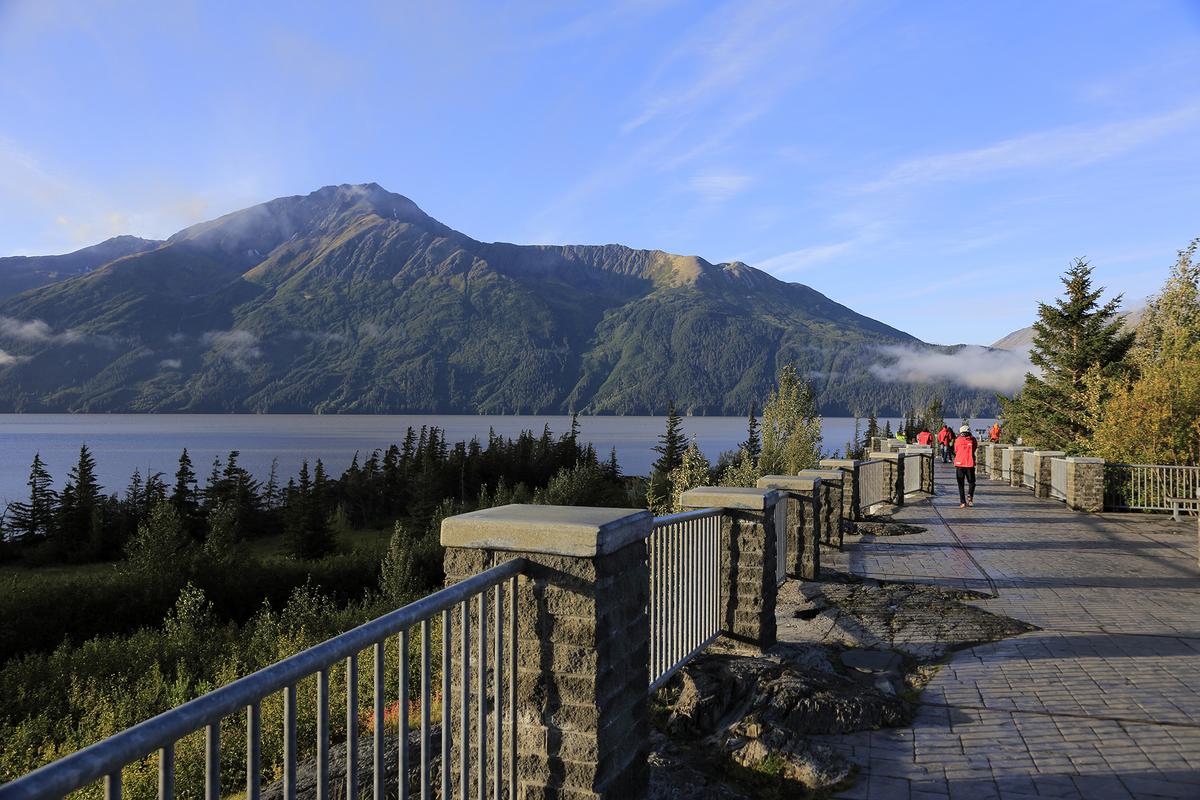
Along Turnagain Arm, Bird Point offers sweeping views of the water and surrounding peaks, and a good chance at spotting beluga whales in season. Bruce Yuanyue Bi/Getty Images
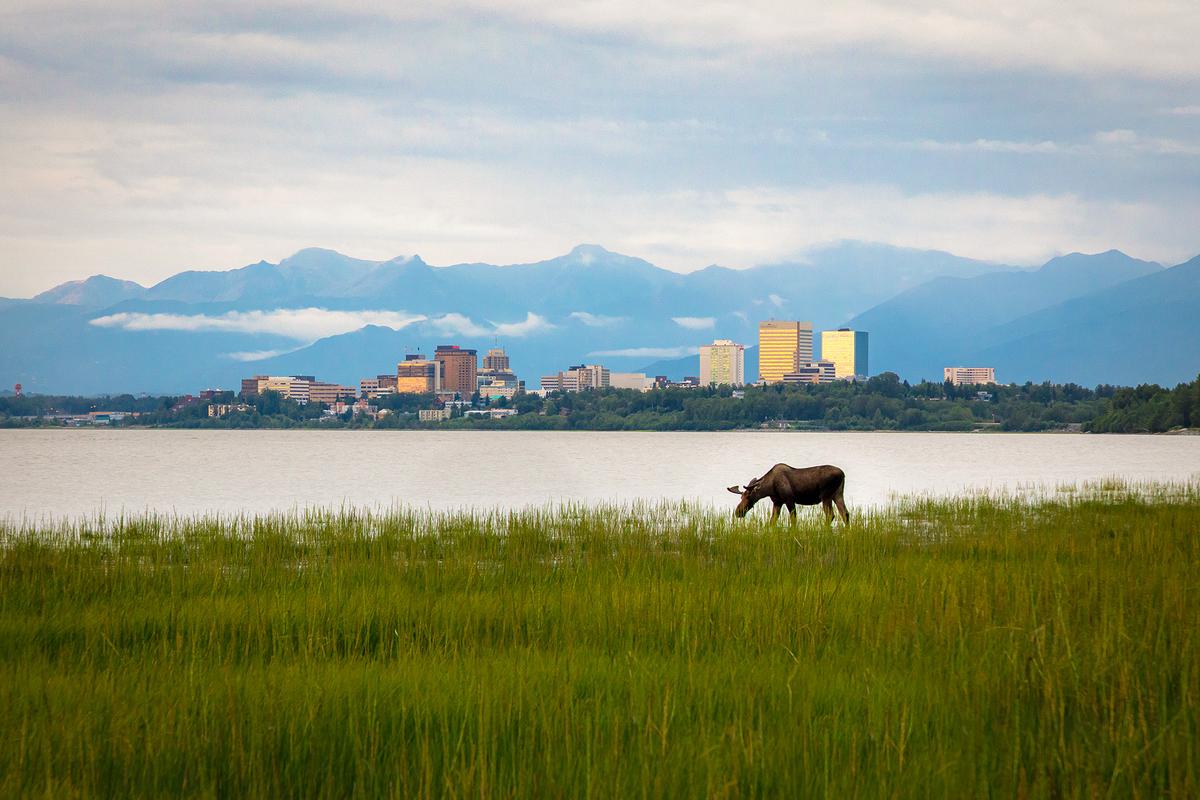
Urban wildlife: It’s not uncommon to spot a moose quietly grazing in open fields in Anchorage. BILD LLC/Shutterstock
Anchorage Museum
Usually, I skip city and national museums because the content can feel predictable and static. I didn’t expect much on my first visit to the Anchorage Museum, especially given its straightforward name, but a local friend told me to allow at least a whole morning to tour it. She could have said a week and been just as correct.
From the moment I stepped inside this bright, beautiful, 40,000-square-foot space downtown, I was wrapped in compelling narratives across room after room and exhibit after exhibit. Displays focus on everything from gold rush boomtown tales to accounts of how early explorers mapped the Arctic. Plus, you will find hundreds of artifacts, including sealskin clothing, drums, and ceremonial masks from Inuit groups across the state. As a tip, don’t miss the gallery of romantic paintings, which serves as an additional enticement to get out into nature.
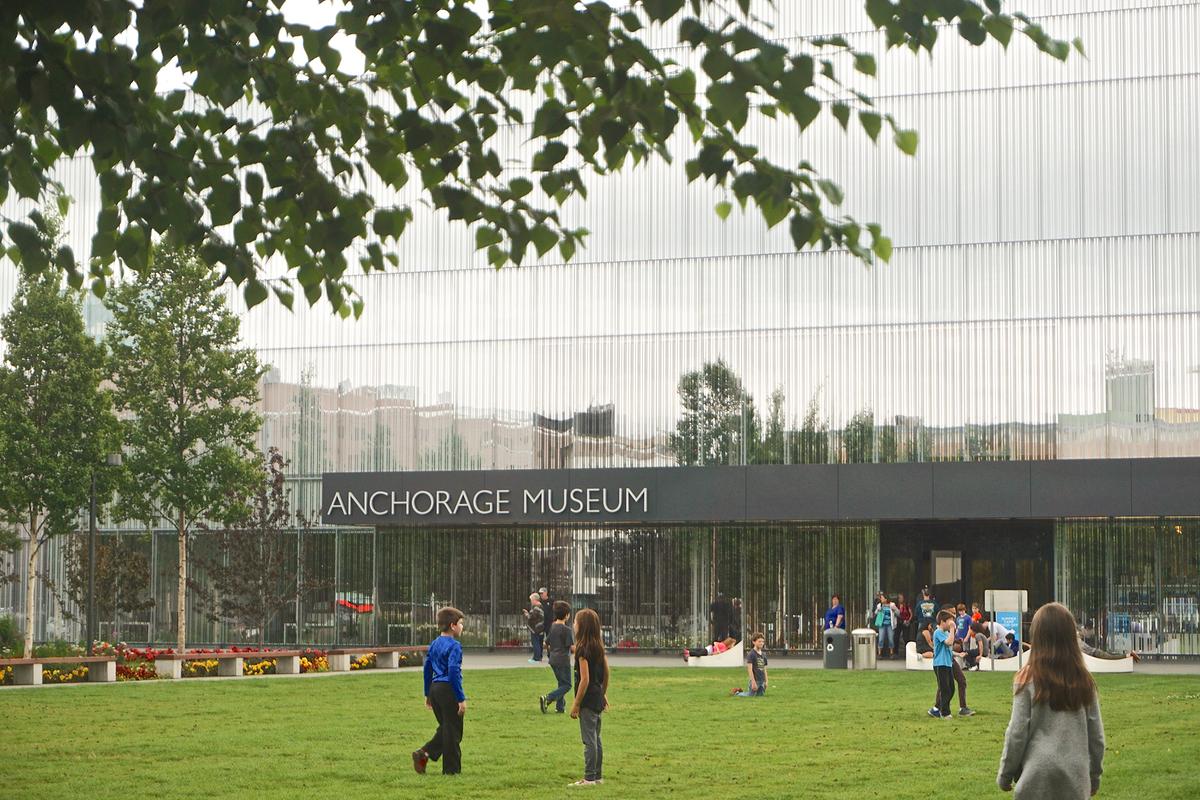
A modern cultural landmark: The eye-catching exterior of Anchorage Museum downtown. Linda Harms/Shutterstock
Inside the Anchorage Museum, where compelling exhibits showcase Indigenous art, Gold Rush history, and Arctic exploration. Logan Bush/Shutterstock
So Many Float Planes
Alaska is a state where roads cover only a tiny fraction of its vastness, leaving four out of five communities inaccessible by car or truck. Interestingly, Juneau is the only state capital unconnected to the outside world by a continuous highway.
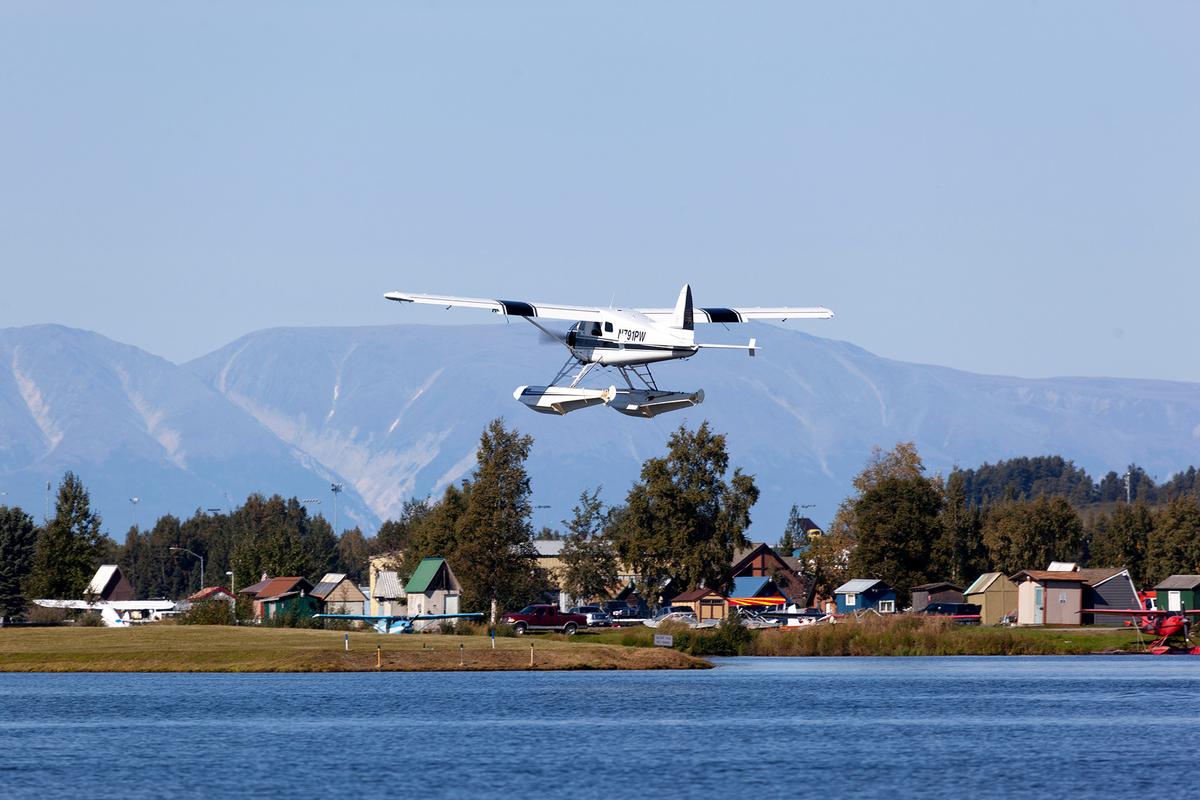
Because of this, Alaska far outpaces the rest of the nation in per-capita pilot’s licenses by a factor of about six to one. In town, you can see this in action by taking a walking tour of the Lake Hood Seaplane Base. Here, on two lakes connected by a canal, some 200 planes take off or land every day, and about 1,000 pontoon planes are moored alongside its docks.
Lake Hood is the world's busiest seaplane base, with around 200 takeoffs and landings a day and roughly 1,000 pontoon planes moored at its docks. JOAQUIN GUASCH DRUDIS/Shutterstock
To really experience it, you should take a flight tour, which I consider the number one must-do activity in Anchorage. Even if you only have a couple of hours, companies like Rust’s Flying Service will show you incredible marvels.
Taking off in a float plane from Lake Hood—which has its own control tower and airport code, LHD—is an experience in itself. On my tour, we bobbed out over small waves on the lake before the propellers revved up along the canal. We skimmed forward until we lifted off, suddenly airborne.
LHD sits just a few miles from downtown, and we banked over the city’s modest skyline before cresting a soaring ridge. Moments later, a whole other world opened up below as the sun glinted off a massive glacier backed by snow-capped summits. We landed to explore a quiet beach on a placid lake before flying back to the hustle and bustle of Anchorage.
Going (Just) Beyond
It is a great idea to book several nights in an Anchorage hotel and use it as a base to explore the nearby wilderness, allowing you to experience the region without the stress of constantly repacking.
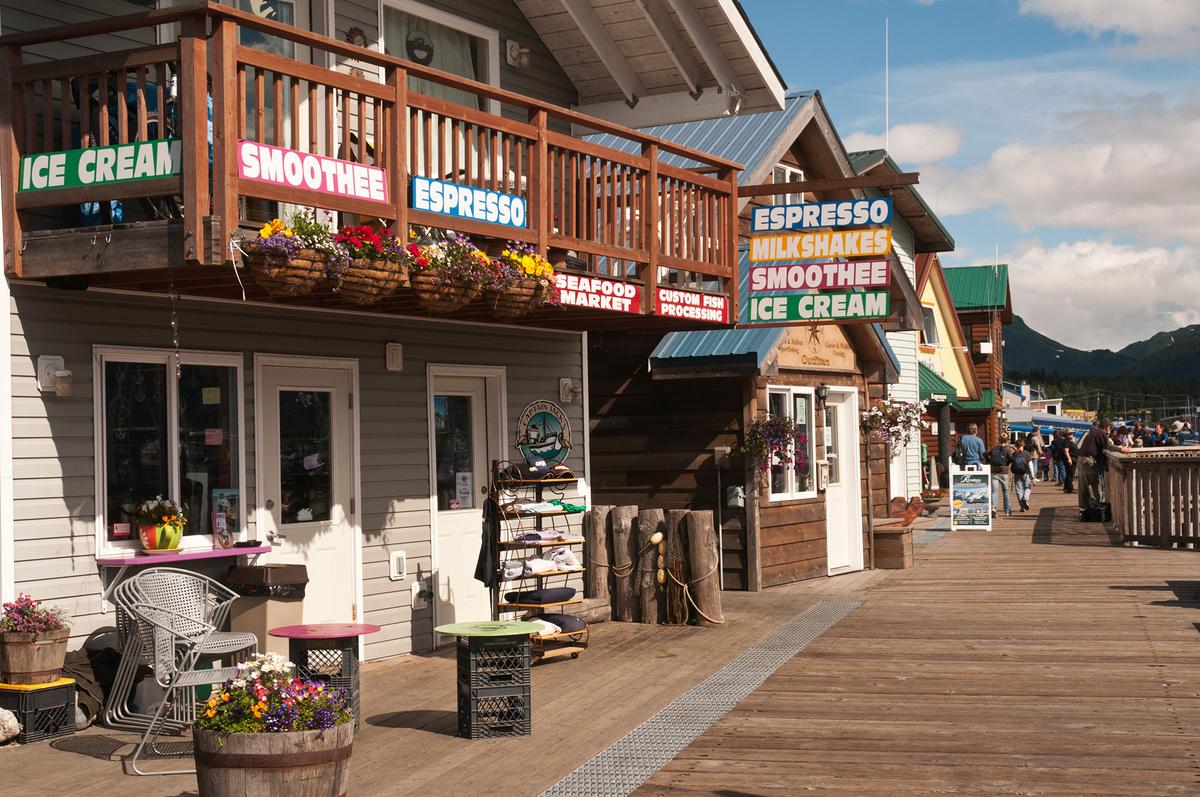
A short walk from downtown: Anchorage's small boat harbor with local eateries. John Elk/Getty Images
On one visit, I enjoyed a day trip to Seward by rising early to catch the Coastal Classic train, a winding four-hour ride south through valleys and past boreal forests. Just out the window, emerald met electric blue while the steady rhythm of the rails provided a soundtrack to the scenery. Upon arrival, I had a seven-hour stopover to explore the picturesque town.
You can also step onto a catamaran headed deep into Kenai Fjords National Park, as marine departures are scheduled to coincide with the train’s arrival. Once aboard, every turn of the boat revealed extraordinary sights, from icy walls of glaciers ready to calve into the ocean to seals basking on rocks. On the return trip, our boat was even surrounded by a pod of killer whales. Tired from the fresh air on the ride back, I enjoyed a steaming coffee in the dining car while looking forward to a late-night bite of king crab back on 4th Avenue.