Legal Ramifications
First and foremost, the president’s order and the Supreme Court’s decision will be compared to the current constitutional law and case precedent, most notably the 14th Amendment.One reader wrote on the topic, contending that no matter the original intent, it could be time for a change: “Present-day circumstances with illegal immigration chaos should be reason enough to update the original intent of the 14th Amendment.”
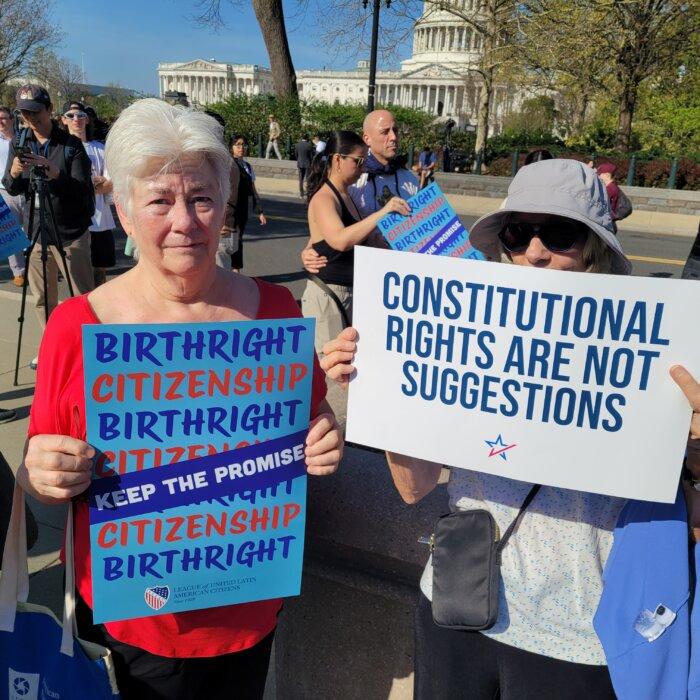
A respondent outlined their thoughts on who should be allowed to become an American, saying, “Citizenship should only be extended to people who desire to embrace the values presented in our Declaration of Independence.”
Birth Tourism
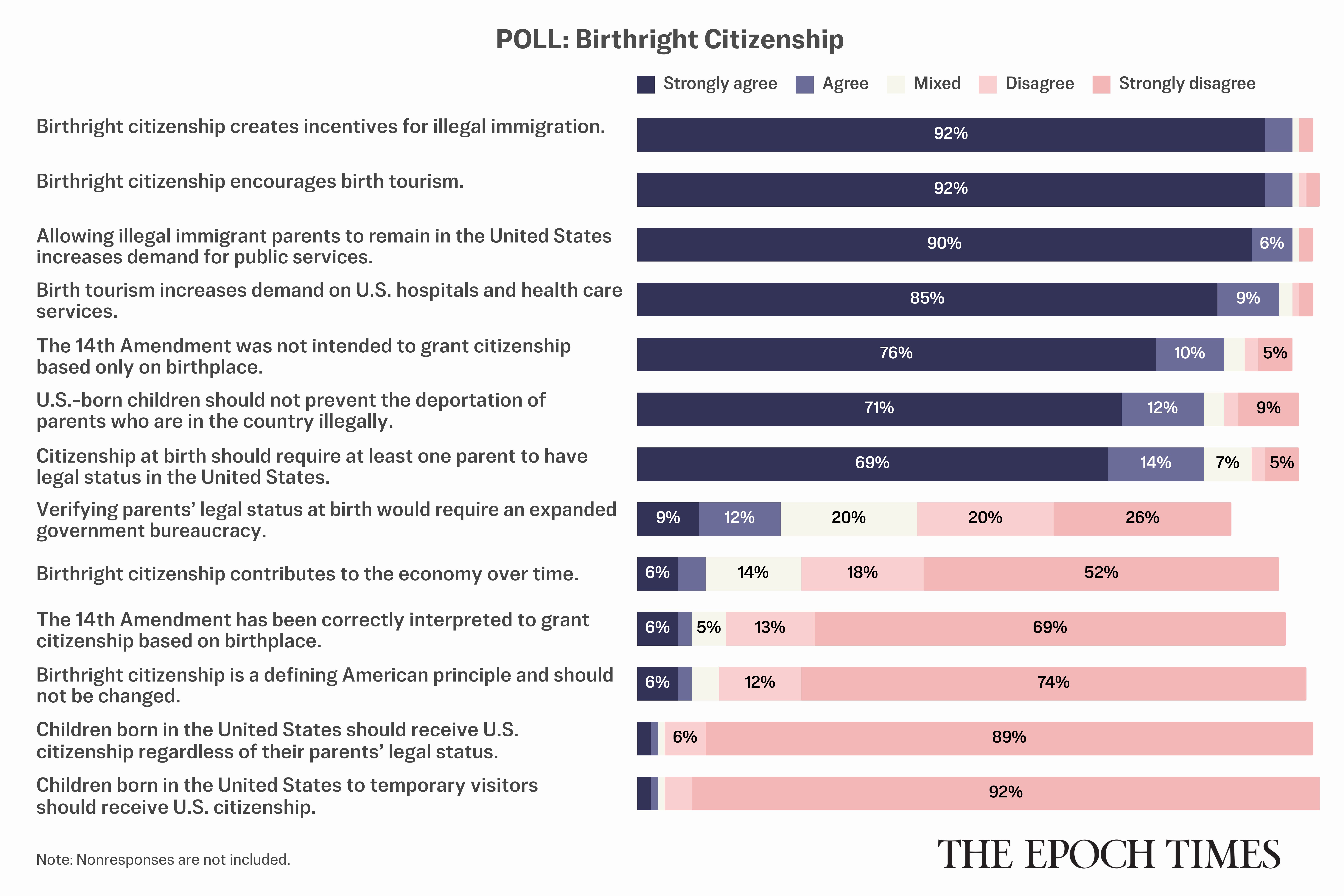
Birth tourism has been a major cause of concern for those tuned into the issue. Frustration over the idea of someone visiting for the specific purpose of having a child in the United States who can obtain citizenship was something shared by our readers.The vast majority (96 percent) of readers believe that birthright citizenship encourages birth tourism, and nearly the same amount (94 percent) believe that birth tourism increases strain on U.S. hospitals and health care services.
“Birth tourism is particularly a problem as they have no allegiance or intention of being here,” said another. “I look differently on an illegal person who has lived here for years and then has a child versus those that come just to give birth. I think there should be some association of intention and allegiance to citizenship.”
Yet another said that the “most important reason to change birthright citizenship is to end incentives for illegal immigration and birth tourism to reduce the number of people that come here only to live off our tax dollars.”
Importance of the Issue
There was little division among readers about the importance of the decision, which now sits with the Supreme Court.One reader, however, noted that their concern “stems from the current balance between public resource allocation and the financial burden placed on hardworking American families.”
“Many middle-income households are increasingly struggling to meet their own basic needs, including healthcare, housing, and daily living expenses. At the same time, there is a growing perception that individuals who are not citizens are able to access certain benefits—particularly emergency healthcare services—without having contributed to the system in the same way.”
Ninety-five percent of those who responded to the survey disagree that children born in the United States should receive U.S. citizenship regardless of their parents’ legal status. Roughly the same number of respondents (96 percent) also disagree that children born in the United States to temporary visitors should receive U.S. citizenship.
“With modern means of travel and the clear abuses that today’s conditions are revealing, some clarification and restrictions must be included. We need to revise the 14th Amendment to reflect today’s environment.”