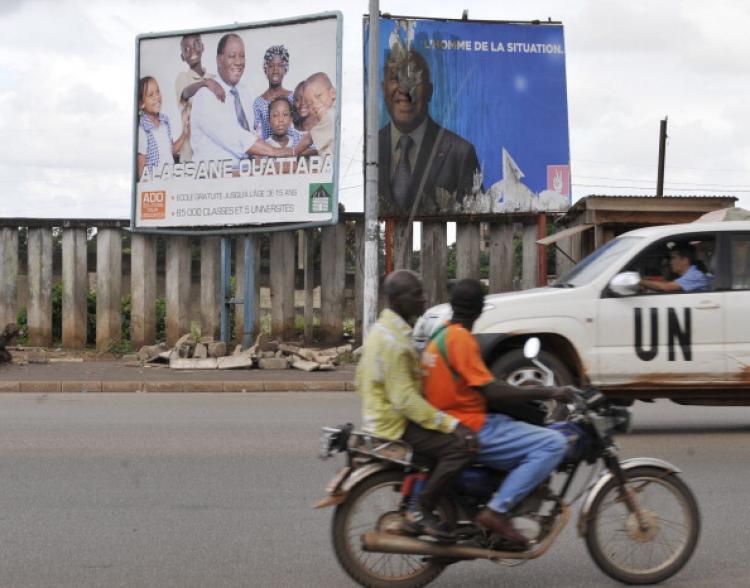
Africa’s Ivory Coast will at last choose their president, five years later than intended, on Oct. 31.
The United Nation’s Special Representative to the country, Y.J. Choi, said on Oct. 27 that he saw no serious obstacles for the election to be held on time.
The U.N. mission in Ivory Coast was set up in 2004. Part of the mission’s mandate is to hold elections, bring about stability for the African country’s 19 million inhabitants, and resolve internal divisions.
Two years ago, a civil war split the country—which is the world’s largest cocoa producer—into a rebel-controlled north and a government-controlled south. A ceasefire gave the U.N. an opportunity to begin negotiations in an attempt to bring stability to the country.
In October, Choi announced that the campaign started calmly, though precautions were still taken: The U.N.’s 8,600 soldiers were reinforced with more troops in case the elections became violent.
The Independent Electoral Commission is expected to announce the result on Nov. 10.
The United Nation’s Special Representative to the country, Y.J. Choi, said on Oct. 27 that he saw no serious obstacles for the election to be held on time.
The U.N. mission in Ivory Coast was set up in 2004. Part of the mission’s mandate is to hold elections, bring about stability for the African country’s 19 million inhabitants, and resolve internal divisions.
Two years ago, a civil war split the country—which is the world’s largest cocoa producer—into a rebel-controlled north and a government-controlled south. A ceasefire gave the U.N. an opportunity to begin negotiations in an attempt to bring stability to the country.
In October, Choi announced that the campaign started calmly, though precautions were still taken: The U.N.’s 8,600 soldiers were reinforced with more troops in case the elections became violent.
The Independent Electoral Commission is expected to announce the result on Nov. 10.