A common adjuvant in vaccines is under scrutiny by a panel that has initiated multiple changes to U.S. vaccine recommendations this year.
The Advisory Committee on Immunization Practices (ACIP) started looking at aluminum salts, an adjuvant in many vaccines recommended by U.S. authorities, members said on Dec. 5.
Christopher Shaw, a researcher with the University of British Columbia who coauthored the latter paper, told The Epoch Times in an email that he welcomes investigation of human exposure to aluminum from all sources, including vaccines.
“I am fairly confident that if aluminum adjuvants were removed from pediatric vaccines, the incidence of autism would decline appreciably,” Shaw, who holds a PhD in neuroscience, said.
Acting against aluminum salts—placed in vaccines to boost the impact of the shots beginning in the 1930s—could shake the vaccine industry, as they are part of 24 immunizations, including vaccines against hepatitis B, diphtheria, tetanus, whooping cough, pneumococcal disease, and human papillomavirus.
Hotez, who declined to appear at the ACIP meeting because he said he thinks ACIP is no longer employing evidence in its decisions, added later: “If you now have to substitute a different adjuvant, that’s five to seven years of research and development, tens of millions, hundreds of millions of dollars. Who pays for that? Well, the companies aren’t going to do it.”

President Donald Trump and top administration officials have recently spoken against aluminum.
He said the adjuvants cause inflammation and may lead to the development of allergies.
‘We Don’t Know’
Dr. Robert Malone, another ACIP member, said during the ACIP meeting that studying individual vaccines may not reveal any problems but that there could be a cumulative risk because children receive dozens of vaccine doses if they follow recommendations. He said he was talking about aluminum salts.“That is a risk for which we do not have adequate data,” he stated. “I think we can all agree on that. ... We don’t know whether there is cumulative risk associated with this component of multiple pediatric vaccines that are administered essentially concurrently.”
Griffin said her presentation, which summarized findings from a subset of ACIP members who flagged aluminum as a possible safety concern while reviewing the childhood vaccination schedule, was motivated in part by the position that “appropriate testing was not performed” when adding aluminum-containing vaccines to the vaccine schedule.

Some members are also concerned about small children receiving aluminum, which results in a higher dose per kilogram of weight, and indications that injected aluminum accumulates in body tissue, she said.
Dr. Tracy Hoeg, acting head of the FDA’s Center for Biologics Evaluation and Research, told ACIP that children in the United States are exposed to 5.9 milligrams of aluminum from vaccines by the time they turn 2 and 8 milligrams before they become adults. That’s more than the 1.4 milligrams by age 2 and 2.9 milligrams throughout childhood for Danish children.
“We need to admit that we may not know what the side effects of doing this, especially given all at once, could be,” Hoeg said.
No concrete action has been taken on aluminum as of yet. Dr. Kirk Milhoan, ACIP’s new chair, said he plans on creating a new work group that would figure out whether aluminum is playing a role in the adverse reactions observed in children.
“There are certainly valid hypotheses of aluminum impacting the immune system that can cross into the brain and potentially cause adverse neurodevelopmental or psychiatric effects,” Dr. Joseph Hibbeln, another ACIP member, said during the meeting.
He questioned whether there are enough human data at present and said there may need to be randomized, controlled trials comparing vaccines with and without the adjuvant.
“The Advisory Committee on Immunization Practices (ACIP) is independently reviewing the full body of evidence on adjuvants and other vaccine components to ensure the highest safety standards,” a spokesperson for the Department of Health and Human Services (HHS), the parent agency of the CDC and FDA, told The Epoch Times in an email. “HHS remains focused on rigorous scientific review, transparency, and ensuring the continued safety and effectiveness of the U.S. vaccine supply.”

Current Standards
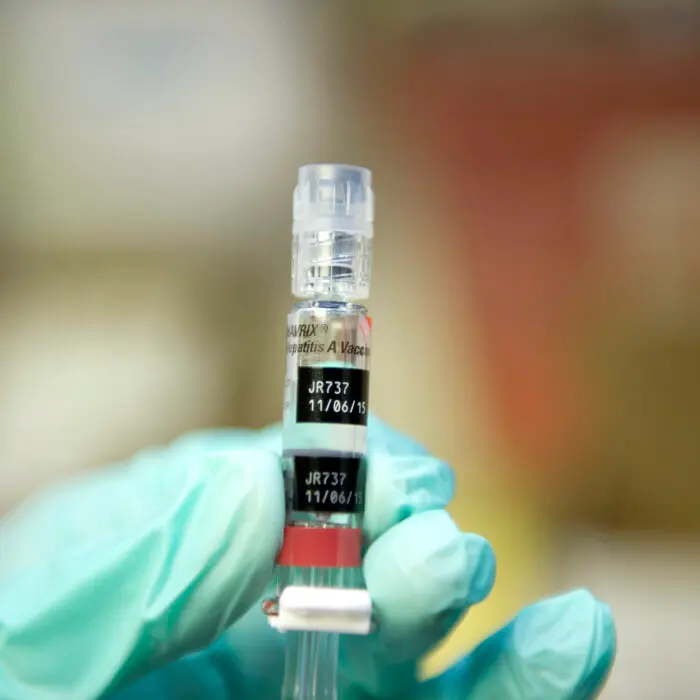
Regulators do not directly approve aluminum and other adjuvants but consider them part of the vaccines they clear or reject.Most approved vaccines with aluminum contain between 0.2 and 0.8 milligrams. Under federal regulations, each dose of a vaccine can generally contain no more than .85 milligrams.


“Although there are only a few clinical trials in which a given batch of vaccine, with and without adjuvant, has been tested in comparable populations, aluminum adjuvants have been used in vaccines for many decades, and have been proven to be safe,” the officials said.
They noted that there are side effects, such as skin inflammation, and they said it would be impractical to produce separate batches of vaccines with and without aluminum and that removing aluminum from the vaccines could sacrifice enhanced immune responses.
“Even if they had, the studies we found, dating from 1947 and 1952, describe vaccine preparations using an aluminum salt that is no longer used,” Crépeaux, who holds a PhD in neurotoxicology, told The Epoch Times in an email. “Security of current exposure of the U.S. population, and especially of very young children, has never been investigated.”
HHS declined to say whether it is reevaluating or would reevaluate the aluminum limits.
“In general, the FDA does not comment on specific studies, but evaluates them as part of the body of evidence to further our understanding about a particular issue and assist in our mission to protect public health,” an HHS spokesperson told The Epoch Times in an email.
“We conclude that episodic exposures to vaccines that contain aluminum adjuvant continue to be extremely low risk to infants and that the benefits of using vaccines containing aluminum adjuvant outweigh any theoretical concerns,” Mitkus, who holds a PhD in toxicology, and coauthors stated at the time.
Former ACIP Member Says Aluminum Safe
Dr. Yvonne Maldonado, one of the ACIP members removed by Kennedy, and other researchers said in a review released on Dec. 3 that studies demonstrate that aluminum adjuvants are well-tolerated by nearly all vaccine recipients, that aluminum is slowly absorbed and efficiently cleared by kidneys, and that there is no link between vaccines with the adjuvants and problems such as allergies.“Our comprehensive review of the scientific evidence found no credible link between aluminum-adjuvanted vaccines and autism, Alzheimer’s disease, allergic disease, or autoimmune disease,” Maldonado told The Epoch Times in an email. “Large-scale studies, including recent analyses of over 1.2 million children, consistently demonstrate safety.”

Maldonado, a professor of pediatrics at Stanford University, also said that the safety of aluminum adjuvants is not an open question, so no new studies are necessary.
“Deliberately withholding vaccines from children to re-investigate settled safety questions would be unethical and would place children at unnecessary risk of serious, preventable diseases like pneumococcal pneumonia, tetanus, and diphtheria,” she said. “Science advances through monitoring, improved methods, and new questions—not by endlessly re-litigating questions that have been repeatedly answered.”
Dr. Cody Meissner, who currently sits on ACIP, said during the recent meeting that clinical trials “obviously have demonstrated there’s no association between vaccines and the development of autism.” He said that neither ACIP nor the CDC should spend additional time on the subject.