VANCOUVER—An impressive lineup of officials, including Aboriginal leaders, attended a press conference Monday unveiling plans for a 2010 Aboriginal Pavilion and longhouse to be situated in the heart of the Olympic venues in downtown Vancouver.
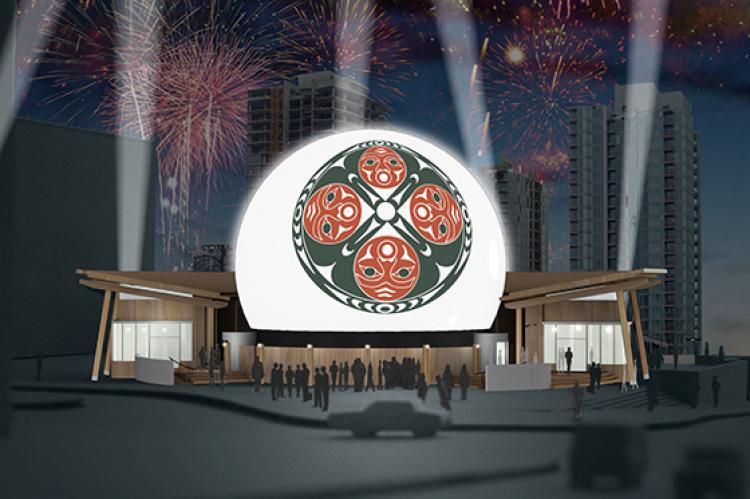
The cultural centre will be located on the plaza of Queen Elizabeth Theatre within walking distance of both GM Place and BC Place where the Olympic opening and closing ceremonies will take place.
The Vancouver Organizing Committee for the 2010 Olympic and Paralympic Winter Games (VANOC) teamed up with the Four Host First Nations (FHFN) in planning the pavilion.
FHFN is comprised of the Lil’wat, Musqueam of Squamish, and the Tsleil-Waututh First Nations who once occupied the lands where the Olympics will take place. The four chiefs entered into agreement with Vanoc to gain their share of the Olympic pie and to incorporate aboriginal culture into the Games.
Others in attendance at the event included B.C. Premier Gordon Campbell, Vancouver Mayor Gregor Robertson, Vanoc CEO John Furlong, and other government representatives, as well as a host of Aboriginal leaders, including national leaders of First Nations, Inuit and Métis.
“This Pavilion will be the Aboriginal gathering place at the biggest potlatch the world has ever seen—the 2010 Games—hosted here within our shared traditional territories,” said Squamish Chief Bill Williams, chair of the FHFN Board of Directors.
Vanoc CEO John Furlong praised the four nation chiefs. “Our host First Nations partners have reached out to the Aboriginal Peoples of Canada to join them in showcasing the best of themselves to the world through the Pavilion, demonstrating that these indeed are Canada’s Games.”
The extensive involvement of Aboriginal peoples in the 2010 Olympics is unprecedented in Olympics’ history.
“These are indeed ‘Canada’s Games,’ made all the more so by the full participation of the Aboriginal Peoples of Canada,” said Senator Gerry St. Germain in his capacity as representative of the Minister of Indian Affairs and Northern Development.
However, there were a few dissenting voices. Rosalan Sam, a member of the Mount Currie Indian Band (also known as Lil’wat Nation), called the unveiling event “showcasing.” Sam is one of a number of native people vocal about the impact of the Olympic Games on their traditional lands.
“Usually when everybody is involved, when all the chiefs are in place, the politicians are in place, it’s what we call showcasing. They are trying to make themselves look good…make themselves feel good.”
Gord Hill of the Kwakwaka'wakw Nation, who runs the No2010.com website and is involved with the Olympics Resistance Network, said including First Nations in this way has no substance and amounts to the exploitation of Aboriginal culture.
“It’s another attempt by the government, Vanoc and corporations to exploit Indigenous culture while at the same time presenting Natives as ‘full and equal’ partners in not only the 2010 Olympics but also Canadian society, both of which are false when considering the oppressed living conditions and relations with the government.”
The pavilion, he said, will merely serve to “showcase aboriginal culture as a commodity to be bought by wealthy tourists. It will probably benefit those Native artists that participate and the Aboriginal business elite that are involved with it.”
The 3,000 square-foot pavilion’s main feature is to be a 65-foot high sphere covered in the FHFN logo and outfitted with the latest technology which will run multimedia presentations of Aboriginal art, business, culture and sport during the Games.
Theme days during the Olympics plan to spotlight different regions in Canada. Performances such as Inuit throat singing, Métis jigging, and hoop dancing are expected to be on display.
The pavilion and the traditional Coast Salish Longhouse, also part of the design, will be transplanted to other locations after the Olympics.