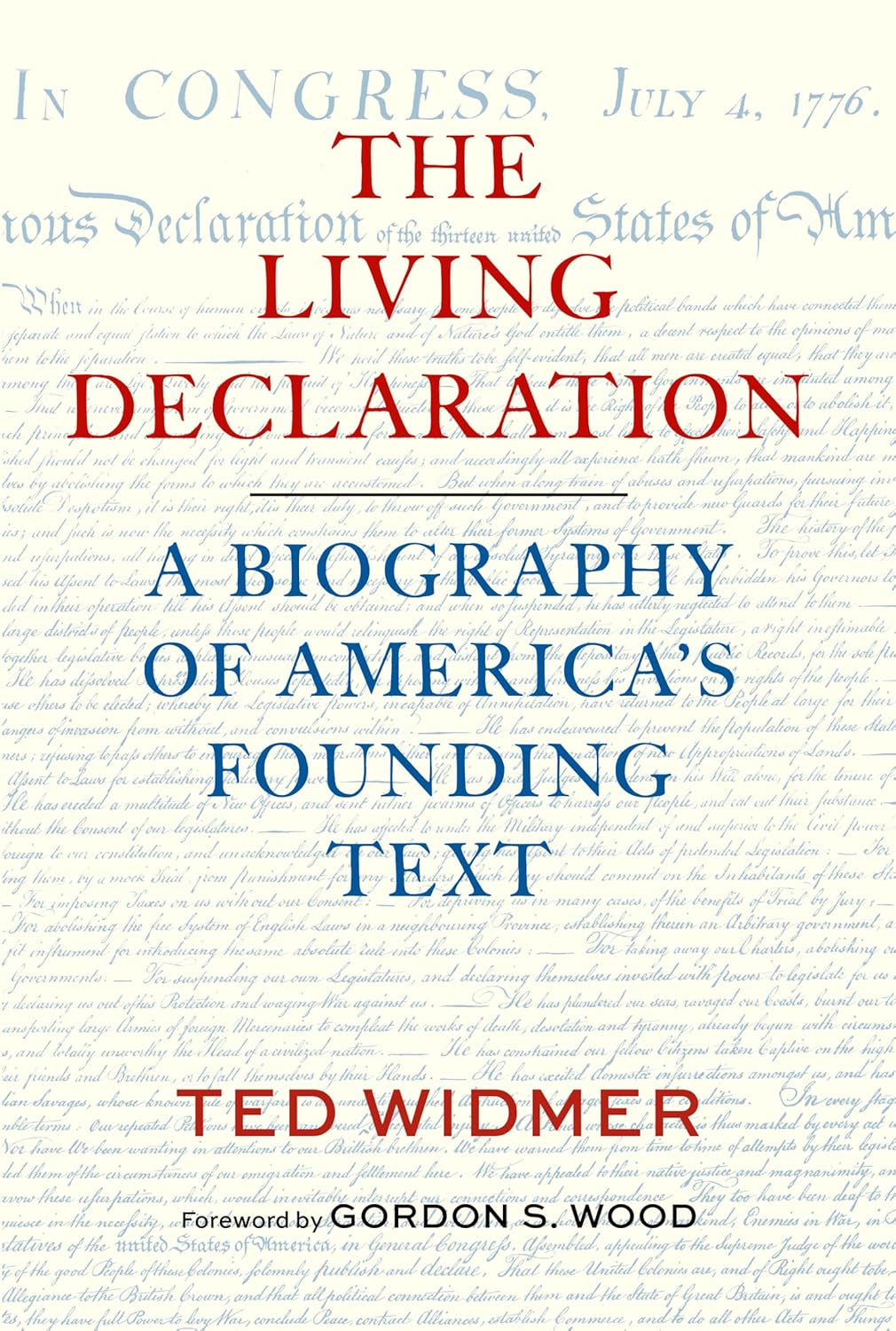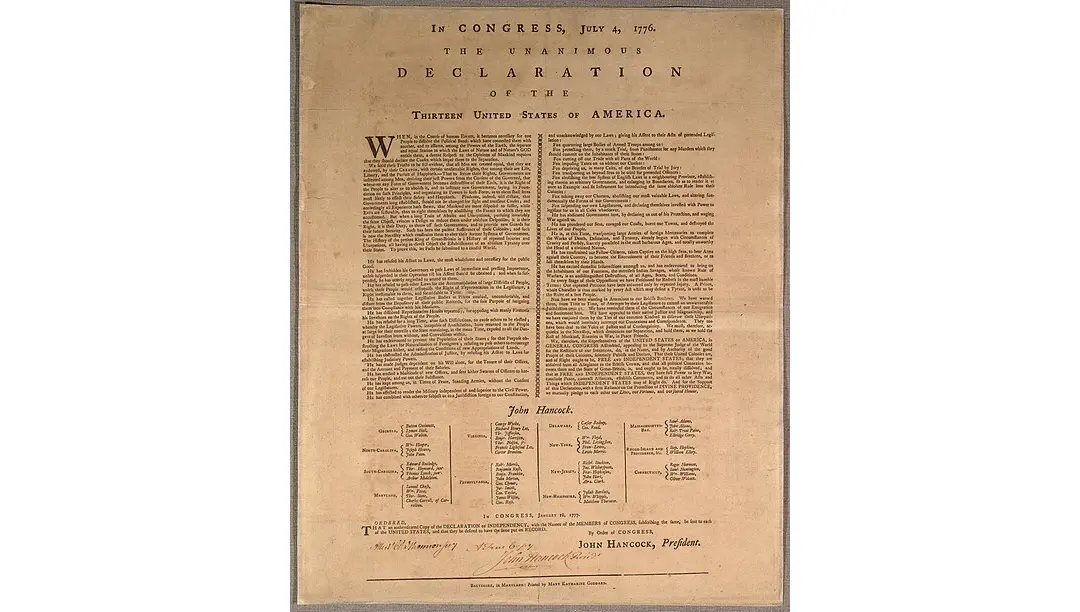
With its varied statements regarding liberty and equality, America’s glorious Declaration of Independence has been the center of sociopolitical debates and demands within and without the country ever since it was proclaimed 250 years ago. In Ted Widmer’s new work, “The Living Declaration: A Biography of America’s Founding Text,” which is both a study and a commemoration of the document, he guides readers through the decades of those debates and demands.
Library of America, the book’s publisher, made a well-timed choice for America’s 250th birthday for several reasons, one of them quite tragic. The foreword is written by Gordon S. Wood, who was America’s leading scholar on early America before he was tragically killed after being struck by a car in June. Wood’s words are—as they always have been—powerful, accurate, and heartfelt. His opening sentence sets the tone of Widmer’s book: “To be an American is not to be someone, but to believe in something.”

‘Rich and Contentious’
The book demonstrates how America has afforded people the opportunity to believe or doubt the tenets of its founding document. Widmer’s study is a collection of essays and speeches from various Americans, American groups, as well as foreign leaders and thinkers who were influenced by the Declaration of Independence.As Wood added in his foreword,
“[T]he Revolution and its Declaration of Independence offered us a set of beliefs that through the generations has supplied a bond that holds together the most diverse nation that history has ever known. Since now the whole world is in the United States, nothing but the ideals coming out of the Revolution and their subsequent rich and contentious history can turn such an assortment of different individuals into the ‘one people’ that the Declaration says we are.”
“Rich and contentious” prove to be operative words for the entire book. The contention, of course, revolves around the phrase enshrined in the document “that all men are created equal, that they are endowed by their Creator with certain unalienable Rights, that among these are Life, Liberty and the pursuit of Happiness.”
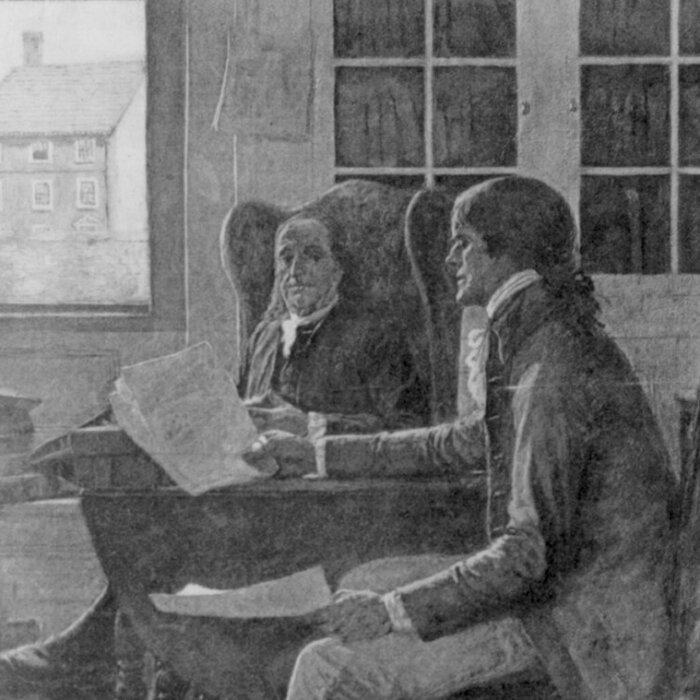
The delegates agreed to the document’s wording despite continuing the practice of slavery and thus refused those “certain unalienable rights” to blacks. But it was the power of those words that continued to echo through the course of 250 years, and which gave people—the disenfranchised and those in support of the disenfranchised—the boldness to make the demands for their rights to life, liberty, and the pursuit of happiness.

Room for Debate
Widmer presents a vast array of historical arguments for and against the Declaration’s wording—from Boston slaves’ use of the words to litigate for their freedom and John Calhoun’s denouncing Thomas Jefferson’s famous words and advocating for racial hierarchy to affirmations by American presidents to the adoption, in other countries, of the text’s phrases for their own declarations. Widmer leaves no question as to the importance and influence of America’s founding document; it altered the way people viewed governments and the individual.As indicated above, not all interpretations of the Declaration of Independence are the same, and some are certainly wrong. As Widmer’s examples demonstrate, Americans of various stripes and backgrounds—from slaves to workers to politicians to suffragists to literary lights—have used the text’s words to promote a specific agenda, wrongly or rightly.
By announcing freedom and equality to all, the Declaration paved the way for fierce debates over the claim. At times in American history, that ferocity resulted in violence and death. These (verbal and literary) debates, necessary for the growth of the nation, and the violence that at times unfortunately ensued, ultimately demanded that Americans answer the question of whether they truly believed in the words of their founding document.
This book presents the question to readers. Indeed, there are speeches and essays presented that are, on their face, opposite of the meaning and spirit of the Declaration and are therefore easy to dismantle and disregard; but there are others that will cause readers to consider the points of those arguing from varied social and political camps.
The American tenet is one of debate. “The Living Declaration” is a history of an ongoing debate, so debating the arguments and statements made in the book seems fitting. As Widmer notes at the end of the work:
“In the years to come, it can be hoped that once again, the Declaration will unite a fractious people. History encourages the thought. The two men who did the most to bring the document into existence, John Adams and Thomas Jefferson, were not always on the same page. Long after working toward a common goal in 1776, their political views began to pull them apart, into the factions that the Founders dreaded. But the country survived these early divisions, and grew stronger as Americans realized that they could reasonably disagree.”
“The Living Declaration” is a fitting literary commemoration of America’s 250th. I recommend it for its wealth of historical works and the variety of those works. It will certainly give readers arguments to consider about how far we have come as a nation, whether we have gone far enough, or whether we have gone too far. If America’s past has been any indication, that argument may continue for the next 250 years.