24 Hours in Boston 

Save
24 Hours in Boston 
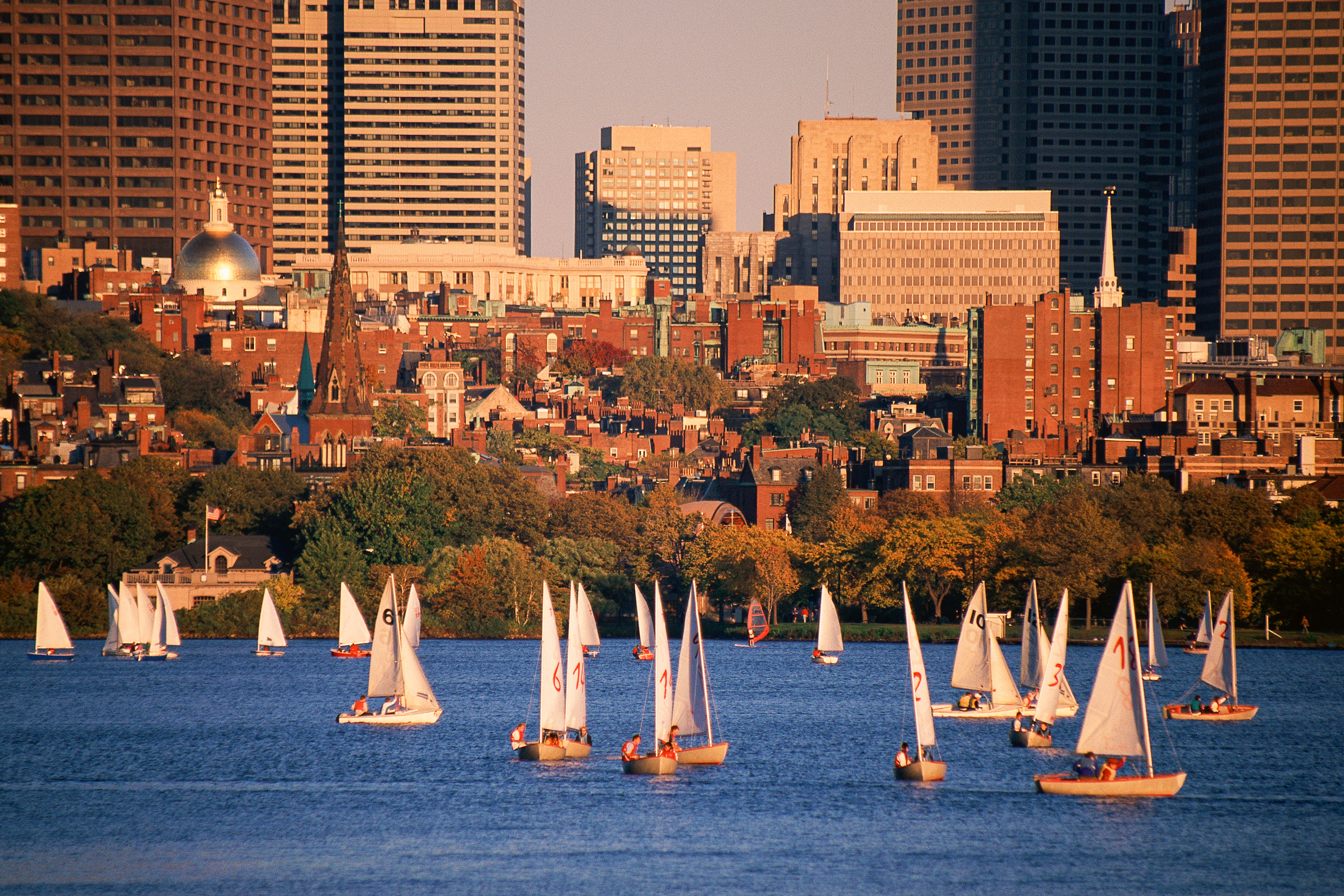
Extensive cleanup efforts have significantly improved the water quality of the Charles River, making it a pleasant destination for watercraft activities. VisionsofAmerica/Joe Sohm/Getty Images
Updated:

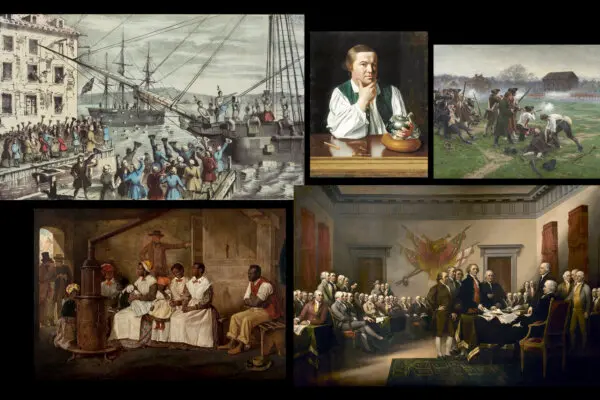
Close your eyes and think of Boston. What do you see? Probably lots of legendary things. Revolutionaries dumping tea into the harbor. Paul Revere on his midnight ride. Shamrocks. Larry Bird sinking a three-pointer. Matt Damon in “Good Will Hunting.” Dave Roberts in 2004, stealing second base in the bottom of the ninth at Fenway—the first spark in a big comeback that paved the way for the first Red Sox World Series win since 1918.

The Massachusetts capital, one of the most historic U.S. cities, is an undeniably iconic place. That makes it a challenge to visit in a single day. But we’ll do our very best, traveling through time and space, back through hundreds of years of history and across this surprisingly compact, walkable—and endlessly compelling—urban center.

Arrival

General Edward Lawrence Logan International Airport (BOS), usually referred to as just “Logan” by Bostonians, is the largest airport in New England. It’s also the busiest in the northeastern United States—if you don’t count the airports in New York City. BOS is serviced by all major North American carriers, which connect Boston to dozens of U.S. cities. It’s a secondary hub for Delta Air Lines and several international airlines, and nonstop flights land there from around the world. That includes Dubai, United Arab Emirates; Amsterdam; Paris; London; Tokyo; and Hong Kong.

Originally opened back in 1923 as a military facility, BOS is close to the heart of the city. Planes land just across the harbor from downtown. Without traffic, a taxi or Uber can get you from the terminals through the Sumner Tunnel to Faneuil Hall in, incredibly, less than 10 minutes. You can also take the “T,” the Bostonian nickname for the Massachusetts Bay Transportation Authority (MBTA), which usually refers to the subway system.

Blue Line trains service Airport Station, a short shuttle bus ride from the terminals. Or even better, get on a boat. The airport’s Water Transportation Dock is served by both public MBTA ferries, as well as private water taxis.

Morning

Once you land at BOS, head over to the dock (via a short shuttle) and jump on the ferry or a water taxi. The salty air will do wonders for your senses, whether you’ve arrived from a long transatlantic flight or just a nearby city. These vessels service several points around the harbor.

The ride to Long Wharf is rather short—just about 10 to 15 minutes. It’s inexpensive, too. A ferry ticket will set you back about $10 max. You’ll land right in the middle of some of Boston’s biggest attractions.

You might want to grab a bite before you really get going. It’s only a seven-minute walk from the wharf to Faneuil Hall and Quincy Market. The former is one of the city’s most recognizable and beautiful buildings. Dating back to 1742, it’s a National Historic Landmark.
Faneuil Hall, built in 1742, is known as "The Cradle of Liberty" because of its role in Revolutionary War-era debates. Many important speeches, including those by Samuel Adams and James Otis, took place here. (APCortizasJr/Getty Images)
Faneuil Hall, built in 1742, is known as "The Cradle of Liberty" because of its role in Revolutionary War-era debates. Many important speeches, including those by Samuel Adams and James Otis, took place here. APCortizasJr/Getty Images
Quincy Market is named after Josiah Quincy, Boston’s mayor at the time of its construction. It was built to accommodate the city's expanding commercial activity. (Stefan Ugljevarevic/Shutterstock)
Quincy Market is named after Josiah Quincy, Boston’s mayor at the time of its construction. It was built to accommodate the city's expanding commercial activity. Stefan Ugljevarevic/Shutterstock
The hall hosted revolutionary rallies and stirring speeches by Samuel Adams and others, as the then-13 colonies walked down the path toward independence from Great Britain. Now part of the Boston National Historical Park, it was also a gathering place for other important protests, including those demanding the abolition of slavery and the promotion of women’s suffrage.

It’s probably too early for a lobster roll or a bowl of clam chowder. But get both anyway. You’ll find plenty of places serving them up in the adjoining Quincy Market, which has plenty of history (it opened in the 1820s). Inside, you’ll find dozens of shops and restaurants—perfect for browsing comic books, hats, local sports apparel, and handmade jewelry. Nibble on something at the oldest food hall in the country—there are enchiladas, ice cream, fresh pasta, beef teriyaki, and, of course, lots (and lots) of seafood.
From there, follow the Freedom Trail, a walking route of 2 1/2 miles that passes 16 separate sites significant to U.S. history. Lines embedded in the sidewalks literally lead the way. Markers point out places of note.

First stop: the Paul Revere House. This year is the 250th anniversary of Revere’s famous midnight ride. On April 18, 1775, the silversmith galloped through the night before the Battles of Lexington and Concord, warning the minutemen that the British were arriving. Revere’s former home, which was constructed in about 1680, is the oldest building in downtown Boston.

The wooden house on 19 North Square stands out, an anachronism in shape and style. It forms a sharp contrast with the more modern brick buildings all around it. Admission is just $6, and guides at the two-story house are happy to answer any questions you may have. They know all about the place and the now legendary man (and his family) who once lived here.
Paul Revere was a silversmith and patriot best known for his midnight ride on April 18, 1775. This bronze equestrian statue by Cyrus Edwin Dallin was dedicated in 1940. (Pgiam/Getty Images)
Paul Revere was a silversmith and patriot best known for his midnight ride on April 18, 1775. This bronze equestrian statue by Cyrus Edwin Dallin was dedicated in 1940. Pgiam/Getty Images
The Paul Revere House, built in 1680, is the oldest surviving residential building in downtown Boston. (TLF Images/Shutterstock)
The Paul Revere House, built in 1680, is the oldest surviving residential building in downtown Boston. TLF Images/Shutterstock

Afternoon

You’re now already in Boston’s North End. Continue along the trail to take in a couple of other significant sites, including the Paul Revere Statue and the Old North Church. The latter, formally called Christ Church in the City of Boston, opened its doors in 1723 and remains the oldest surviving church in the city. It was here that two men climbed the steeple to signal Revere with two lanterns—the famous “two if by sea”—warning of the approach of the British. Entry is $5. For an additional $5, you can tour the crypt and the bell-ringing chamber.
The Old North Church played a crucial role in the Revolutionary War when two lanterns were hung in its steeple to signal that the British were coming by sea. (Richard T. Nowitz/Getty Images)
The Old North Church played a crucial role in the Revolutionary War when two lanterns were hung in its steeple to signal that the British were coming by sea. Richard T. Nowitz/Getty Images
After your tour, wander the labyrinthine lanes and winding streets of the North End. This was the first residential neighborhood settled in Boston, way back in about 1630. It’s also home to the city’s Little Italy, making it the perfect place for lunch.

From cappuccino to cannelloni to lasagna and ravioli (and perhaps an espresso martini, for a little pick-me-up), you’ll find it all at dozens of Italian restaurants packed into this tiny district. That includes some of the best pizza in Boston.

Regina Pizzeria opened its doors in 1926, and the Polcari family has run it since 1956. Arrive expecting a wait; there’s usually a line of people lining up for brick-oven pies, especially at mealtimes. The signature slice? The Giambotta, with sausage, salami, peppers, and onions. But even a simple cheese pizza is pretty much perfect. It’s gooey, baked on an aged and proofed dough with a signature sweet and spicy tomato sauce.
Hanover Street, in Boston's North End, is one of the oldest streets in the city. (Pgiam/Getty Images)
Hanover Street, in Boston's North End, is one of the oldest streets in the city. Pgiam/Getty Images
Walk off the big lunch at Boston Common. It’s just about a mile away, about 20 minutes on foot, a bit quicker if you take the Green Line on the “T.” The 50-acre urban oasis of the common is an excellent place for some fresh air and a good stroll. But of course, there’s history here, too.
Everyone from George Washington to John Adams celebrated independence in this green space; during the Civil War, people gathered there to hold antislavery rallies. In 1979, some 400,000 people came together for a Mass celebrated by Pope John Paul II. Walk around the famous Frog Pond (which becomes a skating rink in winter), fountains, and monuments commemorating many events, including the Boston Massacre. It all feels like a pleasant country meadow—in the city—with incomparable views of the glassy skyline.
Boston is considered by many to be the cultural and financial center of New England. (Tupungato/Shutterstock)
Boston is considered by many to be the cultural and financial center of New England. Tupungato/Shutterstock

Evening

Head to Fenway Park. Even with the historical buildings throughout the city, this stadium is arguably the most beloved structure in Boston. If you’re lucky, your visit will coincide with a night when the Red Sox are in town. It’s even better if they’re playing their bitter baseball rivals, the New York Yankees.
But even if not, a tour of the ballpark is still worth it. Guides lead small groups around the oldest stadium in Major League Baseball—teams took the field for the first time here in April 1912. Fenway has all the quirks you would expect from a place originally built to fit into the irregular space of its five surrounding streets, then repeatedly renovated and transformed over the decades.

You can even sit atop the towering 37-foot Green Monster out in left field.

“That’s what I love about Fenway,” a guide told me on my most recent visit. “It’s just an incredible layer cake of a building.”
Lobster is a signature ingredient in New England cuisine, with Boston being one of the best places to enjoy it. (hollandog/Shutterstock)
Lobster is a signature ingredient in New England cuisine, with Boston being one of the best places to enjoy it. hollandog/Shutterstock
If the Sox are playing, just grab dinner at the stadium and enjoy the game. It’s not just hot dogs and popcorn anymore—there are crab rolls, steak tip sandwiches, lobster bisque, and Cubanos. Plus, there’s even a concession stand that serves a kale Caesar wrap and another that specializes in garden salads.

If the team is out of town, wander over to the nearby Charles River and enjoy the evening air. Perhaps you can pause for a photo of the sailboats, rowers, and ducks on the water at the Gloucester Street Dock on the esplanade.

Then find a spot there in Back Bay to wind down for the night, a place such as The Bebop. It serves elevated pub grub—think Guinness beef stew or lobster ravioli. There’s live music most nights of the week. Listen to everything from jazz to Irish jams. Drink, eat, and enjoy. Don’t forget to relish this relaxing end to a big day in Boston.


AD