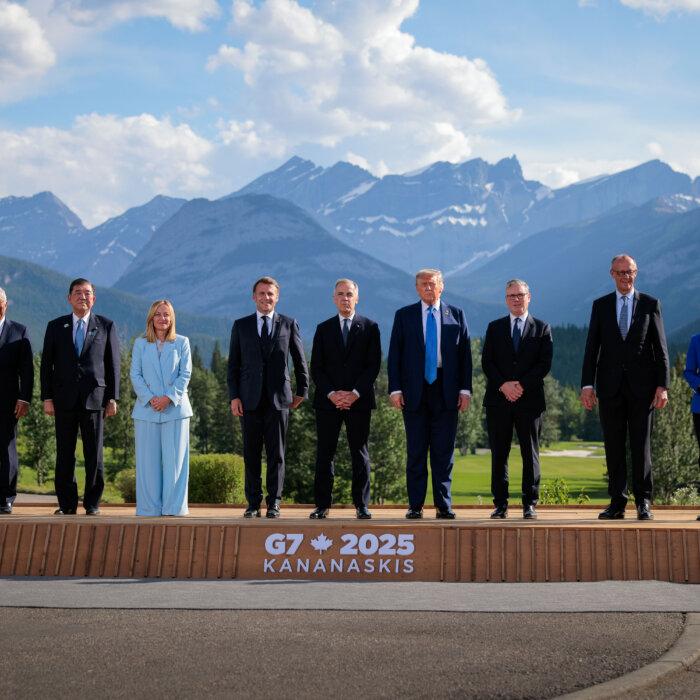
Ukrainian President Volodymyr Zelenskyy left a Canada-hosted G7 summit on June 17 in the absence of new pledges of U.S. assistance and without a sought-after meeting with his American counterpart.
Along with the United States and Canada, the Group of Seven (G7) comprises the UK, France, Germany, Italy, and Japan.
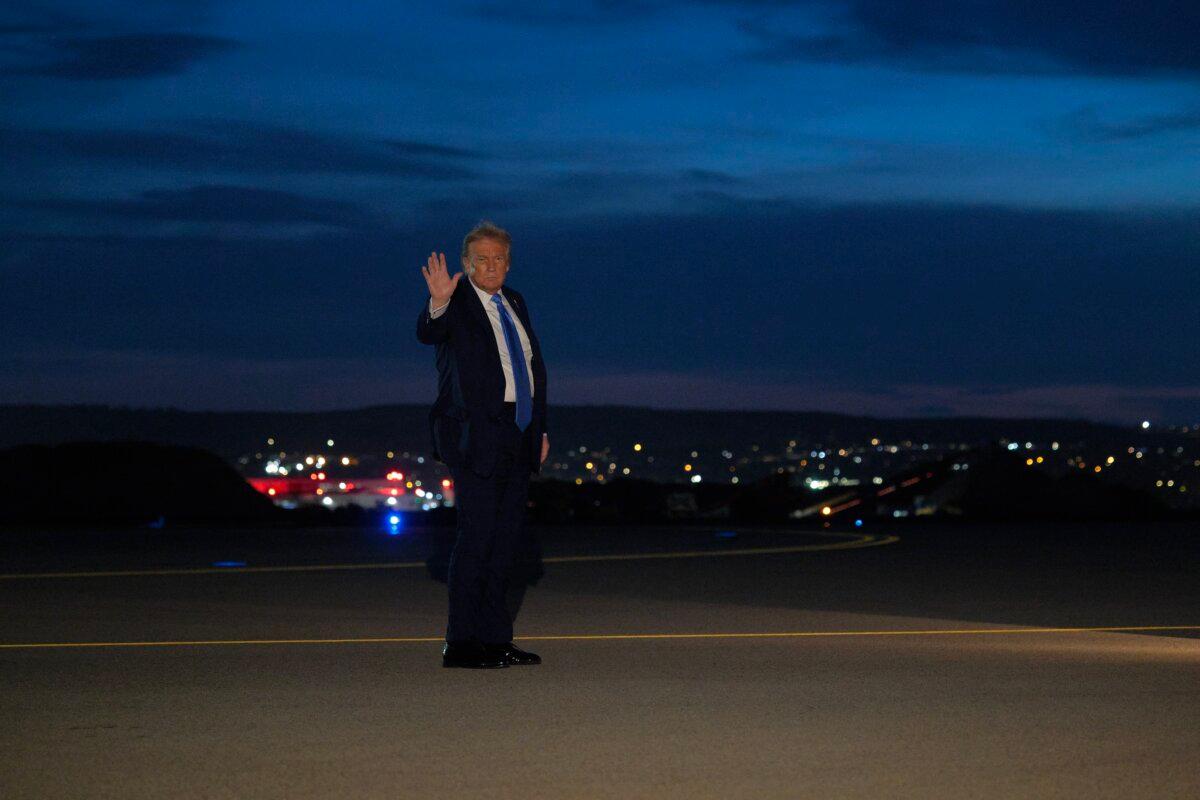
On June 16, Trump abruptly left the summit for Washington—a day earlier than planned—to address the ongoing conflict between Israel and Iran.
“One of the questions that I will discuss with President Trump during the meeting is the defense package that Ukraine is ready to buy,” he told reporters in Vienna on June 16.

“It was the U.S. and President Trump who proposed a [Russia–Ukraine] ceasefire, the resumption of diplomacy, immediate meetings, and negotiations,” he wrote in a June 17 post on X.
No Joint Statement on Ukraine
Before his departure, Zelenskyy met the remaining G7 leaders, including British Prime Minister Keir Starmer and NATO Secretary-General Mark Rutte.The Ukrainian leader also received a pledge of assistance from Canadian Prime Minister Mark Carney, who announced that his country would provide Kyiv with CA$2 billion (about $1.47 billion) in military aid.
Canada, which currently holds the G7’s rotating presidency, remains among Ukraine’s staunchest supporters.
But its ability to assist the Ukrainian war effort is vastly outstripped by the United States, which until now has been the largest supplier of military assistance to Kyiv.
Initially, there had been speculation that G7 leaders would issue a joint statement outlining their stance on the Russia–Ukraine conflict, now in its fourth year.
But as the summit wrapped up on June 17, a spokeswoman for Carney said a joint statement on Ukraine had never been planned.
“G7 Leaders expressed support for President Trump’s efforts to achieve a just and lasting peace in Ukraine,” it reads.
“They recognized that Ukraine has committed to an unconditional ceasefire, and they agreed that Russia must do the same.”
It further stated that G7 leaders “are resolute in exploring all options to maximize pressure on Russia, including financial sanctions.”
Before leaving the summit, German Chancellor Friedrich Merz expressed “cautious optimism” that “decisions will also be made in America in the coming days to impose further sanctions against Russia.”
When asked about the summit’s outcome, Kremlin spokesman Dmitry Peskov said the G7—of which Russia was once a member—had “lost its relevance” for Moscow.
In 2017, Russia withdrew from the group of nations—then known as the G8—after its membership was suspended three years earlier.