The Swiss alpine town of Davos opened its doors to the World Economic Forum’s 56th annual meeting on Jan. 19, with a steady stream of business and political leaders arriving for a week of closed-door talks and high-profile panel sessions, set against a shifting global economic outlook and rising geopolitical strains.
The World Economic Forum (WEF) said it expected a record 400 top political leaders, including close to 65 heads of state and government and six leaders from the Group of Seven, as well as nearly 850 CEOs and chairs and close to 100 unicorns and technology pioneers. U.S. President Donald Trump is slated to take part, and organizers said the delegation from the United States will be the largest in Davos history.
“We’re pleased to welcome back President Trump to Davos, and he’s bringing the largest U.S. delegation,” WEF President and CEO Borge Brende said, noting that special envoy Steve Witkoff and Trump’s son-in-law Jared Kushner are also planning to participate, in addition to a large bipartisan delegation from the U.S. Congress.
“Dialogue is not a luxury, it is a necessity,” Brende said, highlighting the forum’s long-running argument that engagement across governments and industries is essential even as global rivalries sharpen.

“It’s really going to be a discussion at a very important moment. ... Geopolitics is changing,” Mirek Dusek, a forum managing director in charge of programming, said. “Some people think we’re in a transition. Some people think we’ve already entered a new era. But I think it’s undeniable that you are seeing a more competitive, more contested landscape.”
Trump’s Participation Looms Large
The U.S. president has repeatedly signaled that he views global trade and security relationships through the lens of U.S. national interest, a stance that has complicated ties with European allies even as the administration insists that the transatlantic relationship remains strategically important.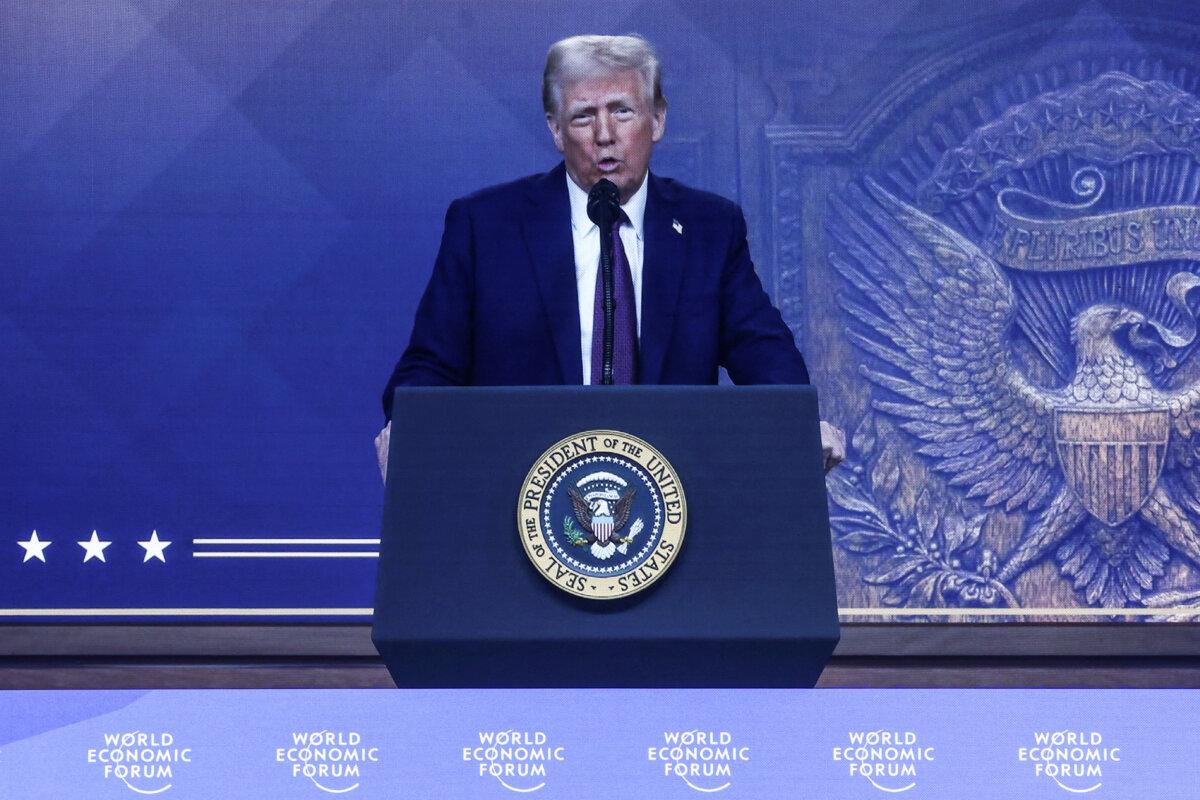
“For a very long time, buying and owning a home was considered the pinnacle of the American Dream,” Trump wrote. “It was the reward for working hard, and doing the right thing, but now, because of the Record High Inflation caused by [former President] Joe Biden and the Democrats in Congress, that American Dream is increasingly out of reach for far too many people, especially younger Americans.
“I will discuss this topic, including further Housing and Affordability proposals, and more, at my speech in Davos in two weeks.”
On trade, Trump has repeatedly accused the European Union of treating the United States unfairly and has backed tariffs aimed at narrowing the gap in goods flows.
“Hundreds of billions of dollars of deficits with the EU, and nobody’s happy with it,“ Trump said at the WEF meeting in January 2025. ”And we’re going to do something about it.
“I’m trying to be constructive because I love Europe. I love the countries of Europe. But the process is a very cumbersome one. And they do treat the United States of America very, very unfairly with the [value-added tax] taxes and all of the other taxes they impose.”
On security, Trump has continued to press European allies to spend more on defense, arguing that the United States bears too large a share of the NATO burden. Last year, NATO members agreed to sharply raise military spending targets, addressing a priority Trump has pursued since his first term.
Economy in Focus
As leaders gather in Davos, the economic backdrop is one of resilience mixed with new vulnerabilities. The International Monetary Fund (IMF) on Jan. 19 edged up its global growth forecasts again, saying that the world economy has adapted better than expected to the disruptions caused by U.S. tariffs that peaked in 2025 and have eased in recent months.“Global inflation is expected to fall, but US inflation will return to target more gradually. Key downside risks are reevaluation of technology expectations and escalation of geopolitical tensions.”
The IMF forecast global growth of 3.3 percent in 2026, up by 0.2 percentage points from its October estimate, and also raised its 2025 forecast to 3.3 percent. The outlook for U.S. growth in 2026 has also been lifted by 0.3 percentage points to 2.4 percent, supported by fiscal policy and lower Federal Reserve interest rates.
A central driver of the improved outlook, IMF officials said, is an investment boom in information technology, particularly artificial intelligence infrastructure. The fund said information technology investment as a share of U.S. output has climbed to its highest level since 2001, lifting business activity and producing global spillovers, especially in Asia’s technology exports.

Gourinchas said the AI boom also introduces risks, including the possibility that lofty expectations for productivity and profit gains could fail to materialize, triggering a correction in stretched market valuations and tighter financial conditions.
“A moderate correction in AI stock valuations with a tightening of financial conditions—reduces global growth by 0.4 percent relative to the baseline,” Gourinchas said. “This could have far-reaching consequences if real investment in technology sectors declines more sharply, triggering a costly reallocation of capital and labor.”
He said downside risks come at a time of heightened geopolitical uncertainty, narrowed fiscal space in many countries, and increased use of export controls on critical inputs such as rare earths, which could interact with any potential correction in AI-related productivity and stock price reassessments in a negative feedback loop that could turn a market correction into a broader growth scare.