The 2026 World Cup soccer tournament will present a major security challenge for its main host, the United States, due to the unprecedented scale of the event, experts have told The Epoch Times.
The United States—which will host the final at MetLife Stadium in East Rutherford, New Jersey—is sharing the tournament with Canada and Mexico.
For the first time, world soccer’s governing body, FIFA, has increased the number of participating nations from 32 to 48.
Such a complex tournament, which will be attended by hundreds of thousands of fans from around the world and feature 104 matches across three nations, will be a major headache for the Department of Homeland Security (DHS) and a logistical challenge for FIFA, the experts said.
“This is the first time they’ve run the event at this scale,” Cliff Stott, a professor of social psychology at Keele University in England and an expert on crowd behavior and public order, told The Epoch Times,
“It’s a significant expansion on any other previous tournament with more countries competing this time than ever before.”
‘Nefarious People Can Slip Through’
“Any time you have big gatherings and people from all over the world, nefarious people can slip through,” Lora Ries, director of the Border Security and Immigration Center at The Heritage Foundation, told The Epoch Times.She said terrorists or just those intent on overstaying their travel visas could “lie well” in their applications.
“So that’s why we’ve got to have so much scrutiny on the visa applications and continue to monitor and vet people when they do get a visa granted up until the time that they show up at our airports or other ports and onward, if appropriate,” Ries said.
Egypt is due to play its first three games in next year’s World Cup in Seattle and Vancouver, and thousands of Egyptian fans are expected to apply for U.S. visas.
He said the State Department had surged an additional 450 officers to handle visa applications from “World Cup enthusiastic countries” like Argentina and Brazil.
Security Protocols Unchanged
“We’re not changing the security protocols in terms of getting in the country,” according to Giuliani, whose father, Rudy Giuliani, was mayor of New York when the United States last hosted the tournament in 1994.That World Cup was watched by a total of 3,587,538 spectators, a record for the tournament that still stands to this day but will inevitably be beaten when 104 matches are played between June 11 and July 19.
Considering that 16 additional nations are participating and that the United States, Canada, and Mexico are popular destinations, the number of travelers will likely be much higher.
Stott said the various locations and the distances involved in the 2026 edition of the tournament present a logistical challenge for soccer fans.
Risk of Visa Overstayers
Ries said a minority of those visiting for the World Cup would inevitably seek to stay on in the United States.“That’s always a risk anytime there’s an opportunity for someone to come ’temporarily' to the U.S., that they don’t leave,” Ries said.
She said the State Department had data on visa overstay rates for every country, and, “depending on those rates, they need to dial up and dial down the scrutiny given to the applicants, and not be afraid to deny a visa.”
The fourth nation in the group containing the United States, for example, could be any one of Turkey, Romania, Slovakia, or Kosovo.
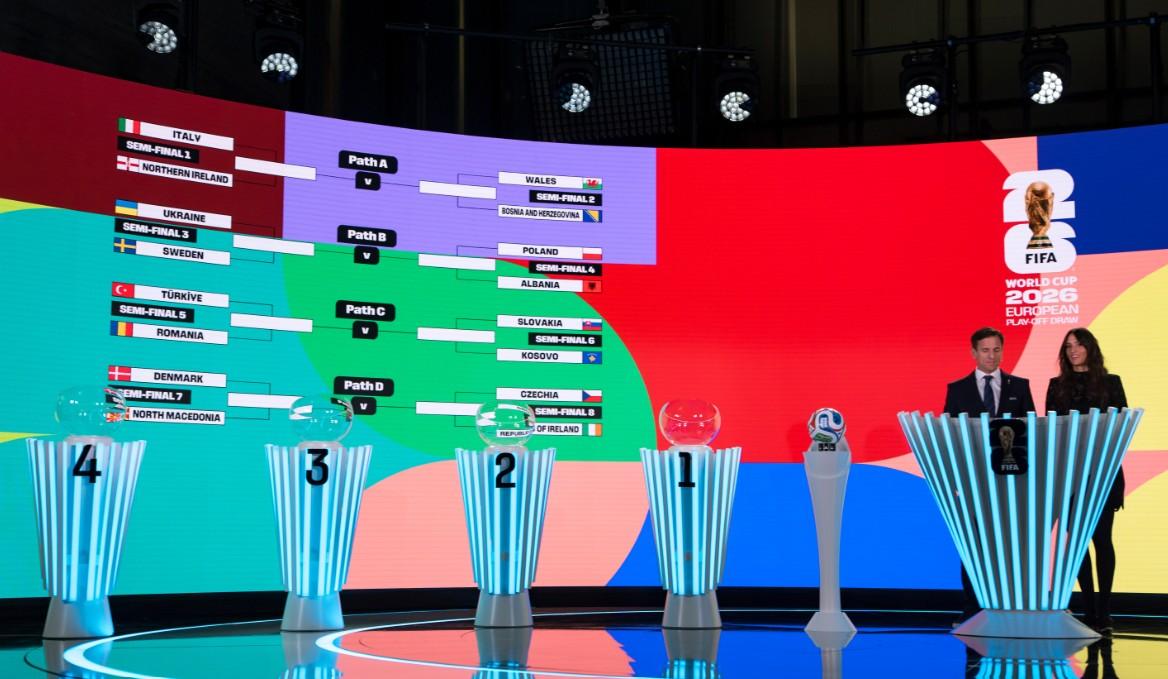
That means that fans of many countries will have only two months to apply for visas to the United States.
Several of those countries, such as the Democratic Republic of Congo, Bolivia, Albania, and Iraq, may have issues with passport vetting.
Hooliganism a Minor Concern
Violence between fans of rival nations has not been a problem at a World Cup since 1990.England fans, an international menace during the 1980s and 1990s, have been well-behaved in recent tournaments.
“The idea that there are going to be challenges from hooliganism is not realistic,” Stott said.
Coordination
Stott said the main issue for the organizers and the host nations was the diversity of law enforcement agencies involved in the safety and security response.“In the past, historically, where we’ve looked at successful safety and security arrangements across the tournament as a whole, that’s come about through good coordination and a good unified safety and security policy,” he said.
Political Controversies
An example of a political agenda, Stott said, was Seattle’s decision to make the Egypt vs Iran game on June 26 an LGBT pride event, despite homosexuality being illegal in both countries. The Egyptian and Iranian football federations have both complained and urged FIFA to intervene.“It’s due to these cities and states not cooperating with federal government to enforce federal immigration laws,” said Ries, who added those jurisdictions were protecting “criminal aliens.”
“President Trump is right to not want to benefit these jurisdictions, who are flouting federal law and endangering American citizens,” she said, but noted she was not sure how feasible it would be to order FIFA to move the games, which they had contractually agreed to host in those cities.
The Epoch Times has reached out to FIFA but has not received a response.