Doubts remain over whether the reimposition of sanctions on Iran—suspended in 2015 following the Joint Comprehensive Plan of Action—will curb Tehran’s nuclear ambitions.
Olli Heinonen, a former deputy director general of the International Atomic Energy Agency (IAEA) and a distinguished fellow at the Stimson Center, told The Epoch Times, “We should not yet conclude that Iran’s program has been destroyed.”
“The status of stocks of 20 percent and 60 percent enriched uranium—which can be converted in a short period into fissile material suitable for a weapon—is not fully known,” he said.
Sanction ‘Evasion Infrastructure’
A spokesman for Dallas, a private analytics and reconnaissance company that has exposed companies that help Russia evade sanctions, told The Epoch Times in an email, “What’s telling from our Russia investigations is that authoritarian regimes don’t just evade sanctions reactively, they build evasion infrastructure in advance, as a backup, even while negotiating.”
The spokesman, who asked not to be identified for security reasons, said Iran has already established procurement networks through the same Central Asian routes that Russia uses for military components.
“Tehran has spent months pre-positioning financial channels via [United Arab Emirates] and Chinese banks, diversifying nuclear supply chains through Hong Kong, Malaysia, and Turkey, and crucially, securing alternative technology acquisition routes,” he said.
“Importantly, Iran learned from Russia’s 2022 mistakes. They’ve pre-established alternative payment systems and backup supply chains through Chinese banks and crypto networks before snapback, not after.”
Heinonen said the sanctions reimposed under the snapback mechanism would create additional hurdles if Iran needed to import new raw materials such as high-strength aluminum or composite materials.
“However, one cannot exclude the possibility that Iran could assemble a small enrichment facility of roughly 1,000–2,000 centrifuges in a relatively short period, as it did in late 2002 at Natanz,” he said.
Brig. Gen. Yossi Kuperwasser, a former member of Israel’s Iran nuclear negotiating team, told The Epoch Times the question was not whether Iran would be able to survive under the new U.N. sanctions but whether the Iranian people would look at the regime and ask themselves why they should suffer economically because it has refused to give up nuclear ambitions.
Kuperwasser said public discontent was what really worried the Tehran regime.
“Right now they cannot build their own nuclear weapon, for many reasons,” said Kuperwasser, who now heads the Jerusalem Institute for Strategy and Security (JISS).
“Without it, you cannot build a nuclear weapon,” he said.
Billions ‘Down the Drain’
Kuperwasser said Iran spent billions of dollars over the years on its nuclear program, and it had all gone “down the drain.”“To start now building a new Natanz or new Esfahan is beyond their capabilities financially. They have little money and they [have] to spend it on maintaining some minimal level of economic activity,” Kuperwasser said.
Heinonen said hardliners in Tehran, led by the 86-year-old Iranian leader Ali Khamenei, are not yet ready to make concessions about Iran’s nuclear program.
“Some officials have promoted a ‘win-win’ approach in which Tehran would accept certain nuclear constraints to reduce sanctions—on the one hand to lessen the impact on a struggling economy, and on the other to preserve nuclear capabilities that could be expanded at a later date,” he said.
At 8 p.m. ET on Sept. 27, the sanctions, which were first adopted by the Security Council between 2006 and 2010, were reinstated.
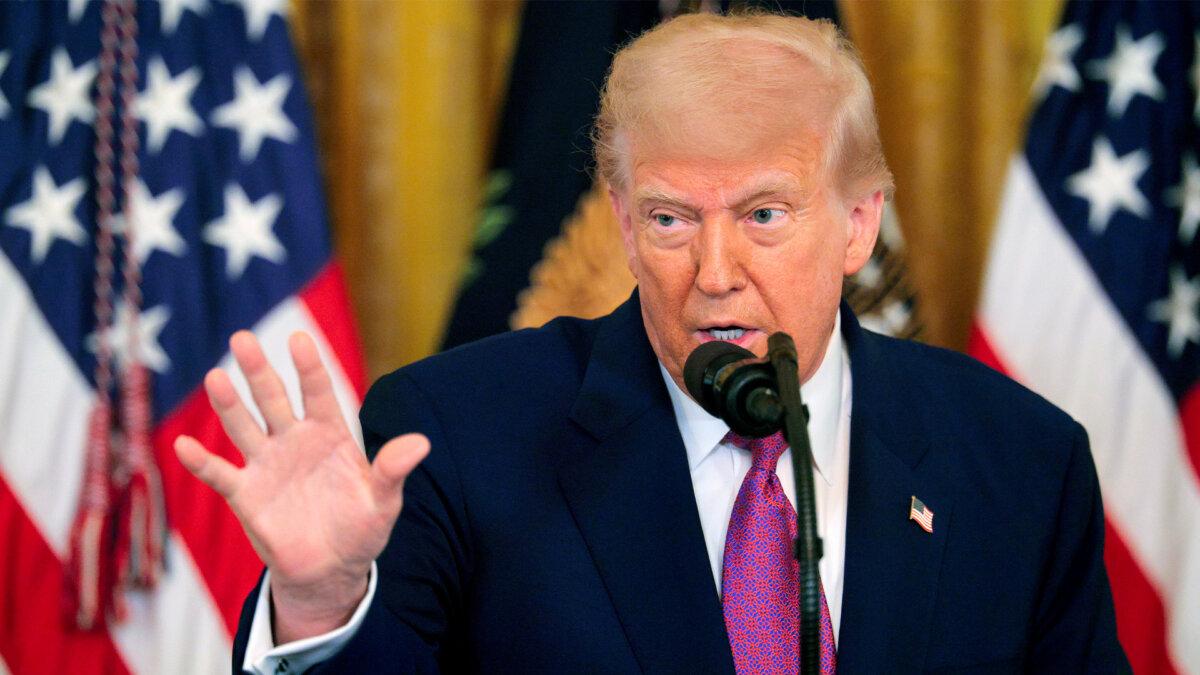
On Oct. 1, the U.S. Department of the Treasury’s Office of Foreign Assets Control (OFAC) designated for sanctions 21 entities and 17 individuals it believes are involved in the “acquisition of sensitive goods and technology” for Iran.
“Under President Trump’s leadership, we will deny the regime weapons it would use to further its malign objectives,” he said.
Iran has repeatedly said that its nuclear program is for peaceful purposes.
It said the Atomic Energy Organization of Iran (AEOI) unveiled six major technological achievements the previous day, including a skin cream containing rhenium-188 for skin cancer treatment, as well as gallium FAPI, “designed for the detection of more than 30 types of cancer,” and lutetium FAPI, which “offers targeted treatment for advanced cancers.”

“Iran also doesn’t consider itself legally bound to observe those illegal resolutions, including the suspension of uranium enrichment,” he added.
Asked if the sanctions can be fully implemented against Iran, given its support from China, Russia, and North Korea, Heinonen said, “For the sanctions regime to be effective it needs to target, among other things, Iran’s trade with major partners such as Russia, India, and China. This includes curbing Iran’s exports—in particular oil—and restricting imports of vital equipment, materials, and technologies for the petrochemical sector, the armed forces, and nuclear and ballistic-missile programs.”
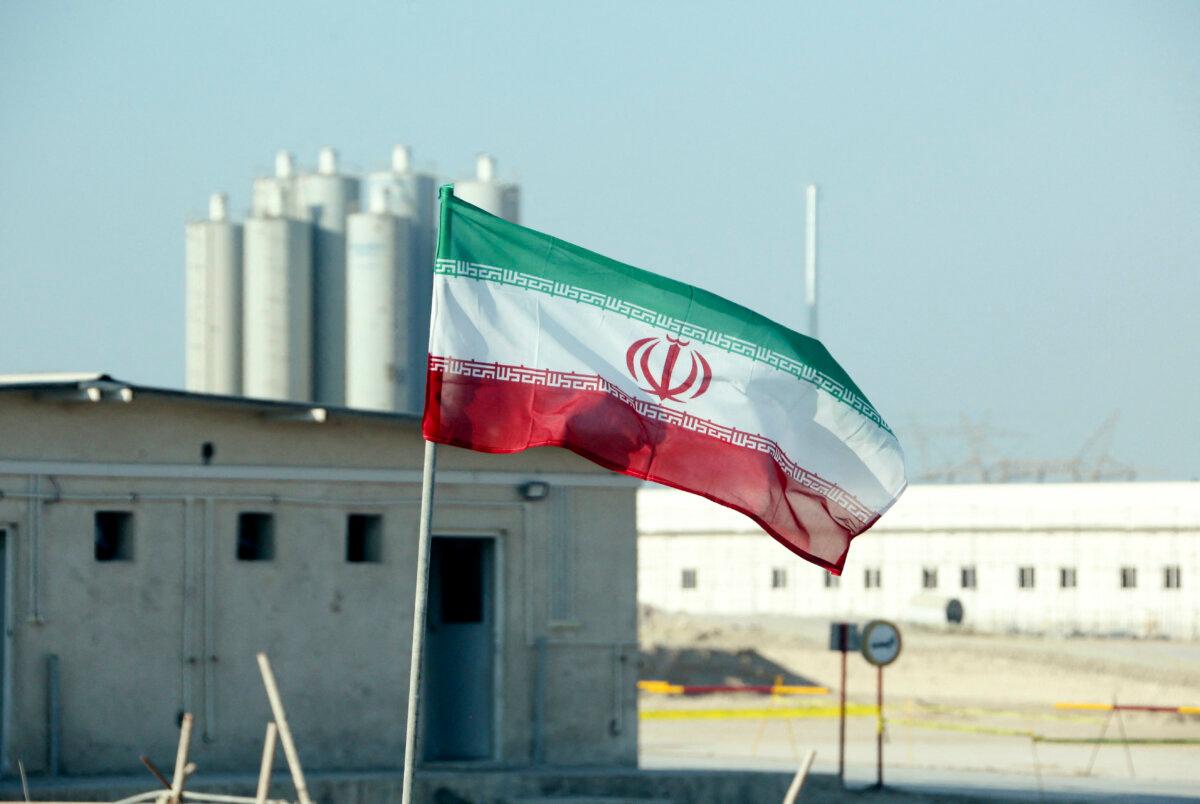
Heinonen said Russia had recently agreed with Iran to complete the Bushehr-2 and Bushehr-3 nuclear power stations, and build small modular reactors and larger power plants.
“These projects require not only financing but technology imports that Russia itself lacks in some areas,” he said.
Third-Country Loopholes
The Dallas spokesman said the real test is whether the UK and other Western countries will coordinate enforcement with Asian allies to close third-country loopholes.“Russia, for instance, has managed to procure sanctioned components because Asian firms sanctioned by the UK were not simultaneously blacklisted by the EU or the U.S.,” he said.
The Dallas spokesman said Russia had sustained defense production despite sanctions by technical intermediaries and sourcing parts through hubs like Singapore, Dubai, and Istanbul.
“Western authorities should therefore focus on suppliers of critical military inputs—from advanced Nvidia chips to key electronic components—and demand tougher oversight,” he said.
Kuperwasser said Iran was unlikely to change its course on its nuclear program until Khamenei dies.
“He is the man who calls the shots and when he goes, it might be an opportunity for anybody who wants to see a different Iran to try and play their cards,” Kuperwasser said. “But for the time being, it seems that the most powerful player in this game is still going to be the Revolutionary Guards,” who remain loyal to Khamenei and his hardline policy on the nuclear program.