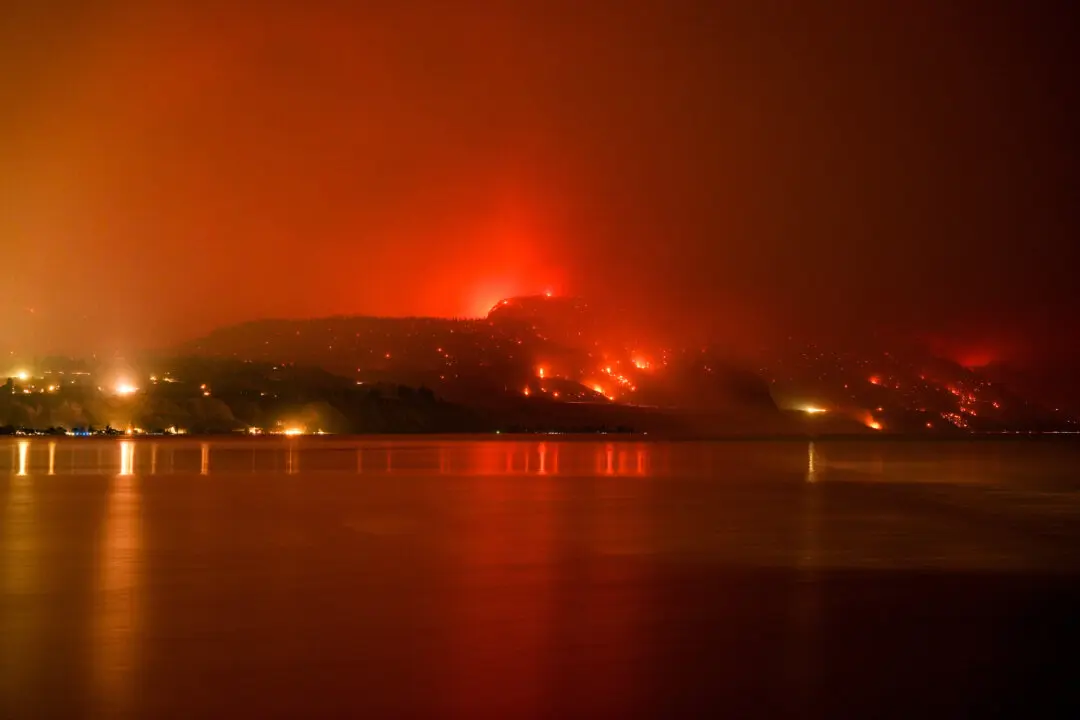
An out-of-control wildfire in the northern part of Saskatchewan has forced thousands more residents to flee their homes, almost doubling the number of people who have already been evacuated.
Thousands of people have been evacuated from the town of La Ronge and the surrounding region in addition to the approximately 8,000 residents who were already displaced by fires in Saskatchewan, Premier Scott Moe said in a June 3 press conference.
Once all evacuees are registered, there could be as many as 15,000 people displaced from their homes, Moe said.
More than 400 structures have been lost to wildfires in the province to date and more damage is expected, Moe said, noting that some homes have been lost in the northern part of La Ronge.
“I think it’s safe to say that we are going to have some loss,” he said. “From the conversations that we’ve had with local leaders, we’re not yet. Today’s not going to be an easy day, and tomorrow doesn’t appear to be an easy day either. ... We need a change in the weather.”
Gusting winds and dry conditions have exacerbated the blaze, making it challenging for crews to control, Saskatchewan Public Safety Agency (SPSA) President and Fire Commissioner Marlo Pritchard said.
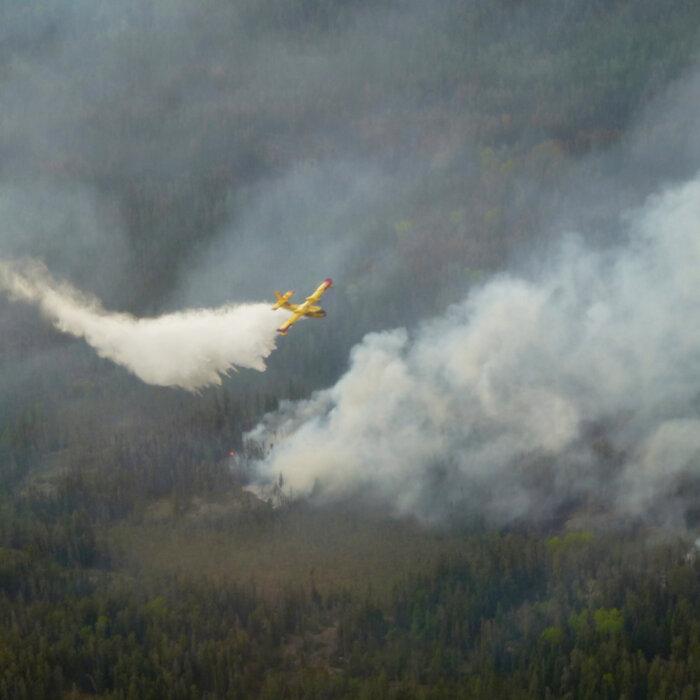

“Yesterday was an extremely challenging day for our firefighters,” he said during the press conference. “Our firefighters had to flee as the fire behaviour was so extremely ... aggressive that they had to get out of the way for their own safety.”
The SPSA issued an evacuation order June 2 for the 2,500 residents of La Ronge, as well as those in nearby Air Ronge and the Lac La Ronge Indian Band after a wildfire breached the town’s airport.
The out-of-control fire continues to move swiftly and was listed at 83,630 hectares in size by the province’s public safety agency.
The Saskatchewan Health Authority and the Canadian Red Cross have said more than 45 acute-care patients and long-term care residents were being moved from the La Ronge Health Centre and care homes.
Evacuation orders have also been issued for northern areas, including Pelican Narrows, East Trout Lake, and Peter Ballantyne Cree Nation.
Twenty fires were burning in Saskatchewan as of June 3, eight of them out of control. Moe has said there could be many more evacuation orders in the coming days.
He said the province is working with the federal government and the RCMP to determine whether military support is needed.
Funding will also be made available for evacuees, he said.
“One of the efforts that we are stepping forward with alongside Manitoba and alongside the federal government, is to partner with the Red Cross in supporting our evacuees,” Moe said. “We’re providing $15 million from the province of Saskatchewan ... to support the work of the SPSA in supporting those that are evacuated from a community in Saskatchewan.”
In neighbouring Manitoba, fires have forced more than 17,000 people from their homes, including 5,000 residents of Flin Flon near the Saskatchewan boundary.
Most of the province remains under extreme fire danger with small pockets of high fire danger, according to the most recent bulletin from the Manitoba Wildfire Service.
Manitoba Premier Wab Kinew said some 1,000 hotel rooms have been allocated for evacuees in Winnipeg.
“Nobody wants to sleep on a cot for more than a day or two, even in an emergency,” Kinew told reporters before participating in the June 2 premiers’ conference in Saskatoon.
“We’re connecting folks who need those enhanced accessibility supports first and then broadening it out to everybody else who needs help too.”
Some residents from Pimicikamak Cree Nation, located east of Flin Flon, have been transported to a hotel in Niagara Falls, Ont., as accommodations within the province fill up.
Wildfires also continue to burn in Alberta where nearly 5,000 people have been evacuated, as well as in British Columbia and Northern Ontario.
The Canadian Press contributed to this report.