The upcoming mandatory review of the United States-Mexico-Canada Agreement this year includes many well-known issues such as dairy supply management, but some U.S. representatives say it must also address Alberta’s “unfair” treatment of American electricity providers.
U.S. President Donald Trump’s top trade representative Jamieson Greer is pushing for Alberta’s electricity system to be reformed to eliminate what he calls “unfair treatment of electrical power distribution providers in Montana.”
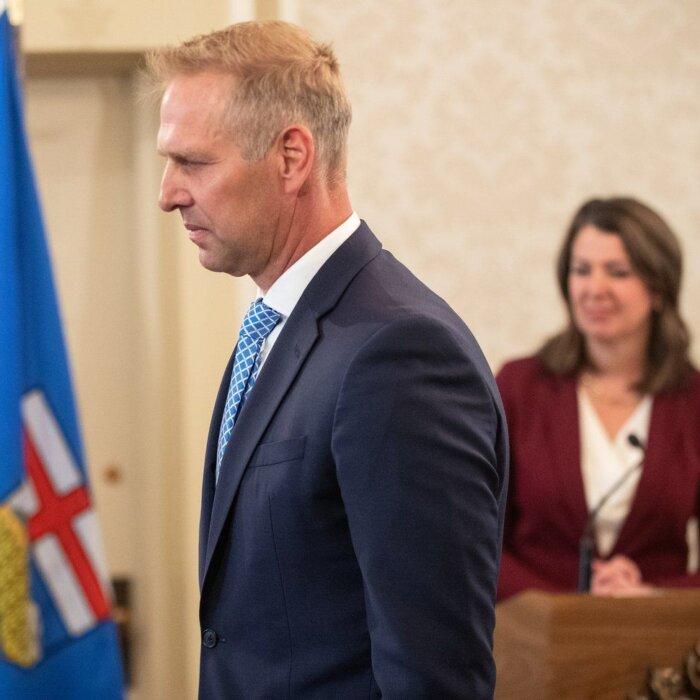
Alberta’s Utilities Minister Nathan Neudorf has disputed the allegation of unfairness, saying the province’s electricity grid operator doesn’t discriminate against any U.S. power generators.
The Dispute
The U.S. Trade Representative’s Office identified Alberta’s non-profit electrical grid operator as a trade irritant in a report released last year, saying that electricity producers based in Montana are not receiving equitable access to the Alberta market.The report also says the AESO has “proposed additional fees and other restrictions on imported energy.”
Essentially, Alberta’s grid prioritizes stability and its own abundant power, restricting imports when it’s not needed or physically feasible, even if Montana has cheaper power available at that moment.
Neudorf told the media last year that those concerns have been a “long-standing issue” brought to the attention of his office, but he said no jurisdiction is being given preferential treatment.
“Any decisions made by the AESO has to do with reliability of our grid, something that we’ve been undertaking at least for the last two years as we’ve seen a significant imbalance in the generation capacity within the province.”
Neudorf said the province is ensuring it adheres to its trade commitments but added that AESO could have been identified as a trade irritant due to Alberta’s reduced energy imports from Montana over the last two years while simultaneously boosting its electrical exports to that state during the same period.
When Alberta “saves” transmission capacity for internal reliability by, for instance, curtailing exports at the border, Montana can’t count on exporting power north when it’s available or cheap, or on importing power when needed, Zolnikov said.
Grid Issues
An AESO market statistics report identified Montana as a net exporter of electricity to Alberta despite the reduced imports, which in 2024 were less than half of what Alberta acquired from the state in 2022.The report also said Alberta imported more power in 2024 from Montana than it did from British Columbia or Saskatchewan, the other two jurisdictions connected to the grid of the Prairie province.
But the U.S. contends that Alberta’s rules sometimes block Montana power due to grid congestion, varying market prices.
Zolnikov says that the current transmission infrastructure is insufficient and congested and that more infrastructure is needed.
“You need a very large upgrade of your transmission, more capacity, more lines,” he said. “We’re looking at that in Montana. Where can we connect to? Who can we connect to, including Canada.”
The AESO is currently undergoing a comprehensive overhaul of the grid system, which is anticipated to be fully operational by 2027.
An AESO spokesperson said in a media statement that the operator is encouraging generators located in Montana to engage in the work being done for the system overhaul, and also said U.S. generators are not being treated unfairly.
The spokesperson added that Alberta is proactively seeking to increase the volume of power that can be imported from both Canadian and U.S. regions, which includes expanding the necessary services and infrastructure to guarantee that imports can consistently enter the province.
Zolnikov said, however, that investors will only be willing to build more lines if clear rules for curtailment are in place.
“What the solution long term to this is, we need to build out more to solve this problem. And Alberta’s current solution is preventing us from building out more, because no one knows what they’re going to do,” he told CBC. “I’ve talked to people who want to invest on transmission going north. … No one’s going to touch this with a 10-foot pole until there’s surety.”
Neudorf said Alberta wants Montana to have a stake in its electrical grid despite U.S. tariffs and the ongoing trade dispute between the two countries.
“Tariffs may come and go, (and) governments come and go, but we want to make sure we build a good, competitive market that serves the needs of Albertans,” he said.
“If our government or our country is still faced with tariffs from the United States, we can make those actions secondary to that, but I don’t think it should be embedded within the system that we’re developing and designing right now.”
Cost is also a factor, Neudorf said. He recently told CBC’s “Calgary Eyeopener” that repairing the grid could come with a price tag of up to $500 million.
Impact on USMCA
The USMCA review is a mandatory joint assessment by the United States, Mexico, and Canada that is scheduled to begin on July 1, 2026, marking the sixth anniversary of the trade deal.The six-year review will result in one of four outcomes: a renewal with the potential to extend the deal to 2052, a partial renegotiation, a period of prolonged uncertainty with annual reviews until 2036 when the current pact expires, or termination.
The third option would mean Canada, the United States, and Mexico were unable to agree to a 16-year renewal, thus requiring them to hold joint annual reviews until either they agree to approve an extension or the pact expires 10 years from now.
Just how big of a role the Alberta-Montana electricity issue will play in the upcoming USMCA review is unknown, but it is likely to fall well down on the list of issues behind dairy and supply management, procurement, alcohol bans, and oil and critical minerals.
The issue could be a small bargaining chip for Canada or the United States during talks, but it could also be resolved outside the main USMCA negotiations through direct talks between Alberta and Montana.