The Quebec government has announced its plan to present legislation this fall to prohibit public prayer.
The notwithstanding clause can be used by governments to override certain sections of the Charter of Rights and Freedoms.
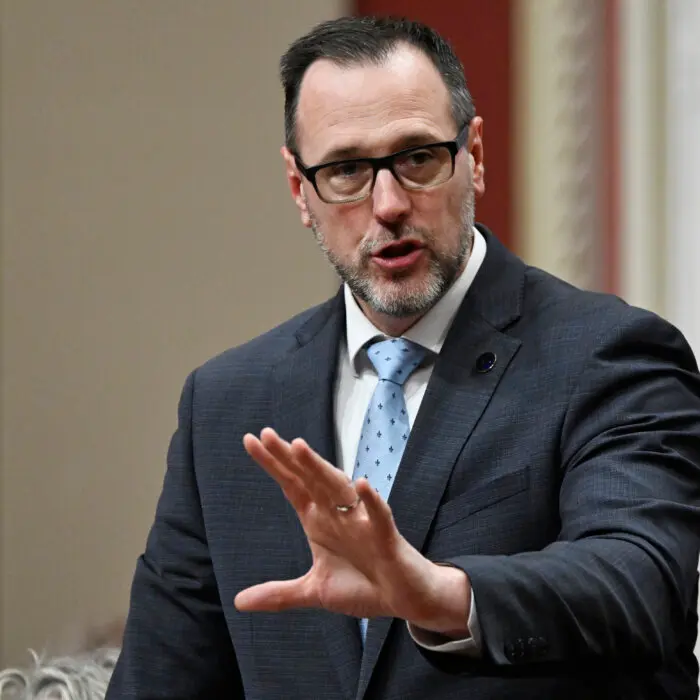
“The proliferation of street prayers is a serious and sensitive issue in Quebec,” Roberge wrote on X on Aug. 28. “Last December, our government expressed its discomfort with this increasingly prevalent phenomenon, particularly in Montreal.”
Why Is the Province Tabling the Bill?
The statement issued by Roberge did not include specifics on how the Coalition Avenir Québec (CAQ) government plans to legislate against public prayer, but Legault has talked about the ban in the past.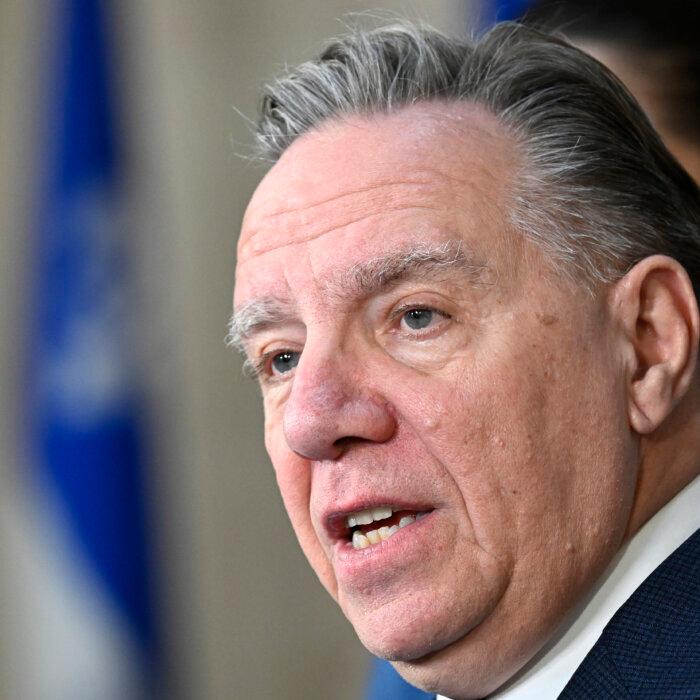
He first mentioned his government was considering such a ban last December just before the National Assembly of Quebec went on its holiday break.
Legault was questioned by reporters about the legality of such a step and asked if a public prayer ban would violate Canada’s Charter of Rights and Freedoms.
The premier said his government would “look at what means we can use to act legally,” but he noted that he wanted to send a “very clear message to Islamists.”
He added that his government had received a report with more than 4,000 recommendations last fall to look at protecting the language, culture, and secularism of Quebec.
Roberge mentioned the report in his Aug. 28 statement but said the province would push ahead with its proposed mandate.
“The Premier of Quebec has given me the mandate to strengthen secularism, and I am firmly committed to fulfilling this mandate diligently,” he said. “Thanks to the reflections conducted in caucus and the committee’s report, our deliberations on several aspects of secularism are well advanced.This fall, we will therefore table a bill to strengthen secularism in Quebec, including by prohibiting street prayers.”
The issue has also been on the radar of Parti Québécois Leader Paul St-Pierre Plamondon, whose party has been surging in the polls. He announced in late August that he would hold a “consultative referendum” for members to weigh in on what his party’s position should be.
He described public prayers as an “appropriation of public space by religious fundamentalists” and questioned why it has taken Legault so long to act on the issue.
“The reality is that he has done nothing for a year,” St-Pierre Plamondon told reporters during a swearing-in ceremony for Alexandre Boissonneault, new PQ member of the Quebec national assembly.
Bill Opposition
The public spaces that would be subject to the ban have yet to be specified by the government, but schools and other such public buildings are likely to be included, based on Legault’s earlier remarks. It is also unclear if all faiths would be impacted by the ban.Concerns about the proposed ban have led some groups to stage public prayers in protest.
The Canadian Muslim Forum (CMF-FMC) has been speaking out against the proposed ban on public prayer for months. It issued another statement on Aug. 28 in response to the CAQ’s announcement, calling on the government to “redirect its energy toward urgent priorities and to respect the dignity and rights of all Quebecers.”
Muslims are not the only religion likely to be impacted by the proposed ban. Many religious denominations, including Christians, conduct prayers in public spaces.
Assembly of Catholic Bishops of Quebec president Martin Laliberté said a ban on public prayer could disrupt Catholic rituals like the Way of the Cross procession on Good Friday. He questioned whether it would be illegal for someone to offer a “sun salutation” in a public outdoor yoga class or to pray over a meal at a public park.
The Canadian Civil Liberties Association (CCLA) has also been critical of the Quebec government’s plan, calling it an “alarming measure” that would be a “clear infringement” on freedom of religion and assembly.
Secularism Goal
Quebec’s announcement in late August comes in the wake of the province’s enactment of Bill 84 in May, which requires newcomers in the province to align with its values. Safeguarding of the French language, gender equality, and secularism are three of the topics highlighted in the legislation.Similar legislation was pointed to in the report tabled with the province this month. The advisory committee that submitted the report to the government recommended that the province expand its secularism law, known as Bill 21, to limit religious accommodations and to extend the religious symbols ban to daycare workers.
The committee, which is led by two lawyers who have previously defended Bill 21 in a legal setting, also reviewed the question of public prayer. The report did not recommend a universal ban; instead, it proposed that municipalities should have the jurisdiction to regulate the practice.