This copy is for your personal, non-commercial use only. Distribution and use of this material are governed by our Subscriber Agreement and by copyright law. For non-personal use or to order multiple copies, please contact The Epoch Times Reprints.
What happens in Canada when organized labour refuses to comply with a back-to-work order? In the 1970s, refusal to obey back-to-work orders led to jail time for several union leaders. But there have also been other cases with less severe outcomes or no consequences at all, especially in recent times.
The question of what the outcome could become for defiant unions is once again on the country’s mind, with the showdown between Air Canada and unionized flight attendants reaching an impasse.
The Current Situation
About 10,000 Air Canada flight attendants who belong to the Canadian Union of Public Employees (CUPE) went on strike on Saturday, Aug. 16, over unmet salary and work condition demands.
They were ordered back to work Aug. 17 after Jobs Minister Patty Hajdu said she was invoking Section 107 of Canada’s Labour Code to require binding arbitration by the Canada Industrial Relations Board (CIRB). The CIRB required the previous terms of agreement to be reinstated until a new agreement is signed, and for the flight attendants to go back to work until that time.
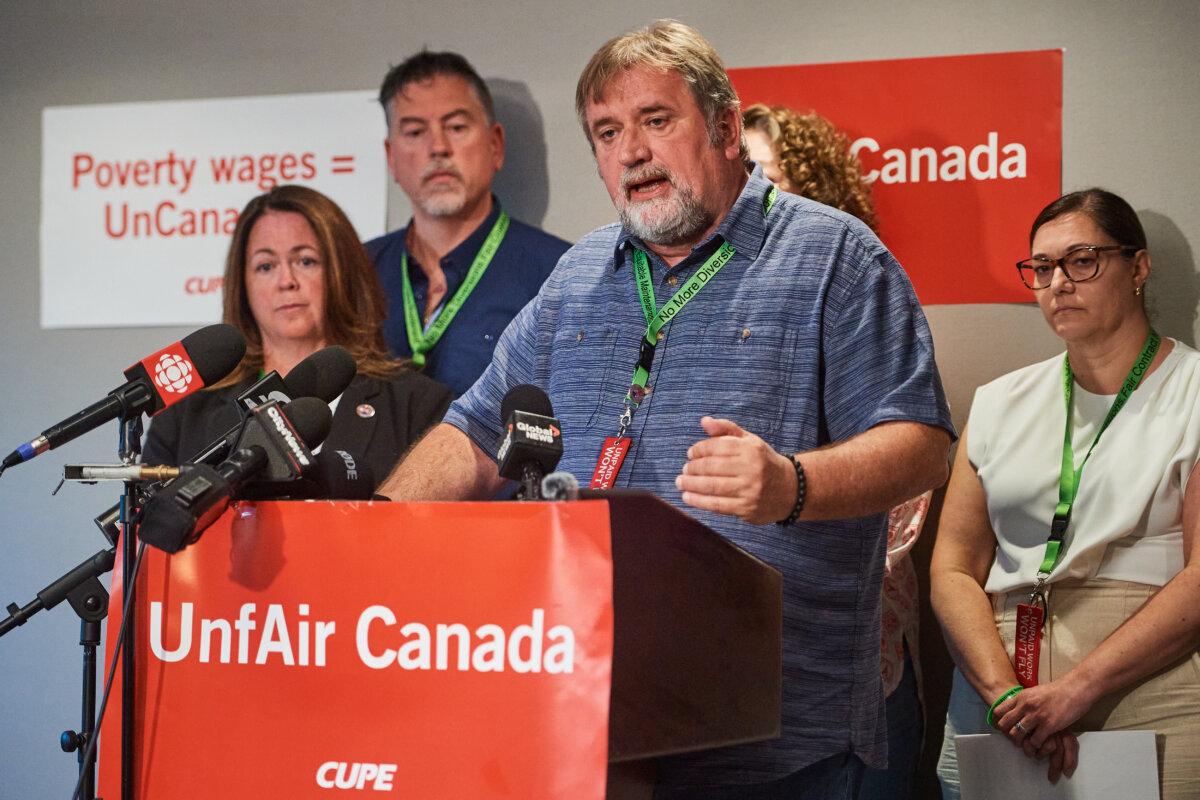
CUPE National President Mark Hancock speaks at a press conference outside the Pearson Airport in Toronto on Aug. 18, 2025. The Canadian Press/Sammy Kogan
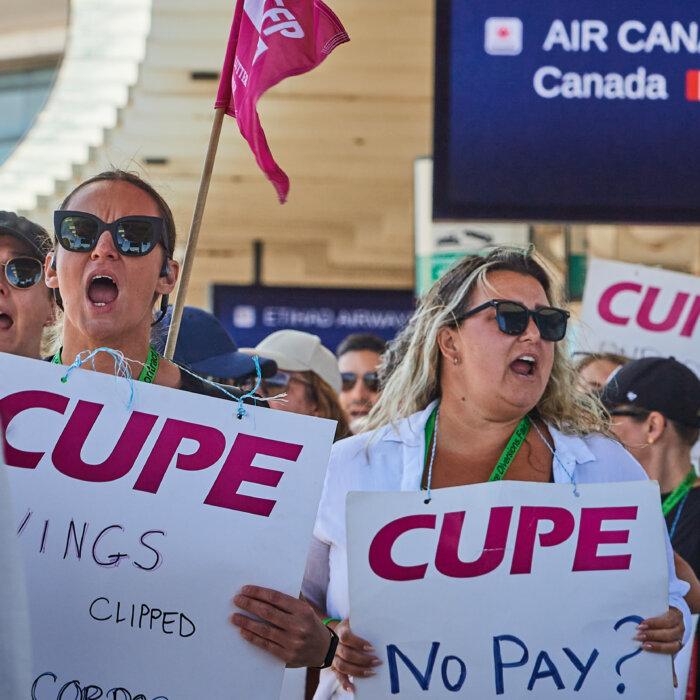
However, unionized flight attendants are refusing to comply with CIRB’s back-to-work order and are continuing to picket, something the board has called “unlawful.”
CUPE’s national president, Mark Hancock, said Aug. 18 that he’s willing to go to jail to protect collective bargaining rights and the right to strike, portraying the dispute as representative of the clash between government and corporate power allied against working Canadians. The union has said the federal back-to-work order is unconstitutional and is challenging the issue in courts.
Prior to the strike, 99.7 percent of the CUPE flight attendants’ membership voted to authorize the strike action. The last time Canadian flight attendants went on strike was in 1985, although a flight attendant strike was narrowly averted in 2011. The union says Air Canada expected the federal government to intervene and therefore didn’t engage in good-faith negotiations.
Air Canada, which is calling the union’s ongoing strike “disappointing,” says its Aug. 11 offer included “a 38 percent increase in total compensation over four years that would have made our flight attendants the best compensated in Canada.” The airline said the pay raise comes with “provisions for ground pay and other work-life balance, career and pension improvements.”
However, CUPE’s Air Canada chapter president Wesley Lesosky said the real raise is much smaller in reality.
“Air Canada has offered 8 percent in the first year as a one-time catch-up. Meanwhile, flight attendants have taken a 9 percent cut to their real wages due to inflation over the course of their last contract since 2015,” Lesosky said. “In reality, the company has offered a 17.2 percent wage increase over four years.”
The union further says that entry-level wages for flight attendants have only gone up 10 percent in the past 25 years while inflation has risen 169 percent.
Late on Aug. 18, the union told its members that the airline had reached out to resume negotiations, which had ceased last week. The union added that the strike is “still on.”
How Much Power Does CIRB Have?
CIRB is a quasi-independent tribunal that handles labour and wage disputes in Canada. The board’s Aug. 18 letter declared the ongoing work stoppage illegal and demanded that the union “immediately cease all activities that declare or authorize an unlawful strike of its members.” The letter also orders the union to provide “written public notice” by noon EDT on Aug. 18 declaring all strike activities over, which the union has not done.
However, the letter does not lay out penalties or consequences for failure to obey its instructions. Historian and constitutional lawyer Lyle Skinner said CIRB has to go through the court to enforce its order, which it has so far declined to do.
“For the CIRB order to be enforced, they have to file it with a Court. They declined to do so [on Aug. 18] for the reasons in their decision citing it would serve no useful purpose due to ongoing labour discussions,” Skinner told The Epoch Times.
Skinner noted that CIRB can change its view based on new circumstances and that there are offences that could be charged under the Canada Labour Code, but he said such matters can only be prosecuted with the consent of the labour board.
This gives CIRB fairly significant power to set the tone and future outcome of the already tense situation, which the airline says has already led an estimated 500,000 passengers to have their flights cancelled by the morning of Aug. 18.
Past Precedent
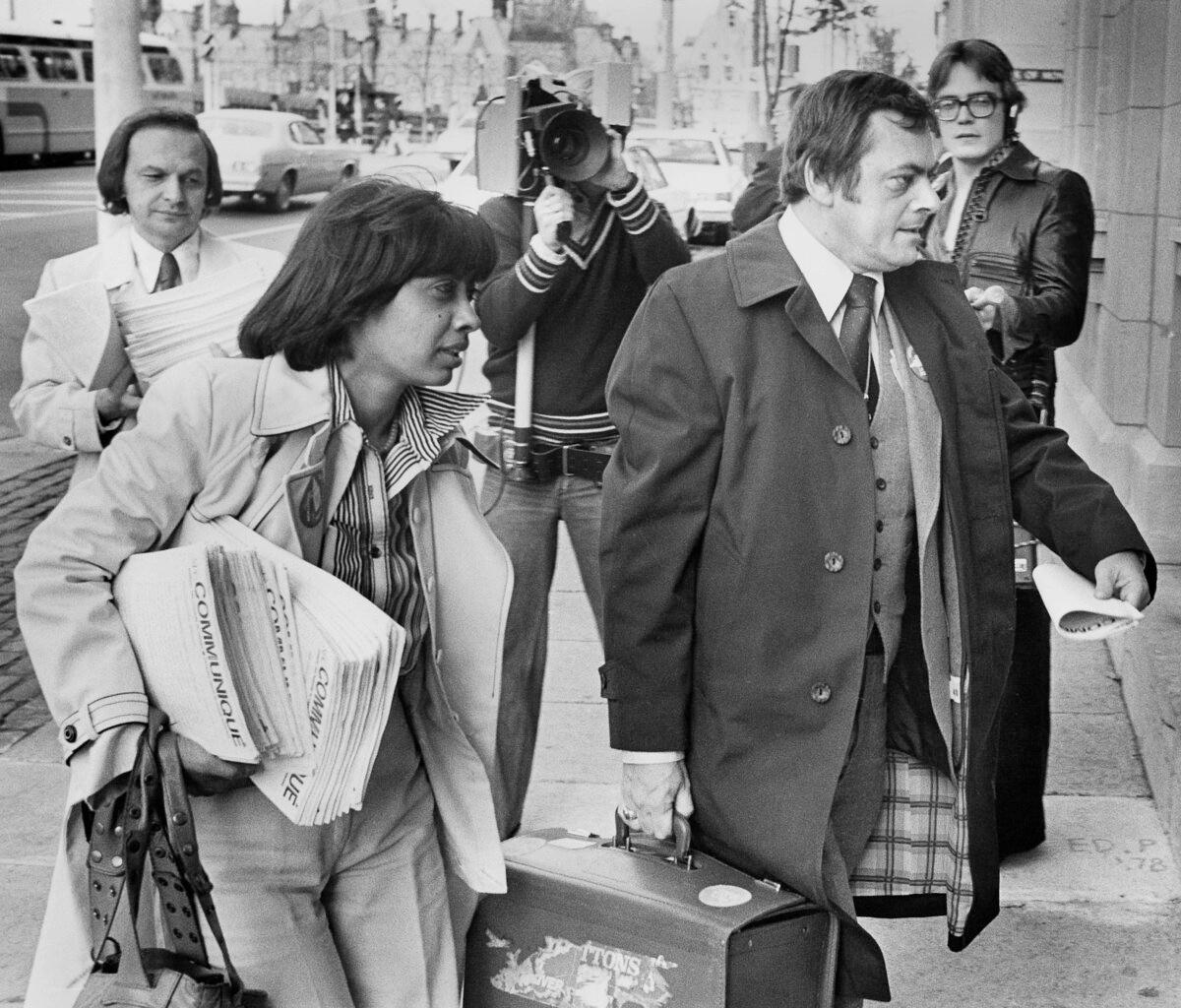
Jean-Claude Parrot, national president of the Canadian Union of Postal Workes, heads to a news conference in Ottawa on Oct. 17, 1978. The Canadian Press/Chuck Mitchell
Historically, when unions have defied back-to-work orders, penalties have ranged from fines to time behind bars.
In 1972, three Quebec public sector union leaders were each given one year in prison after defying back-to-work legislation and rallying their workers to keep striking.
This was followed in 1978 by Canadian Union of Postal Workers chief Jean-Claude Parrot being given three months in jail and 18 months of probation after the union refused to comply with back-work legislation.
More recent non-compliance standoffs include that of the B.C. Teachers’ Federation, which defied a back-to-work order by striking for two weeks in 2005. The union was hit with $500,000 in fines by the B.C. Supreme Court as a result.
Another case with a different outcome was one from last year, when the Teamsters union did comply with a back-to-work order to end a rail workers strike but filed an ongoing constitutional challenge in court arguing that the CIRB’s order violated their rights.
Political Calculations
Prime Minister Mark Carney has been cautious in his words about the dispute, expressing disappointment and a desire for a resolution but avoiding putting the blame primarily on one party in the dispute.
However, the urgency to resolve the dispute as soon as possible is clear from the Liberal government, which intervened only 12 hours after the flight attendants went on strike.
With Canada facing unprecedented instability over tariffs from the United States and a gloomy economic forecast, the labour standoff is made even more politically toxic. The pressure to get Canada’s largest airline back to being fully operational as soon as possible is of significant economic importance, with Toronto Region Board of Trade President Giles Gherson warning in an Aug. 15 statement that even a brief disruption of Air Canada services “would have broad-reaching economic consequences.”
Minister of Jobs and Families Patty Hajdu rises during question period in the House of Commons on Parliament Hill in Ottawa on May 30, 2025. The Canadian Press/Sean Kilpatrick
The Liberal push to see the dispute resolved as soon as possible and avoid worse economic damage has led to Hancock alleging the government is teaming up with Air Canada to squash workers’ rights. The CUPE union chief said Aug. 18 that the government’s action is blocking a deal at the bargaining table because “real negotiations cannot happen if only one side is banking on the government taking away the rights of another party.”
The Liberals are also now up against an alliance of organizedlabour, the Conservatives, the NDP, and the Green Party all of whom say the flight attendants should not be forced back to work without first reaching a freely negotiated deal.
In addition to rejecting Air Canada’s Aug. 11 offer of a 38 percent raise over four years, with the company saying that the offer will make its flight attendants “best compensated in Canada,” the CUPE union says flight attendants do 35 hours of unpaid labour on average per month before and after takeoff.
For her part, Minister Hajdu has said that ending the dispute as quickly as possible is in the best interests of all Canadians, who are experiencing “a great deal of frustration and anxiety” because of flight cancellations. Hajdu on Aug. 18 announced a probe into industry practices, saying any unpaid work done by flight attendants is entirely unacceptable and any loopholes that may allow it will be closed.