News Analysis
Prime Minister Mark Carney has landed in Europe for the annual NATO summit, with Canada in an improved position in the eyes of allies now that it has committed to meet the defence alliance’s spending target by the end of the fiscal year and signed a defence treaty with Europe.
While all NATO allies are now expected to meet that target, the goalposts will be moved further still. The meeting is expected to focus on increasing the target of military spending from 2 percent of GDP to 5 percent.
The increased spending target comes as tensions are continuing to build in Europe, the Middle East, and Asia, which are certain to be a main topic of discussion for the allies.
Both the Biden and Trump administrations have been increasing the pressure on allies to ensure they meet their NATO spending requirements.
Last year’s NATO meeting saw Canada called out by then-Secretary-General Jens Stoltenberg for not spending enough on defence. Canada was at that time spending just 1.37 percent of its GDP on its military, making it one of nine countries not meeting the benchmark.
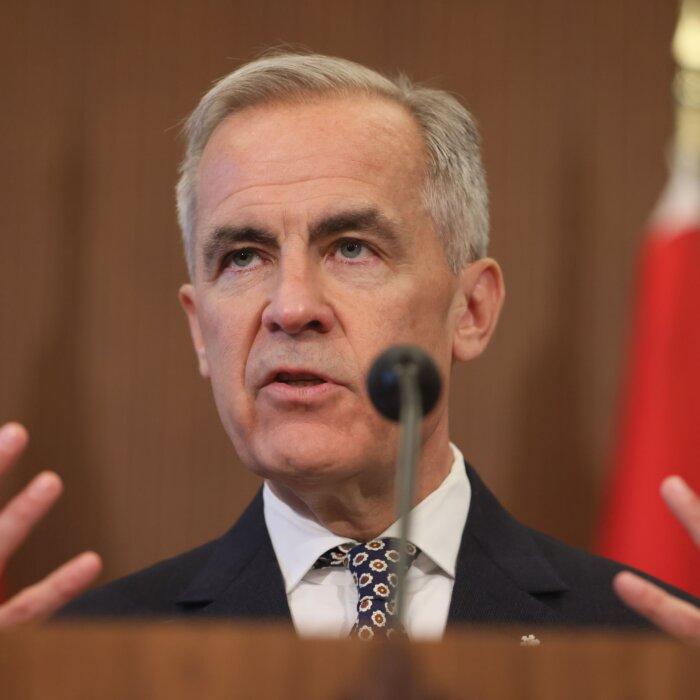

Then-Defence Minister Bill Blair said following the summit that Canada’s defence spending would rise to at least 1.75 percent of its GDP by 2029. But weeks after becoming prime minister, Carney announced Ottawa would spend an additional $9 billion on defence in 2025 to meet NATO’s 2 percent target by March 2026.
The increased military spending will include $2.6 billion for recruitment and retention programs, $2.1 billion for defence research and development, $2 billion for military aid and additional defence partnerships, $1 billion for strategic military capabilities such as advanced radar systems and additional vehicles, and $800 million for new and existing military equipment.
On June 23, Carney also signed a defence and security partnership with the European Union, which will allow Canada to join the $1.25 trillion ReArm Europe program and allow it to partner with other countries to buy military equipment through the SAFE program.
Secretary General Outlines Agenda
In a pre-summit press conference on June 23, NATO Secretary General Mark Rutte said the meeting will involve raising the benchmark for defence investment to 5 percent of GDP.All NATO countries initially agreed to meet the 2 percent deadline in 2014, but they had not set a deadline for meeting this target.
Rutte also said the Summit will be based around a new defence investment plan, and that while the exact details are classified, this includes a fivefold increase in air capabilities, thousands more tanks and armoured vehicles, and millions of rounds of artillery ammo.
Rutte also mentioned a “continued focus” on support for Ukraine, which has been at war with Russia since its invasion in February 2022, as well as “the pursuit of a just and lasting end” to the war.
While Rutte said Russia remains the most “significant and direct threat” to NATO, the country is also supported by China, Iran, North Korea, and Belarus.
“But our security environment has changed. And not for the better. The threats we face today demand that we do far, far more to ensure we can effectively deter and defend,” Rutte said.
Trump Returns
This year’s NATO summit will mark the return of U.S. President Donald Trump as the leader of the United States, which could lead to interesting outcomes given his previous admonishments of the defence alliance.Trump said the defence alliance was “obsolete” when running for president back in 2016, and when he became president, he repeatedly criticized NATO countries that did not meet the 2 percent target. When running for president again in 2024, Trump said he would encourage Russia to do “whatever the hell they want” to countries that failed to meet the target.
Given Trump’s previous comments about the defence alliance and America being the top contributor to NATO, this week’s meeting is likely to emphasize the increased defence spending among all nations.
Similar to the recent G7 joint statement, this year’s NATO declaration could emphasize different shared goals when compared with 2024 due to Trump’s presence. While last year’s G7 summit mentioned climate change, gender equality, and LGBT issues, which are subjects Trump has shunned as president, these were missing from the recent G7 statement on June 17.
In 2018, Trump refused to sign the joint G7 statement following the meeting in Quebec because of what he called “false statements” by then-Prime Minister Justin Trudeau and retaliatory Canadian tariffs on the U.S. steel and aluminum industry.
While all NATO countries are expected to meet the 2 percent target this year, he may push for them to go further. The U.S. president recently told reporters on June 21 that he supported NATO increasing its defence spending target to 5 percent for other countries, but added that he didn’t think the United States should because the country had been “in many cases ... paying almost 100 percent [of] the cost.”
The U.S. president also brought up Canada as a country that was “just about the lowest” for defence spending in the alliance, and said the country believed the United States would protect it.
Carney recently said during a June 17 G7 meeting that the two are attempting to come to a deal around economics and security within 30 days.
Given that Trump left the G7 meeting early to deal with the conflict between Israel and Iran, the NATO summit may provide another opportunity for him and Carney to discuss working toward an economic deal. The two may also further discuss Canada’s participation in Trump’s “Golden Dome” defence project to defend against missiles and drones, which Trump has said could cost Canada US$71 billion to join.