A record level of “ramping” at some West Australian hospitals in June has led the Australian Medical Association (AMA) to call on all governments to sign up to a new national health reform agreement.
The AMA has called the situation a “logjam crisis” happening in all “corners of Australia.”
It has called for an independent national workforce planning agency to be established as a key part of attracting and retaining medical professionals in regional Australia.
Ramping is said to occur anytime an ambulance spends more than 30 minutes waiting outside a hospital for its patient to be admitted.
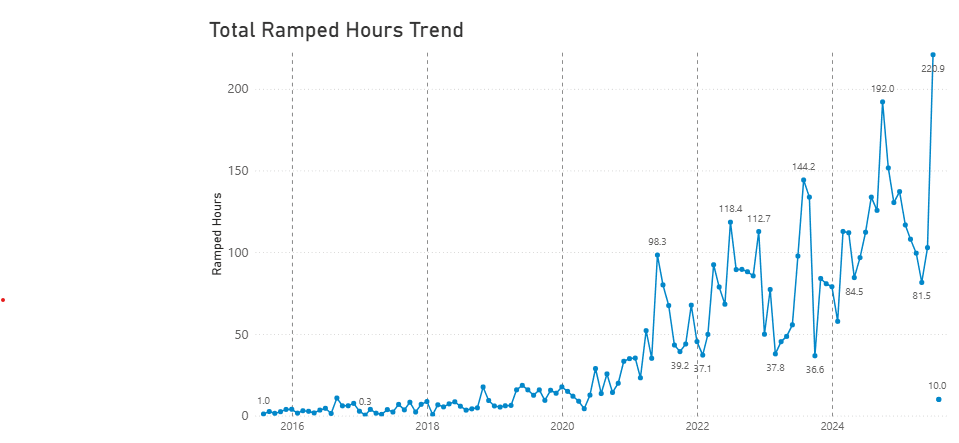
Figures from St John show regional WA hospitals recorded more than 250 hours of ambulance ramping last month, an average of just over eight hours every day during which ambulances were parked outside emergency departments, unable to transfer patients or respond to another emergency.
While every WA regional hospital except Northam experienced a month-on-month increase in June, Bunbury Hospital was by far the worst, accounting for about 85 percent of non-metropolitan ramping hours. It’s a problem which has gradually occurred over the last 10 years, and which—for Bunbury in particular—is showing no sign of abating.


Meanwhile, metropolitan hospitals collectively experienced a small decrease from the previous month, though they had higher ramping times than June 2024. However, Royal Perth Hospital in the CBD had patients waiting in ambulances for a total of 1,261 hours versus 1,096 at the same time last year.
Last year, the Cook Labor government introduced a new Patient Transport Coordination Hub (PaTCH) to improve the coordination of non-emergency patient transfers and reduce the use of ambulances for interhospital transfers of patients with low- and medium-severity conditions.
It also established the WA Virtual Emergency Department (WAVED) to provide a service for patients who do not require emergency department attendance but need non-urgent transport to a clinic or hospital site. However, it appears that neither of these initiatives has been successful in reducing ramping times so far.
The state’s paramedics have taken to venting their frustration by writing on the sides of their ambulances.
One, which was parked outside Emergency Services Minister Paul Papalia’s office in April, bore the message, “WA Health is ‘Cooked.’”
An Ambulance Employees Association of WA spokesman said, “The ramping crisis continues to worsen, with ambulances spending unprecedented hours waiting outside hospitals instead of responding to emergencies.
No State or Territory is Hitting its Targets
The issue is not confined to the West.The AMA’s 2025 Ambulance Ramping Report Card says that in New South Wales (NSW), “The time taken to transfer patients to the emergency department has been gradually deteriorating since 2018/19, when the state [last] met the target of 90 percent of cases being transferred within 30 minutes.”
Queensland also has a target of transferring 90 percent of patients within 30 minutes.
It only reports on performance within its top 26 hospitals, and in 2023/24, 55.6 percent of transfers met this standard, a 17.6 percentage point deterioration from 2019/20, when it was 73.2 percent.
A similar aim has been set by South Australia, but in the 2023/24 financial year, only 47.3 percent of patients were transferred within 30 minutes. The state’s performance in this metric has fallen 16.5 percent, from 63.8 percent in 2019/20.
Victoria only managed to transfer 65 percent of its patients within its 40 minute target, and the AMA noted that the figure “remains 12.9 percentage points below the performance in 2019/20” when 77.9 percent of transfers were within range.
Fewer Callouts Do Not Mean Less Ramping
The Australian Capital Territory (ACT) has two targets: 50 percent of resources being available for another incident within 20 minutes and 90 percent within 40 minutes.In 2023/24, just 6.1 percent of transfers met the first goal, and 50.2 percent the second. That’s despite it having the fewest ambulance callouts per 1,000 people in the country.
And in the Northern Territory (NT), where the aim is to have 100 percent of ambulances back on the road within 30 minutes of their arrival, this occurred in 72.5 percent of cases. Since St John did not start tracking this data until 2022, historical comparisons couldn’t be made.
“Australia’s emergency departments have been struggling to keep up with rising demand for many years, despite the best efforts of our world-class medical staff. Performance has been falling drastically since the onset of COVID-19, with a much-needed, yet minor uptick during 2023/24,” the AMA said in its report.
“Australia is facing alarming levels of ramping, with reports of individuals being driven to emergency departments due to a lack of available ambulances, and some people tragically dying while waiting for an ambulance. It is essential we invest in the capacity of our EDs (Emergency Departments) to reduce ramping, free up beds, reduce strain on staff, and improve patient outcomes.”