Von der Leyen Praises Australia’s Under 16s Social Media Ban

Von der Leyen said Europe will be watching as Australia implements its social media ban.
Von der Leyen Praises Australia’s Under 16s Social Media Ban
European Commission President Ursula von der Leyen speaks during a plenary session at the European Parliament in Strasbourg, France, on April 1, 2025. Frederick Florin/AFP via Getty Images
|Updated:
0:00

Prime Minister Anthony Albanese has been promoting Australia’s impending under-16 social media ban at U.N. headquarters in New York, receiving praise from the European Commission president.

Albanese and Communications Minister Anika Wells discussed the ban on children under 16 accessing social media at an event on the sidelines of the U.N. General Assembly.

They were accompanied by Australian mum Emma Mason, who said her daughter’s suicide in 2022 was “enabled by social media.”

European Commission President Ursula von der Leyen said she had been inspired by Australia’s example.

“Anthony, I want to thank you and Emma for bringing us here together. This is a bold decision that you have taken and it’s an example of what determined countries can do,” she said.

She said since the introduction of Australia’s landmark law, she had been watching very closely.
“We in Europe are watching and will be learning from you as you implement your world-first and world-leading social media ban,” she said.

“It is of course also a hot topic discussed and debated in the European Union, because as Emma said, it is for parents to raise their children and not for algorithms.”

The Australian parliament passed the social media ban law in November 2024 and it is due to come into force on Dec. 10.

Albanese Says Ban ‘Right Thing to Do’

Albanese told the New York audience Australia’s social media age restrictions “go further than any country has before.”
“Not cutting access to publicly available content, but delaying the ability to set up social media accounts from the current age of 13, until the age of 16,” he said at the event.

“This is a sensible but overdue step to protect young Australians at a critical stage of their development, giving them three more years to build real-world connections and online resilience. Three more years to get better at spotting the fakes and the dangers.”

The prime minister argued the social media ban was the “right thing to do by children” and parents.

Wells Says Australia Can ‘Police the Sharks’

Wells said the government wants kids to develop a sense of their own identity before platforms assume who they are. She said these laws would give an integral buffer that allows kids to do just that.
“They will save lives, because while we can’t control the ocean, we can police the sharks, and these laws from 10 December will save the lives of Australian kids,” she said.
“From a grassroots campaign of 127,000 parents whose fervent wish was that somebody would do something, we are now at the U.N. showing our world-leading laws and helping other countries who have great interest in taking up this same mission.”

X Raises Concerns

Elon Musk’s X Corporation, however, is concerned about the impact of the social media ban on human rights and is calling for a delay.
“We are especially concerned about the potential negative impact that the Social Media Minimum Age will have on the human rights of children and young people, including their rights to freedom of expression and access to information,” X said (pdf) in a submission to a current online safety Senate inquiry.
X Corporation argued any social media ban compliance should happen six months after the eSafety Commissioner released the regulatory guidelines, in addition to allowing a grace period.

How Will Social Media Ban Work?

eSafety Commissioner Julie Inman Grant unveiled “regulatory guidance” for the tech industry to implement the social media ban on Sept. 16.

In these guidelines, eSafety confirmed they would not ask platforms to verify the age of every single Australian using social media.

“Blanket age verification may be considered unreasonable, especially if existing data can infer age reliably,” Inman Grant said.

However, the guidelines did not rule out a digital ID and discussed it as a potential method of verification.
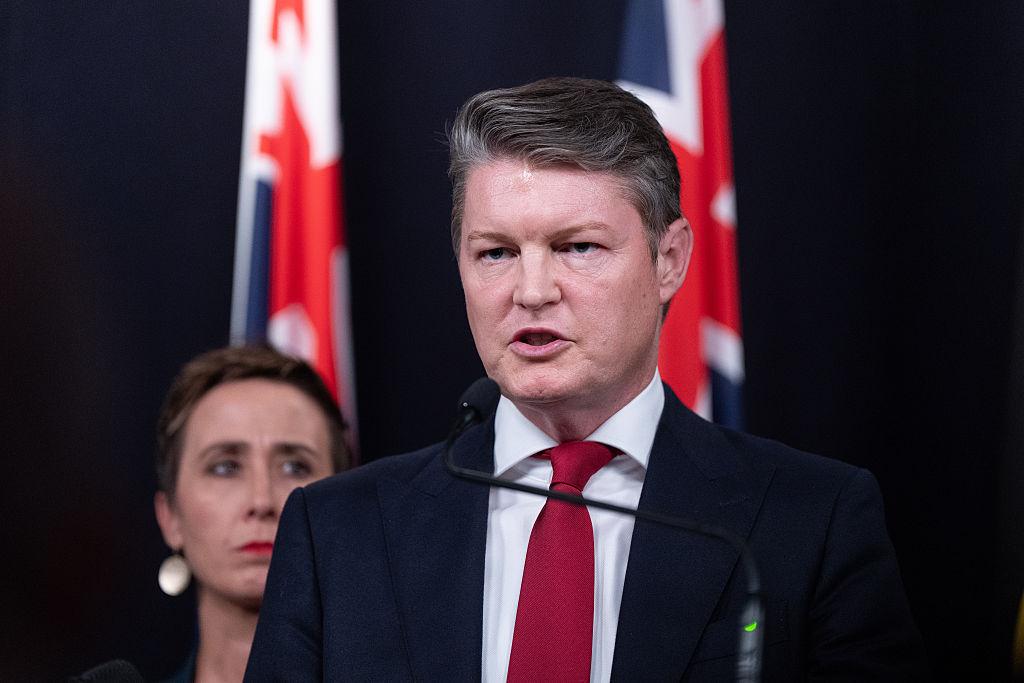
Following the release of the guidelines, Shadow Communications Minister Melissa McIntosh argued the eSafety Commissioner “does have the power to mandate digital ID if she chooses to.”
“There’s certain measures that platforms have to use, but sort of buried in the trickery of the communications, is there’s potential for digital ID to be used,” she said on Sept. 17.
Google LogoMark Us Preferred on Google
Monica O’Shea
Monica O’Shea
Author
Monica O’Shea is a reporter based in Australia. She previously worked as a reporter for Motley Fool Australia, Daily Mail Australia, and Fairfax Regional Media. She can be reached at monica.o'[email protected]