An unknown number of people have died in West Papua over recent weeks as fighting, mostly in remote mountainous areas with poor communications, continues.
Adding to the chaos, there have also been clashes between Indonesia’s military and the armed wing of the Free Papua Movement.
According to the independent monitoring group ACLED (Armed Conflict Location & Event Data), violence in Papua has reached its highest levels this year, driven by an escalation in fighting between the military and the separatist West Papua National Liberation Army (TPNPB).
ACLED records 29 clashes between the rebel group and Indonesian security forces in May, compared to six the previous month.
In a recent skirmish on May 14 in Sugapa District in Central Papua, 18 people were left dead, but accounts of who they were varied.
The military claimed they were all members of the West Papua National Liberation Army (TPNPB), who had attacked the army when they were trying to provide health services and education to residents in villages in Intan Jaya.
However, according to the TPNPB, only three of their combatants were killed, with the rest being civilians.
The Indonesian Embassy in Wellington backed the military’s account, saying all the dead were “members of the armed criminal group.”
Peacekeeping Attempts
Meanwhile, a horrific video has been circulating on social media depicting an attack in Papua New Guinea’s (PNG’s) remote Enga Province, which has a recent history of tribal conflict.Such fights are often carried out using machetes. Authorities find it difficult to restore order, and in late May, a PNG Defence Force unit had to fight its way out of an ambush.
As with West Papua, most of the fighting in PNG is centred on the issue of independence, in this case for Bougainville.
It had been hoped that the “Burham talks,” chaired by former New Zealand Governor General and decorated soldier Sir Jerry Matapere, who led the peacekeeping force in 1997, would resolve the disagreement without violence.
The historic Burnham Military Camp, in New Zealand’s South Island, is the site of pivotal peace talks that ended the Bougainville conflict in 1997.
Is Independence Possible?
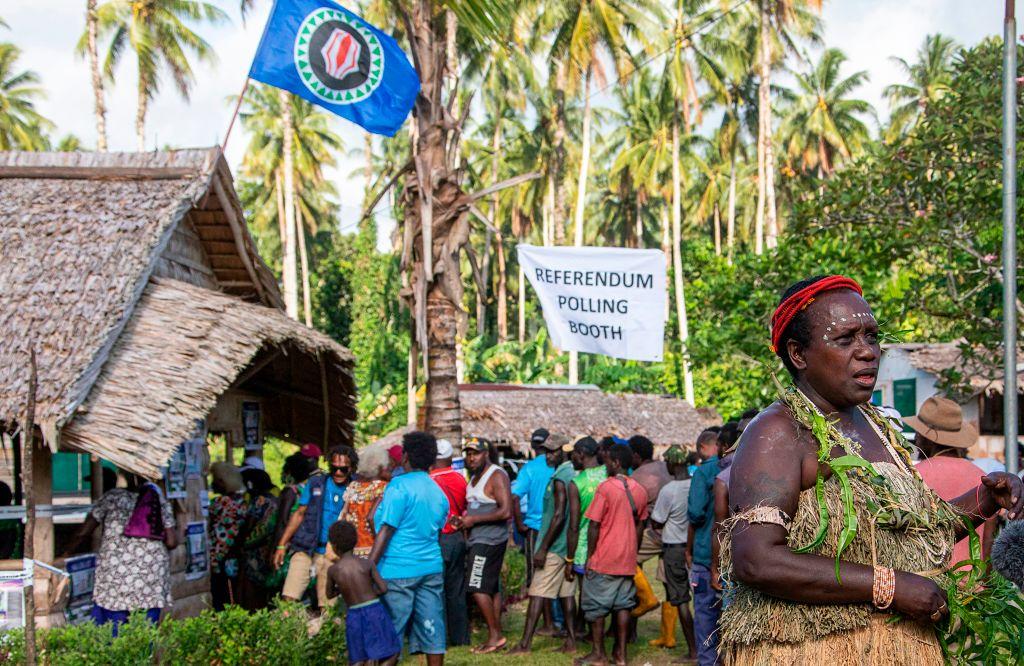
In 2019, about 97.7 percent of Bougainvilleans voted for independence in a referendum mandated by a peace agreement signed in 2001. However, the referendum was not legally binding, with the parliament able to make the final decision.Both governments are now debating the rules governing the presentation of the referendum results in the PNG parliament.
The two sides are at an impasse on the question of how many MPs are required to support the tabling of the referendum results: PNG wants two-thirds, while Bougainville wants a simple majority.
Toroama characterised the current round of negotiations as the final chapter in a process that has occupied nearly three decades, venting his obvious frustration with what he claimed was the PNG government’s “stalling” approach since the referendum.
He claimed that the plebiscite was, in fact, binding under both PNG’s National Constitution and the Bougainville Peace Agreement (BPA).
He also flatly rejected PNG government alternatives such as “free association” or “federated states,” saying they would be unacceptable to Bougainvilleans who “died for independence.”
Unless the Bougainville delegation gets the outcome it wants from the latest talks—a Heads of Agreement that explicitly provides for independence—then it will consider “all other precedents and legal options available.”
This could potentially include unilaterally adopting an Independence Constitution and setting an independence date of Sept. 1, 2027, when the Bougainville Constituent Assembly meets later this month.
Toroama made a similar demand at “joint moderation talks” in Port Moresby. But at that time, PNG Prime Minister James Marape said that it is “a constitutional matter that requires parliament’s deliberation and decision-making,” effectively suggesting the question be resolved by MPs themselves.
He also warned that both sides needed to consider the economic outcomes of any future separation, pointing out that 95 percent of Bougainville’s budget is funded either by the PNG government or international donors.
“The long-term sustainability of Bougainville must be factored into these discussions,” he added.
“Today, as we speak, Bougainville generates only 5 percent of its own budget. This is a serious conversation that we must address as part of the broader negotiations.”
The PNG government is also clearly worried that the country, riven by inter-tribal disputes that flare into violence, could potentially fracture.
“We have over 800 languages, 20 provinces, one National Capital District, and [the] Autonomous Bougainville government,” Marape said.
“If we do not manage this process responsibly, we risk opening the door to similar movements in other parts of the country.”