Victoria has achieved 42 percent renewable energy in the last financial year, according to the state government.
The government is confident it will easily achieve its legislated renewable energy target of 40 percent by the end of 2025.
The state now has more than 90 large-scale renewable energy projects, which provide nearly 7 gigawatts of renewable energy capacity to the grid.
“Victorians are also embracing rooftop solar on their offices, warehouses and homes, with panels contributing almost 11 percent of Victoria’s energy last financial year,” the government said.
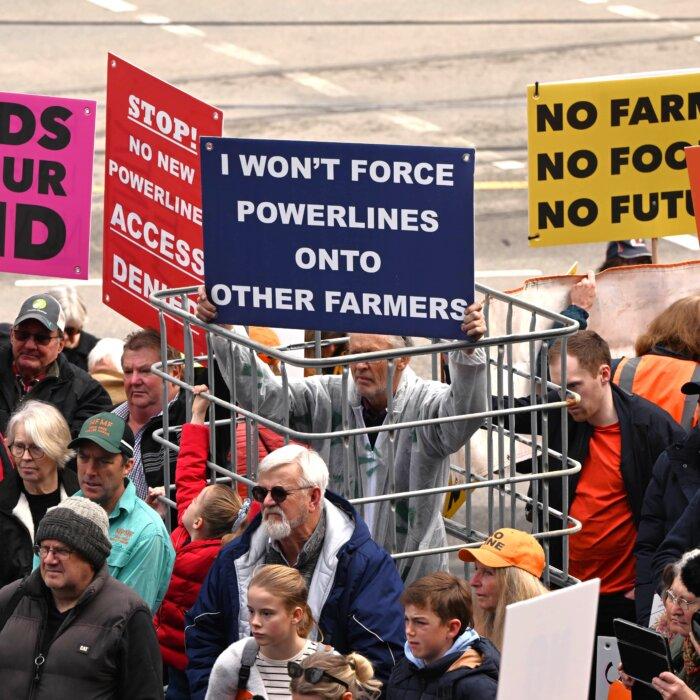
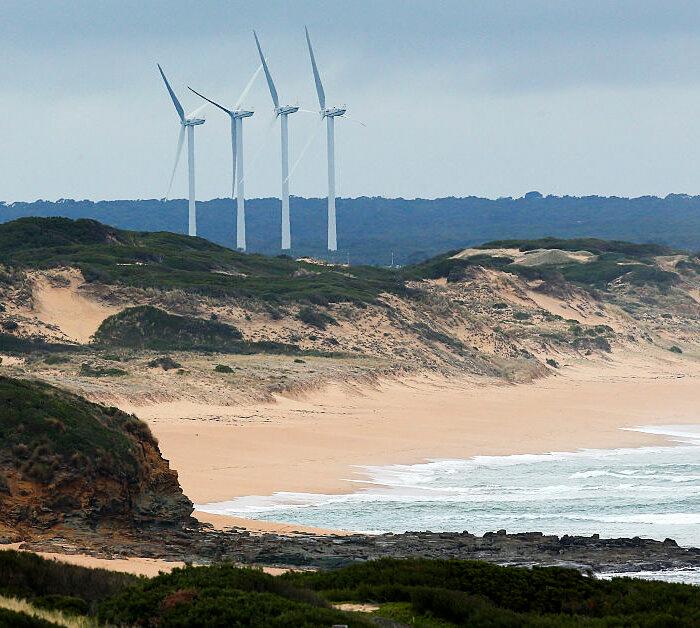
Labor said there were more than 50 gigawatts of proposed or committed renewable energy projects.
“Our record investment in renewable energy is paying off. Victoria consistently has the lowest wholesale power prices in the country, helping to slash energy bills for families and businesses,” Energy and Resources Minister Lily D’Ambrosio said.
The Labor government said that in the last financial year, Victoria’s average power price was $107 per hour, compared to $115 for Tasmania, $127 for Queensland, $138 for South Australia, and $151 for New South Wales (NSW).

Electricity Prices Soar in Victoria
However, the latest wholesale electricity report (pdf) released by the Australian Energy Regulator on July 31 paints a different picture.The report states that wholesale spot electricity prices increased in all states aside from NSW in the second quarter of 2025 compared to the same quarter in 2024.
For example, in Victoria, wholesale prices rose to $168 per megawatt-hour (MWh) in the second quarter of 2025, up 21 percent from the year prior.
South Australian wholesale prices rose 12 percent to $166 per MWh, Tasmanian prices increased 10 percent to $149 per MWh, while Queensland wholesale electricity prices soared 25 percent to $136 per MWh.
Meanwhile, when compared to the previous quarter, wholesale electricity prices also rose in every state. The report also noted there were a lot more high electricity price events in the second quarter of 2025 compared to a year ago.
“High price events played a significant role in increased wholesale electricity prices this quarter, with most events occurring in June,” the report said.
Liberals Claim Labor Has Botched its Energy Policy
Shadow Energy Minister David Davis, commenting on Aug. 17, said Labor had botched its energy policy and the rollout of low-emission technologies.“Far from going ‘down, down, down,’ as claimed by Lily D'Ambrosio, electricity and gas costs across the state have surged, hurting families and they appear set to surge upwards further,” he said.
He said the Labor government had delivered both uncertain electricity and gas supply and surging energy costs.
Offshore Wind and Battery Storage Targets
Victoria’s legislated renewable energy targets also include goals for wind energy and energy storage.Its offshore wind energy generation target is at least 2GW by 2032, 4GW by 2035, and 9GW by 2040.
In terms of energy storage targets, the Victorian government has legislated 2.6 GW of energy storage capacity by 2030 and at least 6.3 GW by 2035.
The energy storage targets cover short, medium and long duration energy storage systems, including batteries.
“Long duration storage (more than 8 hours) may include for example pumped hydroelectricity generation, long-duration battery systems and other emerging technologies like compressed air storage and molten salts.”