US Starts Seabed Mineral Talks With the Cook Islands

America and the Cook Islands will jointly research seabed minerals as Washington moves to counter China’s growing influence in the remote Pacific nation.
US Starts Seabed Mineral Talks With the Cook Islands
The research vessel MV Anuanua Moana, which is exploring efforts for industrial deep-sea mining, at a port in Rarotonga, Cook Islands, on June, 11, 2025. William West/AFP via Getty Images
|Updated:
0:00

The U.S. government has begun talks with the Cook Islands for research on seabed minerals exploration and development.

The people of the Cook Islands, a self-governing country, are historically and culturally aligned with New Zealand and possess New Zealand passports.

Western nations are increasingly wrestling with China’s influence after Beijing recently signed defense, trade, and financial deals with the small Pacific country.

“The United States of America and the Cook Islands are proud U.S.-linked firms sit at the forefront of deep seabed mineral research and exploration in the Cook Islands, which reflects strong and shared U.S.-Cook Islands seabed minerals interests,” the U.S. State Department said in a joint statement with the government of the Cook Islands on Aug. 5.

“Seabed minerals are critical for developing and powering the technology of today and the future.”
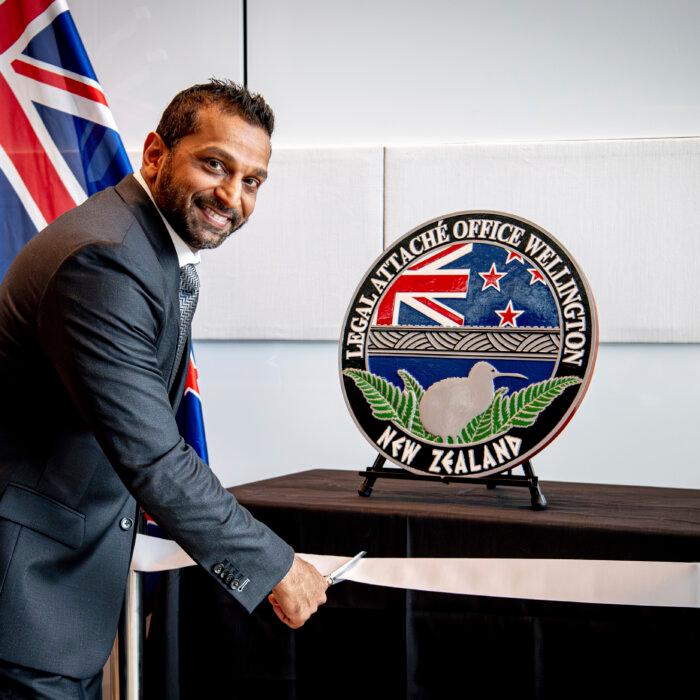
The FBI opened a new office in Wellington, New Zealand, on July 31, expanding its presence in the Pacific to address growing security threats, including cybercrime, espionage, and influence from the Chinese Communist Party (CCP).

FBI Director Kash Patel, who made a discreet visit to Wellington, said in a video released by the U.S. Embassy that countering the CCP in the Pacific region is “one of the most important global issues” facing the two countries.

In June, New Zealand Foreign Minister Winston Peters suspended payment of NZ$18.2 million ($10.9 million) in development funding to the Cook Islands because of the island nation’s deepening ties with China.
The New Zealand government raised concerns in February, after Cook Islands Prime Minister Mark Brown traveled to China and signed a Comprehensive Strategic Partnership, which covers economic, infrastructure, and maritime cooperation, as well as seabed mining, with the CCP.

The New Zealand government said it was not properly consulted at the time despite the two nations’ constitutional ties.

New Zealand “will also not consider significant new funding until the Cook Islands Government takes concrete steps to repair the relationship and restore trust,” Peters’s spokesperson said on June 19.

Communist China has been New Zealand’s largest trading partner since 2017, and New Zealand has a policy that does not recognize Taiwan.

Early in June, defense and security think tank Royal United Services Institute (RUSI) stated in a report that the Cook Islands, an archipelago with an extensive exclusive economic zone, has emerged “as a focal point for China’s broader Pacific strategy.”

RUSI stated that the Cook Islands maritime domain, which is rich in marine resources and critical minerals such as manganese, cobalt, and polymetallic nodules, is difficult to manage effectively.

But its vastness and remoteness make it susceptible to illegal, unreported, and unregulated fishing and exploitation of marine and mineral resources, waste dumping, and a range of potential nontraditional security risks.

The think tank said the CCP’s engagement with Pacific Island nations follows a consistent pattern: economic assistance, grants, and loans without due diligence; untenable infrastructure investments; and diplomatic recognition maneuvers.

China has a near-monopoly on the global rare earths market, essential for the production of many new technologies such as electric vehicles, wind turbines, and smartphones.

The United States is taking on China in the race to the bottom of the sea, hoping that new mining techniques will help break Beijing’s grip on global minerals.

Polymetallic manganese nodules, found 2.5 miles to 3.7 miles deep in the abyssal zone, offer dense concentrations of nickel, cobalt, copper, and manganese.

While seafloor massive sulfides, rich in copper, zinc, silver, and gold, are found 0.9 miles to 1.9 miles down, cobalt- and manganese-rich crusts are found along underwater mountain ridges.

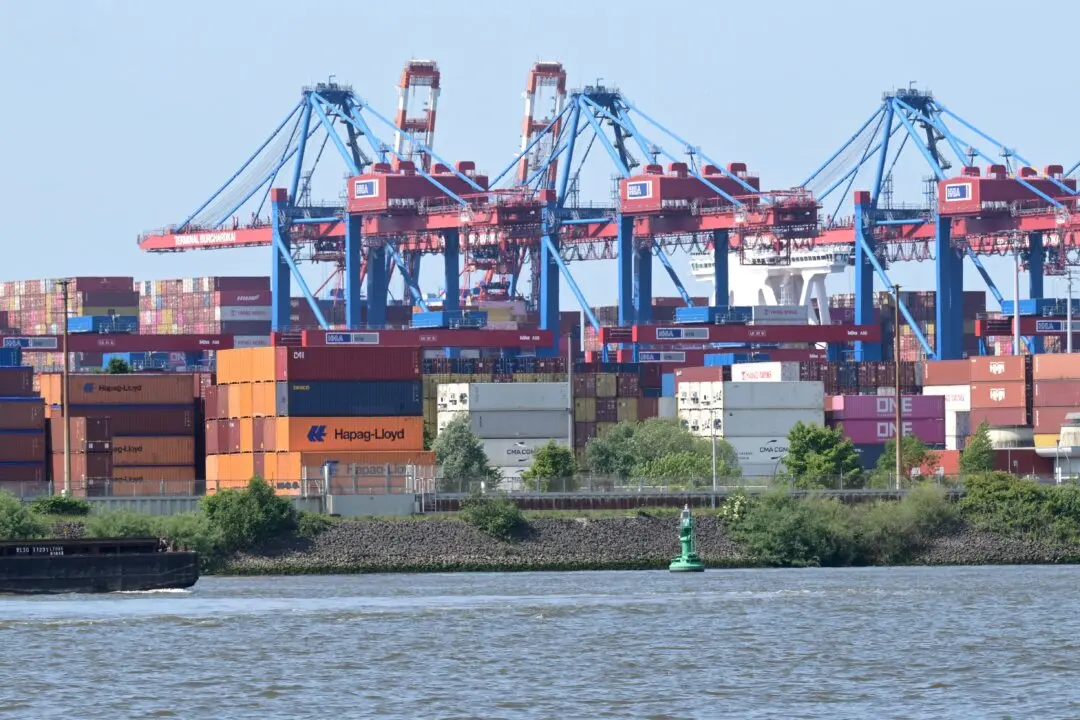
The explored areas are in the Clarion-Clipperton Zone, a geological submarine fracture zone located in the north of the Pacific Ocean between Mexico and Hawaii, as well as the Indian Ocean and the Mid-Atlantic Ridge.
Rex Widerstrom contributed to this report. 
Google LogoMark Us Preferred on Google
Owen Evans
Owen Evans
Author
Owen Evans is a UK-based journalist covering a wide range of national stories, with a particular interest in civil liberties and free speech.