This copy is for your personal, non-commercial use only. Distribution and use of this material are governed by our Subscriber Agreement and by copyright law. For non-personal use or to order multiple copies, please contact The Epoch Times Reprints.
US Signs $2.3 Billion in Africa Health Deals Under America First Strategy
The administration says the deals protect Americans from disease threats while shifting responsibility to partner governments and safeguarding U.S. taxpayers.
The United States has signed nearly $2.3 billion in new bilateral global health agreements with Botswana, Madagascar, Sierra Leone, and Ethiopia, the State Department said on Dec. 23, advancing the Trump administration’s America First Global Health Strategy and its push to tie foreign health aid to measurable performance and co-investment.
The four memorandums of understanding (MOU), signed on Dec. 22 and 23, commit the United States to almost $1.4 billion in health assistance, while the four African partners will collectively co-invest more than $900 million of their own resources. U.S. officials said the agreements are designed to combat priority infectious disease threats while reducing long-term reliance on American taxpayer funding.
“Each MOU includes clear benchmarks, strict timelines, and consequences for nonperformance—ensuring U.S. assistance delivers results against priority disease threats and reduces long-term dependence on U.S. assistance,” deputy spokesperson Tommy Pigott said in a statement, signaling that future U.S. funding will depend on measurable results and recipient-country commitments.
Shift Toward Greater Self-Reliance
The agreements reflect a broader overhaul of U.S. global health assistance under the America First Global Health Strategy, unveiled in September, which seeks to replace what officials describe as decades of aid-driven dependency with multi-year, incentive-based compacts emphasizing national ownership, co-investment, and accountability.
“With our new America First Global Health Strategy, we will not only save lives and assist countries around the world in developing resilient and durable health systems, but we will also make America safer, stronger, and more prosperous,” the State Department said in a statement. “We will ask governments to coinvest in these efforts and work with the United States to align on performance benchmarks in order to strengthen capacities for countries to become self-reliant.”
U.S. officials have said that while past aid programs saved tens of millions of lives and helped prevent dangerous outbreaks from reaching American shores, they also became inefficient, with a majority of funds absorbed by overhead and technical assistance rather than frontline care.
Beyond inefficiencies, U.S.-commissioned audits conducted from 2020 to 2024 found widespread diversion of donor-funded health commodities, with half of inspected vendors selling stolen supplies, some tied to organized cross-border networks.
“A sizeable minority of the commodities were distributed cross-border, pointing to a level of scale and sophistication indicative of transnational organized crime,” the strategy document states. “It is likely that this diversion is costing U.S. taxpayers millions of dollars each year.”
Ethiopia Deal Leads New Health Compacts
Ethiopia received the largest share of the new agreements, with a $1.5 billion memorandum of understanding that includes just over $1 billion in U.S. funding and $450 million in Ethiopian co-investment. The deal targets HIV/AIDS, tuberculosis, malaria, polio eradication, maternal and child health, and infectious disease preparedness, while transitioning long-standing U.S.-backed programs to Ethiopian leadership.
Smaller agreements were signed with Botswana, Sierra Leone, and Madagascar.
Botswana’s $487 million arrangement focuses on HIV control, workforce reform, and upgraded health data and surveillance systems. Sierra Leone’s $173 million deal front-loads U.S. support to strengthen surveillance and labs while shifting most costs to the government by 2030, with goals to sharply reduce malaria deaths and expand HIV treatment. Madagascar’s $175 million agreement focuses on malaria, maternal and child health, and outbreak preparedness, with targets including major gains in antenatal care and continued polio-free status.
The four agreements follow a series of similar deals signed in recent weeks with Uganda, Lesotho, Kenya, Rwanda, Liberia, Mozambique, Nigeria, and Eswatini, which involve multibillion-dollar U.S. commitments paired with significant domestic co-investment.
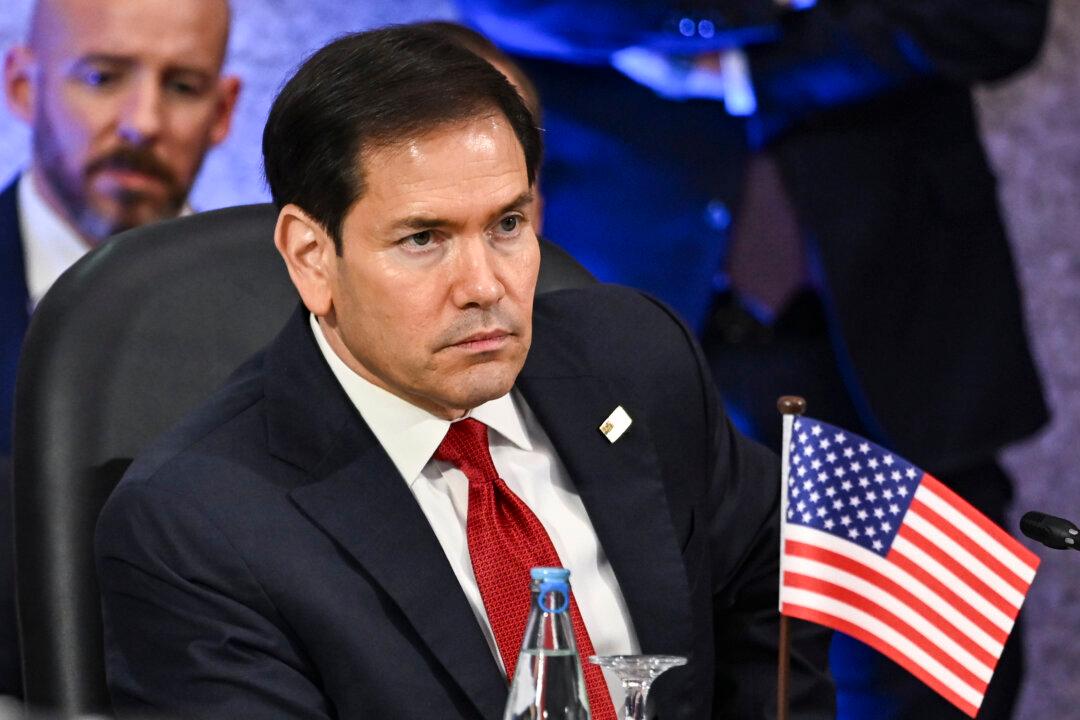
Secretary of State Marco Rubio has described the new bilateral health compacts as a strategic tool to advance U.S. interests abroad, strengthen surveillance against emerging disease threats, and promote American health innovation, while ending what the administration describes as wasteful and ideologically driven aid models.
“Our foreign assistance programs are deeply broken,” Rubio wrote in a letter featured in the America First Global Health Strategy document. “Our health foreign assistance programs in particular have become inefficient and wasteful, too often creating parallel healthcare delivery systems and a culture of dependency among recipient countries.”
The State Department said it expects to sign additional multi-year bilateral global health memorandums of understanding with dozens of countries in the coming weeks, with implementation slated to begin in 2026.
“This is what America First leadership looks like,” Pigott said in a statement, adding that the approach is intended to protect Americans from global health threats while delivering results for American taxpayers.
Tom Ozimek is a senior reporter for The Epoch Times. He has a broad background in journalism, deposit insurance, marketing and communications, and adult education.