Germany “will always be closer to the United States” than to China, the country’s foreign minister, Johann Wadephul, said on Feb. 2.
“I would reiterate that, still, the United States is the most important partner to Europe and to Germany, still our security for Europe depends on the United States, the Article 5 commitment, and the nuclear umbrella,” Wadephul told the audience of a lecture hosted by the International Institute for Strategic Studies in Singapore.
The German foreign minister said that despite recent disputes with the United States over the control of Greenland, this is still the case.
“This is the case, and this is functioning day by day, and we are working very closely together in NATO structures,” he said.
Wadephul was referring to Article 5 of the North Atlantic Treaty, which states that an attack on one NATO member is considered an attack on all members.
The U.S. nuclear umbrella is a security guarantee to protect non-nuclear-armed allies from nuclear threats—a protection that also deters those allies from developing defensive nuclear weapons themselves.
U.S. President Donald Trump’s administration has been urging European nations to take greater control of their own security, as the United States pivots away from the continent.
Europe Must ‘Step up’
Last week, the European Union’s foreign policy chief, Kaja Kallas, said that Europe must “step up” to meet its own security needs, recognizing that the United States “is setting its sights abroad and beyond Europe.”“If anyone thinks here, again, that the European Union, or Europe as a whole, can defend itself without the U.S., keep on dreaming. You can’t. We can’t,” Rutte told the European Parliament’s defense committee in Brussels on Jan. 26.
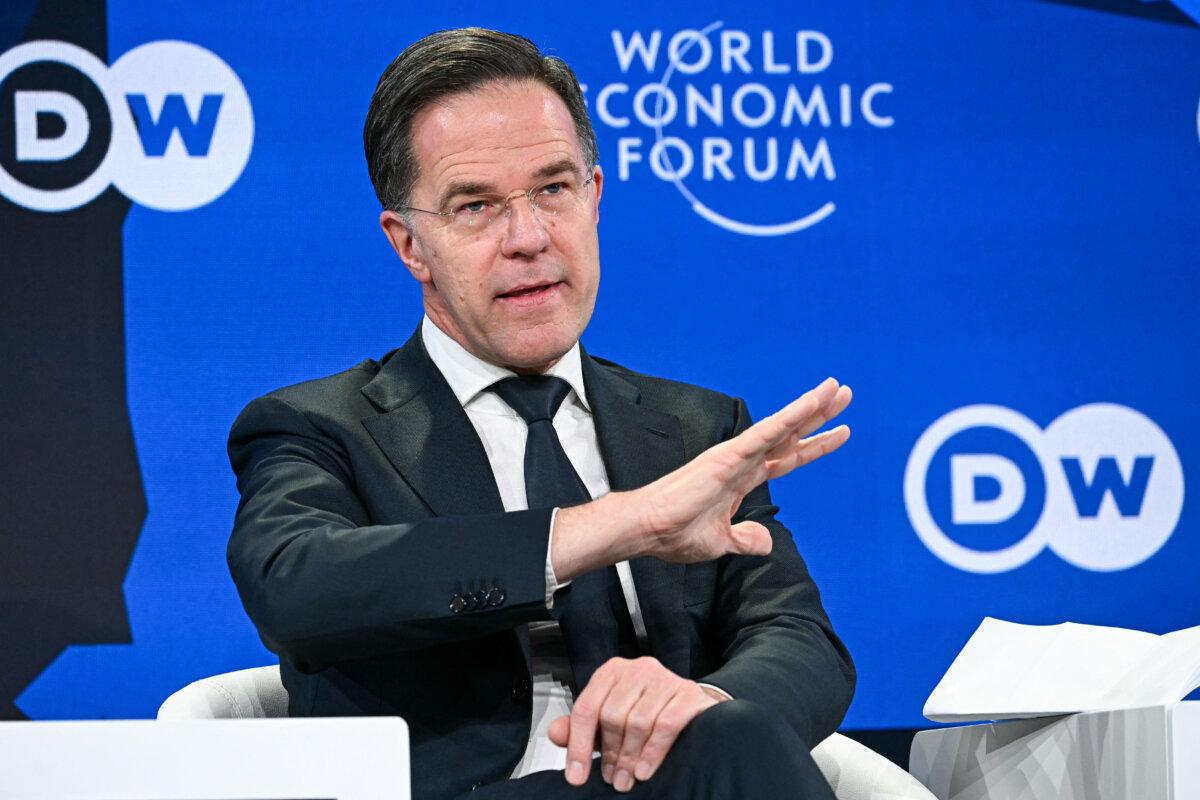
Rutte also cautioned against a European army, saying it could lead to duplication, and suggested that countries would need to recruit additional soldiers to outfit such a force, in addition to recruiting for their own national militaries.
He said that European countries should continue to take responsibility for their own defense but within the transatlantic security framework.
“For Europe, if you really want to go it alone, and those who you are pleading for that, forget that you can ever get there with 5 percent. It will be 10 percent,” Rutte said, referring to defense spending targets as a percentage of gross domestic product (GDP).
“You have to build up your own nuclear capability,“ Rutte said. ”That costs billions and billions of euros. You will lose, then in that scenario, you would lose the ultimate guarantor of our freedom, which is the U.S. nuclear umbrella. So hey, good luck.”