The U.S. military launched its 11th consecutive night of strikes against Iran early Wednesday, striking the regime’s military operations centers, maritime capabilities, aircraft hangars, drone storage facilities, and military logistics infrastructure. The strikes began around 7 p.m. ET and ended at 8:15 p.m. ET the same day.
“The strikes are designed to continue degrading Iran’s ability to threaten commercial shipping in the Strait of Hormuz,” U.S. Central Command said in a statement on X.
Over the past three months, Iran has attacked more than 30 commercial vessels in the vital waterway, endangering hundreds of innocent mariners and undermining freedom of navigation, according to the command.
According to the U.N’s International Maritime Organization, 14 mariners have been killed by Iranian strikes targeting vessels on the Omanian side of the strait since the conflict started on Feb. 28. Three others were killed in attacks across the Middle East. A total of 2,900 mariners have had to be evacuated from the strait.
Since early May, CENTCOM forces have helped facilitate the transit of approximately 900 commercial vessels carrying 450 million barrels of crude oil.
The 11th night of strikes continues a pattern of nightly U.S. operations against Iranian targets.


An interim ceasefire brokered last month fell through after Iran resumed its attacks on commercial ships in the Strait of Hormuz.
The war has settled into a grinding fight for the narrow waterway through which roughly one-fifth of the world’s crude oil and natural gas once flowed. Both sides are now hitting infrastructure that millions of ordinary people depend on every day. The targets in Iran are also key to the Iranian military.
Trump, speaking from the Oval Office on Tuesday, said Washington has “no interest in meeting.” He indicated that U.S. forces could soon strike near Pickaxe Mountain, a fortified underground site close to one of Iran’s main uranium enrichment facilities.
Iran’s armed forces responded with a blunt warning via state-run media, saying such an attack would be regarded as an expansion of the war, and U.S. allies and interests would become targets.
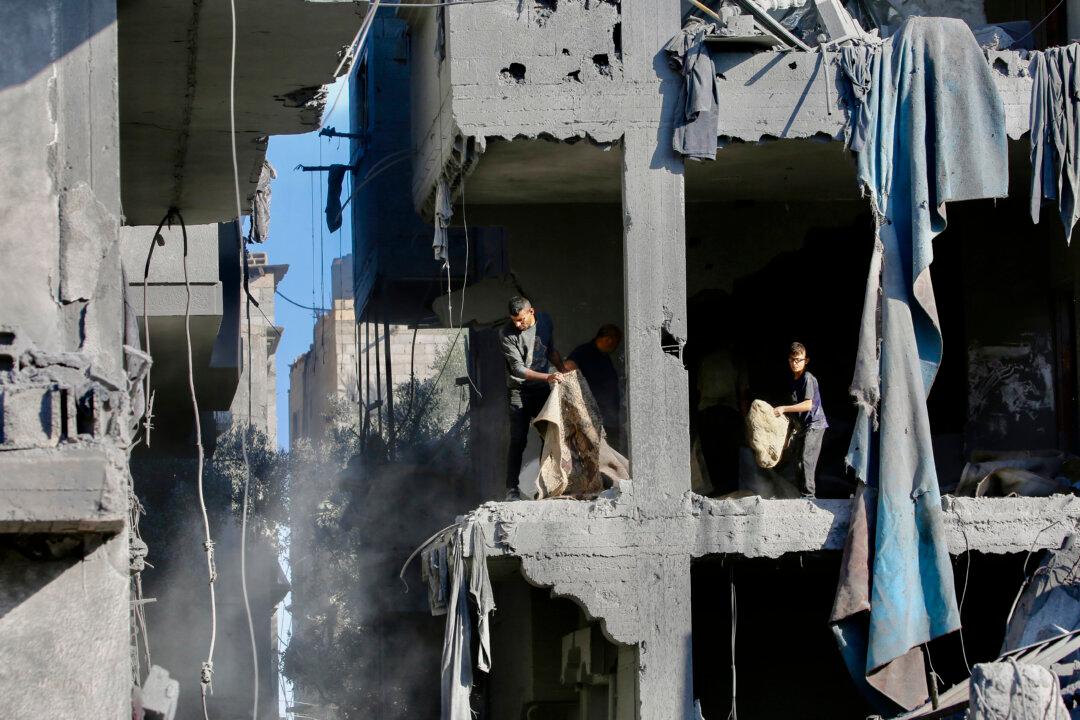
On Tuesday, Iran attacked a tanker in the strait off the coast of Oman, forcing the crew to abandon ship, the British military’s United Kingdom Maritime Trade Operations center confirmed. Iran also launched attacks in Bahrain and Kuwait. Kuwait said Iran struck desalination and power plants for a fourth straight day, causing fires and damage to the primarily critical civilian infrastructure.
Jordan reported it intercepted five drones and three missiles. Flights were briefly suspended at Irbil International Airport in Iraq’s Kurdish region after attacks there.