The United States and Japan are leveraging joint military exercises to forge an alliance with Taiwan and the Philippines, according to an expert, cementing the Indo-Pacific deterrent that Beijing fears most.
The U.S. Marine Corps and Japan’s Self-Defense Forces (SDF) kicked off Resolute Dragon 26 at Camp Kengun in Japan’s Kumamoto Prefecture on June 20, opening the latest round of their annual bilateral exercise.
The exercise spanned bases across southwestern Japan, from Kyushu to the outlying island chain.
It marked the first time Japanese military transport ships Nihonbare and Yoko participated in a bilateral exercise, according to a report by Japanese public broadcaster NHK on June 20.
Concurrently, U.S. Pacific Command joint forces held the biennial multinational exercise Valiant Shield from June 22 to July 1 in Japan, Guam, the Commonwealth of the Northern Mariana Islands, and at sea around the Mariana Islands Range Complex.
The drill focuses on boosting multinational combat tactics and regional deterrence as Japan participates for the second time, per a May 22 press release from Japan’s Ministry of Defense.
‘Credible Deterrent’
Richard Yu-ping Chou, a committee member at the evaluation center of Taiwan’s National Defense Industrial Development Foundation, said the exercises signal the U.S. military acting on long-held plans to enlist Japan in distributing combat forces across the Western Pacific to counter China.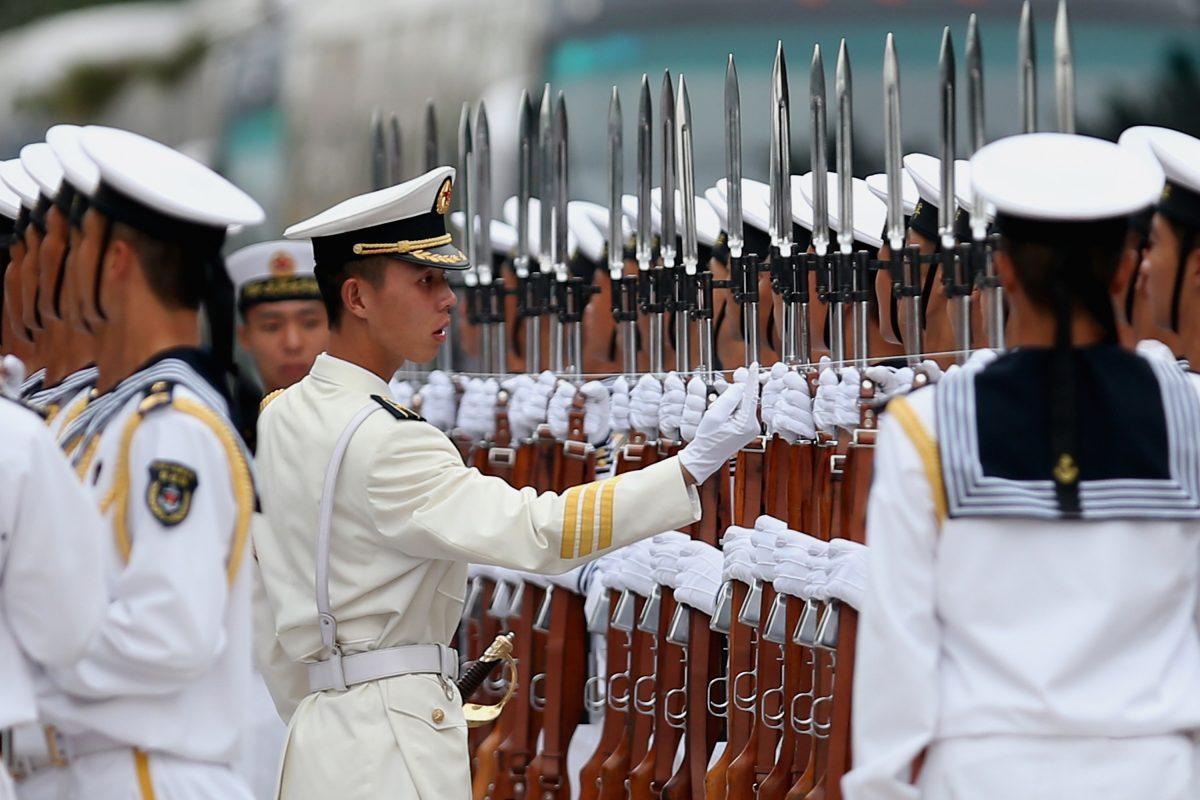
“China had advanced its gray-zone operations—aggressive and coercive actions designed to intimidate without crossing into open warfare—across the first island chain by exploiting gaps in U.S. and Japanese military coverage,” Chou told The Epoch Times.
“But deployments such as upgraded Type 12 surface-to-ship missiles with counterstrike capabilities by Japan’s Ground Self-Defense Force (GSDF) present Beijing with a credible deterrent.”
The first island chain, which includes Taiwan, Japan, and the Philippines, is widely seen by analysts as a strategic buffer limiting China’s ability to project military power into the Pacific.
Chou said the drills also mark Japan’s shift beyond coast guard patrols toward deploying concealed strike capabilities closer to Chinese waters.
“No matter how reinforced Beijing’s coast guard vessels are, any ship that enters the range of Japan’s shore-based missiles will be destroyed,” Chou said.
Chou said the deployment of the Nihonbare and Yoko shows the GSDF can move anti-ship and air-defense missiles to its outlying islands within 48 hours, strengthening the country’s defenses.
“This rapid mobility means Beijing can no longer exploit a time gap to lock in a military advantage,” Chou said.
Su Tzu-yun, an assistant professor at Tamkang University’s Graduate Institute of International Affairs and Strategic Studies in Taipei, said the Typhon missile system’s presence in Japan sends a sharper warning to Beijing against any military aggression.
“The missile system can fire Tomahawk cruise missiles, and launching them from Japanese bases could strike more than half of China,” Su told The Epoch Times.
“This could place China’s Eastern, Northern, and Central theater commands within Japan’s striking range, severely complicating Beijing’s military calculus.”
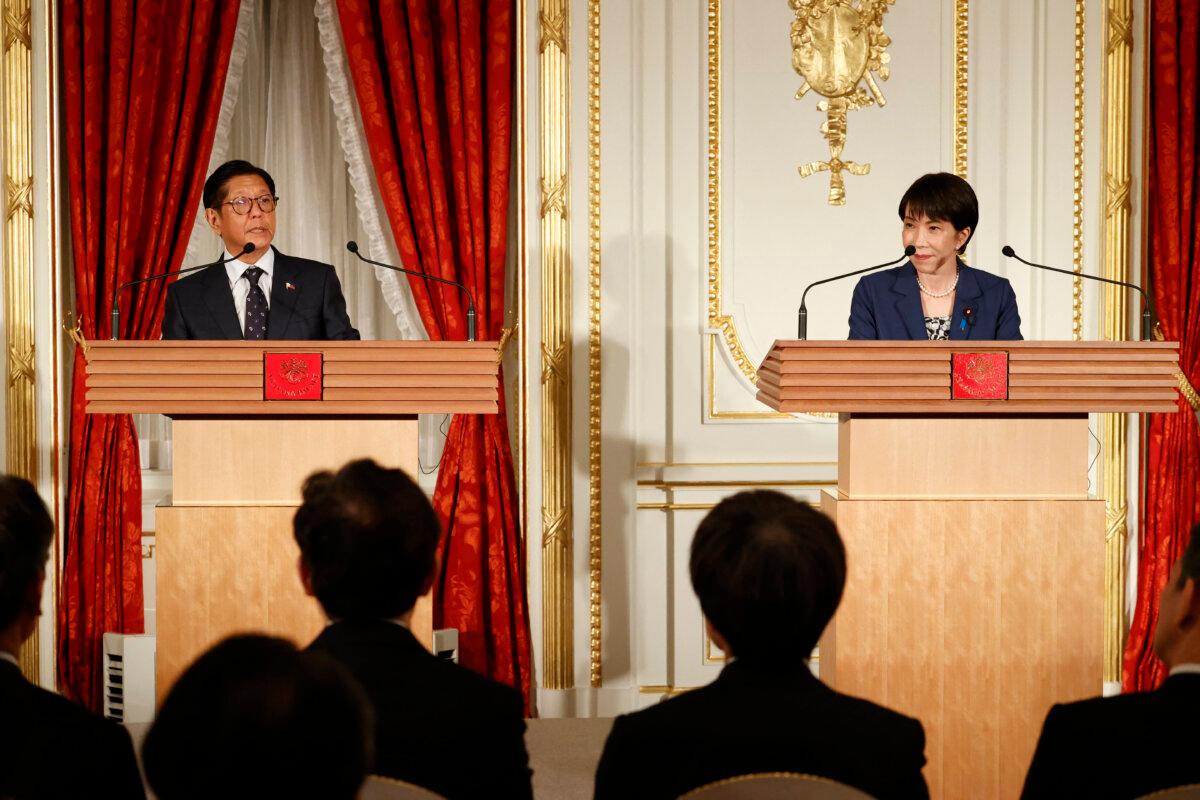
Ahead of the U.S.–Japan drills, Beijing dispatched several government ships on June 6 in an attempt to breach Taiwan’s restricted waters, while protesting efforts by Tokyo and Manila to delimit overlapping exclusive economic zones off Taiwan’s east coast.
Taiwan is a self-governed democracy; the Chinese Communist Party (CCP) has never controlled it, but has vowed to annex it by force if necessary.
Chou said Beijing weaponized the issue to build toward a full naval blockade of Taiwan and test the U.S. and Japanese response, but their exercises act as a deterrent against that threat.
“The tactics rehearsed in these drills aim to transform scattered islands across the first island chain into mobile strike bases to seal off Chinese advances,” he said.
Chou said linking advanced radars and dispersed units across these island outposts fundamentally rewrites the CCP’s tactical playbook.
“The People’s Liberation Army (PLA) once only had to target Taiwan, but an assault would now draw U.S., Japanese, and Philippine missiles into the Taiwan Strait and Bashi Channel,” Chou said.
Multilateral Alliance
While the drills were underway, Chinese state-run outlets such as China Daily and the China Global Television Network amplified reports of local residents in Japan protesting the exercises over “regional instability.”Su said the regime will likely pursue more dangerous expansionist maneuvers beyond these propaganda tactics.

“For instance, Beijing could dispatch naval flotillas deeper into the Pacific and deploy electronic surveillance ships for remote tracking,” Su said.
“China will shift its focus to its coast guard to gradually expand its maritime claims across the Indo-Pacific.”
Chou said China will likely surge spy planes and drone flights over Japan’s southwestern islands and the Philippines’ Batanes islands to collect radar signals from U.S., Japanese, and Philippine missile units.
“China is building a database during peacetime to execute precise electronic jamming during wartime,” he said.
Chou added that Beijing could also increasingly disguise its maritime militia as ordinary fishing boats to intentionally ram coast guard vessels from Taiwan, Japan, and the Philippines.
“China might even implement a ’militia-style blockade' in localized waters to test the gray-zone response capabilities of Washington, Tokyo, and Manila before crossing the threshold of war,” he said.
Chou said the CCP will view the deployment of the Typhon in Japan as a “severe strategic provocation” but cannot prevent the United States and Japan from forging a multilateral alliance in all but name with Taiwan and the Philippines.
“China will not back down after these U.S.–Japan exercises; instead, it will escalate the confrontation to a more concealed and lethal dimension,” Chou said.
“But exactly what Beijing fears most will also materialize—the United States, Japan, Taiwan, and the Philippines will forge much tighter ties in military command and intelligence sharing.”