US Forces Strike Iranian Military Infrastructure in 12th Consecutive Night of Attacks

‘The mission will continue to further degrade Iran’s ability to threaten civilian mariners and commercial vessels transiting regional waters,’ CENTCOM stated.
US Forces Strike Iranian Military Infrastructure in 12th Consecutive Night of Attacks
Heavy machinery is targeted, at an unknown location, during what the U.S. Central Command (CENTCOM) says are strikes on Iran, in this screengrab taken from a handout video released on July 22, 2026. U.S. Central Command/Handout via Reuters
|Updated:
0:00

The U.S. military launched strikes against Iranian military targets on Wednesday evening, making it the 12th consecutive night of attacks against the regime.

“The mission will continue to further degrade Iran’s ability to threaten civilian mariners and commercial vessels transiting regional waters,” U.S. Central Command (CENTCOM) said in a statement on X.
The previous night’s operations hit the regime’s military operations centers, maritime capabilities, aircraft hangars, drone storage facilities, and military logistics infrastructure.

On Thursday, Iran-backed Houthi terrorists claimed missile and drone strikes on two Saudi oil tankers, the Encelia and the Layla, as part of a naval blockade on Saudi Arabia. A maritime security source confirmed the attack on the Saudi-flagged Encelia, which transmitted a distress call after being struck by a missile near the Saudi port of Jizan in the Red Sea late Wednesday. British company Vanguard reported the tanker was hit by an unknown projectile on its starboard side about 70 nautical miles southwest of Al Shuqaiq.

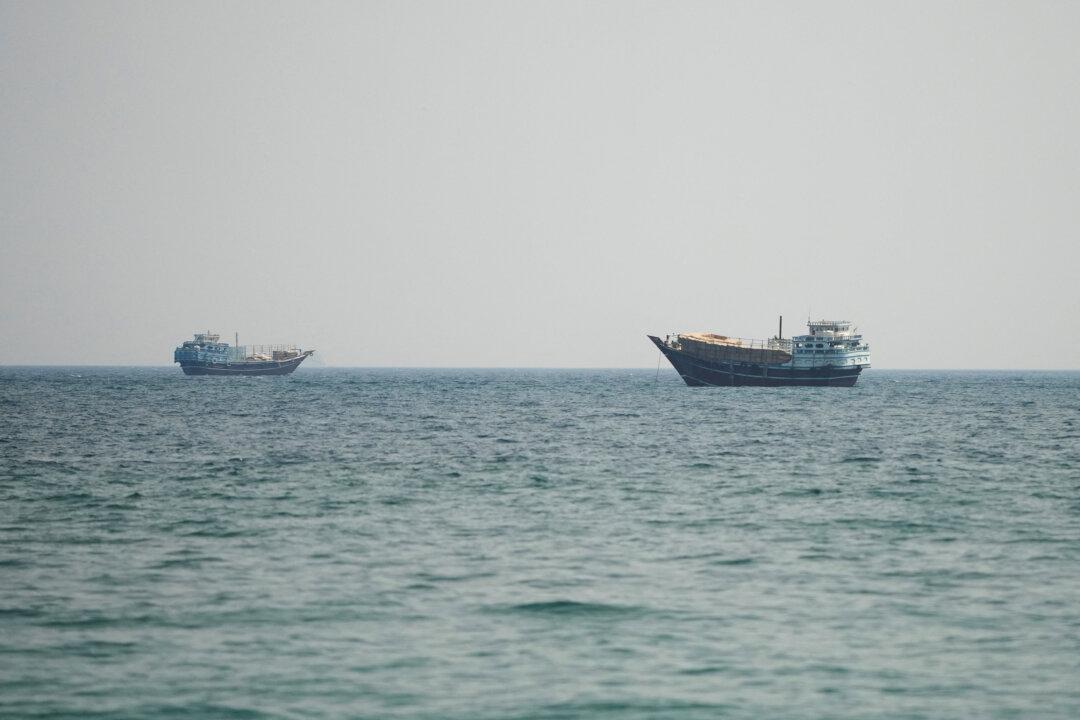
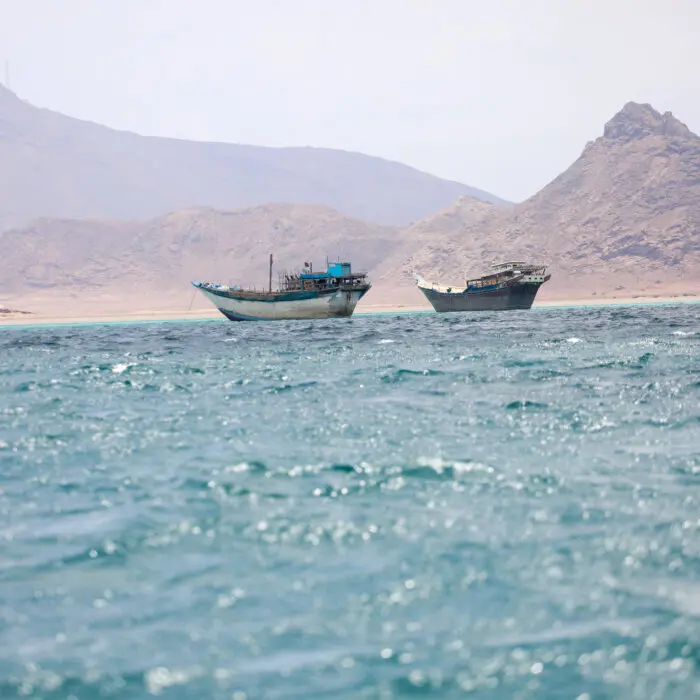
Over the past three months, Iran has attacked more than 30 commercial vessels in the Strait of Hormuz, CENTCOM said. According to the U.N.’s International Maritime Organization, 14 mariners have been killed by Iranian strikes targeting vessels on the Omani side of the vital waterway since the conflict started on Feb. 28. Three others were killed in attacks across the Middle East. A total of 2,900 mariners have had to be evacuated from the strait.

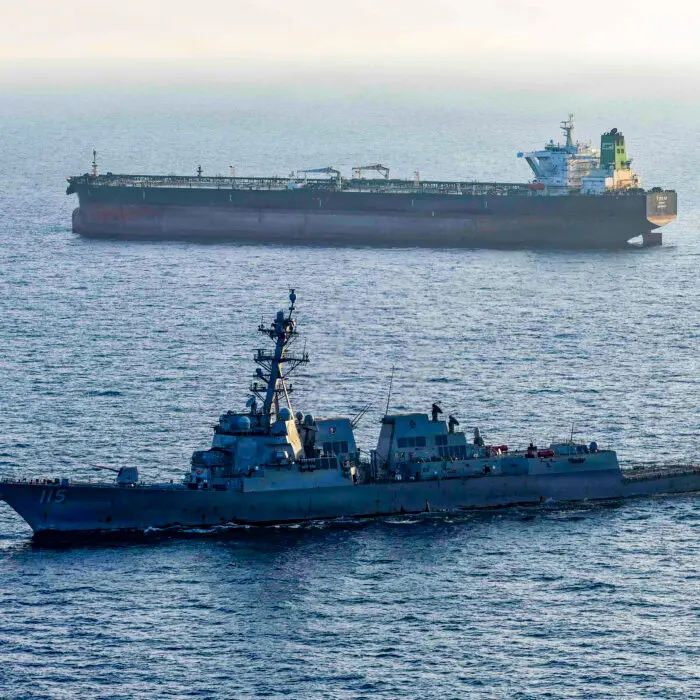
Since early May, CENTCOM forces have facilitated the transit of approximately 900 commercial vessels carrying 450 million barrels of crude oil.
An interim ceasefire negotiated last month fell through after Iran resumed its attacks on commercial ships in the Strait of Hormuz.
U.S. strikes on July 17 came in the wake of Iranian ballistic missile and drone attacks on a U.S. base in Jordan. Two soldiers were killed: 1st Lt. Tyler James Feehan, 25, of Ewa Beach, Hawaii, and Pvt. Isabella Gonzales, 19, of Carrollton, Texas. A third service member, Sgt. Angel S. Rampersad, 28, of Ozone Park, New York, initially reported missing, is now presumed dead.

Iran attacked a tanker in the strait off the coast of Oman on Tuesday, forcing the crew to abandon ship, according to the British military’s United Kingdom Maritime Trade Operations center. Iran also launched attacks in Bahrain and Kuwait. Kuwait said Iran struck desalination and power plants for a fourth straight day.

Jordan reported it intercepted five drones and three missiles. Flights were briefly suspended at Irbil International Airport in Iraq’s Kurdish region after attacks there.

President Donald Trump, speaking from the Oval Office on Tuesday, said Washington has “no interest in meeting” with Iran. He indicated that U.S. forces could soon strike Pickaxe Mountain, a fortified underground site close to one of Iran’s main uranium enrichment facilities.

Iran’s armed forces responded with a blunt warning via state-run media, saying such an attack would be viewed as an expansion of the war, and U.S. allies and interests would become targets as a result.

Reuters contributed to this report.
Google LogoMark Us Preferred on Google
Kimberly Hayek
Kimberly Hayek
Author
Kimberly Hayek is a reporter for The Epoch Times. She covers California news and has worked as an editor and on scene at the U.S.-Mexico border during the 2018 migrant caravan crisis.