The U.S. Embassy in Kuwait City was closed as the aerial war against the Iranian regime continues, the State Department announced on March 5.
“While there have been no reported injuries to U.S. personnel, the safety of Americans abroad remains the highest priority of the U.S. Department of State,” the department said.
It noted that the State Department is continuing to maintain a Level 3 advisory for Kuwait, urging American citizens to reconsider travel to the oil-rich Middle Eastern nation.
U.S. citizens are advised to depart Kuwait if they can do so in a safe manner, the State Department said, by “using commercial or other available transportation options.”
The suspension announcement comes as six U.S. service members were killed when an Iranian drone hit a port in Kuwait on March 1, officials have said. The Pentagon also confirmed that Kuwait shot down three U.S. fighter jets earlier this week in friendly fire incidents.


Since the U.S.–Israel operation against the Islamic regime on Feb. 28, Iran has responded by firing drones and missiles at Gulf countries. The United States also shut down embassies in Lebanon in Saudi Arabia as the airstrikes continue, separately urging U.S. citizens to “depart now” from around a dozen different Middle Eastern and North African countries.
The White House has said it would attempt to evacuate American citizens who are stranded in the Middle East, as hundreds of flights were canceled or delayed due to the conflict. Around 17,500 citizens have left the region since the war began.
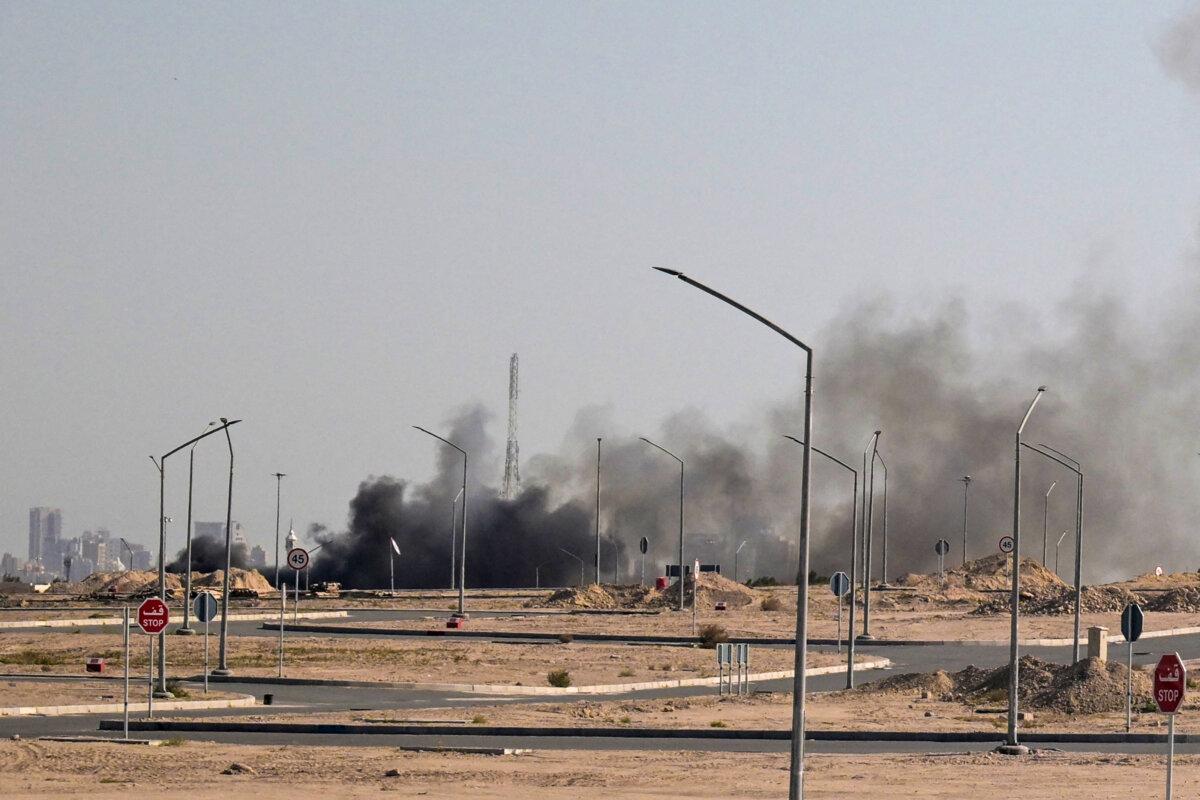
A worldwide caution alert was sent out by the State Department on Feb. 28 as the aerial conflict with Iran started.
U.S. and Israeli officials say the military campaign targeting Iran are designed to dismantle the Islamic regime’s military capabilities and leadership as the country’s top leader, Ayatollah Ali Khamenei, was killed in strikes on Feb. 28. No replacement for Khamenei has been named.
The strikes took place after talks between Tehran and Washington last month about Iran’s disputed nuclear program. Western officials have long said that Iran is using its program to attempt to create nuclear weapons, which Tehran has denied.