This copy is for your personal, non-commercial use only. Distribution and use of this material are governed by our Subscriber Agreement and by copyright law. For non-personal use or to order multiple copies, please contact The Epoch Times Reprints.
US Considering Pentagon Engagement, Sanctions to Compel Nigeria to Tackle Christian Persecution
On Oct. 31, Trump said he would be redesignating Nigeria as a country of particular concern, saying Christianity was facing an ‘existential threat’ there.
Christians gather for the crossover service held at Most Pure heart of Mary Catholic church in Ijebu Imushin, Nigeria, on Dec. 31, 2023. Samuel Alabi/AFP via Getty Images
The United States is considering sanctions or Pentagon engagement on counterterrorism as part of plans to compel the Nigerian government to do more to protect Christians from persecution, a State Department senior official said on Nov. 20.
Jonathan Pratt, who leads the Bureau of African Affairs, outlined the plans in a statement to the House Committee on Foreign Affairs in a hearing focused on President Donald Trump’s recent redesignation of Nigeria as a country of particular concern (CPC), due to the widespread violence toward and alleged murder of Christians in the African nation.
“The Trump administration is developing a plan to incentivize and compel the Nigerian government to better protect Christian communities and improve religious freedom,” Pratt said.
“This plan will consider U.S. State and Treasury engagement on sanctions, as well as possible Department of War engagement on counterterrorism and other efforts to protect religious communities.”
Pratt added that Secretary of State Marco Rubio and Deputy Secretary of State Christopher Landau are engaged with the Nigerian government on the issue of violence against Christians, specifically in relation to incidents in the Middle Belt—which, in recent years, has seen increasing attacks on Christian villages.
Pratt opened his remarks by briefly outlining examples of Christian persecution in the country in recent years by Fulani militants and ISIS and al-Qaeda-affiliated groups.
“The Nigerian government must do more to protect its Christian citizens who are being targeted and killed,” Pratt said.
Pratt described Nigeria, Africa’s most populous nation and its largest democracy, as a key regional partner and added that it was in the United States’ interest to work with its government to ensure that it is protecting religious freedom.
“We welcome Nigeria’s willingness to cooperate following the CPC designation. We look forward to seeing these commitments put into action,” Pratt said.
The Epoch Times contacted the Nigerian government for comment, but did not receive a response by the time of publication.
CPC Designation
On Oct. 31, Trump announced that he would be redesignating Nigeria as a CPC, saying in a post on Truth Social that Christianity was facing an “existential threat” in the country.
On Nov. 1, Trump threatened military action in Nigeria if its government did not do more to protect Christians, as well as threatening to stop aid and assistance to the West African country.
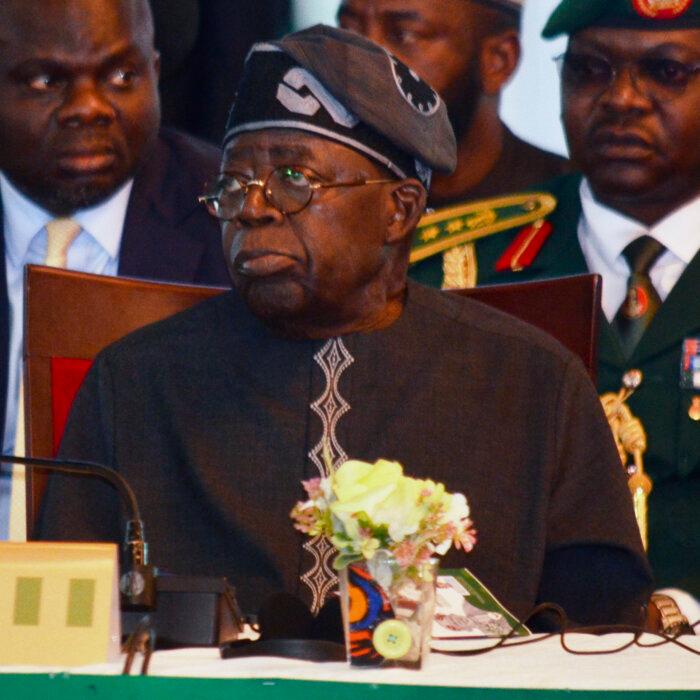
The same day, Nigeria’s president, Bola Tinubu, defended his country’s efforts to protect religious freedom, rejecting accusations of religious persecution against Christians.
“Religious freedom and tolerance have been a core tenet of our collective identity and shall always remain so. Nigeria opposes religious persecution and does not encourage it,” Tinubu said in a statement posted on X.
He also said that Nigeria has “constitutional guarantees to protect citizens of all faiths,” adding that his government will work with the United States on this matter.
Former President Joe Biden removed Nigeria from the CPC list on Nov. 17, 2021, citing what his State Department described as “steps by Nigerian authorities and civil-society leaders to foster interfaith dialogue and reconciliation.”
Jacob McGee, the State Department’s deputy assistant secretary for the Bureau of Democracy, Human Rights, and Labor, was also at the House Committee on Foreign Affairs hearing on Nov. 20, and said that Trump “took bold action in redesignating Nigeria as a CPC.”
“We’re planning engagement on the ground, both through our embassy there and other trips, to make sure that Nigerians hear our very important message that they have to do better,” McGee said.
“We’re making progress in the right direction. President Trump’s bold action on the CPC designation was an important step. It’s gotten their attention in the Nigerian government, but we need to do a lot more.”
Faith ‘Under Attack’
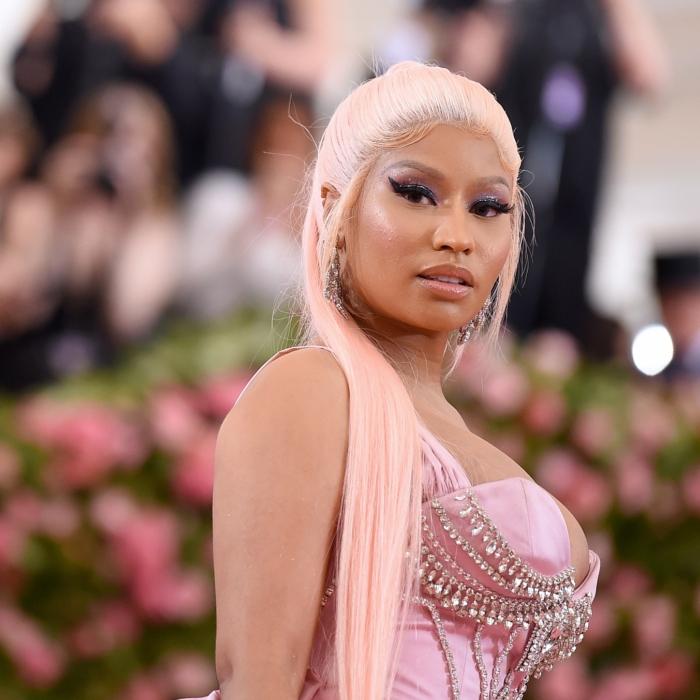
This week, rapper Nicki Minaj spoke at the United Nations to spotlight reports of Christian persecution in Nigeria.
She began her speech by thanking Trump for raising the issue and for his calls for urgent action to defend Nigerian Christians.
“Faith is under attack in way too many places. In Nigeria, Christians are being targeted, driven from their homes, and killed. Churches have been burned, families have been torn apart, and entire communities live in fear, constantly, simply because of how they pray,” Minaj said on Nov. 18.
Although some experts have argued that violence in Nigeria has increased across the board—not just among practicing Christians—several nongovernmental organizations have been sounding the alarm about the rise in targeted violence faced by Christians, who make up about 43 percent of Nigeria’s total population, according to the Pew Research Center.
A report released in August by the International Society for Civil Liberties and the Rule of Law indicates that more than 125,000 Nigerian Christians have been killed since 2009—more than 7,000 of whom were slaughtered in the first seven months of 2025.
Mark A. Kellner, Jack Phillips, and Audrey Simons contributed to this report.
Victoria Friedman is a UK-based journalist covering a wide range of international stories, with a particular interest in technology, eastern Europe, and defense.