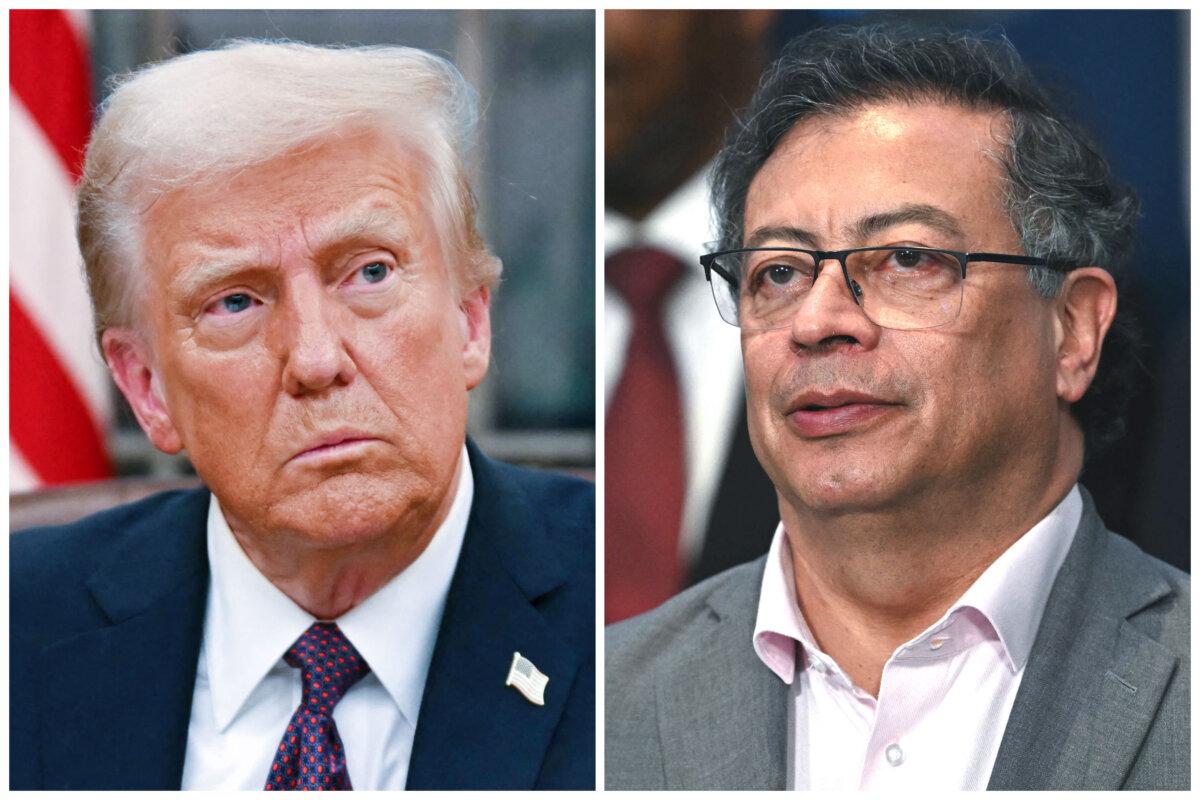
U.S. President Donald Trump on Sept. 15 added Colombia to a list of countries he says are not cooperating in the effort to tackle drugs, the first time since 1997 that the South American country has been included.
Trump’s determination said coca cultivation and cocaine production have reached record highs under Petro and that his government has “failed to meet even its own vastly reduced coca eradication goals.”
“For this reason, I have designated Colombia as having failed demonstrably to meet its drug control obligations,” Trump wrote.
Colombian President Gustavo Petro, who once said cocaine is no worse than whisky, criticized the Trump administration’s decision during a televised Cabinet meeting on Sept. 15. He said Colombia was being penalized despite losing “dozens of policemen, soldiers, and regular citizens, trying to stop cocaine” from reaching the United States.
“What we have been doing is not really relevant to the Colombian people, it’s to stop North American society from smearing its noses” in cocaine, he added.

Colombia was last on the list in 1997, four years after the death of the infamous leader of the Medellin drug cartel, Pablo Escobar.
In 1995, Colombian President Ernesto Samper denied receiving illicit campaign contributions from the Cali cartel, which succeeded the Medellin cartel.
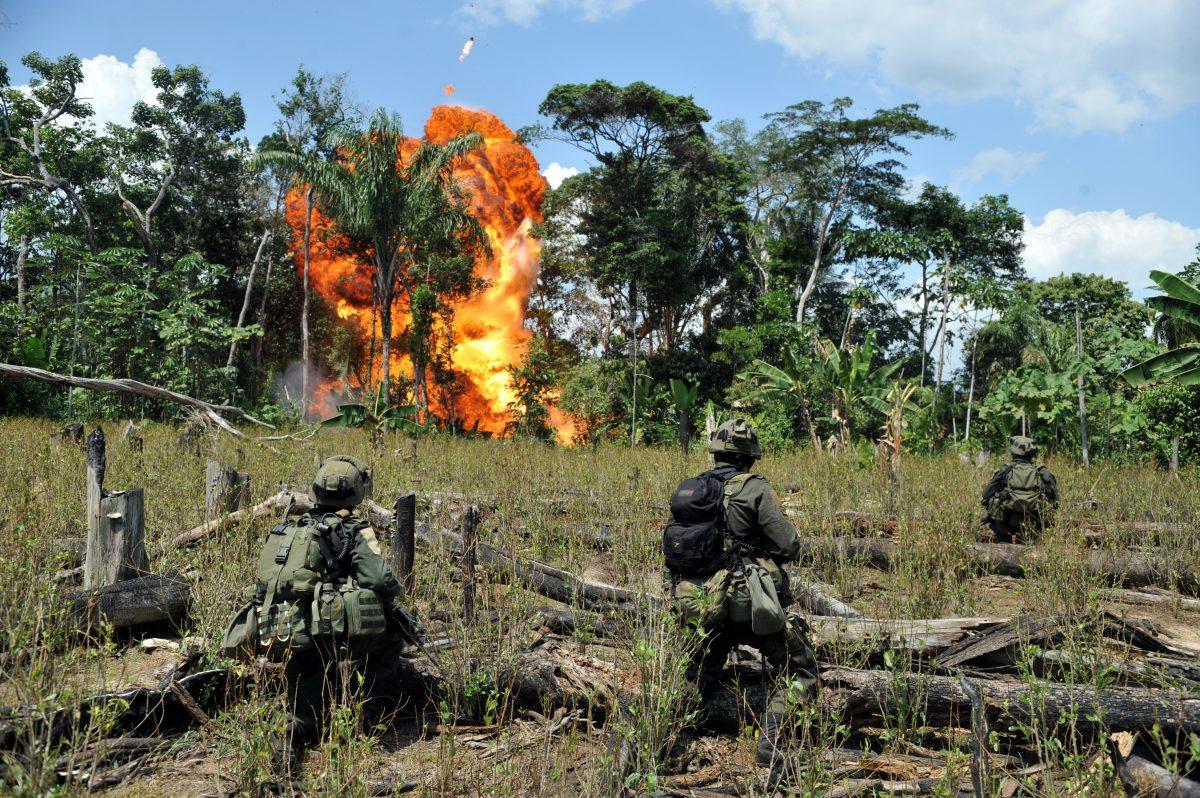
In recent years, new Colombian narco trafficking groups, such as the Clan del Golfo (CDG), have emerged, often working in league with the big Mexican cartels and with Tren de Aragua in Venezuela.
In August 2023, one of the CDG’s leaders, Dairo Antonio Úsuga David, also known as “Otoniel,” was jailed for 45 years in New York after being extradited by Petro’s conservative predecessor, President Iván Duque.
In his presidential determination, Trump praised Colombia’s security institutions for showing skill and courage in confronting criminals and narcoterrorists, but said, “The failure of Colombia to meet its drug control obligations over the past year rests solely with its political leadership.”
Under U.S. law, countries that have failed to meet their obligations under international counternarcotics agreements during the previous 12 months have to be identified as part of a decertification process.
Venezuelan Traffickers Hit Again, Trump Says
Eleven alleged members of Tren de Aragua were killed by a U.S. military strike on a Venezuelan boat trafficking drugs on Sept. 2.On Sept. 15, Trump said the U.S. military had carried out a second “kinetic strike” on a boat carrying drugs from Venezuela, killing three alleged traffickers.
“These extremely violent drug trafficking cartels POSE A THREAT to U.S. National Security, Foreign Policy, and vital U.S. Interests.”
Speaking to reporters in the Oval Office later, Trump said Gen. Dan Caine, chairman of the Joint Chiefs of Staff, had shown him footage of the strike and said he had proof the vessel was carrying drugs.
Trump said: “We have proof. All you have to do is look at the cargo that was spattered all over the ocean—big bags of cocaine and fentanyl all over the place.”
After the first U.S. attack on the Venezuelan vessel, Petro said on Sept. 5, “Under my administration, Colombia does not collaborate in assassinations.”