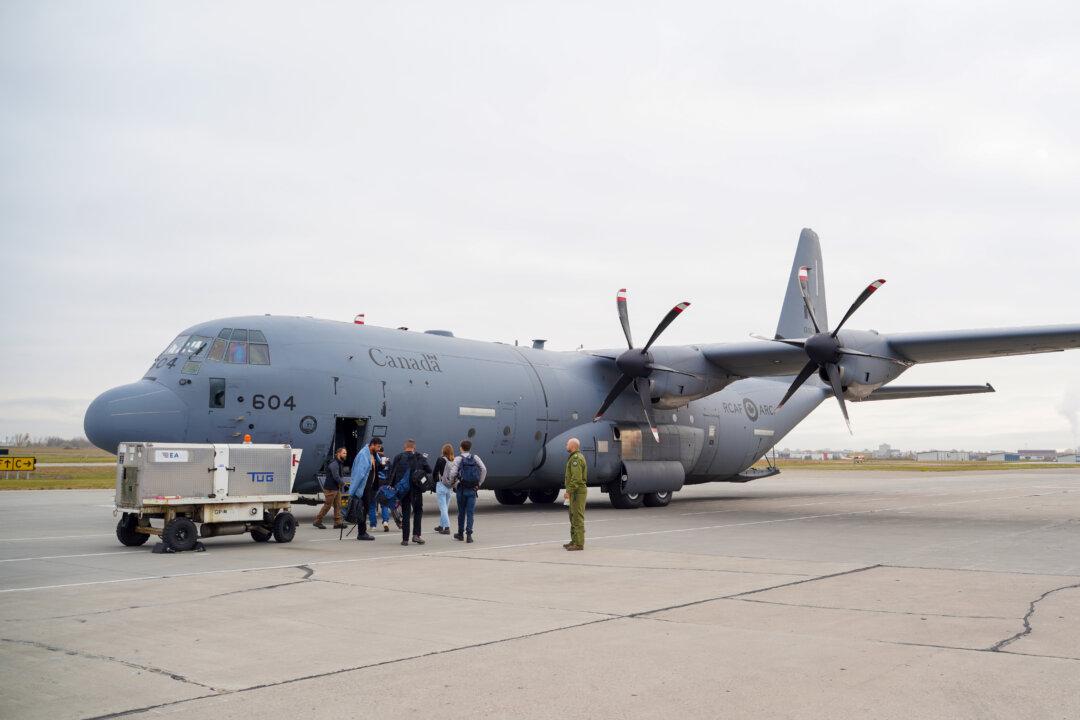
Unifor is set to begin contract negotiations with General Motors.
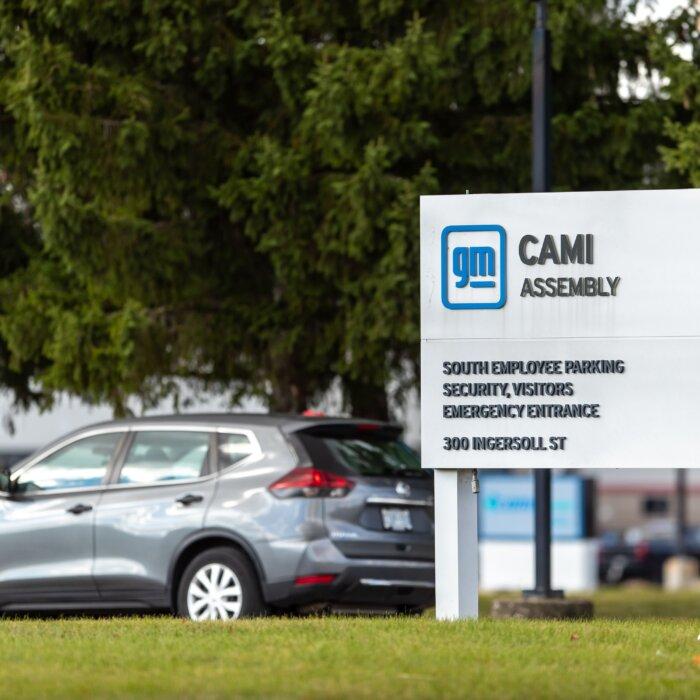
The union represents more than 4,600 members at Ontario GM facilities, including the Oshawa assembly plant, the CAMI facility in Ingersoll as well as operations in St. Catharines and Woodstock.
In July, Unifor named General Motors as the next U.S. automaker for contract talks.
Jennifer Wright, a spokesperson for GM Canada, said in a statement at the time that the company was “committed to working collaboratively” with the union to reach new labour agreements that would be supportive of employees and its Canadian operations.
The statement said that since 2020, the company has invested about $3.3 billion in its Canadian manufacturing plants, which would “help secure thousands of Canadian jobs for years to come.”
Earlier in July, Unifor members approved a new three-year contract with Ford that included three percent annual pay increases.

Other elements of the deal, which takes effect Sept. 21, included a renewal of a no-closure agreement.
It also included program commitments at all Ford facilities, like a third shift at its engine plant in Essex, Ont., forecasted for 2029. Unifor and Ford also agreed to introduce a program that provides laid-off workers from the company’s Oakville, Ont., assembly plant a pathway to full employment by July 2027.
The union says the agreement with Ford marked successful pattern-setting negotiations.
In pattern bargaining, a union negotiates with one company to set terms that it hopes to replicate with other companies in the same sector.
Ford workers covered by the master agreement voted 74 percent for the deal, while members at two locals voted 97 percent and 100 percent in favour.
Unifor national president Lana Payne said in an interview at the time that the agreement with Ford marked a precedent with key gains around wage increases and job security.
“I have confidence in what we’ve negotiated here because history shows us if we do hit a rough patch, that there’s a way to work our way through that,” Payne said in July.
“Obviously, I don’t have a crystal ball here, but we have done everything we can to show that this auto industry is incredibly important and that our union is going to continue to fight for it.”
However, she did acknowledge differences between Ford and its other automotive counterparts—General Motors and Stellantis—that could make upcoming talks more complicated.
Namely, General Motors’ Ingersoll assembly plant and Stellantis’ Brampton assembly plant both currently sit idle with thousands of workers laid off.
“The difference is that they have taken decisions that were different than Ford Motor Co. throughout the last 18 months,” said Payne, referring to the period of trade uncertainty that Canada has faced since the introduction of auto tariffs.
“There’s no doubt in my mind that those contract talks will also be tough and quite frustrating. But we have to fight for this industry here, and this is one of the ways that we can do it.”
The current edition of bargaining between Unifor and the remaining Detroit Three automakers also comes alongside headwinds for the sector.
The union has previously highlighted challenges such as U.S. tariffs, the Trump administration’s decision not to extend the Canada-United States-Mexico Agreement, and the introduction of Chinese electric vehicles into Canada.