The UK government has said its proposed digital ID will be mandatory for all adults to work in the UK, prompting a fierce backlash from civil liberties groups and politicians concerned about the erosion of privacy and creeping state control.
‘Shadow Economy’
Starmer said in a speech on Friday at the Global Progress Action Summit in London that the immigration system needs to be “fair” and that people need to feel the government is on “their side.”“That is why today I am announcing this government will make a new, free-of-charge, digital ID mandatory for the right to work by the end of this Parliament,” the prime minister said.
“Let me spell it out: You will not be able to work in the United Kingdom if you do not have digital ID.”


Starmer added, “For too many years, it’s been too easy for people to come here, slip into the shadow economy and remain here illegally because, frankly, we have been squeamish about saying things that are clearly true.”
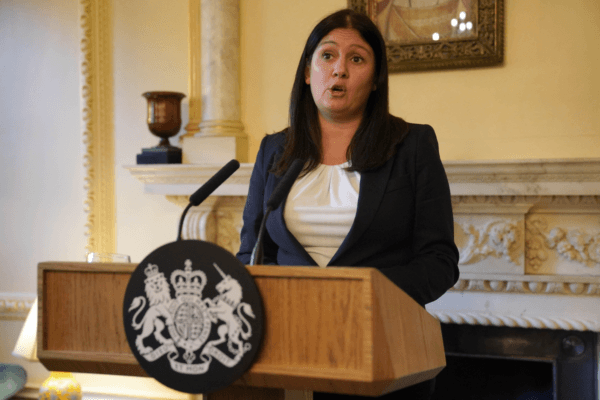
“Although all UK citizens will have a digital ID, it will not be mandatory for people to use it. It will be entirely their choice,” she told Sky News.
Nandy acknowledged that nothing would change practically in terms of what penalties businesses face for failing to check whether employees have the right to work.
Online Petition
Both critics and supporters have pointed out that once digital ID is rolled out, there is scope for its use to be enhanced to access other services—such as the National Health Service (NHS)—following the model of countries such as Estonia and Denmark.The petition states: “We think this would be a step toward mass surveillance and digital control, and that no one should be forced to register with a state-controlled ID system. We oppose the creation of any national ID system.
“ID cards were scrapped in 2010, in our view for good reason.”

‘Controlling the Population’
She also criticized the scheme for being the brainchild of the Labour Together think tank, following its recommendation of a so-called Brit Card in June. The organization has come under scrutiny for an alleged lack of transparency over funding when led by Starmer’s now chief of staff Morgan McSweeney.Farage also said ID cards had failed to make an impact on illegal immigration in other European countries, such as Germany and the Czech Republic.
“It’s made no difference at all in Germany, and nor will it here,” he said.
“All that digital ID will be is a means of controlling the population, of telling us what we can and can’t do, of harassing the innocent ... and didn’t we see it all, when we had the pandemic, when you had to have vaccine ID to travel, to do various things?”
Farage added that he is concerned about “massive data banks” with people’s private information being hacked by “foreign governments, private companies and criminals.”

Blair’s Influence
Proposals for physical ID cards have been previously fought off in the UK. including in the 2000s, when former Prime Minister Sir Tony Blair pushed for them on a voluntary basis but met with fierce resistance, including from the main political parties in opposition at the time.“The contribution digital ID can make to combatting illegal immigration and the criminal groups that exploit desperate people is part of this, but importantly, digital ID can do so much more for our citizens, our communities, and our country,” Alexander Iosad, director of government innovation policy at the Tony Blair Institute for Global Change, wrote in the report.
The Liberal Democrats said they would fight “tooth and nail” against the “nonsensical” plans, and accused Labour of having a “decades-long obsession” with ID cards.
“Imagine if the government devoted this much money and focus on getting [doctor] waiting times down, or fixing social care, instead of pursuing the Labour Party’s decades long obsession with ID cards and more state control.
“It is nonsensical and the Liberal Democrats will fight against it tooth and nail—just as we successfully did against Tony Blair’s ID cards.”
Many people commenting online expressed their intention to refuse to accept or use the ID, drawing parallels between the attempts to introduce vaccination or health status passports during the COVID-19 lockdown era.
GB News contributor Neil Oliver, who has long spoken out on what he sees as the dangers of digital ID, laid out the possibility for the expansion of state powers of surveillance if the proposal is passed into law.
‘Authoritarian Scheme’
“Knowing what I know about Government IT, it is highly unlikely that this terrible, authoritarian scheme will be implemented by 2029. By then, Starmer will have been kicked out of office, and it can be junked,” Truss said.
Former Labour leader Jeremy Corbyn, who is attempting to launch a new left-wing party, also expressed his opposition to the policy.
The Together Declaration campaign group, formed in opposition to perceived government overreach during the COVID-19 lockdown era, vowed to oppose the government plans, saying on X, “Britain is not a ‘Papers Please’ country—freedom from surveillance is part of who we are. Digital ID is expensive, risky, unneeded—and un-British.”
“Politicians have tried and failed to sell digital IDs to the British public as a vital solution to a range of issues including fighting terrorism and even protecting us from COVID,” it said.
“But Britain has historically rejected various forms of mandatory ID. We must reject this one too.”
The proposal envisages virtual ID cards being stored on devices in the same way many people choose to store contactless payment cards or the NHS App.The proposed ID would include name, date of birth, and a photo, as well as information on nationality and residency status. How the scheme will work for those who do not use smartphones will be addressed as part of the consultation process, which will take place later this year before legislation is brought before Parliament.