
When the trial of two men accused of spying for China collapsed before it had even begun in London on Sept. 15, the news came out of the blue.
But in the four weeks since, the case has become a political snowball, with allegations made in the British media that the UK government undermined the prosecution to avoid offending the Chinese Communist Party (CCP), which is not officially defined as an “enemy.”
Allegations Emerge
In April 2024, Christopher Cash, 30, a former parliamentary researcher, and Christopher Berry, 33, a teacher, were charged with spying.What Are the Accusations?
The allegation against Cash and Berry was that, between December 2021 and February 2023, they had “for a purpose prejudicial to the safety or interests of the state, obtained, collected, recorded, published or communicated to any other person articles, notes, documents or information which were calculated to be ... useful to an enemy.”The pair could not be charged under that legislation because it was not in existence at the time of the alleged offenses, and it could not be applied retrospectively.

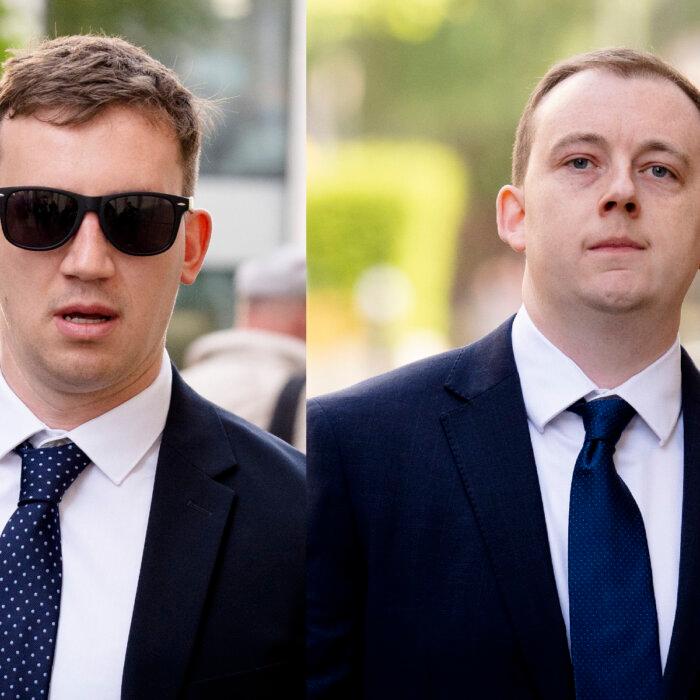
How Did the Trial Collapse?
Cash and Berry had been due to go on trial at Woolwich Crown Court in London in October, but on Sept. 15, during a pre-trial hearing at the Central Criminal Court, prosecutor Tom Little KC said, “We simply cannot continue to prosecute.”He gave no more details, but a judge, Mrs Justice Cheema-Grubb, said she was satisfied and formally recorded not guilty verdicts against the pair.
What Is the Official Secrets Act?
On the day the trial collapsed, Security Minister Dan Jarvis told Parliament, “It is well known that state threats legislation has not kept pace with the changing threats we face.”He said the National Security Act was “state agnostic, removing the unhelpful ‘enemy’ language from the Official Secrets Act and focusing on the malign activity we are all concerned about.”
Is China an ‘Enemy’?
In order to prosecute Cash and Berry, the CPS had to prove that China was considered an “enemy” by the UK government.Russia was considered a threat to Britain’s national security, but the CPS sought to obtain evidence from the government that China was also a threat.
New Developments
The Sunday Times reported on Oct. 5, citing two anonymous sources in government, that the decision to drop the charges against the pair came after a meeting involving British Prime Minister Keir Starmer’s national security adviser, Jonathan Powell, and the Foreign Office’s top civil servant, Sir Oliver Robbins.The Sunday Times reported that Powell said a key witness for the prosecution would use evidence based on the National Security Strategy 2025, a document published in June.
Government Response
Starmer’s press secretary told reporters on Oct. 6, “The suggestion that the government withheld evidence, withdrew witnesses, or restricted the ability of witnesses to draw on particular bits of evidence is all untrue.”The press secretary said the previous Conservative government’s policy was to call China an “epoch-defining challenge” but not an enemy.
On Oct. 8, Starmer, who is himself a former DPP, told reporters: “We were disappointed that the trial didn’t proceed, but the position is very clear that the trial would have had to take place on the basis of the situation as it was at the time under the previous Tory government.
How Does London View China?
On Sept. 13, 2023, Starmer accused then-British Prime Minister Rishi Sunak, a Conservative, of not doing enough to curb threats from China.In June, then-Foreign Secretary David Lammy made a statement about the government’s so-called China audit, which he said would “deliver a long-term strategy—moving beyond cheap rhetoric to a data-driven, cross-government approach.”
What Will Happen Now?
On Oct. 10, Jonathan Hall KC, the independent reviewer of terrorism legislation, said he was “investigating” the affair and told LBC: “I don’t think that the public explanation that’s been given so far is at all adequate. ... It deserves a much fuller explanation.”Parliament reconvened on Oct. 13, and lawmakers are due to debate the China spy trial collapse and its implications.
On Oct. 15, the leader of the Conservative Party, Kemi Badenoch, will have a chance to challenge Starmer’s explanation for the collapse of the China spy trial in Prime Minister’s Question Time.
On Oct. 12, Badenoch said she had written to Starmer, demanding he answer the question of whether it was still his government’s position to claim “that it would have been impossible to argue that China was a threat in court.”
Powell—a former aide to Prime Minister Tony Blair—is set to appear at a private hearing of the Joint Committee on the National Security Strategy in the following weeks.