This copy is for your personal, non-commercial use only. Distribution and use of this material are governed by our Subscriber Agreement and by copyright law. For non-personal use or to order multiple copies, please contact The Epoch Times Reprints.
UK Synagogue Murders: What We Know About the Attack, Police Response
There has been a surge in anti-Semitic attacks across Europe since the Gaza conflict started in October 2023.
Add to My List
Save
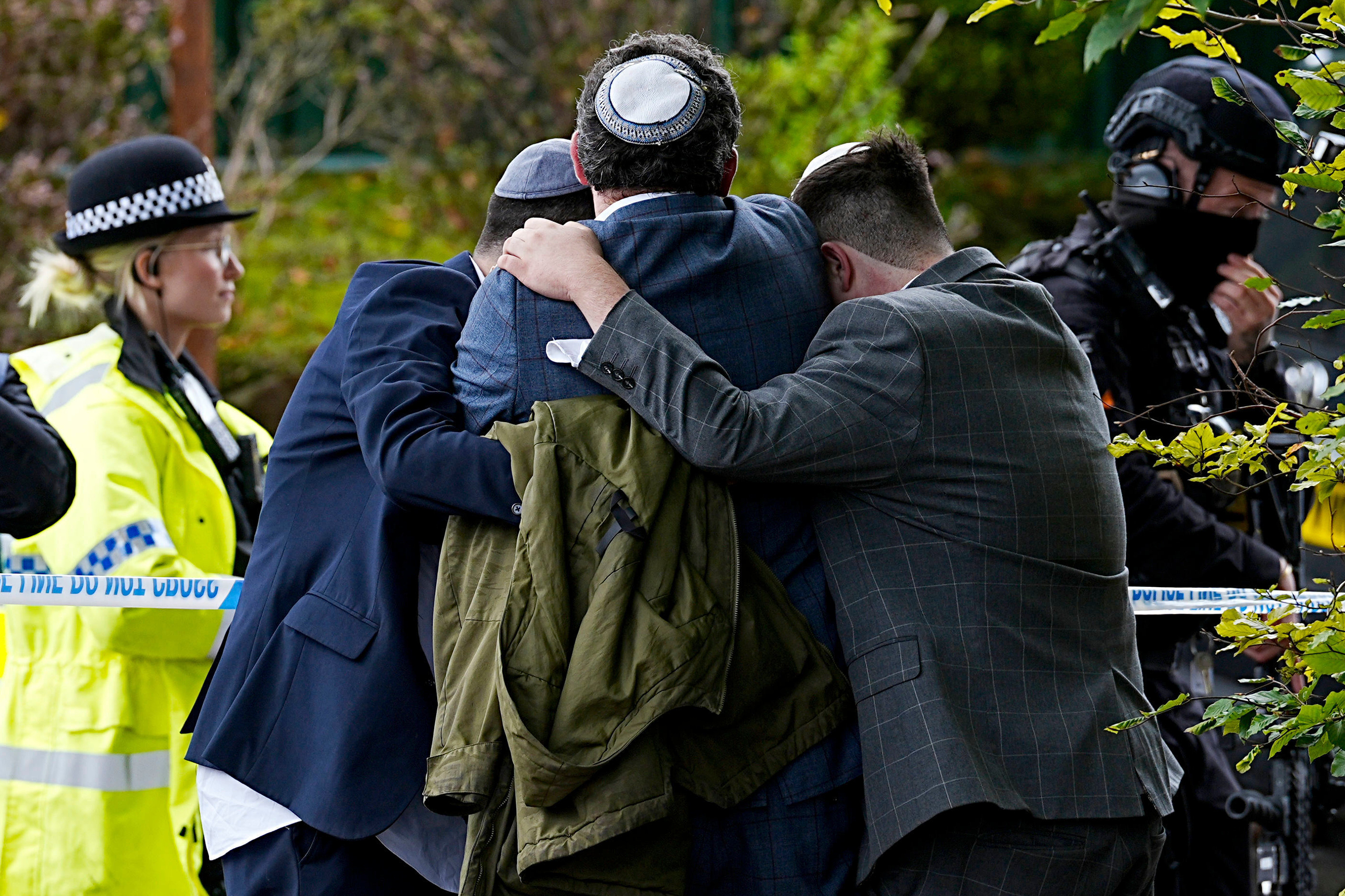
Members of the Jewish community comfort each other in the wake of a terrorist attack at the Heaton Park Hebrew Congregation synagogue in Crumpsall, Manchester, England, on Oct. 2, 2025. Peter Byrne/PA via AP
Members of the Jewish community comfort each other in the wake of a terrorist attack at the Heaton Park Hebrew Congregation synagogue in Crumpsall, Manchester, England, on Oct. 2, 2025. Peter Byrne/PA via AP
Two men were killed when a terrorist rammed a car into a crowd of Jewish people and then began stabbing them outside the Heaton Park Hebrew Congregation synagogue in Manchester, England, on Oct. 2.
The attacker, who authorities said was wearing what appeared to be an explosive vest, was shot dead by police, but it has now emerged that one of the two Jewish men who died may have been killed by a police bullet.
The attack took place on Yom Kippur, the holiest day in the Jewish calendar, when worshippers traditionally spend the day fasting and in prayer.
What Happened?
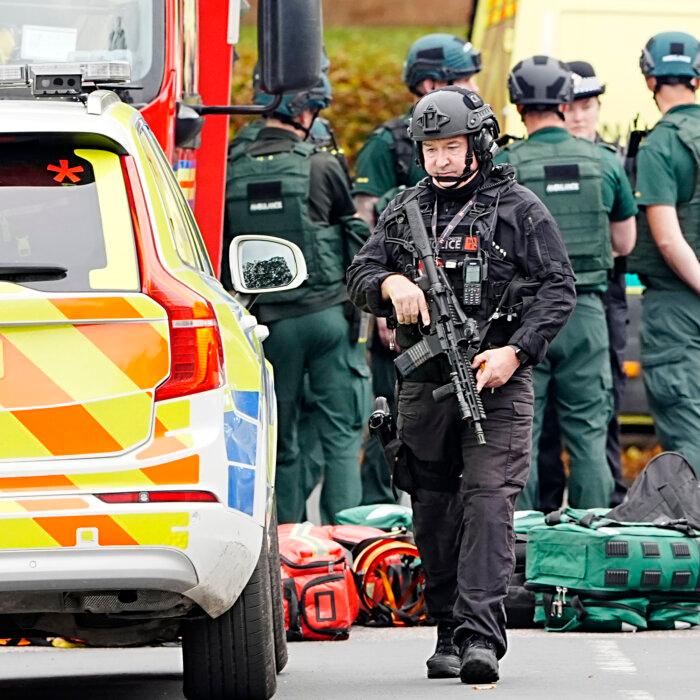
At 9:31 a.m. on Oct. 3, Greater Manchester Police (GMP) responded to reports from members of the public that a car had been driven into people outside the Heaton Park Hebrew Congregation Synagogue on Middleton Road in Crumpsall, in Manchester.
The driver of the car was seen to then attack people with a knife, police said. He was wearing a vest that had the appearance of an explosive device.
Head of Counter Terrorism Policing Laurence Taylor said the attacker was shot dead by police.
GMP later identified the deceased victims as Adrian Daulby, 53, and Melvin Cravitz, 66, who both lived in Crumpsall.
On Oct. 3, GMP said a Home Office pathologist has provisionally determined that one of them “would appear to have suffered a wound consistent with a gunshot injury” and that ”this injury may sadly have been sustained as a tragic and unforeseen consequence” of the actions of the armed police officers.
Who Was the Attacker?
The attacker has been identified as Jihad Al Shamie, a 35-year-old British national of Syrian origin.
GMP said their records did not show that he was previously referred to Prevent, the British government program designed to assess and manage people at risk of radicalization.
The BBC has reported that he entered the country as a child and was granted UK citizenship in 2006, when he was 16.
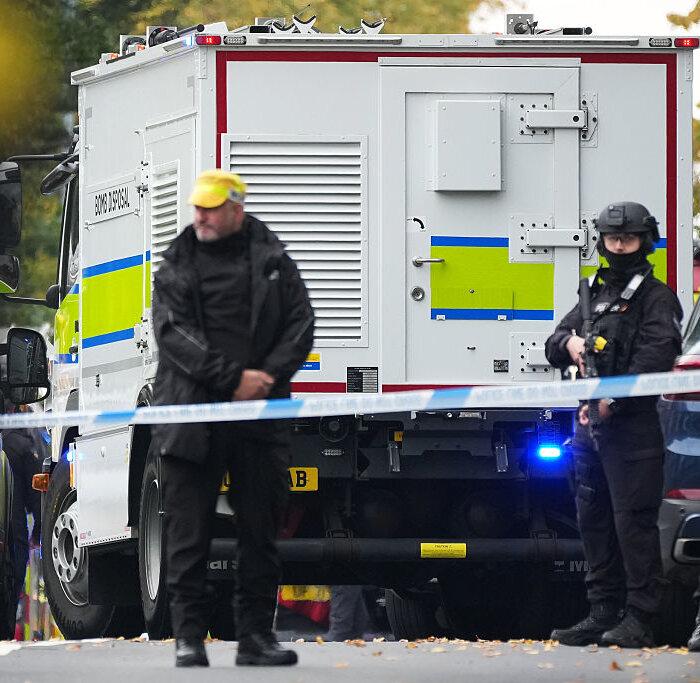
The police said, “A suspicious device worn by the attacker during the incident has been assessed and was deemed not to be viable.”
Officials’ Reaction to Attack
British Prime Minister Keir Starmer, whose wife is Jewish, said on X: “This was a vile terrorist attack that attacked Jews, because they are Jews.
“Anti-Semitism is a hatred that is rising, once again. Britain must defeat it, once again. To every Jewish person in this country: I promise that I will do everything in my power to guarantee you the security you deserve.”
Chief Rabbi Ephraim Mirvis, chief rabbi of the united Hebrew congregations of the commonwealth, posted on X: “This is the day we hoped we would never see, but which deep down, we knew would come.
“For so long we have witnessed an unrelenting wave of Jew hatred on our streets, on campuses, on social media and elsewhere—this is the tragic result.”
Rise in Anti-Semitic Attacks in Europe
Since Oct. 7, 2023—when terrorist group Hamas launched its attacks into Israel, killing 1,200 people, before Israel launched an air and ground offensive into the Gaza Strip—there has been a surge of anti-Semitic attacks reported across Europe.
In August 2024, a man was arrested on suspicion of setting fire to a synagogue in La Grand-Motte, southern France.
Two months later, Danish police arrested three men after hand grenades exploded near the Israeli Embassy in Copenhagen.
The Community Security Trust said in August 2024 that there had been a record high number of anti-Semitic incidents in Britain in the first half of that year, the majority of which were motivated by the Israel–Hamas conflict.
On Oct. 3, a spokesperson for Campaign Against Anti-Semitism said it would be organizing a protest outside Downing Street on Oct. 8.
“The time for dialogue, platitudes, and lip service has passed,” the spokesperson said in a statement emailed to The Epoch Times. “Britain can no longer afford excuses while our Jewish community faces terror on our streets.”
Previous UK Terrorist Attacks
Britain has suffered several terrorist attacks, the most infamous being the so-called 7/7 attacks in July 2005 when four suicide bombers blew themselves up, killing 52 people on a bus and three underground trains in London.
On March 22, 2017, a car driven by Khalid Masood struck and killed four pedestrians, and injured many others, on Westminster Bridge in central London, before he crashed into the gates of the Houses of Parliament.
He stabbed to death a police officer, Keith Palmer, before he was shot dead.
In Feb. 2020, Sudesh Amman, a convicted terrorist who had been released from prison, stabbed two people in the street in Streatham, south London, before being shot dead by police.
In Oct. 2021, Conservative MP Sir David Amess was stabbed to death by Ali Harbi Ali, 26, a British national of Somali descent, while meeting constituents in Essex.
Ali was later given a life sentence and claimed during his trial that Amess deserved to die after voting for airstrikes on ISIS terrorists in Syria in 2014 and 2015.
The likelihood of a terrorist attack in Britain is currently set at the “substantial” level, as it has been since Feb. 2022, when it was lowered from “likely.”
The Associated Press contributed to this report.
Chris Summers
Author
Chris Summers is a UK-based journalist covering a wide range of national stories, with a particular interest in crime, policing and the law.