The UK unveiled its Defense Investment Plan (DIP) on June 30, with an extra 5 billion pounds ($6.6 billion) spent on unmanned vehicles, and a new generation of drone carrier ships replacing traditional navy destroyers.
British Prime Minister Keir Starmer, speaking at a drone factory in Berkshire, said the UK would spend “almost 80 billion pounds [$105.8 billion]” per year on defense by 2029, and that the DIP would drive economic growth and keep the country safe and secure in the future.
“This game-changing investment will strengthen our armed forces on land, at sea, and in the air, ensuring our servicemen and women have the cutting-edge capabilities they need to deter evolving threats and keep the British people safe,” Starmer said in a statement.
The British Ministry of Defense said in a statement that 5 billion pounds in the DIP would create a “flexible, integrated force with attack drones flying alongside army helicopters, [Royal Air Force] jets made invisible from enemy detection with new drones, and a hybrid Royal Navy made up of crewed and uncrewed vessels.”
“This major investment will see capabilities ranging from highly complex autonomous mine-hunting drones to small ‘quadcopter’ tactical drones, and low-cost ‘kamikaze’ one-way attack drones,” the ministry said.
The current fleet of six Type 45 destroyers will be replaced by six new common combat vessels, which the ministry expects will be on duty “from the early 2030s.”
Budgetary Issues
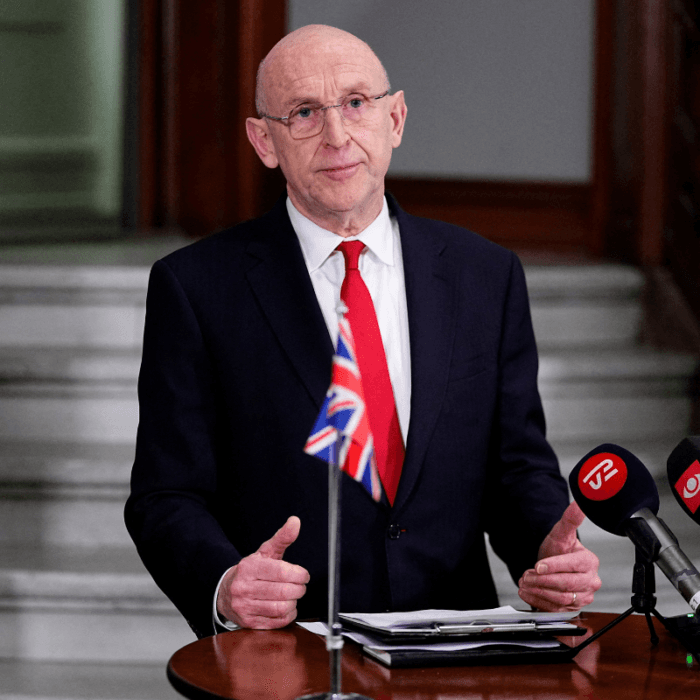
On June 11, John Healey resigned as British defense secretary, three days after he was shown an iteration of the DIP, which he said fell “well short of what is required for defense and the country at this dangerous time.”
Healey claimed that Starmer was unable and unwilling to “commit the resources that the nation needs to defend the country at this time of rising threats.”
It is unclear whether extra money has been allocated to the DIP since Dan Jarvis replaced Healey as defense secretary, but the chancellor, Rachel Reeves, said on June 30 that she had overseen the biggest increase in defense spending “since the Cold War.”
She said the DIP represented “an additional 15 billion pounds [$19.8 billion] worth of funding by again reprioritizing spending across government.”
The Ministry of Defense said the DIP would help the Royal Navy to counter Russian activity in the North Atlantic and the High North, and protect critical underwater infrastructure.
Jarvis, a former soldier himself, said the government was determined to give the armed forces what they needed to serve with courage and keep the country safe.
“The character of warfare is rapidly changing,” Jarvis said. “In Ukraine and the Middle East, uncrewed systems are defining conflicts.”

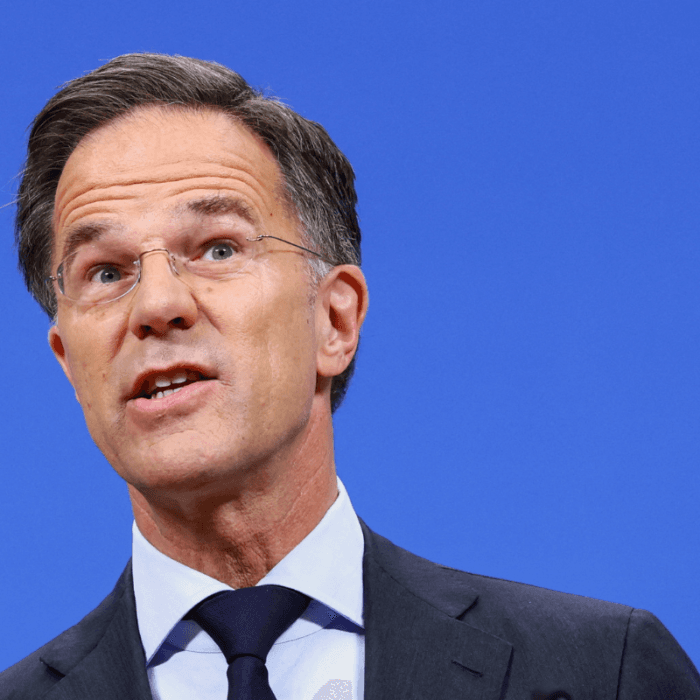
On June 25, NATO Secretary-General Mark Rutte said he expected members to announce billions of dollars in extra defense spending before or during the alliance’s summit, which is being held in the Turkish capital, Ankara, on July 7 and July 8.
“We are going to show the world that we are delivering on the commitments we made in The Hague last year,” Rutte said, referring to a commitment made at the NATO summit in June 2025 to increase defense spending to 5 percent of gross domestic product (GDP) by 2035.
The Hague summit declaration was split into a commitment to spend 3.5 percent of GDP on core defense, such as troops, weapons, and equipment, and a further 1.5 percent of GDP on defense and security-related infrastructure, including the cyberproofing of assets and protection for energy pipelines and undersea cables.
Rutte said Germany is on track to double its defense investment from just a few years ago, to more than 150 billion euros ($171 billion) per year.
In the UK, Starmer resigned as leader of the ruling Labour Party on June 22, clearing the way for Andy Burnham to succeed him and become prime minister.
If nobody steps forward to challenge Burnham for the party leadership, he will succeed Starmer as prime minister on July 17.
Starmer: Platform for My Successor to Build On
But when he was asked by a reporter at a news conference on June 30 whether Burnham had been shown the DIP, Starmer avoided answering the question directly, instead saying, “[It is a] platform on which I know my successor will build.”
The opposition Conservative Party’s shadow defense minister, James Cartlidge, told the BBC that the DIP was “too little, too late.”
“We waited so long for this defense investment plan, but because it hasn’t got the money, it isn’t delivering, and it isn’t delivering soon enough,” Cartlidge said.
The leader of the Liberal Democrat Party, Ed Davey, said Starmer’s government had “dangerously short-changed” the armed forces.
“Defense chiefs have been forced to make hard choices when they should be given what they need,” Davey said.