The UK home secretary unveiled plans in Parliament on Jan. 26 for a new National Police Service (NPS), which is modeled on the FBI and will take over the fight against terrorism and organized crime in the UK.
The NPS would replace the National Crime Agency, which covers England and Wales, although it would also have a UK-wide role.
The document states that the government would invest 115 million pounds ($157 million) over the next three years “to enable the rapid and responsible adoption of [artificial intelligence] and automation technologies by the police.”
A new National Centre for AI in Policing, known as Police.AI, would be created.


The number of facial recognition camera vehicles would be increased from 10 to 50.
“A hundred years ago, fingerprinting was decried as curtailing our civil liberties, but today we could not imagine policing without it,” Mahmood said.
“I have no doubt that the same will prove true of facial recognition technology in the years to come.”
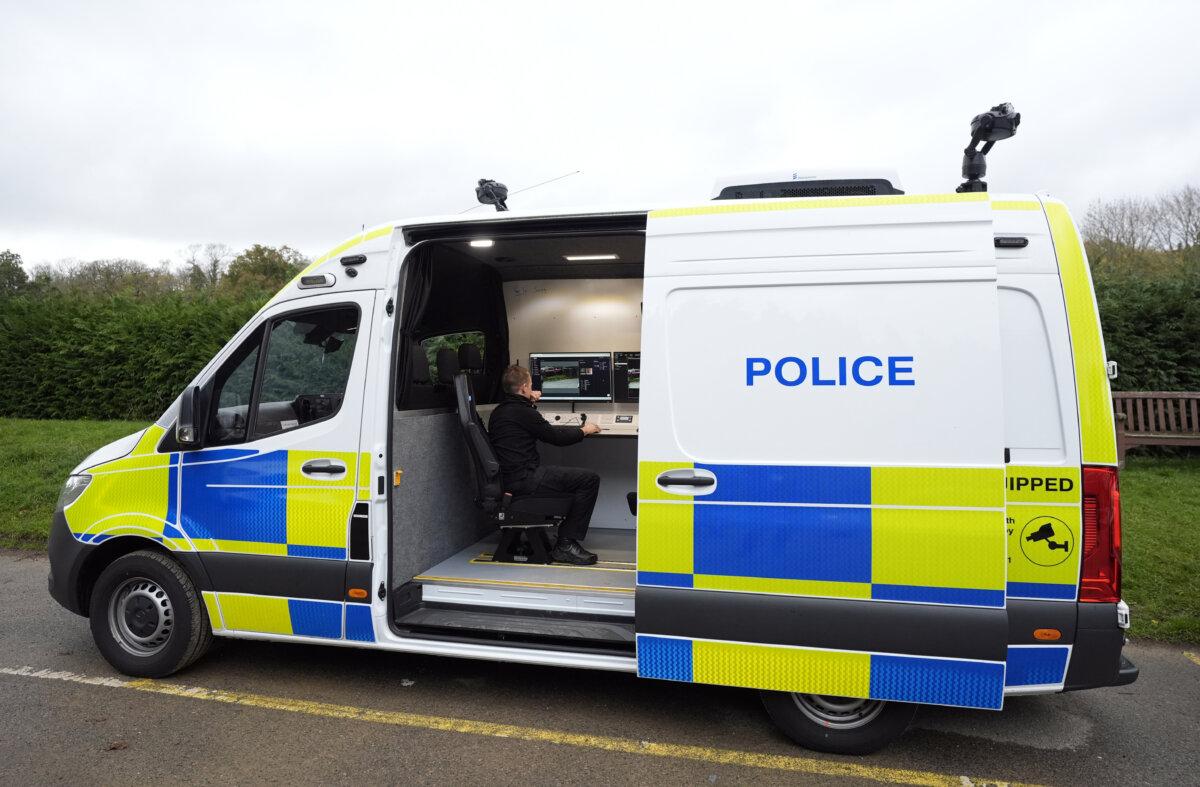
There is currently no dedicated statute governing police use of facial recognition in England and Wales.
Earlier in January, Eleanor “Nell” Watson, a leading researcher and adviser on AI ethics and transparency, criticized the increased deployment of surveillance technology.
Mahmood also announced plans to scrap the existing 43 police constabularies in England and Wales, which would be reorganized into a dozen regional forces.
“Policing is not broken, as some might have us believe,” she told the House of Commons on Jan. 26. “Last year, the police made over three-quarters of a million arrests, 5 percent more than the year before.”
‘Epidemic of Everyday Crime’
“However, across the country, things feel very different,” Mahmood said. “Communities are facing an epidemic of everyday crime that all too often seems to go unpunished, and criminals know it. Theft has risen by 72 percent since 2010, phone theft is up 58 percent.”The current 43 police forces in England and Wales were set up in 1974, but Mahmood said the world has changed dramatically.
“Criminals are operating online and across borders with greater sophistication than ever before, be they drug smugglers, people traffickers or child sexual abusers,” Mahmood said.
“The world has changed dramatically since policing was last fundamentally reformed over 50 years ago. Policing remains the last great unreformed public service.”
There were plans to merge police forces 20 years ago, but the idea was dropped by the Labour government of then-Prime Minister Tony Blair.
Labour won a general election in the UK last year, and Mahmood was installed as home secretary, tasked with sorting out the UK’s police and prisons.
Criticism of ‘Mega-Forces’
The opposition Conservative Party’s shadow home secretary, Chris Philp, criticized the plan to reduce the number of police forces from 43 to 12 and said it would create forces that would be too big.“Such huge forces will be remote from the communities they serve,“ Philp said. ”Resources will be drawn away from villages and towns towards large cities.”
He noted that the Metropolitan Police, the UK’s largest police force, had the worst crime-solving rates.
“That goes to show that large scale does not automatically deliver better results, and therefore we will oppose the mandated merger of county forces into remote regional mega-forces,” Philp said.
Member of Parliament Pete Wishart, of the Scottish National Party, said: “Over the weekend, the home Secretary was trailing this proposal as a British FBI.
“While it might indeed be their FBI, British it most definitely is not, as it applies only to England and Wales.”
“In Scotland, we are immensely proud of our culture and ethos of policing by consent and the fact that we have the lowest crime rates in the whole of the UK,” Wishart said. “The last thing we want is this creeping Americanization.”
He demanded to know what powers the NPS would have in Scotland.
Mahmood said NPS would cover the whole of the UK.
“In England and Wales, it will have full operational powers and will be able to carry out its law enforcement activities,” she said.
“But in Scotland and Northern Ireland, it will carry out operations only with the agreement of the legally designated authority.”