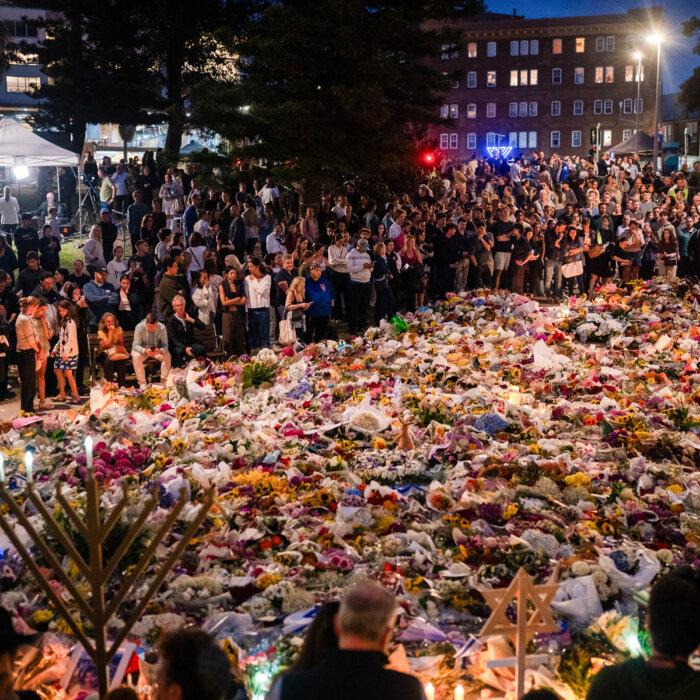
British laws would have required a counterterrorism plan be in place during the Hanukkah gathering that would eventually be attacked by the Bondi terror gunmen.
That’s the assessment of Scott Wilson, who retired as a senior officer with London’s Metropolitan Police after 31 years.
Wilson appeared before the Royal Commission on Antisemitism and Social Cohesion as an expert witness, to explain how UK authorities try to shield public gatherings and venues from attack.
Among other initiatives Wilson suggested, included training volunteers to spot threats, and longer hours at the gun range to train officers.
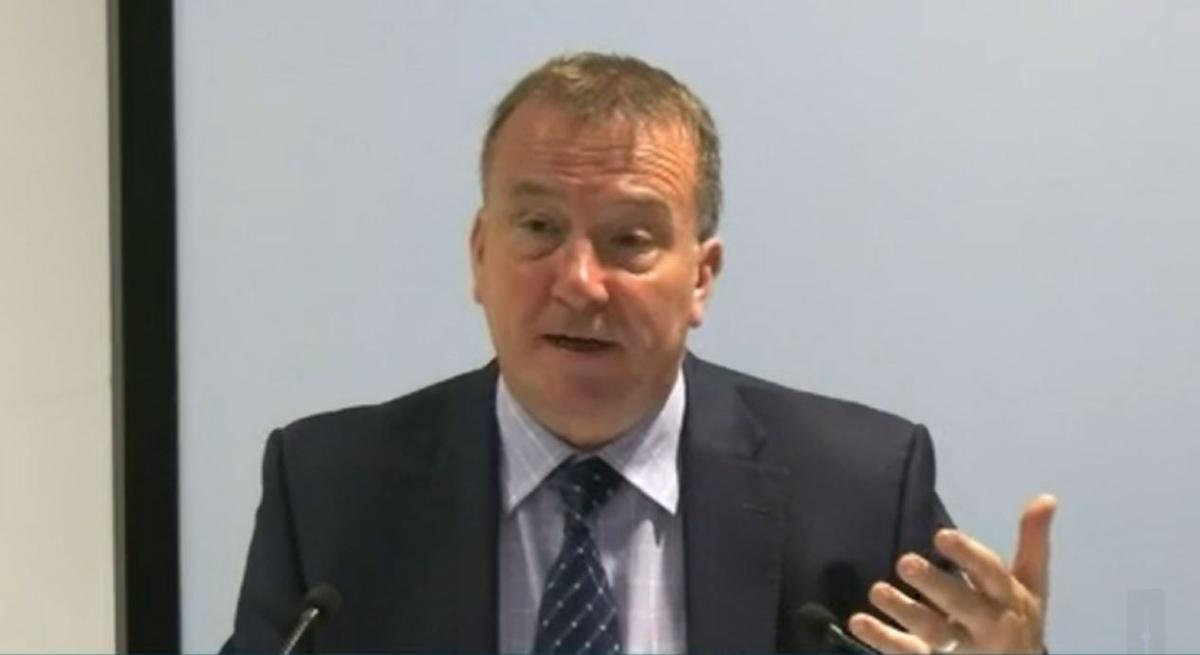
Wilson also served as national coordinator of the UK’s Protect and Prepare counterterrorism strategy, ran emergency planning for the London 2012 Olympic Games, and advised authorities on the Bondi Junction Westfield stabbing attack.
In Wilson’s assessment, the Hanukkah celebration reached the risk threshold that would have seen it come under the highest tier of Britain’s Terrorism (Protection of Premises) Act 2025.
Heightened Risk
Britain’s regime sorts events by the size of the crowd they draw.
Anything above 800 people places it at a heightened risk level, carrying substantial responsibilities.
Organisers at that level, Wilson explained, must have a counterterrorism plan in place and train their staff to handle potentially life-threatening situations.
The fact that the Hanukkah gathering had been advertised publicly, sold tickets and used barriers meant it would have reached that level, which would have obliged organisers to “implement, as far as reasonably practicable, public protection measures to reduce vulnerability and risk.”
He described a range of measures that could apply: physical defences to stop a vehicle ploughing into a crowd, upgraded CCTV coverage, and a professional security firm brought in specifically for the occasion.
Even modest gatherings of between 200 and 800 people attract requirements under Martyn’s Law—among them staff awareness training, security briefings, and plans for evacuation and lockdown.
Wilson noted that the legislation remains untested in the courts. It is still working through a two-year transition, and enforcement powers do not come into law until April 2027. Even so, he said, the framework is already shaping how local safety advisory bodies weigh up events.
“Security can’t be down to those five security guards. It has to be down to the 1,000 employees,” he told the commission, adding that it is often the cleaner or the person serving coffee who first notices something out of place.
Call for More Hours Devoted to Gun Training
“Your general patrol officer completes his 80 hours at a police college or academy … and then you’ve got this armed offender course they do, which is three days. We add that together, that works out as something like nine days [firearms] training your average officer in Australia’s got, compared to at least 12 weeks for an ARV officer in the UK. So there can’t be any comparison,” Wilson said.
ARV officers are drawn from the ranks of serving police and constantly patrol London’s streets in groups of three, armed with Glock 17 pistols and SIG MCX semi-automatic rifles as standard.
They also carry Tasers, a 37 millimetre projectile launcher, and various baton rounds, and wear ballistic body armour and helmets.
“Before 2008, a lot of [the responses] would be containment,” Wilson said. “You would be waiting for military resources to come in to carry out that neutralisation. Now police officers are trained to go forward, locate the threat, and neutralise the threat.”