This copy is for your personal, non-commercial use only. Distribution and use of this material are governed by our Subscriber Agreement and by copyright law. For non-personal use or to order multiple copies, please contact The Epoch Times Reprints.
British Prime Minister Sir Keir Starmer (L) meeting Chancellor of the Exchequer Rachel Reeves (R) at Downing Street in London on Oct. 28. 2024. Hollie Adams/PA
Chancellor of the Exchequer Rachel Reeves is preparing a budget that is expected to hike taxes as a slowing UK economy and increasing government borrowing leave the Labour government with few alternatives.
The treasury chief will set out the government’s tax and spending plans on Nov. 26, amid a tough economic outlook, with inflation above the pre-COVID-19 pandemic norms at 3.6 percent and public sector debt at about 94.5 percent of gross domestic product (GDP), according to the UK’s Office of National Statistics.
These pressures and Labour’s commitment not to raise income tax, national insurance, or VAT give Reeves little room to fund priorities such as the National Health Service (NHS) without new revenue.
Reeves said on Nov. 25 that her fiscal plan would “cut NHS waiting lists, cut debt and cut the cost of living.”
Capital Economics’ Group Chief Economist Neil Shearing said in a Nov. 24 statement that Reeves may need to raise 35 billion to 40 billion pounds ($46 billion to $52.5 billion) to meet her own fiscal rules, with “most of this is likely to come via higher taxes.”
“The debate will revolve around the size of the fiscal squeeze required to hit the government’s self-imposed rules and, crucially, the mix of tax rises and spending restraint used to achieve it,” Shearing said.
He noted that high debt and large deficits were common across advanced economies, including the UK and France. The International Monetary Fund’s latest economic outlook, published on Oct. 14, projected UK GDP growth to rise slightly to 1.3 percent from 1.2 percent this year, while the 2026 forecast was trimmed to 1.3 percent from 1.4.
Shearing said that the UK still lacked a credible growth strategy, noting that boosting investment in a capacity-constrained economy requires “someone, somewhere, to consume less,” whether households or the state.
What’s Expected
Reeves is expected to keep tax brackets frozen instead of adjusting them for rising wages. This means that as people earn more over time, about 1.75 million of them will end up paying more tax, even though the official tax rates won’t change.
According to the Institute for Fiscal Studies, keeping tax brackets frozen for two more years would push about 960,000 people into paying income tax for the first time, and move another 790,000 workers into a higher tax rate as their wages rise.
The Institute for Fiscal Studies stated on Oct. 13 that if Reeves hopes to raise large sums from tax increases in the budget, she could consider raising council tax rates on homes in higher value bands.
Other possible measures include freezing the amount of savings people can keep tax-free, limiting how much they can put into tax-advantaged pension accounts, and cutting the annual tax-free allowance for cash individual savings accounts (ISAs).
Many savers start saving with cash ISAs because they are simple and familiar, according to financial services company Hargreaves Lansdown. As people gain confidence, they often move some of that money into investment products, according to the company.
Hargreaves warned on Nov. 13 that cutting the annual ISA allowance would leave savers with less to transfer into stocks and shares ISAs once they are ready to invest, “effectively reducing investments rather than boosting them.”
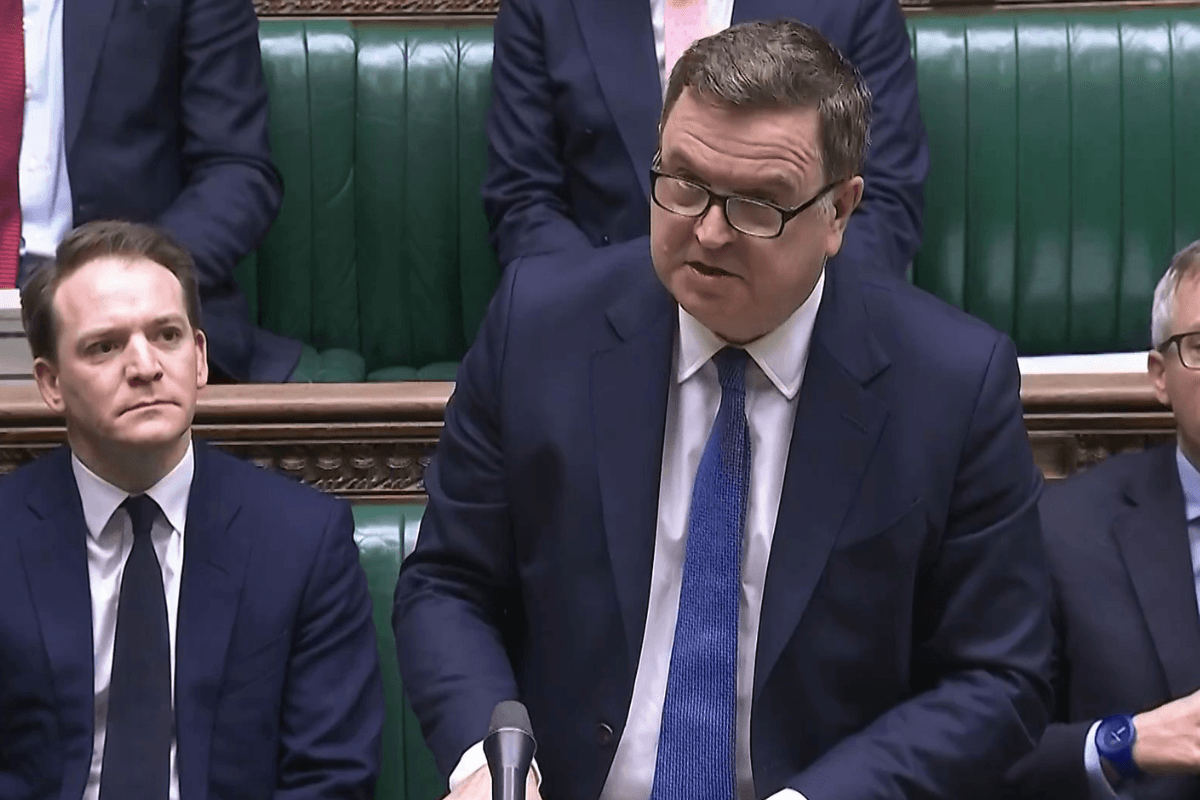
Screen grab of Shadow Chancellor Mel Stride asking a question on borrowing costs in the House of Commons in London on Jan. 9, 2025. House of Commons/UK Parliament/PA Wire
The opposition Conservative Party’s shadow treasury chief, Mel Stride, has said that the government is punishing savers and middle-income workers.
In a Nov. 24 post on X, he urged ministers to “protect savers—not punish them,” targeting potential ISA cuts. A day earlier, in a video posted on X, he suggested that Labour was preparing tax increases to pay for higher welfare spending.
Political Stakes
Ahead of the budget announcement, Reeves urged Labour lawmakers to rally behind her plans as she sought to steady nerves inside the party. Speaking to backbench members of Parliament late on Nov. 24, she called for unity and said that “politics is a team sport.”
An Ipsos poll published this month shows Nigel Farage’s Reform UK party leading national voting intentions with 33 percent. Labour stood at 18 percent, and the Conservatives at 16 percent, with the Green Party close behind at 15 percent.
Shearing said much ultimately hinges on the projections by the Office for Budget Responsibility, to be unveiled once Reeves delivers her budget to lawmakers. A generous projection could soften the outlook considerably, while a more cautious one could force a deeper squeeze, he said.
“Either way, the political reaction will matter as much as the numbers. The key question is how this lands with the parliamentary party and whether it stirs further manoeuvring against the Prime Minister and the Chancellor,” he said.
Evgenia Filimianova is a UK-based journalist covering a wide range of international stories, with a particular interest in foreign policy, economy, and UK politics.