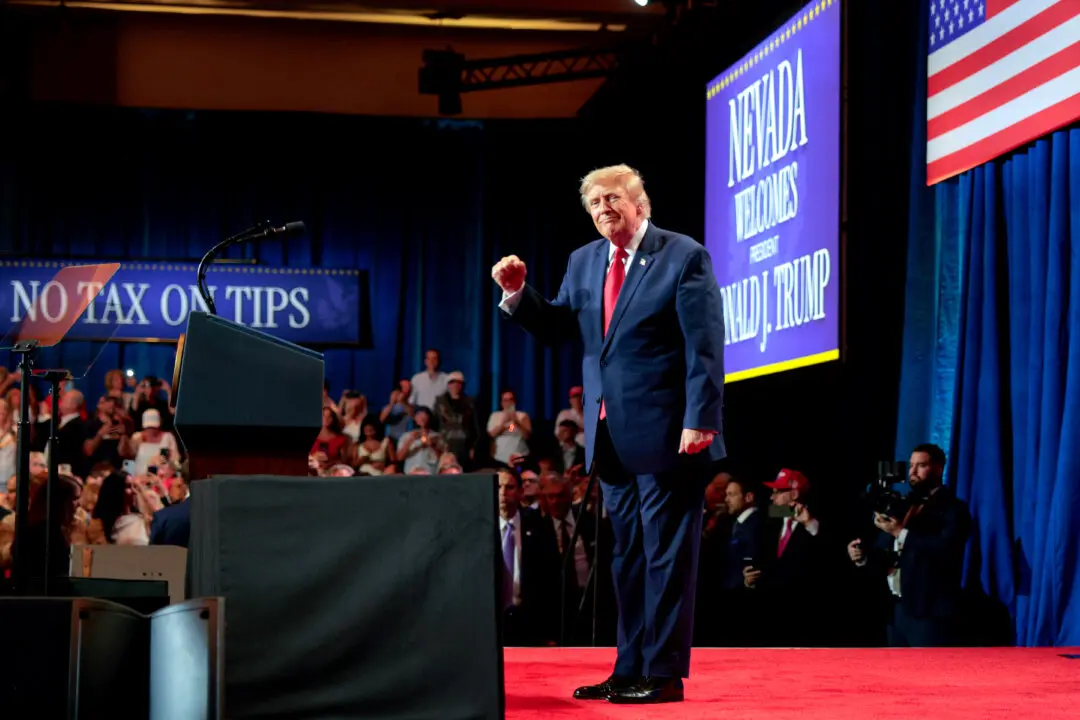
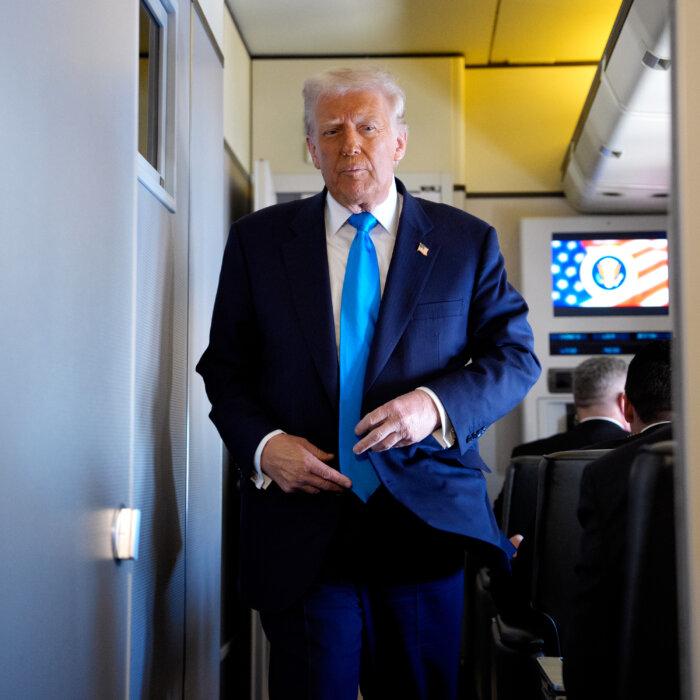
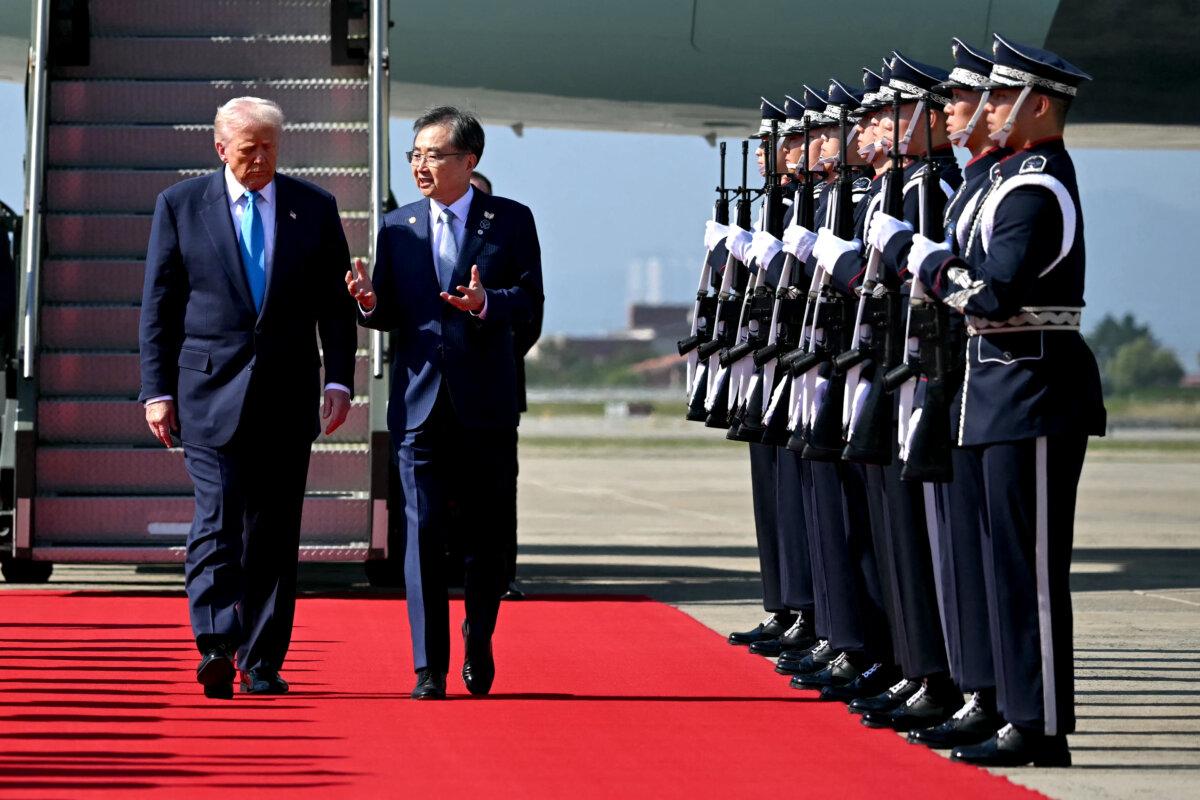
GYEONGJU, South Korea—U.S. President Donald Trump arrived in South Korea on Oct. 29 to a red-carpet welcome with cannons blasting in a formal salute before he sat down with South Korean President Lee Jae-myung and global business leaders.
“That was some spectacle, some beautiful scene,” Trump said during the bilateral talk. “It was so perfect, so flawlessly done. ... I don’t think we’ve ever seen anything like that.”
Trump’s visit is his second state visit as president—the other was during his first term in office—and makes him the only foreign head of state to receive two official receptions, according to Lee.
Lee also honored Trump by awarding him the nation’s highest honor, the Grand Order of Mugunghwa—a first for a U.S. president—a decorative sash and medal made of gold, rubies, and other gems.
The award is typically given to the country’s newly elected presidents and recognizes meritorious service to South Korea.
The South Korean leader praised Trump for his efforts to end wars and foster global stability.
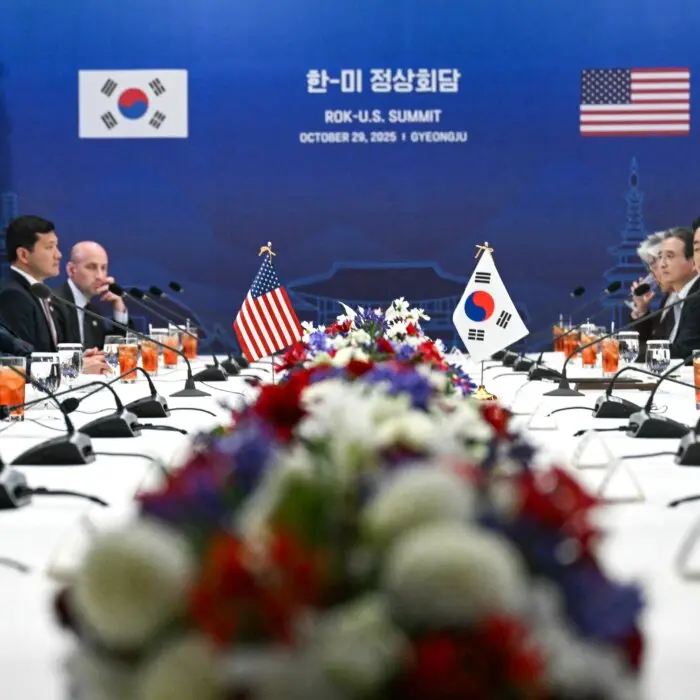
“You are indeed a peacemaker,” Lee said. “You have been successful in bringing peace to many parts of the world, and I hope that your peacemaking skills can be applied to the Korean Peninsula.”
The United States has long provided resources to help defend South Korea. Lee vowed to increase domestic military spending—including purchasing nuclear-powered submarines and the fuel to operate them—to reduce reliance on the United States.
North Korean leader Kim Jong Un test-fired a series of missiles in the Indo-Pacific Ocean on Oct. 28, while Trump was on his Asian tour.
Lee expressed gratitude for the president’s attempts to deescalate tensions by being open to meeting the North Korean leader.
“This time, your meeting with Chairman Kim did not happen, but I am very happy that you’re willing and open to having a dialogue with Chairman Kim,” Lee said. “The posture itself is a lot for us. ... I believe that we’ve been planting good seeds for a better future.”
Trump became the first U.S. president to cross into North Korea when he briefly met with Kim in 2019.
While the meeting with Kim is unlikely during this visit, all eyes are on a scheduled sit-down between Trump and Chinese Communist Party leader Xi Jinping on Oct. 30.
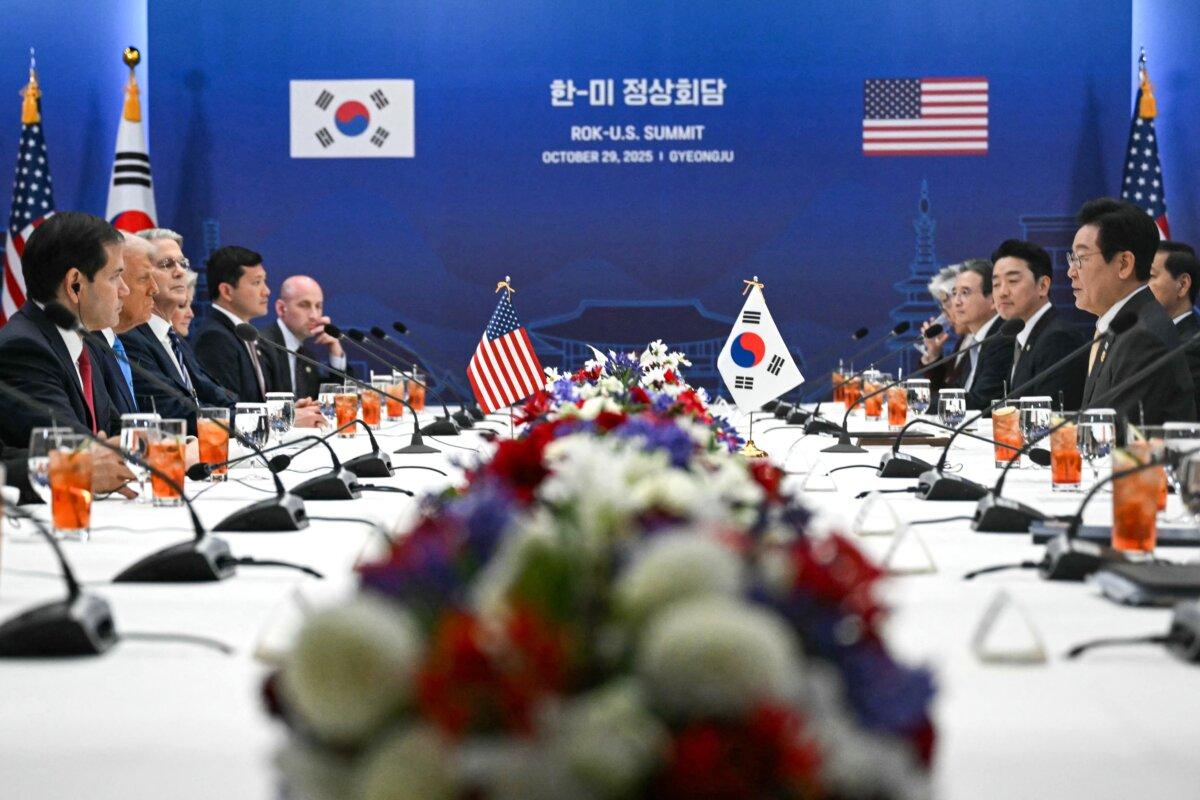
The bilateral discussions with Lee are taking place on the sidelines of the Asia-Pacific Economic Cooperation summit in the resort town near Lake Bomun.
Thousands of delegates and representatives from foreign governments, businesses, and other organizations streamed into the picturesque city to discuss trade, security, and strengthening multinational partnerships.
The president delivered a keynote address at a luncheon with chief executive officers and business leaders from across the region.
“I’m thrilled to be back with so many visionary innovators and titans of industry, the most brilliant in the world, actually,” Trump said.
He welcomed the economic activity and flurry of investments pouring in from South Korean businesses to the United States.
“The Republic of Korea is a cherished American friend and a close ally, and as we can see in this beautiful city, it’s truly one of the most remarkable nations anywhere on Earth,” Trump said. “Here in this peninsula, the people of South Korea have forged a miracle of economic development like you rarely see; an industrial and technological powerhouse, and above all, a free society and enduring democracy and a thriving civilization.”
The president highlighted the mutually beneficial aspects of his foreign policy agenda.
“When America thrives, our partners thrive and our alliances thrive with all of the countries,“ Trump said. ”The Indo Pacific thrives, and that’s good for all of us, and the entire world becomes safer and wealthy and greater than ever before.”
He told the crowd that bringing about systemic, sustainable change will take visionary leadership.
“At some point in your careers, every great business person and CEO in this room today has faced critics who said reform, innovation, and bold action would only lead to a total disaster,” Trump said. “But none of us would be here if we had listened to the small minds with no vision.”
The president envisioned a multilateral collaboration that improves the quality of life for populations across the world.
“Together, we will build a future of strong independent nations on both sides of the vast ocean, joined by our common interests, united by common values, and reaching constantly toward a richer, safer, and more peaceful Pacific,” he said.