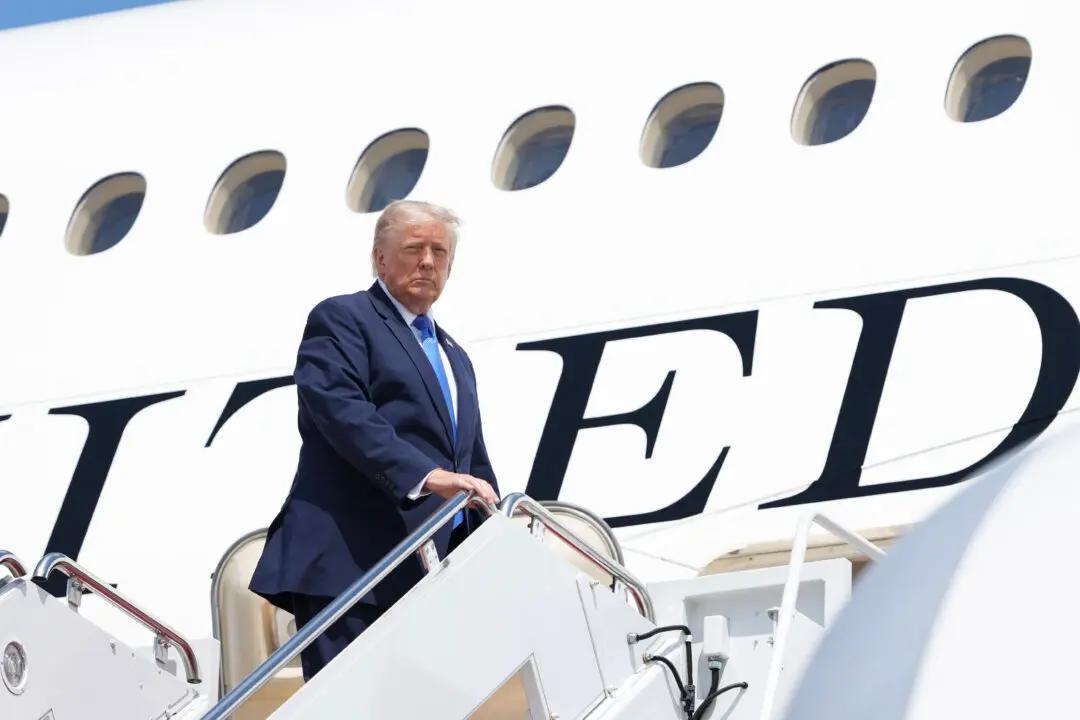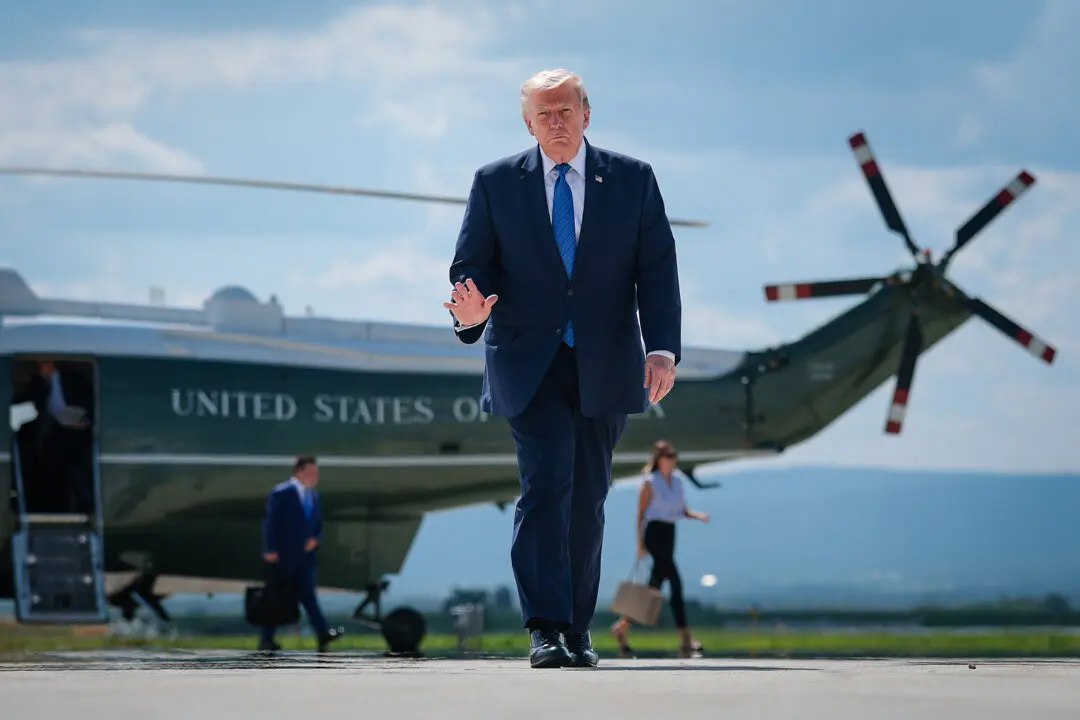
U.S. President Donald Trump on Thursday told reporters that he believed the war with Iran would be over soon and said the U.S. military was facing tighter stockpiles of some weapons, while others were in virtually “unlimited supply.”
Trump made the remarks while speaking to reporters in the Oval Office on Aug. 6, after being asked for comment on the status of U.S. stockpiles of munitions and his assessment of the U.S.–Iran war.
“I think it’s going to end pretty soon, I don’t think they can go much longer,” Trump said in reference to the conflict, now in its sixth month.
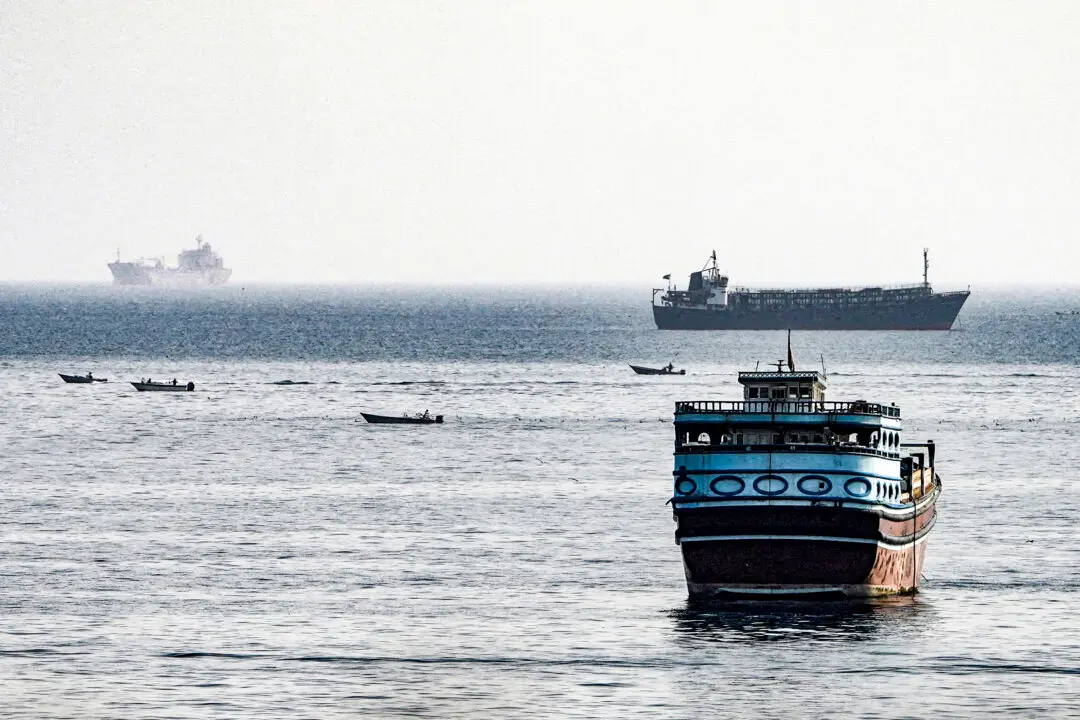
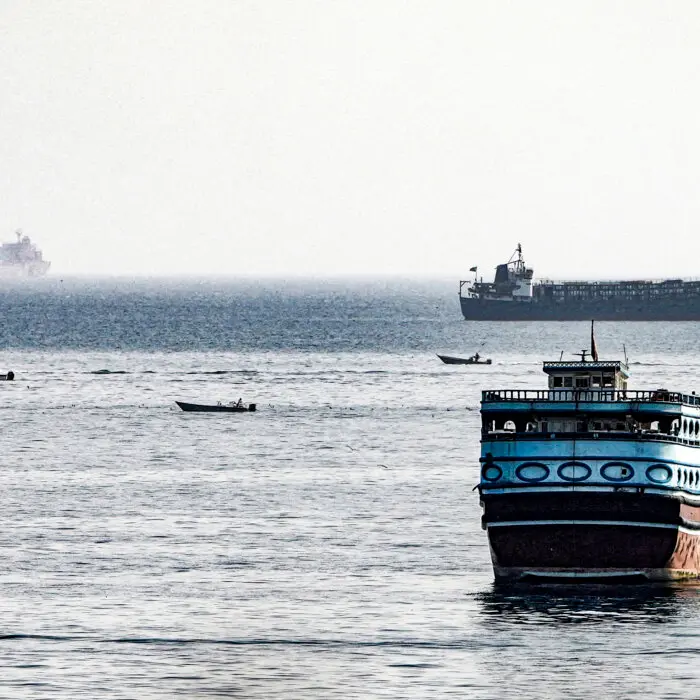
Asked whether a deal was nearing to reopen the Strait of Hormuz—the key maritime chokepoint in the Gulf where Iranian forces have targeted commercial ships with fast boats, drones, and missiles—the president expressed confidence that an agreement could come “soon.”
“I think we’re doing very well,” Trump said, adding that he’s “involved in the negotiation.”
Trump has rejected Iran’s claims that the United States is not involved in the talks, accusing Tehran of duplicity and saying Iranian officials publicly deny negotiating with Washington while continuing to engage behind the scenes.
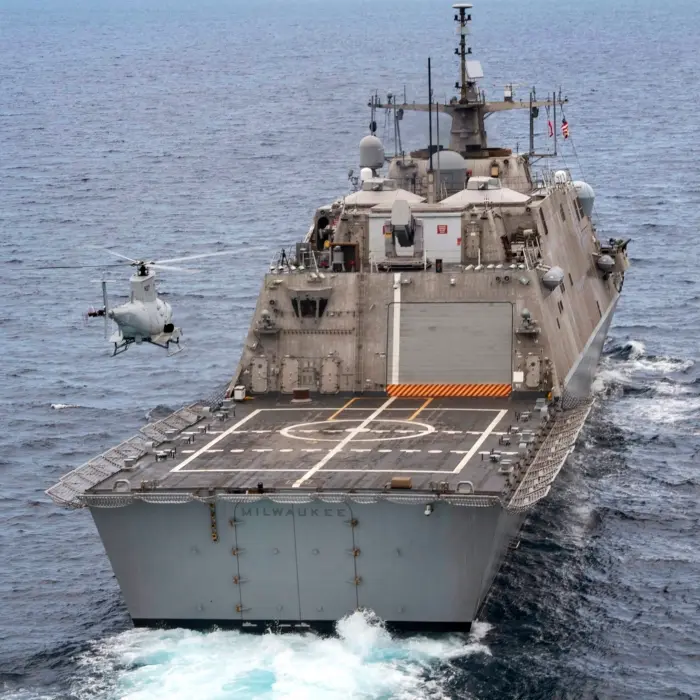
The president highlighted the pressure being put on Iran by the ongoing U.S. naval blockade of Iranian ports and shipping. He added, however, that Iranian forces retained some ability to threaten ships transiting the Hormuz strait, including by laying mines.
Munitions Stockpiles
Trump also responded to questions about U.S. munitions stockpiles, which recent media reports have said are running low.
Asked about the reports, Trump said the country had an almost unlimited supply of certain weapons but acknowledged that inventories of others were “a little bit tighter.” He said the U.S. military remained in “great shape” overall.
The presidents added that U.S. defense companies were building more production plants, including facilities for Patriot and Tomahawk missiles.
“We have literally massive amounts of ammunition,” Trump said, with large amounts of less precise, high-end weaponry that the president described as nonetheless “very powerful and very good.”
“We have elite, too, but we’re watching that very closely,” Trump added, referring to high-end weapons.
Trump did not specify which munitions he was referring to. Media reports citing anonymous sources have pointed to interceptors used by Patriot and Terminal High Altitude Area Defense systems as examples of weapons whose inventories have begun to dwindle rapidly.
The White House and Pentagon have disputed the reports. War Secretary Pete Hegseth on Aug. 4 rejected CNN’s account, calling it false, while White House press secretary Karoline Leavitt denied a Washington Post report that Trump had clashed with Hegseth over the state of U.S. weapons stockpiles.
Limited Shipping Through Hormuz
Meanwhile, the U.S. military blockade of Iranian ports and shipping continues, adding pressure on Tehran to come to the table and agree to a negotiated resolution of the conflict and fully reopen the Strait of Hormuz.
U.S. Central Command said in an Aug. 6 operational update that it had redirected one more vessel in Hormuz in the last day, bringing the total number to 49 since the blockade was reinstated in mid-July.
Few ships are currently transiting the strait, maritime tracking data show. Only eight ships crossed on Tuesday, according to Kpler, a maritime tracking firm, and just 29 have crossed so far this week.
Shipping was concentrated around the northern route controlled by Iran, Kpler said, adding that factors such as route transparency and the risk of further disruption were more important to operators than headline traffic volumes.