Heads of major countries will be on the Board of Peace (BoP) to oversee the establishment of an interim technocratic government in Gaza, U.S. President Donald Trump said on Nov. 18.
Under the second phase of the U.S.-brokered cease-fire agreement between Israel and the terrorist group Hamas, the security responsibilities in Gaza are to be transferred to a new International Stabilization Force (ISF), with an initial two-year mandate.
“Everybody wants to be on the board, and it’ll end up being quite a large board because it’ll be the heads of every major country,” Trump, who will chair the BoP, said during a dinner he hosted for Saudi Crown Prince Mohammed bin Salman on Nov. 18.
Addressing the crown prince, Trump said he hoped the prince would agree to serve on the board.
“You’ll accept, I hope,” Trump said.
Saudi Arabia had voiced support for a U.S.-drafted U.N. Security Council resolution endorsing Trump’s Gaza cease-fire plan.
Russia and China—both permanent members of the U.N. Security Council with veto power—ultimately abstained, easing earlier concerns that either might block the resolution.
“China, which was against it, took a pass and didn’t vote against it, and Russia, which was against it, didn’t vote against it,” Trump said during his speech on Nov. 18. “We appreciate it, because one negative vote and it doesn’t happen.”
He noted that the approval of the resolution was a “great honor” for him and said the BoP, with the mandate to manage Gaza until the end of 2027, will do “some fantastic things.”
“But the board of peace will be something that’s never even been thought of before. And it’s covering Gaza, but it'll end up covering large portions of the world,” Trump said.
Hostages
The cease-fire agreement brought an initial stop to the Israel–Hamas conflict, which began on Oct. 7, 2023, when Hamas attacked southern Israel.So far, the Hamas terrorist group, which has committed to the first phase, has returned all 20 living hostages and 25 out of 28 deceased hostages.
Trump described the situation in Gaza as “messy” but said it is improving radically. He also noted that Hamas had cooperated in hostage returns.
Israel and Hamas
Hamas and other terrorist groups in the region, including the Popular Resistance Committees (PRC) and Popular Front for the Liberation of Palestine (PFLP), have expressed their opposition to elements of the U.S.-authored resolution.While Hamas has committed to the first phase of the cease-fire agreement, it has so far refused to disarm.
Hamas spokesperson Hazem Qassem said on Nov. 17 that the group wants a resolution that stops what it described as Israel’s “aggression against Gaza, the West Bank, and Jerusalem.”
The PRC and PFLP oppose any deployment of international or foreign forces inside the Gaza Strip.
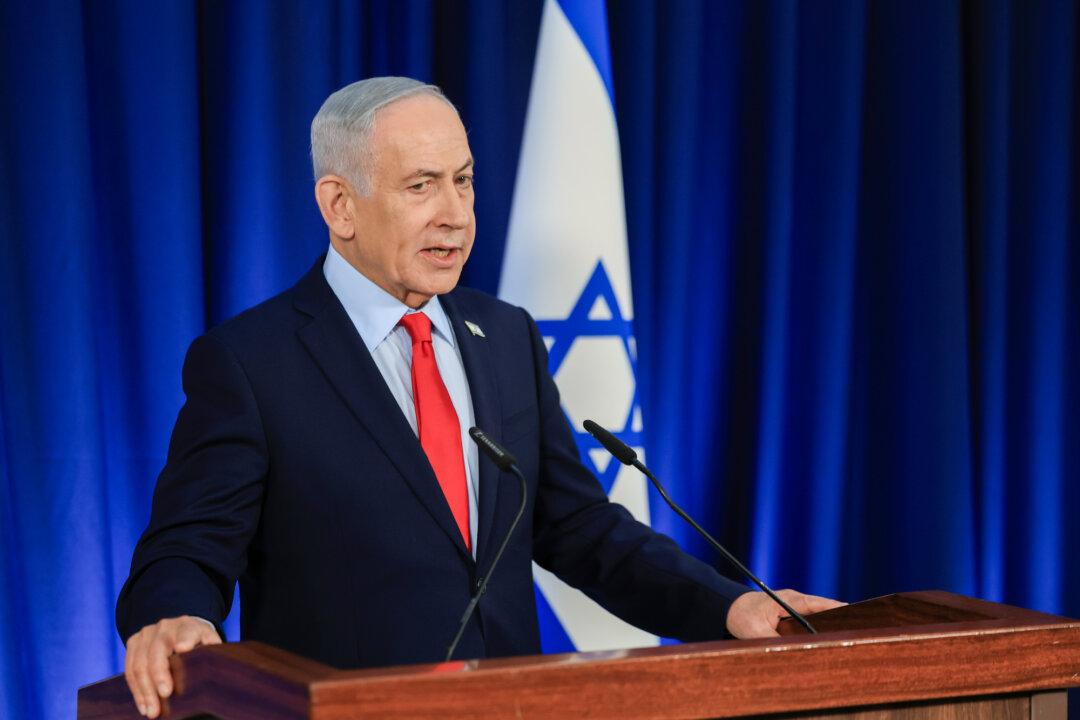
Israeli Prime Minister Benjamin Netanyahu has stressed that the demilitarization of Gaza and the disarmament of Hamas remain key requirements.
Netanyahu noted that Israel’s opposition to a Palestinian state in any territory still stands.