This copy is for your personal, non-commercial use only. Distribution and use of this material are governed by our Subscriber Agreement and by copyright law. For non-personal use or to order multiple copies, please contact The Epoch Times Reprints.
Trump Says He Had ‘Great Talk’ With Brazil’s Lula, Discussed Sanctions, Trade
Leaders’ tones after the phone call signaled a positive turn in the latest diplomatic engagement between the United States and Brazil after months of tension.
U.S. President Donald Trump and Brazilian President Luiz Inácio Lula da Silva shake hands as they meet on the sidelines of the 47th Association of Southeast Asian Nations summit in Kuala Lumpur, Malaysia, on Oct. 26, 2025. Ricardo Stuckert/Brazil Presidency/Reuters
U.S. President Donald Trump said on Dec. 2 that he spoke by phone with Brazilian President Luiz Inácio Lula da Silva to discuss trade, sanctions, and how to combat organized crime.
Speaking to reporters at the White House, Trump said they had “a great talk.”
“We talked about trade. We talked about sanctions because, as you know, I sanctioned them having to do with certain things that took place. But we had a very good talk,” the president said.
“I like him. We had some good meetings, as you know, but we had a very good talk today.”
Later, in a post on Truth Social, Trump described the call as productive, reiterating that they had discussed trade and sanctions. They also discussed sanctions on Brazilian dignitaries, how to stop organized crime, and various other issues, he said.
“President Lula and I established a relationship at a meeting which took place at the United Nations, and I believe it set the stage for very good dialogue and agreement long into the future. I look forward to seeing and speaking with him soon. Much good will come out of this newly formed partnership!” Trump wrote.
Brazil’s presidential office later said in a statement that during the 40-minute conversation, Lula had indicated that the removal of U.S. tariffs on some products was “very positive,” but that the two countries needed to discuss lifting measures on other tariffed products.
The office said Brazil wanted to move forward quickly in these negotiations.
“President Lula also emphasized the urgency of strengthening cooperation with the U.S. to fight international organized crime. He highlighted recent operations carried out in Brazil by the federal government aimed at financially crippling criminal organizations, and noted that some of these groups have operations based abroad,” Lula’s office said.
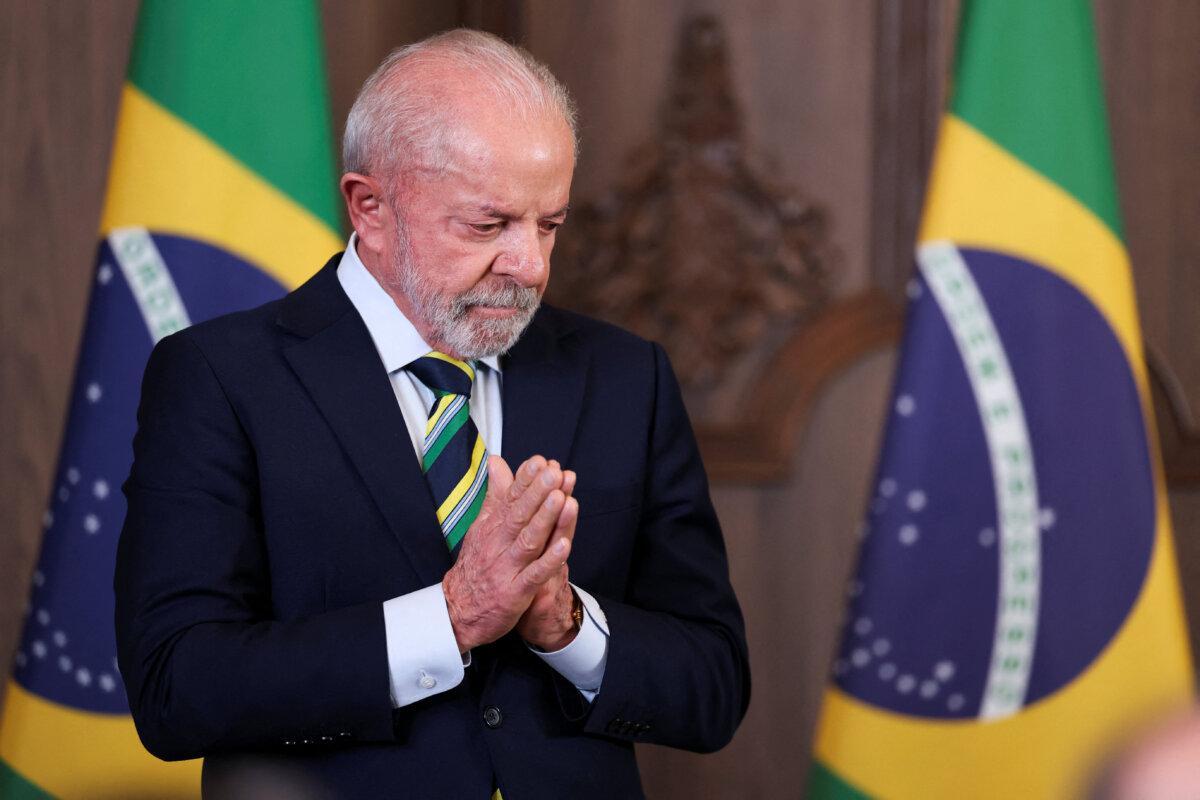
Brazilian President Luiz Inácio Lula da Silva gestures during a news conference on the sidelines of the 47th ASEAN Summit in Kuala Lumpur, Malaysia, on Oct. 27, 2025. Edgar Su/Reuters
The office added that Trump would work with Brazil and was willing to provide “full support to joint initiatives between the two countries to confront these criminal networks.”
The call between the presidents follows Brazilian Finance Minister Fernando Haddad’s Nov. 27 announcement that Brazil would seek closer cooperation with the United States to combat organized crime. The move comes after Brazil launched investigations into a money-laundering scheme involving a criminal network that Brazilian authorities say is linked to U.S. entities.
Previous Tensions
The positive tone signaled by both leaders after the call marks the latest diplomatic engagement between the United States and Brazil following months of tension, particularly over the trial of Trump ally and former Brazilian President Jair Bolsonaro, which the U.S. president said at the time was a “witch hunt” by the Lula administration.
In November, Trump removed 40 percent tariffs on Brazilian beef, coffee, and some agricultural products. The tariffs had initially been imposed on July 30, with a White House fact sheet citing “recent policies, practices, and actions” by the South American country that posed “an unusual and extraordinary threat” to U.S. national security, foreign policy, and the economy.
The order also referenced the alleged political persecution of Bolsonaro. That same day, the U.S. State Department sanctioned Supreme Court Justice Alexandre de Moraes—who oversaw the case against Bolsonaro earlier this year—over alleged serious human rights abuses, with officials accusing him of targeting political opponents and suppressing free speech.
In September, Brazil’s Supreme Court panel sentenced Bolsonaro to 27 years in prison after convicting him of attempting to overthrow the government following his loss in the 2022 election. In late November, Bolsonaro began serving his prison sentence.
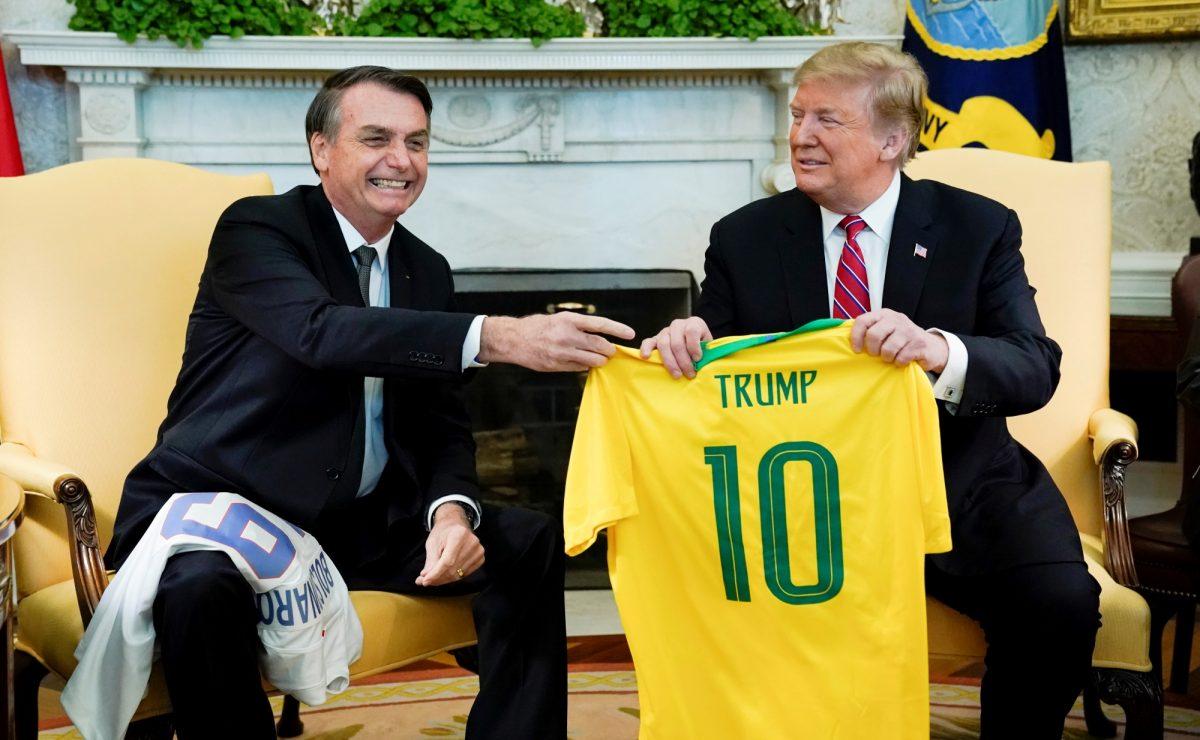
Then-Brazilian President Jair Bolsonaro presents a Brazilian national soccer team jersey to U.S. President Donald Trump during a meeting in the Oval Office on March 19, 2019. Kevin Lamarque/Reuters
“The judicial proceedings against those responsible for planning the coup d'état fall exclusively under the jurisdiction of Brazil´s Judicial Branch and, as such, are not subject to any interference or threats that could compromise the independence of national institutions,” he said in a July 10 post on X.
Bolsonaro, a former military officer and a conservative, has maintained his innocence, saying he is the target of political persecution.
Victoria Friedman is a UK-based journalist covering a wide range of international stories, with a particular interest in technology, eastern Europe, and defense.