U.S. President Donald Trump spoke to British Prime Minister Keir Starmer on April 9 about the need to come up with a “viable plan” to get the Strait of Hormuz operating normally, Downing Street said on April 10.
The Strait of Hormuz is one of the world’s most strategically vital maritime chokepoints, with about 20 percent of the world’s seaborne crude oil and liquefied natural gas flows passing through it.
“We’ve been pulling together a coalition of countries ... working on a political, diplomatic plan,” Starmer said on April 10, during a tour of the Middle East. “But also looking at military capabilities and ... the logistics of actually moving vessels through the strait.”
Starmer’s office said in a statement, “The leaders discussed the need for a practical plan to get shipping moving again as quickly as possible,” adding that the two leaders agreed to talk again soon.
In an April 9 post on X, Iranian leader Mojtaba Khamenei said Iran will “take the management of the Strait of Hormuz to a new phase.”
Iranians Propose ‘Transit Fees’
In an April 10 post on X, the Iranian Consulate in Mumbai, citing the head of the Commission on National Security and Foreign Policy, Ebrahim Azizi, said, “Under a parliamentary proposal, transit fees through the Strait of Hormuz would be paid in Iran’s national currency, the #rial.”
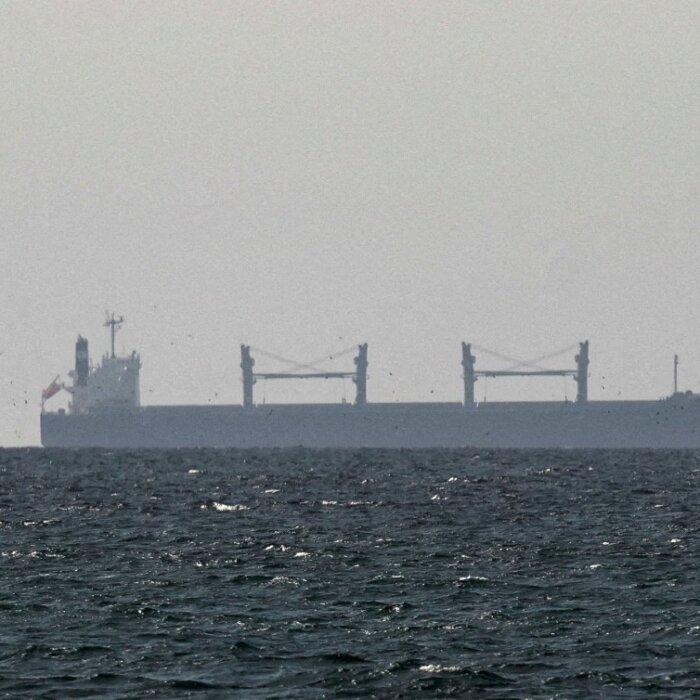
Iranian state broadcaster IRIB published a chart of “designated routes” in the Strait of Hormuz with an area marked “danger zone,” suggesting the Islamic Revolutionary Guard Corps may have placed sea mines in the waterway.
Citing Iran’s Ports and Maritime Organization, IRIB said in a post on X, “Due to the war situation in the PersianGulf and possible anti‑ship #mines in the main traffic zone of the Strait of Hormuz, vessels must ... coordinate with the IRGC Navy and use the designated routes.”
The graphic showed vessels rerouted north near Larak Island.
‘They Better Stop’
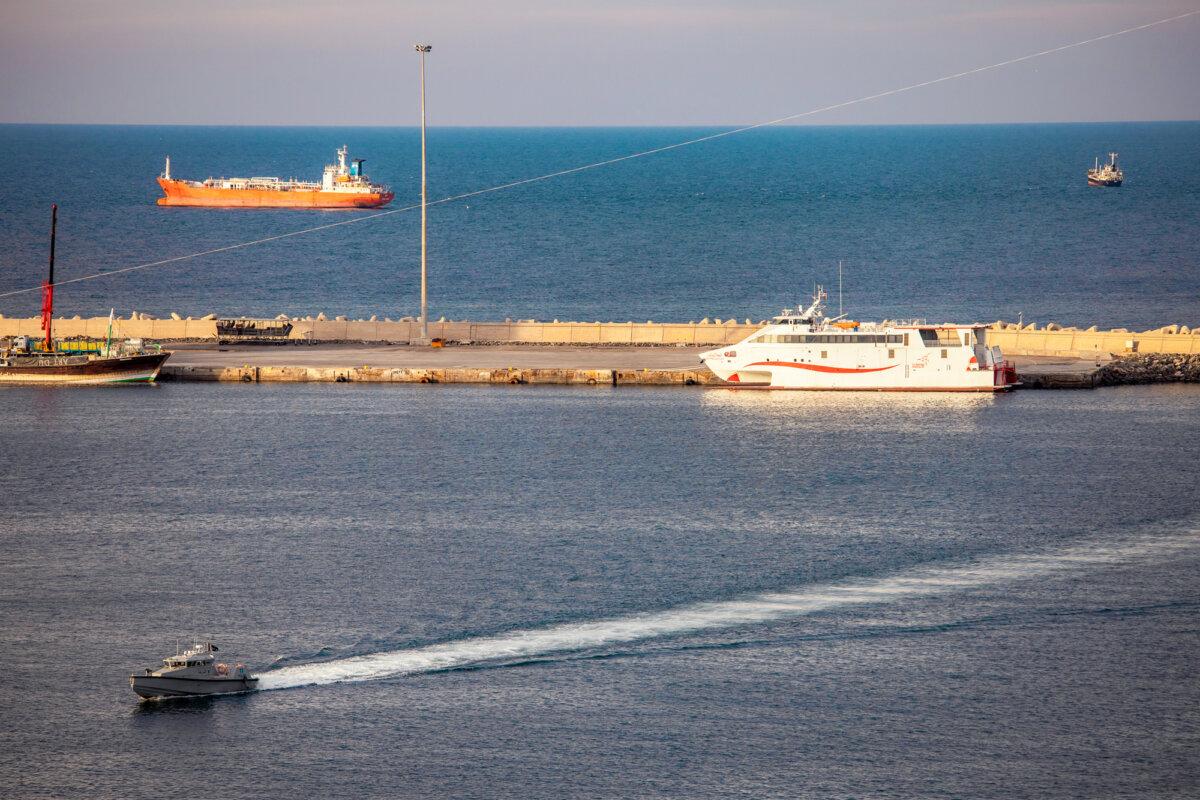
In a separate post on Truth Social, the U.S. president criticized Iran for unconfirmed reports that the regime was charging ships a fee to pass through the waterway.Fees were not imposed on shipping vessels before the United States and Israel launched Operation Epic Fury against the Iranian regime on Feb. 28.
“We’re thinking of doing it as a joint venture. It’s a way of securing it, also securing it from lots of other people,” he said, calling such an arrangement a “beautiful thing.”
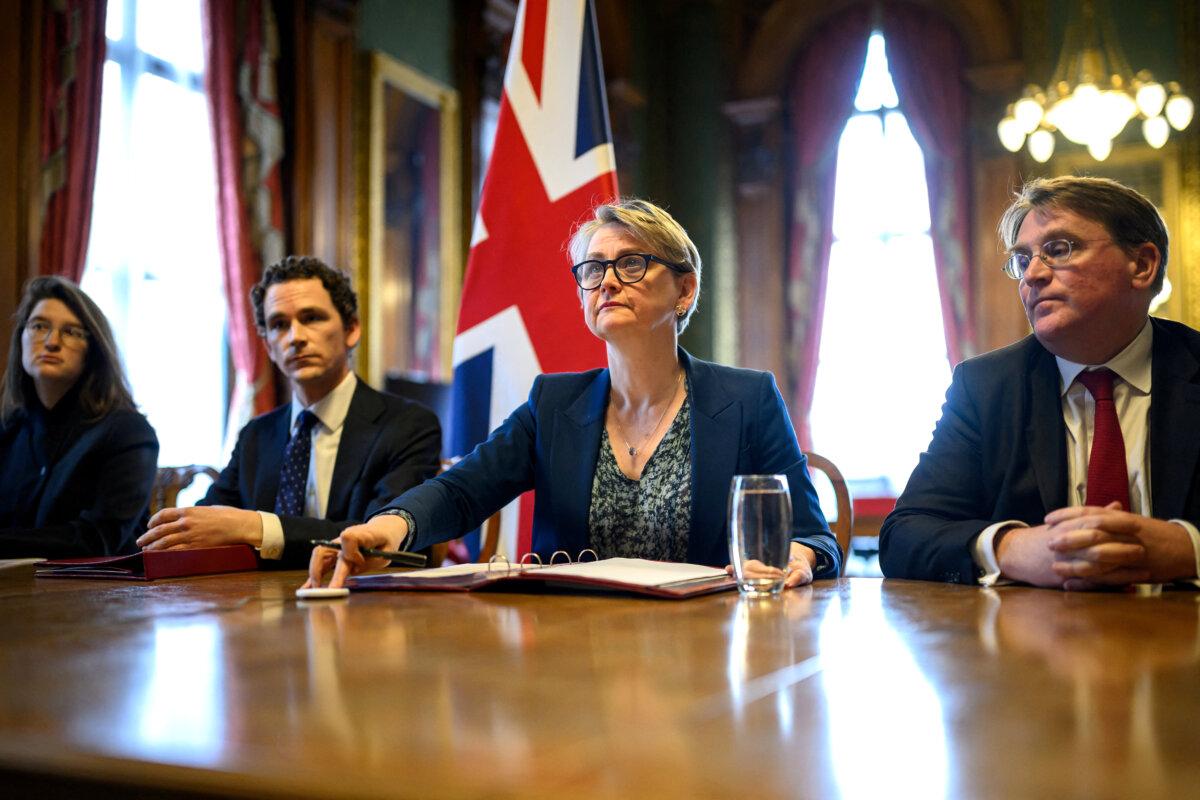
British Foreign Secretary Yvette Cooper, in an April 9 speech, said that the Strait of Hormuz was an international shipping route and “no country can close those routes.”
“We need the full and unconditional reopening of the Strait as a central part, not just of the current ceasefire, but the long-term future for the region,” Cooper added. “Because the fundamental freedoms of the seas must not be unilaterally withdrawn or sold off to individual bidders.”
Barrot told France Inter radio that work was well advanced for an escort system, “once calm has been fully restored.”